Mini compressor pedals can add sustain, even out picking dynamics, and make clean tones feel more polished without taking up much board space.
Whether you want subtle leveling or a more noticeable squeeze, the best compact compressors offer simple controls, reliable bypass, and tones that work for guitar and bass.
Best 10 Mini Compressor Pedals Picks for 2026
Classic MXR Feel

- Classic MXR compression in a mini housing
- CA3080 IC for quieter, more transparent operation
- Attack switch toggles slow and fast attack times
Best For: players who want classic compression in a compact, easy-to-use pedal
Blend-Friendly Control

- FET compressor with Volume, Compression, and Blend
- Blend knob mixes clean tone with compression
- Volume can reach unity gain or a slight boost
Best For: players who want simple controls and the ability to blend in clean signal
Automatic Simplicity

- Manhattan-style compression with auto-blend
- Automatic tone recovery preserves highs
- Built-in pre-amp adds extra tone push
Best For: guitarists who want simple, transparent compression with minimal adjustment
Compact Blend Control

- Compact size for tight pedalboards
- Compression, Volume, and Blend controls
- Simple 9V, 10 mA design
Best For: players who want a small, easy-to-use compressor with blend control
Control-First Mini Comp
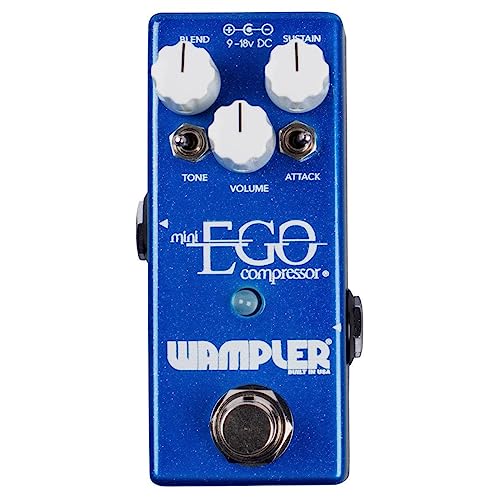
- Blendable dry signal for parallel compression
- Dark/bright and slow/fast switches add flexibility
- Compact mini format with pure core tone
Best For: Guitarists who want precise, versatile compression in a mini pedal
Budget Dual-Mode Comp
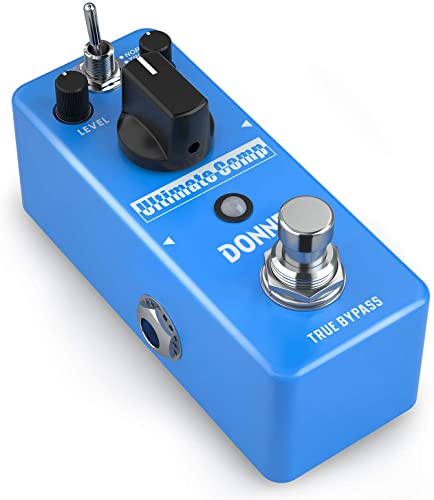
- Simple COMP, TONE, and LEVEL controls
- NORMAL and TREBLE modes for added flexibility
- True bypass for transparent signal handling
Best For: Budget-minded players who want a simple compressor for guitar or bass
Low-Cost Mini Analog Comp

- Fully analog circuit with true bypass
- Compact aluminum-alloy mini housing
- LED indicator and broad adjustable range
Best For: Players looking for a basic, compact compressor at a low price
Compact Optical Pick
MOOER Yellow Comp Mini Optical Compressor
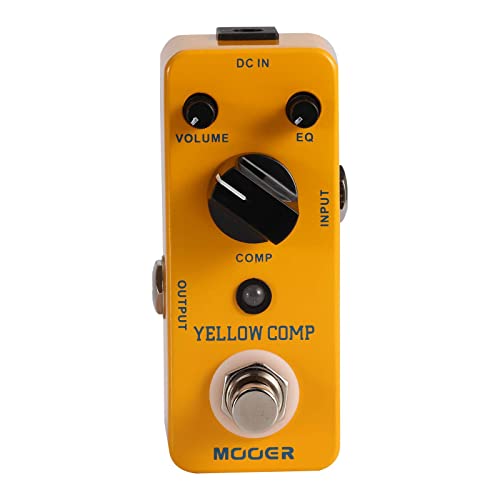
- Classic optical compression with smooth attack and decay
- True bypass and adjustable EQ/volume
- Full metal shell in a compact mini size
Best For: Players who want a tiny compressor with classic optical tone
Flexible Studio-Style Option
SONICAKE Source Comp Mini Analog Compressor

- Inspired by a studio compressor design with rich controls
- LED color changes offer real-time feedback
- Buffer bypass and support for guitar or bass
Best For: Players who want a compact compressor with deeper control
Classic Tone With Extra Modes
MOOER Yellow Comp Mini Compressor Pedal

- Classic optical compression in a compact pedal
- True bypass plus adjustable EQ
- Hot and Warm modes for added tone flexibility
Best For: Players who want a familiar compressor sound with extra voicing options
Classic MXR Feel – MXR Dyna Comp Mini Compressor
If you want one of the most familiar mini compressor pedals in a smaller footprint, the MXR Dyna Comp Mini keeps the classic MXR compression approach while saving space on your board. It uses the rare CA3080 “metal can” IC for quieter operation, greater transparency, and increased dynamic range, plus an attack switch that lets you choose between slow and fast response.
Best For: Players who want classic MXR compression in a compact pedal with simple attack options.
Pros:
- Space-saving mini housing
- Rare CA3080 IC for quieter, more transparent compression
- Attack switch adds slow and fast settings
Cons:
- Focused on a classic compression style rather than deep controls
- Not aimed at users who want lots of blending or shaping options
The Dyna Comp Mini is a practical pick if you want the MXR compression sound in a smaller format. Its appeal is straightforward: compact size, familiar feel, and an attack switch that adds a little extra flexibility without complicating the pedal.
Blend-Friendly Control – JHS Whitey Tighty Compressor
The JHS Whitey Tighty is one of the more straightforward mini compressor pedals for players who want quick control over compression without a complicated layout. Its FET design gives you Volume, Compression, and Blend knobs, so you can add squash, keep your level even, and mix back clean tone to taste.
Best For: Players who want simple compressor controls with a clean-signal blend option.
Pros:
- Three simple knobs: Volume, Compression, and Blend
- Blend control helps retain clean tone with compression
- Volume can be set at unity gain or slightly boosted
Cons:
- Only provides a few core controls
- Not meant for users looking for a highly detailed compression interface
For players who want a practical compressor that is easy to dial in, the Whitey Tighty keeps the focus on usable sounds. The blend feature is the key advantage here, making it easier to keep your attack and clarity intact while still getting the smoothing effect of compression.
Automatic Simplicity – Keeley Compressor Mini Pedal
The Keeley Compressor Mini is built for players who want mini compressor pedals that do the heavy lifting for them. It uses Manhattan-style compression with auto-blend, a new transient release time, and automatic tone recovery, all while keeping the controls simple and the signal clear.
Best For: Guitarists who want easy compression with clarity, sustain, and minimal tweaking.
Pros:
- Auto-blend helps preserve clarity and note definition
- Automatic tone recovery keeps highs clear at higher compression settings
- Built-in pre-amp is designed to push pedals and amplifiers
Cons:
- Designed around simplicity rather than hands-on control depth
- May be less flexible than pedals with separate blend and compression controls
This is a strong choice if you want a compressor that feels intuitive and supportive rather than technical. The Keeley Mini focuses on sustain, transparency, and practical live-or-recording use, making it appealing for players who want one pedal to cover the basics well.
Compact Blend Control – Xotic SP Compressor Pedal
The Xotic SP Compressor is a compact option in the mini compressor pedals category, giving you core compression controls in a small footprint. With Compression, Volume, and Blend controls, it is aimed at players who want a straightforward way to shape dynamics while keeping some clean signal in the mix.
Best For: Players who want a compact compressor with simple compression, level, and blend control.
Pros:
- Compact size fits easily on crowded pedalboards
- Compression, Volume, and Blend controls cover the basics
- 9V, 10 mA design is easy to power
Cons:
- Basic control set may not satisfy players wanting deeper tweaking
- Style and details are less informative than some competing pedals
If you want a small compressor that gets straight to the essentials, the SP Compressor is easy to understand and easy to place on a board. Its blend control adds flexibility without making the pedal feel complicated, which suits players who want a compact, practical compressor.
Control-First Mini Comp – Wampler Mini Ego Compressor
If you want mini compressor pedals with more control than a simple squash-and-go design, the Wampler Mini Ego is built for that job. It keeps the original signal blendable, adds dark/bright tone switching plus slow/fast attack options, and stays compact enough for streamlined boards.
Best For: Players who want an always-on compressor or parallel-compression effect with fine-tuned control.
Pros:
- Blend knob lets you mix your dry signal back in for less squash and more clarity.
- Two tone options and two attack settings make it easier to shape response.
- Works as an always-on compressor or as a more obvious effect.
- Pure core tone design aims to keep your base sound intact.
Cons:
- Requires a 18V DC power supply.
- No power adapter is included in the supplied notes.
For players who need more than basic compression, the Mini Ego stands out by offering studio-style flexibility in a mini format. It is the most feature-rich pick here for dialing in compression without giving up your dry signal.
Budget Dual-Mode Comp – Donner Ultimate Comp Pedal
Among mini compressor pedals, the Donner Ultimate Comp is a straightforward option for smoothing dynamics without making setup complicated. It gives you COMP, TONE, and LEVEL controls, plus NORMAL and TREBLE modes, so you can shape compression for guitar or bass with a simple layout.
Best For: Players who want an affordable, easy-to-use compressor with basic tone-shaping options.
Pros:
- COMP, TONE, and LEVEL controls cover the core compression needs.
- NORMAL and TREBLE modes add extra versatility.
- True bypass design is meant to keep the signal transparent when disengaged.
- Suitable for both electric guitar and bass.
Cons:
- Power adapter is not included.
- Only offers the essentials compared with more advanced compressors.
This is a practical pick if you want an approachable compressor that focuses on the basics. It offers useful mode switching and clean bypass behavior without pushing into complicated controls.
Low-Cost Mini Analog Comp – KOKKO FCP2 Compressor Pedal
If you are shopping mini compressor pedals on a tighter budget, the KOKKO FCP2 keeps things simple with a fully analog circuit and true bypass. Its compact aluminum-alloy build, LED status indicator, and broader adjustable range make it a straightforward utility pedal for guitar or bass.
Best For: Players who want a small, analog compressor at a reasonable price.
Pros:
- Fully analog circuit with true bypass.
- Mini size and aluminum-alloy housing are built for pedalboard use.
- LED indicator shows when the effect is active.
- Works with guitar and bass.
Cons:
- Power adapter is not included.
- Requires an external AC adapter for power.
The FCP2 is a no-frills compressor for players who mainly want compact size, analog operation, and a low-cost entry point. It is the simplest option in this group, but it still covers the core basics well.
Compact Optical Pick – MOOER Yellow Comp Mini Optical Compressor
If you want one of the most compact mini compressor pedals for tightening up your signal, the MOOER Yellow Comp keeps things simple with classic optical compression, true bypass, and easy EQ and volume adjustment. Its full metal shell and portable size make it a practical choice for boards where space matters.
Best For: Players who want a small, straightforward compressor with classic optical character and onboard tone shaping.
Pros:
- Classic optical compressing sound with smooth attack and decay
- True bypass helps minimize tone loss
- Adjustable EQ and volume for quick tone matching
- Full metal shell in a very small footprint
Cons:
- Single-purpose layout may feel basic if you want more control options
- Powered by 9V and draws 10 mA, so you’ll need the right supply or battery setup
This is a practical mini compressor pedal if your priority is classic compression in a tiny enclosure. It’s built for players who want to set a clean, usable compression sound without giving up pedalboard space.
Flexible Studio-Style Option – SONICAKE Source Comp Mini Analog Compressor
The SONICAKE Source Comp is built for players shopping mini compressor pedals that still offer plenty of control. Inspired by a famous studio compressor pedal, it adds rich parameter knobs, LED feedback, and buffer bypass for electric guitar or bass, making it a flexible option for clean and driven tones.
Best For: Guitarists and bassists who want a compact compressor with more shaping control and real-time LED feedback.
Pros:
- Rich parameter knobs for dynamic adjustment
- Works with electric guitar and bass
- Buffer bypass for flexible signal handling
- LED color change provides real-time feedback
Cons:
- Requires a 9-18V center-negative power supply, which is not included
- Hardware interface is listed as 3.5mm audio, so setup details may need a closer look
For players who want a mini compressor pedal with more hands-on control than the most minimal designs, this one stands out. It aims for broad usability across clean and overdrive settings while staying compact enough for smaller boards.
Classic Tone With Extra Modes – MOOER Yellow Comp Mini Compressor Pedal
Among mini compressor pedals, the MOOER Yellow Comp is a strong fit if you want classic optical compression in a space-saving format. It offers true bypass, EQ shaping, and two working modes, so you can move from a more powerful output to a warm, tube-like response depending on the sound you’re after.
Best For: Players looking for a compact compressor with classic optical tone, true bypass, and mode switching.
Pros:
- Classic optical compressor sound in a mini enclosure
- True bypass design helps reduce tone loss
- EQ control lets you brighten or soften the tone
- Hot and Warm working modes add extra flexibility
Cons:
- DC 9V power is required and cable/adapter are not included
- Mode and EQ features may be more than needed for players wanting a very simple compressor
This version is a practical choice if you want the familiar Yellow Comp sound with a few extra shaping options. It keeps the footprint small while still giving you enough control to tailor the compression for different rigs and styles.
How We Picked the Best Mini Compressor Pedals
We focused on pedals that deliver useful compression in a small footprint, with a practical balance of tone, control, and pedalboard compatibility. Priority went to models with dependable build quality, simple operation, and settings that can cover everything from subtle sustain enhancement to more pronounced compression.
We also considered circuit style, bypass behavior, control layout, and whether each pedal is suitable for guitar, bass, or both. For many players, the best choice is less about maximum features and more about how quickly a pedal can be dialed in on a busy board.
Quick Comparison
In the mini compressor pedal category, some models lean classic and straightforward, while others add EQ, blend, or extra level control for more flexible shaping. If you prefer fast setup, a simpler analog design may be easiest to use. If you want more precision, choose a pedal with additional controls for attack, tone, or clean blend.
Key Buying Factors for Mini Compressor Pedals
Compression Character
Look for how aggressively the pedal evens out dynamics. Light compression can preserve picking nuance, while stronger compression creates longer sustain and a more controlled response.
Control Set
More knobs can mean finer tuning, but they can also make setup less immediate. Mini Compressor Pedals with blend, EQ, or volume controls are often better for players who want to match different guitars or basses.
Bypass and Noise
True bypass can be helpful in simple signal chains, while buffered bypass may suit larger pedalboards. Low noise is especially important if you plan to use higher compression settings.
Instrument Compatibility
Not all compressors are equally suited to guitar and bass. Bass players should pay close attention to low-end retention and whether the pedal keeps the fundamental clear under compression.
Who Should Buy Which Mini Compressor Pedals?
If you want a classic, plug-and-play feel, choose a straightforward mini compressor with minimal controls. If you need more tonal shaping, look for models with blend, EQ, or level adjustment. Players building a compact board should prioritize size and bypass type, while bass players should focus on transparency and low-frequency control.
For most shoppers, the best Mini Compressor Pedals are the ones that solve a specific problem: longer sustain, smoother attack, more consistent rhythm parts, or a cleaner front end for pedals that follow. Match the pedal to that goal, and you’ll get more value than chasing the most features.