Traveling musicians need MIDI gear that packs easily, connects reliably, and works without turning every performance or recording session into a troubleshooting project.
This roundup compares 10 portable MIDI interfaces, hosts, controllers, and audio interfaces for mobile musicians, from simple USB solutions to wireless and multi-device setups.
Best 10 Midi Interfaces for Traveling Musicians Picks for 2026
Portable Keyboard Controller
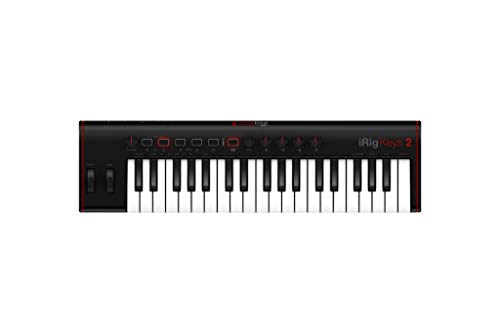
- 37 velocity-sensitive mini keys
- MIDI I/O and headphone output
- USB bus-powered travel design
Best For: Mobile players who need keys and monitoring
Travel Recording Interface
M-AUDIO M-Track Duo USB Audio Interface
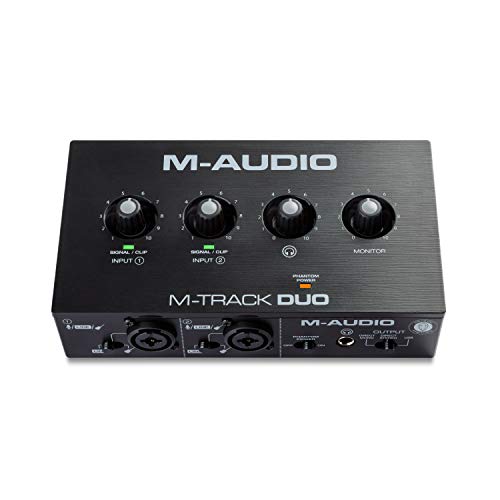
- Two combo mic, line, and instrument inputs
- Phantom power and zero-latency monitoring
- Compact USB interface for Mac, PC, and mobile
Best For: Travel recording with microphones or instruments
Best Wireless Option
FORE K1 Wireless MIDI Interface

- Wireless 2.4 GHz connection up to 32 feet
- Supports iOS, Android, macOS, and Windows
- Compatible with 5-pin DIN MIDI devices
Best For: Traveling musicians who want cable-free MIDI connections
Best All-in-One Travel Controller
Donner DMK 25 Pro MIDI Keyboard

- Portable 25-key USB-C controller
- Includes pads, smart scales, and arpeggio controls
- Works with mobile devices and desktop DAWs
Best For: Traveling producers who want a compact mobile production controller
Best Mobile Recording Interface

- Bus-powered USB design for mobile setups
- MIDI I/O plus two combo audio inputs
- 24-bit/192kHz recording with direct monitoring
Best For: Traveling musicians recording audio and MIDI together
Best Portable MIDI Keyboard
Donner N-25 Mini MIDI Controller

- 25 velocity-sensitive mini keys in a compact body
- USB-MIDI compatibility across computers and mobile devices
- Includes programmable controls and 40 teaching courses
Best For: Mobile melody writing and beginner music production
Compact MIDI Hub – Midiplus 2×2 USB MIDI Interface
The Midiplus 2×2 is a straightforward choice for musicians seeking midi interfaces for traveling musicians. Its two MIDI inputs and two MIDI outputs provide practical connectivity for a compact laptop-based rig, while USB power eliminates the need to pack an external adapter.
Best For: Travelers who need a lightweight, bus-powered MIDI connection between keyboards, controllers, and Mac or Windows computers.
Pros:
- Two MIDI inputs and two MIDI outputs support 32 MIDI channels per connection type.
- USB-powered design requires no external power supply.
- Works with Mac OS X and Windows XP or later without a driver.
- Includes a USB cable and weighs about 0.300 kilograms.
Cons:
- Provides MIDI connectivity rather than microphone, instrument, or headphone audio connections.
- Its computer compatibility is listed for Mac OS X and Windows, not mobile platforms.
This is a practical, no-frills option when your travel setup centers on hardware MIDI and a computer. It keeps the connection count useful without adding a separate power brick.
Portable Keyboard Controller – IK Multimedia iRig Keys 2
The IK Multimedia iRig Keys 2 combines a 37-key velocity-sensitive mini keyboard with MIDI and headphone connectivity, making it a versatile option among midi interfaces for traveling musicians. Its USB bus-powered design and compact dimensions suit mobile production with a laptop, tablet, or compatible phone setup.
Best For: Musicians who want playable keys, hands-on controls, MIDI connections, and headphone monitoring in one travel-friendly controller.
Pros:
- 37 velocity-sensitive mini keys offer expressive control in a compact format.
- Includes MIDI input and output through 2.5mm TRS jacks.
- Provides a 1/8-inch headphone output for personal monitoring.
- USB bus-powered design weighs 30.7 ounces and measures 20.4 by 5.5 by 2.13 inches.
Cons:
- The mini-key layout is less spacious than a full-size keyboard.
- MIDI connections use 2.5mm TRS jacks, so compatibility with standard MIDI cables may require appropriate adapters.
- Its 37-key format takes more bag space than a compact pad-only controller.
For travelers who need more than a basic MIDI interface, the iRig Keys 2 adds a keyboard, assignable controls, and headphone output without requiring a separate controller and monitoring solution.
Travel Recording Interface – M-AUDIO M-Track Duo USB Audio Interface
The M-AUDIO M-Track Duo is primarily a portable USB audio interface, but it can complement a travel rig built around midi interfaces for traveling musicians. With two combo inputs, phantom power, direct monitoring, and compatibility with Mac, Windows, Android, and iOS, it is suited to recording instruments or vocals alongside MIDI gear.
Best For: Traveling musicians who need to record microphones, guitar, or line-level sources while working with a computer or mobile device.
Pros:
- Two combo XLR/line/instrument inputs support microphones, guitar, and line sources.
- Phantom power supports compatible condenser microphones.
- USB/Direct monitoring switch enables zero-latency monitoring.
- Compact 4.34 by 7.5 by 2.13-inch body weighs about 0.3 kilograms.
Cons:
- It is an audio interface, not a dedicated MIDI input/output interface.
- Maximum sample rate is 48 kHz.
- USB Type-B connectivity may require the appropriate cable or adapter for some mobile devices.
Choose the M-Track Duo when recording audio is as important as connecting MIDI equipment. Its dual inputs and direct monitoring make it a flexible travel companion, though MIDI connectivity must come from another device.
Portable Beat Controller – Akai Professional LPD8 USB MIDI Pad Controller
The Akai Professional LPD8 is a compact pad-and-knob controller for producers who want hands-on beat making while traveling. As part of a broader collection of midi interfaces for traveling musicians, it focuses on triggering samples, loops, and virtual instruments rather than connecting traditional five-pin MIDI hardware.
Best For: Traveling producers, DJs, and musicians who need portable drum pads and assignable controls for a laptop-based DAW.
Pros:
- Eight RGB-backlit MPC-style pads support sample, loop, and instrument triggering.
- Eight assignable Q-Link knobs provide tactile DAW and plug-in control.
- Four programmable preset slots allow quick recall of custom mappings.
- USB-powered, driver-free operation works with Mac and PC without an AC adapter.
Cons:
- It has no traditional MIDI input or output ports listed in the supplied specifications.
- Its eight-pad layout is aimed at beat production rather than keyboard performance.
- It connects through USB, so a compatible computer or mobile setup is required.
The LPD8 is a strong space-saving choice for beat-focused travel sessions. Its slim 13-inch format, pads, knobs, and preset support provide useful hands-on control without the bulk of a keyboard.
Best Wireless Option – FORE K1 Wireless MIDI Interface
For musicians seeking midi interfaces for traveling musicians, the FORE K1 offers a compact wireless alternative to traditional MIDI cables. It supports 5-pin DIN MIDI devices, iOS and Android devices, macOS, and Windows, with plug-and-pair operation and reported latency of 3 ms.
Best For: Traveling keyboardists and electronic musicians who want to reduce cable clutter while connecting compatible 5-pin MIDI gear to mobile devices or computers.
Pros:
- Wireless 2.4 GHz connection with up to 32 feet of transmission range.
- Supports iOS, Android, macOS, and Windows, with multiple connection modes.
- Works with keyboards, synthesizers, electronic drums, and other 5-pin DIN MIDI devices.
Cons:
- Requires an app for direct iOS or iPad Bluetooth MIDI use rather than pairing through standard device Bluetooth settings.
- Wireless operation is designed around compatible 5-pin DIN MIDI equipment.
The FORE K1 is a flexible choice when portability and fewer cables matter most. Its multiple modes are useful for mobile setups, though travelers should plan around the required app workflow and MIDI connections.
Best Simple Host Solution – Behringer GO MIDI HOST
The Behringer GO MIDI HOST is a compact MIDI/USB host interface for musicians building a straightforward portable setup. Its plug-and-play design and USB connectivity make it worth considering among midi interfaces for traveling musicians, particularly those using a compatible keyboard-based rig.
Best For: Keyboard players who need a compact USB MIDI host interface for simple plug-and-play connectivity.
Pros:
- Compact design suited to portable music setups.
- Provides plug-and-play MIDI/USB connectivity.
- Listed with one channel and USB connectivity for a focused setup.
Cons:
- The supplied details list Windows as the operating system, so broader platform compatibility is not specified.
- Only one channel is listed, which may limit more elaborate rigs.
This is a focused option rather than an all-purpose travel interface. Its compact, plug-and-play approach may suit musicians who want a simple USB MIDI host without extra features.
Best All-in-One Travel Controller – Donner DMK 25 Pro MIDI Keyboard
The Donner DMK 25 Pro is a portable 25-key MIDI keyboard controller with USB-C connectivity, making it a practical centerpiece for a mobile production setup. For midi interfaces for traveling musicians, it combines a compact controller with drum pads, smart scales, arpeggio functions, an OLED display, and controls for working with mobile or desktop DAWs.
Best For: Traveling producers and beginners who want a compact controller with expressive controls, learning materials, and compatibility with phones, tablets, and computers.
Pros:
- Portable 25-key design with eight drum pads, velocity-sensitive keys, and an OLED display.
- Includes smart scale, arpeggio, note repeat, chord, touch-bar, and transport controls.
- Compatible with Android, iOS, Mac, and Windows, with a USB-C adapter included.
- Includes four DAW software offerings and 40 teaching courses.
Cons:
- It does not produce sound independently and requires a phone or computer with DAW software.
- Additional OTG adapters may be needed for device interfaces such as Micro USB or Lightning.
The DMK 25 Pro is more than a basic interface: it is a compact production controller for composing on the move. Its feature set is strong for mobile creation, provided you have a compatible device and DAW available.
Best Mobile Recording Interface – Mackie Onyx Producer 2-2
Mackie Audio Interface, Onyx Producer 2X2 USB Audio Interface with MIDI (Onyx Producer 2-2)
Check Price On AmazonFor musicians comparing MIDI interfaces for traveling musicians, the Mackie Onyx Producer 2-2 combines MIDI I/O with a capable 2-in/2-out USB audio interface. Its bus-powered design, compact 1.3-pound build, and direct monitoring make it practical for mobile recording setups.
Best For: Traveling musicians who need MIDI connectivity and high-quality recording inputs in one portable interface.
Pros:
- Bus-powered over USB, so no power adapter is required.
- Includes MIDI I/O alongside two combo mic, line, and Hi-Z inputs.
- Supports up to 24-bit/192kHz recording and zero-latency direct monitoring.
- Two Onyx mic preamps include 48V phantom power for condenser microphones.
Cons:
- Provides only two input and two output channels.
- Its USB connectivity is designed around a computer-based setup.
The Onyx Producer 2-2 is a strong all-in-one choice when a travel rig needs both MIDI and audio recording. Its rugged construction and bus-powered operation help simplify setup away from the studio.
Best Portable MIDI Keyboard – Donner N-25 Mini MIDI Controller
Among MIDI interfaces for traveling musicians, the Donner N-25 stands out as a compact keyboard controller rather than an audio interface. Its 25 velocity-sensitive mini keys, USB-MIDI connection, and compatibility with computers, tablets, and smartphones make it easy to carry for mobile composition.
Best For: Beginners and traveling producers who want a small keyboard for melodies, riffs, and DAW control.
Pros:
- Compact, lightweight design with 25 velocity-sensitive mini keys.
- Works with Mac, Windows, iOS, Android, PCs, and compatible mobile devices.
- Includes an arpeggiator, sustain, octave controls, tap tempo, and programmable banks.
- Comes with music production software and 40 keyboard-teaching courses.
Cons:
- Mini keys may feel less spacious than full-size keyboard keys.
- Connecting to smartphones may require an OTG adapter.
- It provides MIDI control, not microphone or instrument audio inputs.
The N-25 is a convenient travel controller for sketching ideas and learning production basics. Its small footprint is particularly useful when luggage space is limited, though it is not a replacement for a recording interface.
Best MIDI Splitter for Travel Rigs – MIDI Thru-6 Box
For traveling musicians with several MIDI devices, the MIDI Thru-6 Box provides a straightforward way to distribute one incoming MIDI signal. Its 1-in/6-out layout, standard five-pin MIDI connections, and USB-powered operation can help keep a compact performance or rehearsal rig organized.
Best For: Musicians who need to send one controller’s MIDI data to multiple keyboards, synths, or other MIDI devices.
Pros:
- Routes one MIDI input to six MIDI Thru outputs.
- Supports standard five-pin MIDI and all 16 MIDI channels.
- USB-powered at 5V and requires no batteries.
- Compact 4.53-by-2.87-by-1.3-inch design weighs about 0.31 kg.
Cons:
- It distributes MIDI data but does not provide audio inputs or outputs.
- Its single MIDI input limits the setup to one incoming source.
- Requires a 5V USB power supply.
The MIDI Thru-6 Box is useful when a portable rig needs reliable one-to-many MIDI routing. It is best viewed as a dedicated splitter for standard MIDI hardware, not as a general-purpose computer audio interface.
How We Picked the Best Midi Interfaces for Traveling Musicians
We focused on the practical requirements of mobile music-making: compact dimensions, connection flexibility, dependable MIDI transmission, power options, and ease of setup. The selection includes traditional MIDI interfaces, USB MIDI controllers, MIDI hosts, wireless adapters, and audio interfaces with MIDI connectivity because traveling musicians often need different solutions depending on their instruments and workflow.
We also considered whether each device suits a laptop-based setup, hardware instruments, a phone or tablet, or a small live rig. Features such as headphone outputs, velocity-sensitive keys, pads, MIDI routing, and multiple inputs or outputs can matter more on the road than studio-oriented extras.
Quick Comparison
| Best For | Look For |
|---|---|
| Basic laptop MIDI setup | Compact USB MIDI interface with straightforward input and output |
| Playing software instruments | Portable keyboard with velocity-sensitive keys and useful controls |
| Beat-making while traveling | Pad controller or keyboard with drum pads |
| Hardware-only rigs | MIDI host, multi-output interface, or reliable DIN connections |
| Recording audio and MIDI | USB audio interface with MIDI ports and headphone monitoring |
| Minimal cable setups | Wireless MIDI adapter, provided your devices are compatible |
Key Buying Factors for Mobile MIDI Gear
Connections and Compatibility
Check whether your instruments use five-pin DIN MIDI, USB MIDI, USB-C, or Bluetooth. A USB MIDI interface may require a computer or tablet, while a MIDI host can connect USB controllers to hardware instruments without a computer. Confirm the included cables and whether an adapter or powered hub will be needed.
Portability and Power
For frequent travel, prioritize a light enclosure, short setup time, and power that matches your destination. Bus-powered devices are convenient with laptops, but hardware-focused interfaces may need a separate supply. Keep the total cable load in mind, not just the device’s size.
Inputs, Outputs, and Routing
A basic 1-in/1-out interface is enough for one keyboard and one sound module. Choose additional outputs or MIDI thru functionality when you need to control several instruments, duplicate clock signals, or leave a permanent live-routing setup connected.
Playing Feel and Controls
If you will perform directly from the device, key size, velocity response, pad layout, knobs, displays, and octave controls deserve close attention. Compact mini keys save space, but they may feel less natural than full-size keys for expressive playing.
Who Should Buy Which Midi Interfaces for Traveling Musicians?
Choose a simple USB MIDI interface if you already own a keyboard or hardware instrument and mainly need dependable computer connectivity. Choose a portable keyboard controller if you need keys for software instruments in hotel rooms, rehearsals, or small performances.
Choose a pad controller for compact beat production and finger drumming. Choose a MIDI host when you want to connect USB MIDI gear directly to hardware without relying on a computer. Choose an audio interface with MIDI if you record microphones or instruments as well as MIDI.
Finally, consider a wireless option only when reducing cables is more important than maximizing universal compatibility. Before buying, verify operating-system support, connector type, power requirements, and the exact MIDI routing you need for your traveling setup.