The best loop stations for live performances help musicians build layered arrangements, add rhythm, and create a fuller sound without bringing a complete band onstage. The right model depends on how many tracks you need, how much control you want underfoot, and whether you prioritize portability or deep editing.
This roundup compares 10 options ranging from simple practice-friendly pedals to feature-rich loopers designed for complex, hands-free performances. Use the guide below to narrow your choices by workflow, connectivity, rhythm tools, and budget.
Best 10 Loop Stations for Live Performances Picks for 2026
Flagship Performance Power
BOSS RC-600 Floor-Based Loop Station
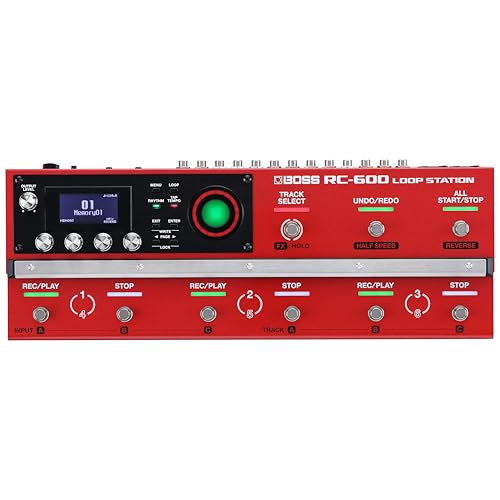
- Six simultaneous stereo tracks
- Extensive onboard effects
- Nine assignable footswitches
Best For: Advanced live performers creating complex layered arrangements
Flexible Dual-Looper Value
Valeton VLP-200 Multi-Track Sampler

- Two collaborative loopers
- 100 stereo drum rhythms
- MIDI synchronization support
Best For: Live looping, songwriting, and rhythm-backed practice
Compact Stereo Classic
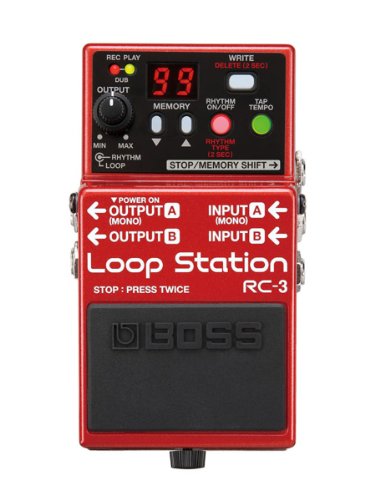
- Up to three hours of stereo recording
- 99 onboard loop memories
- USB WAV import and export
Best For: Players wanting simple, spacious stereo looping
Creative Polyphonic Texture

- Up to three minutes of looping
- Unlimited overdubs
- Reverse and variable-speed playback
Best For: Expressive layered performances and experimental loop textures
Premium Choice
Aeros Loop Studio Gold Edition
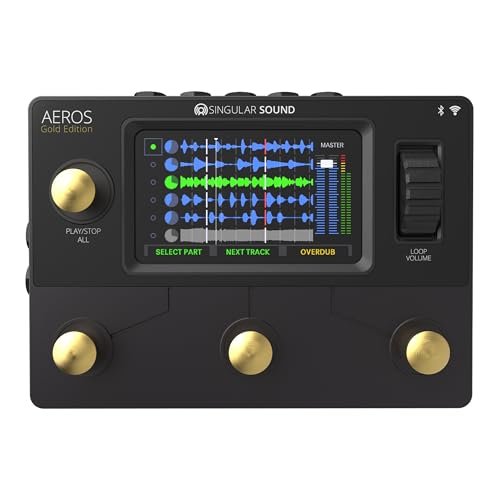
- Six stereo tracks with unlimited overdubs
- Up to 10 hours per song and 48+ hours of storage
- Touchscreen mixing with MIDI, USB, Wi-Fi, and Bluetooth
Best For: Detailed live arrangements and multi-instrumental performances
Tabletop Performance Pick

- Two simultaneous stereo phrase tracks
- Four input and four track effects available together
- 64 phrase memories with MIDI and USB support
Best For: Hands-on electronic, club, and beatbox performances
Compact Pedal Pick

- 10-minute recording with unlimited overdubs
- 11 play modes plus reverse, slow, and speed-up effects
- Aluminum-alloy housing with true bypass and footswitch control
Best For: Guitarists wanting simple pedalboard-based live looping
Best Rhythm-Driven Choice

- 280+ preset rhythm styles and 16 drum kits
- Two-track song-based looping
- Six hours of recording with 99 phrase memories
Best For: Solo performers combining structured loops with dynamic rhythm backing
Best Creative Effects Value

- 10-minute recording capacity
- Unlimited overdubs with undo/redo
- 11 playback modes including reverse and speed control
Best For: Guitarists adding experimental effects to live loop performances
Best Compact Drum Looper

- Six minutes of looping with unlimited overdubs
- 11 drum styles with auto tempo detection
- Headphone output for silent practice
Best For: Players needing synchronized drums and loops in a small pedal
Flagship Performance Power – BOSS RC-600 Floor-Based Loop Station
For performers who need extensive control, the BOSS RC-600 is a flagship choice among loop stations for live performances. It combines six simultaneous stereo tracks, real-time editing, class-leading processing, and a deep selection of effects for complex, layered sets.
Best For: Guitarists, singer/songwriters, multi-instrumentalists, and advanced looping musicians building complex live arrangements.
Pros:
- Six simultaneous stereo phrase tracks support detailed layered performances.
- Offers 49 Input FX and 53 Track FX types, with up to four usable in each section.
- Nine freely assignable footswitches and three pedal modes provide flexible control.
- 32-bit AD/DA and 32-bit floating-point processing support high-quality sound.
Cons:
- Its extensive controls and advanced features may require a learning period.
- The 8.2-pound floor-based design is less portable than a compact pedal.
- It requires corded electric power.
The RC-600 is best suited to performers who will actively use its multiple tracks, assignable controls, and effects. It offers substantial creative headroom for sophisticated live looping setups.
Flexible Dual-Looper Value – Valeton VLP-200 Multi-Track Sampler
The Valeton VLP-200 is a practical option among loop stations for live performances when you want two loop tracks plus built-in drum patterns. Its SERIAL and FREE modes support either parallel loop playback or smooth switching between song sections.
Best For: Performers, songwriters, and practice-focused musicians who want dual looping, rhythm accompaniment, and MIDI connectivity.
Pros:
- Two full-featured loopers can operate in SERIAL or FREE collaboration modes.
- Includes 100 stereo drum rhythms across 16 styles, including rock, pop, jazz, and metal.
- Supports manual or automatic recording and mono or stereo devices.
- MIDI IN/OUT enables synchronization with external MIDI equipment.
Cons:
- It provides two loop tracks rather than the larger track count of flagship loopers.
- The supplied notes do not specify onboard audio effects beyond looping and rhythm functions.
- Two footswitches independently control the loop tracks, offering less assignment flexibility.
With dual looping, drum accompaniment, and MIDI, the VLP-200 covers a broad range of live and songwriting needs without focusing on the larger control surface of an advanced flagship unit.
Compact Stereo Classic – BOSS RC-3 Loop Station Pedal
The BOSS RC-3 is a straightforward stereo pedal for musicians looking for dependable loop stations for live performances. It offers up to three hours of stereo recording, 99 onboard memories, USB transfer, and a rhythm guide with real drums.
Best For: Guitarists and performers who want a compact looper with substantial storage and basic rhythm accompaniment.
Pros:
- Stores up to three hours of stereo recordings.
- Provides 99 onboard memories for saving loops.
- USB 2.0 supports importing and exporting WAV audio with a computer.
- Built-in rhythm guide uses real drums.
Cons:
- Its supplied features are more focused on core looping than advanced multi-track control.
- The notes do not specify extensive onboard effects or multiple independent loop tracks.
- It uses a 9-volt, 300-milliamp power requirement and corded electric power.
The RC-3 makes sense for players who prioritize recording time, loop storage, and a familiar stompbox format over extensive performance routing or effects control.
Creative Polyphonic Texture – Walrus Audio Xero Polylooper
The Walrus Audio Xero Polylooper is a compact choice among loop stations for live performances, emphasizing layered texture and playback manipulation. It supports up to three minutes of looping, unlimited overdubs, reverse playback, and selectable half- or double-speed operation.
Best For: Performers who want compact looping with unlimited overdubbing, reverse playback, and speed-based sound design.
Pros:
- Supports up to three minutes of looping with near-infinite stacking.
- Allows unlimited overdubs for building dense layers.
- Offers 0.5x, 1x, and 2x playback speeds plus reverse playback.
- Volume and pan controls provide additional shaping of loop playback.
Cons:
- The three-minute loop limit is shorter than the recording capacity of some larger loopers.
- The supplied notes do not mention onboard rhythms, MIDI, or USB connectivity.
- Its listed feature set is centered on looping and playback manipulation rather than multi-track control.
The Xero Polylooper is a strong fit for expressive, evolving layers and experimental playback effects. Choose another model if your live setup depends on drum patterns, MIDI synchronization, or numerous independent tracks.
Premium Choice – Aeros Loop Studio Gold Edition
Aeros Loop Studio Gold Edition - 6 Track, Stereo Looper Pedal | Touch Screen and Hands Free Mixing
Check Price On AmazonFor performers who need substantial flexibility, the Aeros Loop Studio Gold Edition is one of the most capable loop stations for live performances. Its six stereo tracks, touchscreen mixer, extensive storage capacity, and MIDI, USB, Wi-Fi, and Bluetooth connectivity make it suitable for layered arrangements and performance setups that go beyond basic pedal looping.
Best For: Guitarists, vocalists, and multi-instrumentalists building detailed live arrangements.
Pros:
- Supports up to six song parts and six stereo tracks per song with unlimited overdubs.
- Offers up to 10 hours of recording per song and 48+ hours of loop storage with a 32GB SD card.
- Includes 32-bit floating-point audio and creative effects such as Reverse, Fade In/Out, and Loop Decay.
- Touchscreen mixing plus MIDI, USB, Wi-Fi, and Bluetooth connectivity provides broad control options.
Cons:
- The SD card required for the expanded storage capacity is not included.
- Its larger feature set and touchscreen workflow may be more than performers need for simple looping.
The Aeros is a strong choice when arrangement depth, storage, and connectivity matter more than pedalboard simplicity. Its two-year manufacturer warranty is an additional advantage for touring or frequent performance use.
Tabletop Performance Pick – BOSS RC-202 Loop Station
The BOSS RC-202 is a tabletop option for performers who prefer hands-on control without relying solely on footswitches. With two simultaneous stereo tracks, dedicated controls, built-in effects, and 64 phrase memories, it fits electronic, progressive, club, and beatbox-oriented uses among loop stations for live performances.
Best For: Club performers, electronic musicians, beatboxers, and creators who want fingertip control.
Pros:
- Provides two simultaneous stereo phrase tracks with dedicated controls and loop status indicators.
- Offers four input effects and four track effects at the same time for DJ- and sampler-style processing.
- Stores 64 phrase memories, each with two phrase tracks and custom playback and effects settings.
- Supports expanded control through optional footswitches, an expression pedal, and MIDI.
Cons:
- Optional footswitches or an expression pedal are needed for expanded external control.
- Its tabletop design may be less convenient than a conventional floor pedal for foot-operated performance.
The RC-202 stands out for immediate hand operation and effect-focused performance control. Choose it when phrase recall and live manipulation are more important than maximizing the number of tracks.
Compact Pedal Pick – Rowin Looper Pedal
The Rowin Looper is a compact, straightforward choice for guitarists seeking practical loop stations for live performances. It provides 10 minutes of recording, unlimited overdubs, undo/redo, and 11 play modes, while its aluminum-alloy casing and true-bypass design suit a pedalboard-oriented setup.
Best For: Electric guitarists who want affordable-style pedal operation with creative loop effects.
Pros:
- Offers 10 minutes of recording with unlimited overdubs plus undo and redo.
- Includes 11 play modes and reverse, slow, and speed-up loop manipulation.
- Uses an aluminum-alloy casing and robust footswitch for performance use.
- Compact pedal format with input and output connections is easy to integrate into a guitar rig.
Cons:
- Provides less recording capacity and track flexibility than the larger multi-track loopers in this roundup.
- The supplied dimensions vary between the sizing reminder and listed item dimensions, so buyers should verify fit before purchase.
The Rowin is best suited to players who value simple foot control and creative playback modes over extensive phrase management. Its compact pedal format makes it a practical starting point for guitar-based live looping.
Best Rhythm-Driven Choice – BOSS RC-10R Song-Based Looper
For performers who want loop stations for live performances to handle both backing rhythms and layered parts, the BOSS RC-10R combines song-based looping with dynamic drum accompaniment. Its two-track operation, extensive rhythm library, and stereo processing make it suited to structured solo sets.
Best For: Solo performers building song sections with synchronized rhythm parts.
Pros:
- Over 280 preset rhythm styles cover a wide range of genres.
- Two-track serial operation supports independent song parts.
- Offers up to six hours of recording and 99 phrase memories.
- Full MIDI I/O and expanded control support add flexibility.
Cons:
- Its broader rhythm and song features may require more setup than a basic looper.
- It uses a corded 9-volt power supply rather than battery power.
The RC-10R is a feature-rich option when rhythm accompaniment matters as much as looping. The LCD, circular status indicators, and selectable output filter help keep live operation practical with either a guitar amp or full-range system.
Best Creative Effects Value – Rowin Twin Looper Pedal
The Rowin Twin Looper is a compact choice for guitarists comparing loop stations for live performances and wanting more than straightforward overdubbing. It provides 10 minutes of recording, unlimited overdubs, reverse playback, speed adjustment, and multiple playback modes.
Best For: Guitarists who want experimental loop manipulation in a small live pedal.
Pros:
- Provides 10 minutes of recording time with unlimited overdubs.
- Undo and redo functions support quick performance changes.
- Eleven playback options include reverse and speed manipulation.
- Aluminum-alloy construction and a heavy-duty footswitch suit live use.
Cons:
- The supplied notes do not specify memory storage or MIDI connectivity.
- Its feature set is focused on guitar looping rather than built-in rhythm accompaniment.
This pedal stands out for performers who treat looping as a sound-design tool. Its reverse and speed controls can add variety to a live arrangement, while the compact enclosure keeps the setup relatively straightforward.
Best Compact Drum Looper – NUX HOOK Drum & Loop Mini
The NUX HOOK Drum & Loop is a practical mini option for loop stations for live performances, rehearsals, and silent practice. It pairs up to six minutes of looping with 11 drum styles, automatic tempo detection, unlimited overdubs, and a headphone output.
Best For: Players who want synchronized drums and looping in a compact pedal.
Pros:
- Auto tempo detection and smart tap tempo help synchronize drums and loops.
- Includes 11 drum-beat styles across different rhythms and genres.
- Supports unlimited overdubs for layered guitar or bass parts.
- Independent drum playback and a 1/8-inch phones output expand its practice uses.
Cons:
- Its six-minute recording time is shorter than the BOSS RC-10R’s stated capacity.
- USB-C is provided for firmware updates rather than described audio connectivity.
The HOOK is appealing when automatic synchronization and built-in drums are priorities but pedalboard space is limited. Its independent drum mode also lets it function as a simple rhythm machine or metronome.
How We Picked the Best Loop Stations for Live Performances
We evaluated these loopers by focusing on the features that matter most onstage: recording time, overdub behavior, track organization, footswitch layout, rhythm support, audio quality, connectivity, and portability. We also considered how easily each unit fits a specific performance style, from solo guitar and vocal looping to electronic production and full song-based arrangements.
A good live looper should be dependable under pressure. Clear controls, predictable timing, easy undo and redo functions, and accessible memory storage can matter just as much as the number of effects or presets. Models with USB, MIDI, stereo I/O, or multiple independent tracks received consideration for more advanced setups.
Quick Comparison
- For advanced solo performances: The BOSS RC-600 and Aeros Loop Studio offer extensive multitrack control and performance flexibility.
- For rhythm-focused songwriting: The BOSS RC-10R combines looping with song-based rhythms and a compact footprint.
- For beatmakers and progressive creators: The BOSS RC-202 provides tabletop control, stereo tracks, phrase memories, and USB audio/MIDI.
- For compact pedalboards: The BOSS RC-3, Rowin, NUX, and other mini looper options keep essential looping functions within reach.
- For experimental layering: The Walrus Audio Xero and Valeton VLP-200 offer creative multi-loop or multi-track workflows.
Key Buying Factors for Loop Stations for Live Performances
Track Count and Loop Control
Single-track loopers are straightforward and often ideal for guitarists who want to record a progression and add overdubs. Multitrack models allow separate parts to be started, stopped, replaced, or balanced independently, which is more useful for complete arrangements. Check whether the tracks are truly independent or simply layers within one loop.
Timing, Quantization, and Undo Functions
Reliable timing is essential when building loops in front of an audience. Quantization, auto-start, rhythm synchronization, and dedicated undo or redo controls can help prevent small mistakes from disrupting a performance. If you plan to improvise heavily, prioritize fast foot access over menus.
Rhythm and Song Features
Built-in drum patterns can provide a stronger foundation than a metronome, particularly for solo performers. Look for pattern variety, fills, tempo control, intros, endings, and the ability to keep rhythms synchronized with loops.
Connections and Stage Integration
Consider stereo inputs and outputs, microphone support, auxiliary input, headphones, USB, MIDI, and external footswitch connections. These determine whether a looper can accommodate vocals, keyboards, drum machines, DAWs, or a larger pedalboard. Silent-practice outputs are especially useful for rehearsing without an amplifier.
Memory, Power, and Durability
Check phrase storage, recording capacity, power requirements, and enclosure construction before buying. A compact pedal may be easier to transport, while a larger floor unit can provide more switches and better visibility. Make sure the controls are easy to operate with your footwear and lighting conditions.
Who Should Buy Which Loop Stations for Live Performances?
Choose a compact single-track pedal if you want simple guitar practice, basic overdubs, or an affordable entry point. These models are usually quick to learn and easy to fit on a crowded board.
Choose a rhythm-equipped looper if you perform alone and need drums or structured backing patterns to make songs feel complete. This is a practical middle ground between a basic looper and a full workstation.
Choose a multitrack floor or tabletop system if your performances involve vocals, several instruments, independent song sections, or complex arrangements. The additional cost and learning curve are justified when you need precise control over multiple parts.
Before purchasing, map out your actual stage workflow: what you will record first, which parts need separate control, and how you will stop or change loops. The best looper is the one you can operate confidently while performing.