The best loop stations for home studios make it easier to build ideas, practice consistently, and create layered performances without a full band. The right choice depends on whether you prioritize simple pedal control, drum patterns, deep production features, or broader guitar processing.
This roundup compares 10 selected loopers, grooveboxes, effects processors, controllers, and supporting studio gear. Use the guide below to match your budget and workflow with the features that matter most.
Best 10 Loop Stations for Home Studios Picks for 2026
Feature-Packed Pick

- 300 minutes of stereo recording and 100 loop slots
- 220 drum grooves across 11 styles
- Color display, USB transfer, and headphone output
Best For: Layered home-studio practice and rhythm-backed composition
Production Workstation Pick

- Four-track workflow with audio loop support
- 128-step sequencing and 64 clips
- Portable battery or USB-powered design
Best For: Loop-based production, sequencing, and portable studio work
Simple Stompbox Pick

- Straightforward record, overdub, and playback controls
- 12 minutes of stereo recording
- Clear 24-segment loop-status indicator
Best For: Beginners and players wanting uncomplicated phrase layering
Desktop Organization Pick
Headliner Adjustable Production Stand

- 55-degree angle for easier device access
- Adjustable 8.25- to 13-inch width
- Steel frame with non-slip rubber pads
Best For: Raising and organizing compatible desktop studio gear
Best Value Looper

- Nine loops and 40 minutes of total recording time
- 48 kHz/24-bit uncompressed audio with unlimited overdubs
- USB WAV transfer plus built-in tuner
Best For: Guitarists seeking generous memory and simple home-studio looping
Best Studio Organizer
Headliner Adjustable Production Stand
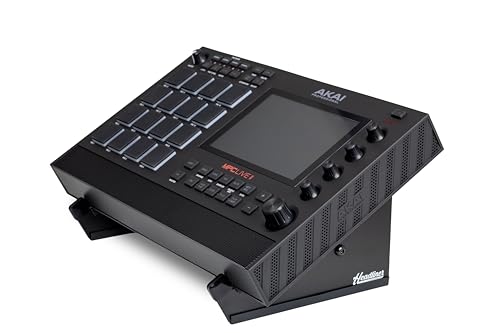
- Fits the Boss RC-505 and other larger desktop gear
- Adjustable 8.25- to 13-inch width
- Angled steel frame with non-slip rubber pads
Best For: Producers organizing larger loop stations and desktop hardware
Best for Silent Practice
NUX A/B ROLL Octave & Loop Pedal

- Six minutes of 24-bit/48 kHz looping with unlimited overdubs
- Seven IR presets plus custom IR support
- Headphone output, auto-recording, and USB-C audio
Best For: Guitarists wanting silent practice and mobile-friendly recording
DJ Performance Pick
DDJ-REV5 4-Deck Controller Bundle

- Four-deck control with Deck Move and Dual Deck features
- Vinyl-textured jog wheels with adjustable resistance
- Includes desktop monitors, stands, and RCA cable
Best For: DJs building a desktop performance setup
Jam-Session Pick

- Over 350 built-in loops plus 50 songs
- Two independent inputs for instruments or vocals
- Tempo, key-shift, and center-cancel practice tools
Best For: Home practice, lessons, and duet jam sessions
Full-Featured Looper
MOOER GE300 Multi-Effects Processor
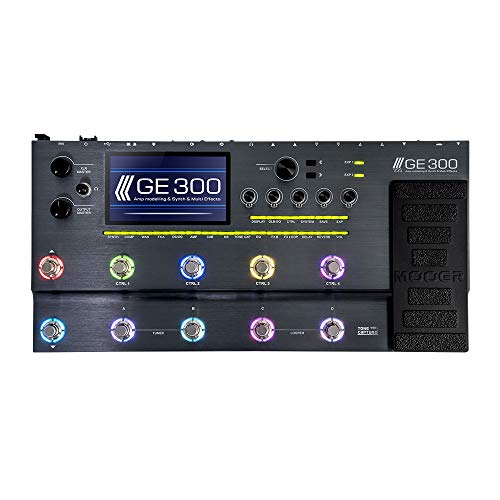
- 30-minute looper with undo, reverse, and half-time effects
- Stores and imports or exports loop-session audio files
- Adds amp models, effects, synth, and MIDI control
Best For: Guitarists creating layered studio arrangements
Feature-Packed Pick – FLAMMA FF20 Looper Pedal
For home studios needing more than basic looping, the FLAMMA FF20 combines a stereo looper, drum machine, display, and practice-friendly connections. Its 300 minutes of recording, 100 loop slots, and USB file transfer make it a flexible choice among loop stations for home studios.
Best For: Guitarists and bassists who want layered loops, built-in rhythms, and headphone practice.
Pros:
- Stores up to 300 minutes of stereo loops across 100 memory slots.
- Includes 220 drum grooves across 11 styles for standalone practice and composition.
- Color display, time stretch, auto record, USB transfer, and headphone output add useful workflow features.
Cons:
- More features may require more setup than a simple looper pedal.
- Requires a 9-volt, 300-milliamp power source for operation.
The FF20 is a strong all-in-one option when your home setup benefits from rhythm accompaniment, saved ideas, and silent monitoring rather than just straightforward phrase looping.
Production Workstation Pick – Roland MC-101 Groovebox
The Roland MC-101 is a compact groovebox for creators who want looping integrated into a broader production workflow. With four tracks, clip-based sequencing, effects, and battery or USB power, it is a versatile alternative to pedal-focused loop stations for home studios.
Best For: Producers who want audio loops, drum kits, tones, sequencing, and effects in one portable unit.
Pros:
- Provides Tone, Drum Kit, and Audio Loop track types across four tracks.
- Offers 64 clips and a 128-step sequencer for detailed arrangements.
- Includes extensive track and master effects, MIDI, USB, and expandable SD-card storage.
Cons:
- Its production-oriented interface is less immediate than a basic stompbox looper.
- It does not include a built-in keyboard for melodic input.
The MC-101 makes the most sense when looping is part of a larger arrangement process. It is especially useful for building complete patterns and performances rather than only layering live instrument phrases.
Simple Stompbox Pick – BOSS RC-1 Loop Station
The BOSS RC-1 keeps looping straightforward with record, playback, overdub, undo, and redo controls. Its stereo connectivity, 12 minutes of recording time, and clear loop indicator make it a practical entry point for loop stations for home studios.
Best For: Guitar, bass, and keyboard players who prioritize easy phrase layering over advanced production features.
Pros:
- Simple stompbox operation supports recording, overdubbing, playback, undo, and redo.
- 24-segment LED indicator shows the current loop mode.
- Offers stereo inputs and outputs plus 12 minutes of stereo recording time.
- Includes a 9-volt battery and carries a five-year BOSS warranty.
Cons:
- Its 12-minute recording capacity is much lower than larger loop stations.
- AC adaptor is optional and sold separately.
- Does not include a built-in drum machine or USB file-transfer workflow in the supplied features.
The RC-1 is best when reliability and low-friction operation matter most. Choose it for learning live looping or adding simple layers, not for extensive loop libraries or rhythm programming.
Desktop Organization Pick – Headliner Adjustable Production Stand
The Headliner adjustable stand is not a looper itself, but it can make loop stations for home studios easier to reach and organize. Its 55-degree angle and adjustable 8.25- to 13-inch width suit larger desktop synths, samplers, effects modules, and drum machines.
Best For: Home-studio users who need to raise and position a desktop looper or other production hardware.
Pros:
- 55-degree angle keeps compatible devices within arm’s reach.
- Width adjusts from 8.25 to 13 inches for different gear sizes.
- Steel construction and non-slip rubber pads help keep the stand stable.
Cons:
- It is an accessory stand, not a looping or audio-production device.
- Single-level design may not suit multi-tier workstation layouts.
- Compatibility depends on whether your equipment fits the stated width range.
Consider this stand when desk ergonomics are limiting your workflow. It can complement a desktop looper or groovebox by bringing controls closer, while its usefulness depends on your gear’s dimensions and available workspace.
Best Value Looper – LEKATO Guitar Looper Pedal
If you want practical loop stations for home studios without a complicated setup, the LEKATO offers generous memory, straightforward foot controls, and USB file transfer. Its uncompressed 48 kHz/24-bit recording and built-in tuner make it useful for guitar practice, songwriting, and compact pedalboards.
Best For: Guitarists who want extended looping time, simple operation, and easy computer-based loop management.
Pros:
- Stores up to nine loops, with up to 40 minutes of total recording time.
- Records at 48 kHz/24-bit with unlimited overdubbing and Analog-Dry-Through design.
- Includes a built-in tuner and USB import/export for WAV loop files.
- Comes with a USB cable and 9V 0.6A power adapter.
Cons:
- Its 9V corded power setup may be less convenient for highly portable rigs.
- The single-knob design provides limited direct control over playback volume.
The LEKATO is a strong choice when recording capacity and uncomplicated foot operation matter most. It is especially appealing for home-studio users who want to move loops between the pedal and a computer.
Best Studio Organizer – Headliner Adjustable Production Stand
For home studios assembling loop stations and other desktop gear, the Headliner Adjustable Steel Desktop Production Stand helps reclaim workspace and improve access. Its angled design raises compatible equipment for easier viewing, while adjustable width accommodates larger production devices.
Best For: Producers who need a stable raised platform for a Boss RC-505 or other desktop music-production hardware.
Pros:
- Fits larger devices including the Boss RC-505 Loop Station, Ableton Push, and Akai MPC models.
- Width adjusts from 8.25 to 13 inches for flexible equipment placement.
- Angled steel construction improves access to controls and visibility of screens.
- Non-slip rubber pads help keep the stand in place.
Cons:
- It is an accessory stand rather than a looping device.
- Its 2.5-pound steel construction adds dedicated weight and desk space.
This stand makes sense when your loop station is part of a crowded desktop setup. It does not add audio features, but the adjustable angle and width can make a larger home-studio workflow more organized.
Best for Silent Practice – NUX A/B ROLL Octave & Loop Pedal
The NUX A/B ROLL stands out among loop stations for home studios by combining looping with cabinet IRs, USB audio, and headphone monitoring. Its auto-recording mode can start recording as soon as you play, while the 1/8-inch headphone output supports quiet practice and songwriting.
Best For: Guitarists who want headphone-based practice, automatic recording, and flexible digital connections.
Pros:
- Offers up to six minutes of looping with unlimited overdubs at 24-bit/48 kHz quality.
- Includes seven onboard IR presets and supports custom IR loading through IR Manager software.
- USB-C supports audio streaming and OTG connections to phones or other mobile devices.
- Provides auto-recording mode and a 1/8-inch headphone output for silent practice.
Cons:
- Its six-minute maximum loop time is shorter than some extended-memory loopers.
- The additional IR and USB features may be more than users seeking a basic looper need.
The A/B ROLL is a versatile option for a compact home recording environment, particularly when silent monitoring and computer or mobile integration are priorities. Its cabinet simulation also lets you practice without a speaker cabinet.
DJ Performance Pick – DDJ-REV5 4-Deck Controller Bundle
For home studios exploring loop stations for home studios, the Pioneer DDJ-REV5 bundle is a DJ-focused option built around flexible deck control, remix performance, and monitoring. Its included DM-40D-BT speaker pair, stands, and RCA cable create a practical starting setup for desktop sessions.
Best For: DJs who want four-deck control, remix-oriented pads, and a bundled desktop monitoring setup.
Pros:
- Four-deck control with quick deck toggling, Deck Move, and Dual Deck functions.
- Vinyl-textured jog wheels offer adjustable resistance and a traditional performance feel.
- Backlit pads support mash-ups and remix control, with adjustable volume and mute functions.
- Dual USB-C connections support Serato DJ Pro and rekordbox.
Cons:
- Its feature set is centered on DJ performance rather than dedicated guitar or instrument looping.
- The bundle may be more equipment than users seeking a compact standalone looper need.
This is best viewed as a complete DJ performance bundle rather than a conventional loop pedal. Choose it if deck manipulation, scratching, remixing, and included monitoring matter more than dedicated overdub controls.
Jam-Session Pick – BOSS eBand JS-10 Audio Player
The BOSS eBand JS-10 combines an audio player, guitar effects, and built-in amplification, making it a convenient option for musicians comparing loop stations for home studios. It includes hundreds of audio loops and supports play-along practice with guitars, bass, or vocals.
Best For: Guitarists, bassists, vocalists, teachers, and duos who want guided practice and effects in one desktop unit.
Pros:
- Includes more than 350 pre-loaded audio loops and 50 new songs for jamming.
- Two inputs have individual controls and effects paths for duet sessions or lessons.
- Center cancel, tempo shifting, and key shifting support flexible play-along practice.
- Built-in 2.1-channel sound with an integrated subwoofer delivers full-range playback.
Cons:
- It is designed around backing tracks and effects rather than user-created overdub looping.
- The unit is corded and weighs 7.6 pounds, so it is less portable than a compact pedal.
The JS-10 is a strong practice and jamming station for home musicians who prefer ready-made backing material. It makes sense when play-along features and integrated sound are priorities, but users needing extensive live loop manipulation should look elsewhere.
Full-Featured Looper – MOOER GE300 Multi-Effects Processor
The MOOER GE300 is the most directly loop-oriented choice here for musicians seeking loop stations for home studios. Alongside amp modeling and effects, it provides a 30-minute looper with undo/redo, dubbing, reverse, half-time processing, storage, and audio-file import and export.
Best For: Guitarists who want a studio-capable looper integrated with amp modeling, effects, synth sounds, and MIDI control.
Pros:
- 30-minute loop station includes undo/redo, direct dubbing, reverse, and half-time effects.
- Loop sessions can be stored, backed up, and imported or exported as audio files.
- Combines 108 amp models, 164 effects, 43 factory speaker-cab IRs, and a guitar synth.
- MIDI in, out, and thru support external control of pedals and amplifiers.
Cons:
- Its extensive feature set may require more setup than a simple standalone looper.
- It requires a 9-volt DC power supply and is relatively large at 16.14 inches long.
The GE300 offers the broadest creative toolkit of the three products, especially for guitar recording and layered sound design. Its storage and audio-file workflow make it particularly suitable for developing and revisiting song ideas in a home studio.
How We Picked the Best Loop Stations for Home Studios
We focused on products that can support home-studio looping in practical ways, from dedicated pedals such as the BOSS RC-1 and LEKATO looper to more advanced production tools such as the Roland MC-101 and MOOER GE300. We also included selected accessories and complementary equipment that can improve a compact setup, including desktop stands, monitoring speakers, and a DJ controller.
Our comparison emphasizes recording time, loop storage, hands-free operation, rhythm or sequencing features, connectivity, sound quality, and ease of use. Because these products serve different roles, the best option is not necessarily the one with the longest feature list.
Quick Comparison
- Best for straightforward pedal looping: BOSS RC-1.
- Best for built-in rhythms and extended recording: FLAMMA FF20.
- Best for compact production: Roland MC-101.
- Best for affordable essential features: LEKATO looper.
- Best for advanced guitar processing: MOOER GE300.
- Best for octave and modern connectivity features: NUX A/B ROLL.
- Best for a practice-focused guitar station: Boss eBand JS-10.
- Best supporting gear: Headliner desktop stands and the Pioneer controller with monitor speakers.
Key Buying Factors for Loop Stations for Home Studios
Loop Capacity and Workflow
Check recording time, loop memory, overdub behavior, and whether tracks can be saved or recalled. A basic single-loop pedal is often ideal for practice, while songwriters and performers may need multiple slots, longer memory, or independent parts.
Rhythms, Sequencing, and Timing
Built-in drum patterns, quantization, auto-recording, and metronome controls help keep layers aligned. These features are especially useful when you are working alone and want a more complete backing arrangement.
Connections and Integration
Consider USB, auxiliary input, headphones, MIDI, audio streaming, and amplifier outputs. Headphone support is valuable for quiet practice, while USB or modern audio connectivity can simplify recording into a computer or mobile device.
Controls and Physical Layout
Footswitches are important for hands-free recording, undo, redo, and stopping. For desktop units, an angled production stand can improve visibility and access, particularly when larger grooveboxes or effects modules share limited desk space.
Sound and Expansion
Guitarists should compare effects, amp models, impulse-response support, and input flexibility. Producers may care more about sequencing, portability, onboard sounds, and pattern control than traditional pedal functions.
Who Should Buy Which Loop Stations for Home Studios?
Choose the BOSS RC-1 or LEKATO if you want a simple, affordable entry point for guitar practice and basic overdubs. Pick the FLAMMA FF20 if drum grooves, longer recording capacity, and more stored loops are priorities.
The Roland MC-101 suits producers who want a compact groovebox rather than a conventional pedal. The NUX A/B ROLL is a strong fit for players who value octave effects, preset-based flexibility, and newer audio connections. Guitarists seeking a broader all-in-one rig should consider the MOOER GE300, while the Boss eBand JS-10 is better suited to structured practice with backing audio and effects.
For a larger desktop workflow, pair a groovebox or effects unit with a Headliner stand. If your setup also includes DJ performance and monitoring, the Pioneer package offers a more expansive workstation than a dedicated looper alone. Ultimately, select the device that matches how you create: quick pedal-based layers, rhythm-driven songwriting, or a more complete production environment.