The right looper can help church musicians build layered worship arrangements, support spontaneous moments, and add depth without requiring a large band. The best choice depends on your instrument, team size, playing style, and comfort with hands-free control.
We selected 10 loop stations ranging from compact one-button pedals to full-featured multi-track systems, so you can find an option that fits rehearsals, services, songwriting, and live performance.
Best 10 Loop Stations for Church Musicians Picks for 2026
Compact Digital Control

- 32-bit audio processing with 13 hours of stereo recording
- 99 phrase memories plus rhythms and drum kits
- Compact design with MIDI, USB, and external control
Best For: Compact pedalboard setups and instrumental church musicians
Vocal Simplicity

- Automatic microphone gain control
- Five-minute loops with unlimited overdubs
- Two-button operation and noiseless loop clearing
Best For: Vocalists and acoustic performers needing simple live looping
Dual-Track Performance

- Dual-track looping with onboard mixing
- 57 rhythms, 16 drum kits, and Loop FX
- USB WAV management, MIDI, and 99 phrase memories
Best For: Layered worship arrangements and advanced live control
Multi-Part Loop Studio
Aeros Loop Studio Gold Edition
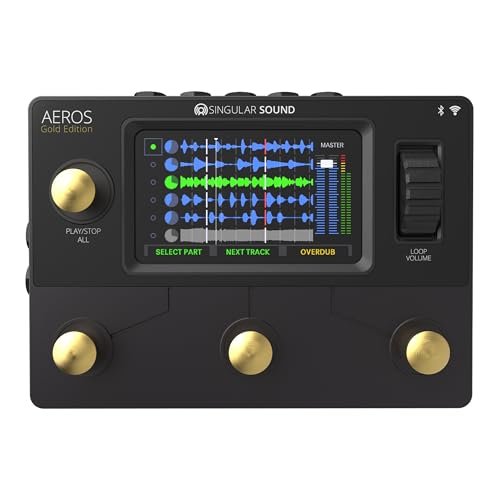
- Six song parts and six stereo tracks per song
- Up to 10 hours per song with extensive storage
- Touchscreen mixing plus MIDI, USB, Wi-Fi, and Bluetooth
Best For: Complex worship arrangements and multi-instrument live looping
Flagship Creative Control
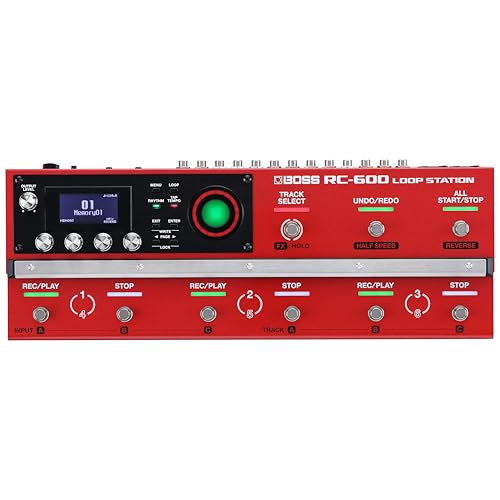
- Six stereo tracks for layered live arrangements
- Extensive Input FX and Track FX selection
- Nine assignable footswitches with flexible control
Best For: Advanced worship looping and multi-instrumental performances
Three-Track Worship Workhorse

- Three stereo tracks with dedicated controls
- Up to three hours of internal recording
- 99 onboard memories and expression pedal control
Best For: Structured worship sets using three loop layers
Compact Six-Track Connectivity
- Six stereo phrase tracks for layered looping
- Two XLR mic inputs with phantom power
- Stereo instrument and line input pairs
Best For: Worship rigs combining vocals and multiple instruments
Best for Full Worship Setups
BOSS RC-505 Mk2 Tabletop Looper

- Five stereo tracks for layered arrangements
- Two XLR inputs with phantom power
- Rhythm generator and stereo line inputs
Best For: Worship leaders and multi-instrumentalists needing extensive tabletop control
Best Simple Pedal

- Straightforward recording and overdubbing
- 12 minutes of stereo recording
- Battery included with optional AC power
Best For: Musicians wanting an easy pedal for single-loop worship parts
Best for Two-Part Layering

- Two synchronized stereo tracks
- Dedicated faders and track selection
- Three hours of storage with 99 memories
Best For: Live performers managing two separate synchronized loop parts
Compact Digital Control – BOSS RC-5 Loop Station
For church musicians seeking compact loop stations for church musicians, the BOSS RC-5 combines high-quality audio processing, stereo recording, built-in rhythms, and flexible control in a pedalboard-friendly design. Its 13-hour recording capacity and 99 phrase memories suit services, rehearsals, and songwriting.
Best For: Guitarists and instrumentalists who want a compact looper with rhythms, memory storage, and MIDI or USB integration.
Pros:
- 32-bit AD/DA conversion and 32-bit floating-point processing support detailed loop playback.
- Offers 13 hours of stereo recording and 99 phrase memories.
- Includes 57 rhythms with A/B variations and seven drum kits.
- Provides MIDI, USB, reverse, and external footswitch or expression-pedal support.
Cons:
- It is a single-track looper, so layered arrangements have less track separation than dual- or multi-track models.
- The optional PSA adapter may be needed for extended sessions instead of battery operation.
The RC-5 is a strong choice when space, sound quality, and straightforward access to saved loops matter more than extensive multi-track mixing.
Vocal Simplicity – TC Helicon DITTO MIC LOOPER
TC Helicon DITTO MIC LOOPER Easy to Use Two-Button Looper Pedal for Vocals and Acoustic Instruments
Check Price On AmazonThe TC Helicon DITTO MIC LOOPER is one of the more approachable loop stations for church musicians who want to layer vocals or acoustic instruments without a complicated interface. Automatic microphone gain control and a two-button layout keep live operation focused on singing and playing.
Best For: Vocalists and acoustic performers who prioritize easy hands-free looping and quick setup.
Pros:
- Automatic mic gain control simplifies microphone setup.
- Offers up to five minutes of loop length with unlimited overdubs.
- The stop button supports noiseless loop clearing.
- Two-button operation is easy to learn for live use.
Cons:
- It provides fewer advanced rhythm, memory, and connectivity features than the BOSS models listed here.
- The supplied notes specify corded electric power rather than battery operation.
Choose the DITTO MIC LOOPER when vocal layering and ease of use are the main priorities; it is less suited to complex, pre-planned loop arrangements.
Dual-Track Performance – BOSS RC-500 Loop Station
For church musicians who need more arrangement control, the BOSS RC-500 offers dual-track looping, onboard mixing, rhythms, effects, and extensive external control. It retains 13 hours of stereo recording and 99 phrase memories while adding tools for more dynamic live performances.
Best For: Performers building layered worship arrangements who want separate loop tracks, onboard rhythms, and deeper control options.
Pros:
- Dual-track design gives performances more organization than a basic single-track looper.
- Uses 32-bit AD/DA conversion and 32-bit floating-point processing.
- Includes 57 rhythms, 16 drum kits, and Loop FX such as repeat, scatter, shift, and vinyl flick.
- Supports MIDI, USB WAV file management, and 99 phrase memories.
Cons:
- Its larger, heavier enclosure takes more pedalboard space than the RC-5.
- The listed MIDI connection uses mini TRS jacks, and the BMIDI-5-35 adapter is available separately.
The RC-500 is a capable middle ground for worship players who want meaningful track separation and performance effects without moving to a full multi-track loop studio.
Multi-Part Loop Studio – Aeros Loop Studio Gold Edition
Aeros Loop Studio Gold Edition - 6 Track, Stereo Looper Pedal | Touch Screen and Hands Free Mixing
Check Price On AmazonThe Aeros Loop Studio Gold Edition is designed for church musicians who need substantial arrangement capacity from their loop stations for church musicians. It supports up to six song parts and six stereo tracks per song, with a touchscreen mixer, long recording times, and multiple connectivity options.
Best For: Guitarists, vocalists, and multi-instrumentalists creating detailed, multi-section live arrangements.
Pros:
- Supports six song parts and six stereo tracks per song with unlimited overdubs.
- Records up to 10 hours per song and stores more than 48 hours with a 32GB SD card.
- Offers 32-bit floating-point audio plus reverse, fade, and loop-decay effects.
- Includes touchscreen mixing, MIDI, USB, Wi-Fi, and Bluetooth connectivity.
Cons:
- The 32GB SD card required for the stated expanded storage is not included.
- Its 8.5-by-6.25-inch footprint may be less suitable for compact pedalboards.
- The supplied specifications list a Micro USB Type-B interface rather than a full-size USB connector.
The Aeros is the most arrangement-focused option here, making it compelling for musicians who need multiple song sections and stereo tracks rather than a minimal pedal-style looper.
Flagship Creative Control – BOSS RC-600
For church musicians seeking loop stations for church musicians, the BOSS RC-600 is a feature-rich floor unit designed for layered live performances. It records and edits up to six stereo loops in real time, with extensive effects and flexible foot control for complex arrangements.
Best For: Guitarists, singer-songwriters, and multi-instrumentalists building sophisticated worship loops.
Pros:
- Six simultaneous stereo phrase tracks support layered performances.
- Offers 49 Input FX and 53 Track FX types, with up to four usable in each section.
- Provides nine freely assignable footswitches and three pedal modes.
- Uses 32-bit AD/DA and 32-bit floating-point processing for high-quality sound.
Cons:
- Its large 22.88-by-9.81-inch footprint may require substantial pedalboard or floor space.
- At 8.2 pounds, it is less portable than a compact looper.
The RC-600 is a strong choice when a worship setup needs multiple independent loops, extensive effects, and hands-free customization rather than a minimal, straightforward looper.
Three-Track Worship Workhorse – BOSS RC-300
The BOSS RC-300 offers a practical format for church musicians comparing loop stations for church musicians. Its three stereo tracks have dedicated footswitches, controls, and faders, while up to three hours of internal recording and 99 memories support repeatable setlists.
Best For: Worship players who want dedicated control over three loop layers and substantial onboard recording time.
Pros:
- Three stereo tracks include dedicated footswitches and controls.
- Dedicated faders make individual track-level adjustments straightforward.
- Stores up to three hours of internal recording across 99 onboard memories.
- An expression pedal provides real-time effects control.
Cons:
- Three tracks provide less layering capacity than the six-track RC-600 models.
- The supplied notes identify a plug power source rather than battery operation.
The RC-300 remains a useful option for musicians who value hands-on track faders and dedicated controls, especially when three synchronized layers are enough for the service.
Compact Six-Track Connectivity – Boss RC-600
For church musicians evaluating loop stations for church musicians, this RC-600 configuration emphasizes flexible inputs alongside six stereo phrase tracks. Two XLR microphone inputs with phantom power and two stereo instrument/line input pairs make it suitable for combining vocals, instruments, and other sources in a live worship setup.
Best For: Worship performers who need multiple microphone and instrument connections with six-track looping.
Pros:
- Six stereo phrase tracks support complex layered performances.
- Two XLR microphone inputs include phantom power.
- Two stereo instrument/line input pairs accommodate varied sources.
- Includes 99 phrase memory presets and a rhythm guide.
Cons:
- The supplied notes do not specify the full range of onboard effects found on some RC-600 listings.
- Its approximately 2 kg weight may still be considerable for a compact mobile rig.
This version is especially appealing when input flexibility matters as much as looping capacity, giving worship musicians a practical way to connect microphones and stereo instruments.
Best for Full Worship Setups – BOSS RC-505 Mk2 Tabletop Looper
For church musicians who want hands-on control over layered vocals, instruments, and rhythms, the BOSS RC-505 Mk2 is a powerful tabletop choice among loop stations for church musicians. It provides five stereo tracks, two XLR microphone inputs with phantom power, stereo line inputs, and dedicated looping controls.
Best For: Worship leaders, vocalists, and multi-instrumentalists building layered arrangements from a tabletop setup.
Pros:
- Five stereo tracks support complex layered loops.
- Two XLR microphone inputs include phantom power.
- Includes a rhythm generator and stereo line inputs.
- Physical buttons and knobs provide direct control.
Cons:
- Tabletop operation may be less convenient for musicians who need a foot-operated pedal.
- Its broad feature set may be more than a simple looping setup requires.
The RC-505 Mk2 is the most capable option here for arranging multiple synchronized layers at the front of a worship setup. Choose it when input flexibility and extensive hands-on control matter more than pedal-style portability.
Best Simple Pedal – BOSS RC-1 Loop Station
The BOSS RC-1 is a straightforward starting point for church musicians who want reliable phrase looping without a complicated interface. Its stompbox design supports recording, playback, overdubbing, and undo or redo, with stereo connectivity and up to 12 minutes of recording time.
Best For: Guitarists, bassists, and keyboard players who need an uncomplicated pedal for adding repeated musical phrases.
Pros:
- Simple controls make recording and overdubbing approachable.
- Records up to 12 minutes in stereo.
- 24-segment LED indicator shows the current loop mode.
- Includes a 9-volt battery and retains recorded phrases after shutdown.
Cons:
- AC adaptor is optional and sold separately.
- Its single-loop design offers less track control than the RC-30 or RC-505 Mk2.
For worship musicians prioritizing ease of use, the RC-1 is the most accessible choice in this group. It is well suited to adding a repeating guitar, bass, or keyboard phrase while keeping the pedalboard simple.
Best for Two-Part Layering – BOSS RC-30 Twin Pedal
The BOSS RC-30 adds more structured layering than a basic looper while keeping a familiar twin-pedal format. It offers two synchronized stereo tracks with dedicated volume faders and track-select buttons, plus extensive phrase storage and built-in effects for processing loops.
Best For: Church musicians who want separate control over two synchronized loop parts during live performance.
Pros:
- Two synchronized stereo tracks support organized layering.
- Dedicated faders and track-select buttons improve live control.
- Stores up to three hours of stereo recording across 99 phrase memories.
- Built-in effects can process recorded loops.
Cons:
- It provides fewer tracks than the RC-505 Mk2.
- Its corded-electric power design is less flexible than a battery-powered option.
The RC-30 strikes a useful middle ground for loop stations for church musicians: more capable than the RC-1, but more pedal-oriented than the RC-505 Mk2. It is a strong fit when two separately managed parts and stored phrases are central to the performance.
How We Picked the Best Loop Stations for Church Musicians
We focused on loopers that suit real worship environments, including solo acoustic sets, vocal-led performances, band-based services, and larger stage setups. Our evaluation considered recording simplicity, overdub workflow, footswitch control, track capacity, input and output flexibility, memory for storing songs, and the ability to remain usable under live pressure.
We also included a range of price and complexity levels. A compact pedal may be ideal for a guitarist who needs occasional rhythm support, while a multi-track or tabletop unit can better serve musicians creating complete arrangements. Product names and features can vary by version, so confirm current specifications and included accessories before purchasing.
Quick Comparison
| Best For | What to Look For | Suitable Type |
|---|---|---|
| Simple guitar or vocal looping | Fast recording, overdubbing, and clear footswitch operation | Compact single- or dual-button looper |
| Solo worship leaders | Multiple tracks, saved memories, and reliable hands-free control | Advanced floor-based looper |
| Layered arrangements | Independent track control, loop parts, and flexible routing | Multi-track performance looper |
| Tabletop performance | Accessible controls, vocal inputs, and easy visual feedback | Tabletop looper |
Key Buying Factors for Loop Stations for Church Musicians
Inputs and Instrument Compatibility
Check whether the unit supports your microphone, acoustic guitar, electric guitar, keyboard, or other sources. Vocalists should look for a suitable microphone input and clean vocal processing, while guitarists may prioritize instrument-level inputs and effects compatibility.
Track Control and Loop Capacity
A basic looper is often enough for one rhythm part and a lead layer. If you build verses, choruses, ambient textures, or separate instrumental sections, choose a model with multiple tracks, independent controls, and enough memory for your set list.
Hands-Free Operation
Footswitch spacing and control layout matter during services. Look for dedicated controls for stop, undo, redo, track selection, and rhythm or effects functions. External footswitch support can be valuable when the looper itself is placed out of easy reach.
Storage, Connectivity, and Reliability
Saved memories make repeatable arrangements easier, especially for recurring services. USB, MIDI, auxiliary inputs, and stereo outputs may help integrate the looper with a worship rig, mixer, backing tracks, or other pedals. Favor straightforward controls and dependable construction over features you will not use.
Who Should Buy Which Loop Stations for Church Musicians?
Choose a Compact Looper If You Want Simplicity
Solo guitarists, occasional loop users, and musicians new to looping will usually benefit from a small pedal with an uncomplicated record-overdub-stop workflow.
Choose a Multi-Track Floor Looper for Complete Worship Arrangements
Worship leaders who build songs live or need separate sections should consider a floor-based unit with multiple tracks, deeper memory, and extensive foot control.
Choose a Tabletop Model for Vocalists and Hands-On Performance
Singers, beatboxers, and musicians who prefer direct access to controls may find a tabletop looper easier to manage than a pedalboard-based design.
Choose an Advanced System for Larger or More Technical Setups
Musicians coordinating several instruments, stereo signals, MIDI devices, or complex song structures should prioritize routing, synchronization, and expandable control. The best looper is the one your team can operate confidently during rehearsal and live worship.