Harmonic tremolo can add a lush, musical pulse that feels bigger and more dimensional than standard volume-based tremolo. It is a great choice for players who want movement, shimmer, and a touch of vintage character.
Below, we focus on the best harmonic tremolo pedals for 2026, with picks that balance tone, control, value, and practical features for real-world rigs.
Best 10 Harmonic Tremolo Pedals Picks for 2026
Compact Harmonic Tap Tremolo

- Smaller enclosure with top-mounted jacks
- Supports external tempo or expression control
- Multiple wave shapes, including Monument mode
Best For: Players who want a compact, feature-rich harmonic tremolo with performance controls.
Simple Harmonic Trem Tone

- Toggle between amp-style trem and harmonic trem
- Compact and easy to tote
- Runs on 9V DC negative center power
Best For: Guitarists who want an affordable, simple harmonic tremolo with two voicings.
Tremolo and Reverb Combo

- Three tremolo modes and three reverb modes
- Dedicated mix, intensity, and speed controls
- Includes separate tremolo and reverb footswitches
Best For: Players who want tremolo and reverb together in one practical pedal.
Switchable Amplitude and Harmonic Trem

- Switchable amplitude and harmonic modes
- Expression pedal input adds flexibility
- Analog pedal with simple knob-based control
Best For: Players who want a straightforward tremolo with both amplitude and harmonic voices.
Combo Reverb/Tremolo
Keeley Eddie Heinzelman Verb o Trem
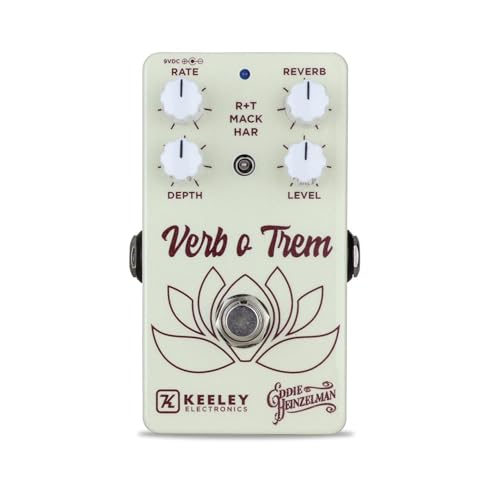
- Reverb and tremolo in one compact pedal
- Keeley spring and plate reverb sounds
- Modulated tube amp-style tremolos
Best For: Players wanting a compact end-of-chain combo pedal
Classic Tremolo
BOSS TR-2 Tremolo Guitar Pedal
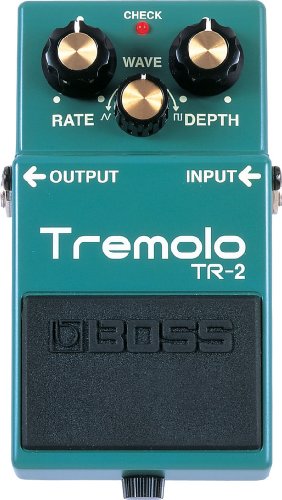
- Wave control shifts from triangle to square
- Dedicated Rate, Depth, and Wave knobs
- Vintage-style analog tremolo sounds
Best For: Players who want a dependable tremolo with simple controls
Compact Tremolo

- Compact mini pedal format
- Wave, Level, Depth, and Speed controls
- Simple tremolo-focused layout
Best For: Players needing a small, easy-to-place tremolo pedal
Classic Pulse

- Optical-style analog tremolo with a warm, natural pulse
- Speed, Bias, and Depth knobs for easy shaping
- True bypass in a compact aluminum-alloy enclosure
Best For: Guitarists and bass players who want simple, classic tremolo
All-in-One Modulation
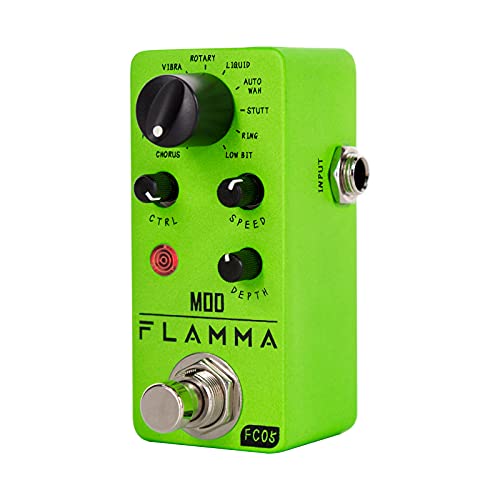
- 11 effects total, including tremolo
- Tiny full-metal pedalboard-friendly design
- Digital multi-effect unit with broad modulation coverage
Best For: Players who want tremolo plus many other modulation effects
Amp-Style Tremolo

- Optical photoelectric circuit for tube amp-style tremolo
- Simple Rate and Intensity controls
- True bypass in a rugged aluminum alloy housing
Best For: Players seeking a simple dedicated tremolo with classic amp-style warmth
Compact Harmonic Tap Tremolo – Monument V2
If you want one of the more flexible harmonic tremolo pedals, the Walrus Audio Monument V2 brings a lot of control into a smaller enclosure. It covers classic tremolo textures while adding tap tempo support, expression control, and multiple wave shapes, so it can handle everything from subtle movement to more animated modulation.
Best For: Players who want a compact, feature-rich harmonic tremolo with tap tempo and expression options.
Pros:
- Smaller enclosure with top-mounted jacks for easier board placement
- Side jack can take external tempo or expression control for rate, depth, shape, or tap multiplier
- Shape knob lets you move between sine, square, ramp, lumps, and Monument mode
- Improved tremolo response across all rates
Cons:
- More controls may be more than you need if you want a simple tremolo
- Requires 9V power and draws 100 mA
The Monument V2 is a strong pick if you want harmonic tremolo pedals with deep tweakability in a compact format. Its blend of tap, expression, and waveform choices makes it easy to tailor to different rigs and playing styles.
Simple Harmonic Trem Tone – 3 Series Harmonic Trem
The JHS Pedals 3 Series Harmonic Trem is built for players who want harmonic tremolo pedals in a straightforward, easy-to-use package. It gives you a toggle between amp-style trem and the company’s harmonic trem take, and it runs from standard 9V DC power for simple integration on most boards.
Best For: Guitarists who want an affordable, no-fuss harmonic tremolo with two usable voicings.
Pros:
- Toggle up delivers amp-style trem
- Toggle down engages JHS’s harmonic trem effect
- Compact, easy-to-tote design compared with a vintage amp
- Runs on 9V DC negative center power and draws 65 mA
Cons:
- Limited control set compared with more feature-heavy pedals
- No expression or tap-tempo features listed
This is a practical choice if you value simplicity and want to switch quickly between two classic tremolo flavors. It keeps the focus on usable tones rather than deep editing.
Tremolo and Reverb Combo – Flint V2
The Strymon Flint V2 is aimed at players who want harmonic tremolo pedals alongside reverb in one compact unit. With three tremolo modes, three reverb modes, and dedicated mix, intensity, and speed controls, it’s set up for practical tone shaping without needing separate boxes.
Best For: Players who want tremolo and reverb together with easy hands-on control.
Pros:
- Combines tremolo and reverb in one pedal
- Three tremolo modes and three reverb modes
- Dedicated mix, intensity, and speed controls
- Includes dedicated tremolo and reverb footswitches
Cons:
- Less focused on tremolo-only setups than a dedicated pedal
- USB-C and multi-effect design may be more than some players need
If you want broad ambient utility along with tremolo, the Flint V2 offers a versatile and streamlined solution. It stands out for players who like having both effects ready in one enclosure.
Switchable Amplitude and Harmonic Trem – Supro Tremolo
The Supro Tremolo is a useful option if you’re comparing harmonic tremolo pedals and want both amplitude and harmonic modes in one box. It keeps the layout simple with knob-based control, adds an expression pedal input, and runs on 9V power for easy pedalboard compatibility.
Best For: Players who want switchable amplitude and harmonic tremolo with expression control.
Pros:
- Switchable Amplitube and harmonic tremolo modes
- Expression pedal input for added control
- Analog design with standard 9V operation
- Compact pedal format with straightforward control layout
Cons:
- Fewer listed controls than more elaborate tremolo pedals
- Battery-powered spec may be less convenient than isolated board power for some rigs
The Supro Tremolo is a sensible pick when you want both classic amplitude-style motion and harmonic texture without a complicated interface. It focuses on core functionality and adds expression control for extra flexibility.
Combo Reverb/Tremolo – Keeley Eddie Heinzelman Verb o Trem
If you want one of the more practical harmonic tremolo pedals for a streamlined board, the Keeley Eddie Heinzelman Verb o Trem keeps things simple with tremolo and reverb in a single enclosure. It is built for players who like these effects near the end of the signal chain, after compression, fuzz, or overdrive, and it combines Keeley’s spring and plate reverbs with modulated tube amp-style tremolos.
Best For: Guitarists who want a compact end-of-chain reverb and tremolo solution with classic Keeley voicing.
Pros:
- Combines reverb and tremolo in one pedal for a compact board setup
- Includes Keeley spring and plate reverb sounds
- Offers modulated tube amp-style tremolos
- Designed to sit well at the end of a guitar rig
Cons:
- Requires a 9V DC center-negative power supply
- Not a dedicated tremolo-only pedal
This is a strong pick if you want a polished, all-in-one finishing pedal rather than a deeper harmonic tremolo feature set. The appeal is the straightforward layout and the fact that both effects are geared toward classic, musical sounds.
Classic Tremolo – BOSS TR-2 Tremolo Guitar Pedal
BOSS TR-2 Tremolo Guitar Pedal | Vintage tremolo effects in an easy-to-use compact pedal
Check Price On AmazonFor players comparing harmonic tremolo pedals, the BOSS TR-2 is a straightforward analog tremolo built around precise control. Its Wave knob changes the LFO shape from triangle to square, while the dedicated Rate and Depth controls make it easy to dial in vintage-style tremolo sounds.
Best For: Guitarists who want a reliable, easy-to-shape tremolo pedal with classic controls.
Pros:
- Wave control changes the LFO waveform from triangle to square
- Dedicated Wave, Rate, and Depth knobs allow precise adjustment
- Offers high-quality vintage tremolo effects
- Compact analog design
Cons:
- Limited to tremolo rather than a multi-effect design
- Requires a 9V DC power supply
The TR-2 is a solid choice if your priority is classic tremolo control in a familiar format. It focuses on core functionality rather than extra features, which makes it easy to use on a working pedalboard.
Compact Tremolo – Ibanez Tremolo Mini Pedal
The Ibanez Tremolo Mini is a compact option for players looking at harmonic tremolo pedals in a small footprint. Based on the supplied notes, it keeps the control set simple with Wave, Level, Depth, and Speed, making it a practical fit if you want tremolo basics without taking up much space.
Best For: Players who need a small tremolo pedal with straightforward controls.
Pros:
- Mini pedal format saves pedalboard space
- Includes Wave, Level, Depth, and Speed controls
- Covers core tremolo effect shaping in a simple layout
Cons:
- Supplied notes do not mention extra tone-shaping features
- Less elaborate than combo or multi-effect options
This is a sensible pick if you want a small tremolo pedal and prefer a minimal control set. It stays focused on the essentials, which can make it easier to integrate into a compact rig.
Classic Pulse – Donner Golden Tremolo Pedal
If you’re comparing harmonic tremolo pedals, the Donner Golden Tremolo is a straightforward analog option aimed at players who want a warm, natural pulse rather than a complicated effect menu. Its optical-style inspiration and simple three-knob layout make it easy to shape classic tremolo for guitar or bass.
Best For: Players who want a compact, true-bypass tremolo with classic amp-style character and simple hands-on control.
Pros:
- Inspired by classic optical tremolo for a deep, natural pulsing sound
- Speed, Bias, and Depth knobs make dialing in tones simple
- True bypass helps keep your clean tone transparent when the pedal is off
- Mini aluminum-alloy housing is pedalboard-friendly and durable
Cons:
- Power supply is not included
- Uses a basic analog tremolo format rather than multi-effect flexibility
- Only one core effect type, so it may not suit players wanting broader modulation options
The Golden Tremolo is a practical pick if you value traditional tremolo feel and a small footprint. It focuses on the essentials and should appeal to players who want a reliable, no-frills pedal with an easy learning curve.
All-in-One Modulation – FLAMMA FC05 Modulation Pedal
For shoppers browsing harmonic tremolo pedals but wanting more than one modulation sound, the FLAMMA FC05 is a compact digital multi-effect pedal with tremolo among 11 total modes. It suits players who need a small board-friendly unit that can cover a lot of modulation territory without taking up much space.
Best For: Players who want one tiny pedal that includes tremolo plus a wide range of other modulation effects.
Pros:
- Includes 11 effects, with tremolo alongside chorus, flanger, phaser, vibrato, and more
- Tiny, portable size makes it easy to fit on crowded pedalboards
- Full metal shell adds durability
- Digital signal path gives it a broad multi-effect approach
Cons:
- Power supply is not included
- Tremolo is just one mode among many, so it is not a dedicated tremolo pedal
- Uses a compact control layout, which may be less immediate than a single-purpose pedal
The FC05 makes sense if you want versatility first and tremolo second. It is best viewed as a budget-friendly modulation utility pedal rather than a specialized harmonic tremolo solution.
Amp-Style Tremolo – JOYO JF-09 Tremolo Pedal
If you’re shopping harmonic tremolo pedals for a classic, amp-like feel, the JOYO JF-09 is built around an optical photoelectric circuit designed to recreate warm tube amp tremolo. Its simple two-knob layout keeps the focus on rate and intensity, making it easy to find subtle movement or a more pronounced chop.
Best For: Players who want an affordable, true-bypass tremolo with classic tube amp-style response.
Pros:
- Optical photoelectric circuit aims for authentic tube amp tremolo character
- Rate and Intensity knobs offer easy, direct control
- True bypass helps preserve your signal when the pedal is off
- Rugged aluminum alloy housing is built for pedalboard use
Cons:
- Power supply and battery are not included
- Only two controls, so deeper shaping is limited compared with more feature-rich pedals
- Designed specifically around tremolo rather than multi-effect versatility
The JF-09 is a strong choice if you want a dedicated tremolo pedal with classic feel and low-friction operation. It keeps the feature set simple, which is helpful if you mostly want plug-and-play modulation.
How We Picked These Harmonic Tremolo Pedals
We looked for pedals that deliver convincing harmonic-style movement, useful control ranges, and dependable build quality. Priority also went to pedals that fit different budgets and board sizes, from compact utility options to feature-rich flagship models.
Because Harmonic Tremolo Pedals can vary a lot in how they split frequencies, shape depth, and preserve clean tone, we favored units with clear controls and versatile voicing rather than one-trick designs.
Quick Comparison
At a glance, the main differences come down to sound complexity, feature set, and convenience. Some of these Harmonic Tremolo Pedals are straightforward and easy to dial in, while others add tap tempo, multi-effects, reverb, or expanded waveform options for more creative use.
If you want the most traditional approach, look at simple optical or analog-style designs. If you want broader ambient textures or stage-friendly control, a pedal with tap tempo, stereo options, or built-in reverb may be the better fit.
Key Buying Factors for Harmonic Tremolo Pedals
Sound Character
Listen for how the pedal handles the split between frequencies. A good harmonic tremolo should sound smooth and musical, not choppy or overly exaggerated unless that is your goal.
Control Layout
Depth, rate, and wave shape are the core controls. Extra knobs such as bias, mix, or subdivision control can help you fine-tune the feel for clean tones, edge-of-breakup amps, or ambient parts.
True Harmonic Tremolo Vs. Standard Tremolo
Some pedals are true harmonic tremolo designs, while others are classic tremolo pedals that can still be useful but sound different. If you specifically want the frequency-splitting swirl, make sure the pedal is voiced for that effect.
Bypass, Size, and Power
Check whether the pedal uses true bypass or buffered bypass, especially if you run a long signal chain. Also make sure the enclosure size and power requirements match your board and pedal supply.
Who Should Buy Which Harmonic Tremolo Pedals?
Players chasing authentic, vintage-inspired motion should prioritize the most dedicated Harmonic Tremolo Pedals with deeper tone shaping and tap tempo if needed. Gigging guitarists may prefer a pedal with presets, tempo control, or extra features for fast switching on stage.
If you want a simple and affordable entry point, a compact tremolo can still cover classic pulsing sounds without taking up much space. For studio players and ambient builders, a more feature-rich model with broader modulation control can offer the most flexibility.
In short, the best choice depends on whether you want classic warmth, modern convenience, or maximum versatility. Choose the pedal that matches how often you use tremolo and how much control you need from it.