If you want more even bass levels, tighter note attack, and fewer volume jumps on stage, a good compressor can make a big difference. The best units help your bass sit consistently in the mix without flattening your tone.
Below, we’ve narrowed the field to 10 of the best bass compressor pedals for live sound, focusing on stage-ready control, reliable operation, and practical features for gigging players.
Best 10 Bass Compressor Pedals for Live Sound Picks for 2026
Studio-Grade Transparency
Keeley Bassist Compressor and Limiting Amplifier Pedal

- True high-fidelity compression and limiting
- Over 20 KHz bandwidth with very low noise
- Handles large signals with transparent response
Best For: Players who want clean, natural compression for live bass
Transparent Headroom

- CHT Constant Headroom Technology for clean performance
- 10 LEDs show gain reduction at a glance
- Transparent compression preserves full dynamics
Best For: Bassists who want clear, stage-friendly compression
Simple Stage Control

- Studio-style RMS compression with simple UI
- Two ratio settings for light compression or limiting
- Side pad switch suits active basses
Best For: Players wanting simple controls and flexible live adjustment
Classic Feel, Bass Ready

- Classic Dyna Comp sound retuned for bass
- Output and sensitivity controls are easy to use
- Compact mini format for pedalboards
Best For: Bassists wanting a classic compressor feel in a small footprint
Studio-Grade Control

- Intelligent circuitry adapts to your playing
- 18V input electronics provide strong headroom
- Digital design aims to reduce compressor noise
Best For: Transparent live compression with easy, stage-friendly control
Transparent Analog Detail
Empress Effects Bass Compressor
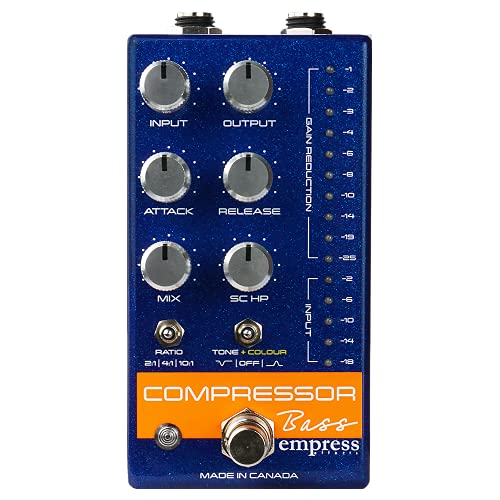
- All-analog path keeps compression transparent
- Mix, ratio, attack, and release controls offer flexibility
- Sidechain filter helps manage very low bass frequencies
Best For: Detailed, transparent compression with advanced live-rig control
Optical Precision on a Budget
JOYO SCYLLA R-27 Bass Compressor

- Optical circuit aims for smooth, musical compression
- Six controls cover attack, release, ratio, tone, input, and output
- True bypass and low-noise design support live use
Best For: Affordable optical compression with broad tone-shaping control
Studio-Grade Bass Control
Origin Effects Cali76 Bass Compressor

- FET compressor built for electric bass
- Ratio and sidechain HPF controls
- Warm, full sound profile
Best For: Players who want detailed compression control for live bass
Budget-Friendly Dual-Mode Option
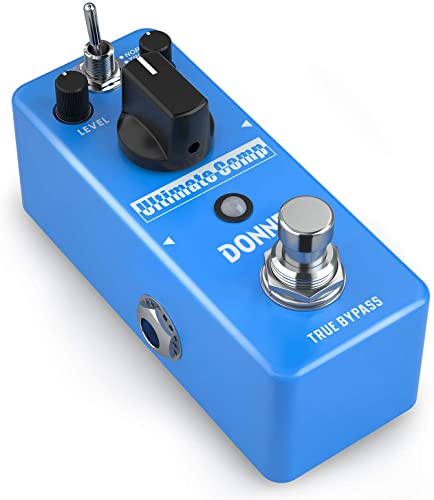
- COMP, TONE, and LEVEL controls
- NORMAL and TREBLE modes
- True bypass with warm, balanced sound
Best For: Players wanting simple, affordable compression for live bass
Bass-Ready Sustain Control
Electro-Harmonix Bass Preacher

- Bass-focused compressor/sustainer
- Works with passive and active basses
- Three attack settings plus true bypass
Best For: Bassists who want a simple, bass-specific compressor/sustainer
Studio-Grade Transparency – Keeley Bassist Compressor and Limiting Amplifier Pedal
If you want bass compressor pedals for live sound that stay as transparent as possible, the Keeley Bassist is built for exactly that job. It uses high-fidelity compression and limiting with very low noise, wide bandwidth, and a clean studio-style approach that helps your bass stay natural on stage.
Best For: Players who want subtle, high-fidelity compression and limiting without losing detail.
Pros:
- Uses the THAT Corp. 4320 and high-performance voltage controlled amplifiers for very high fidelity.
- Offers over 20 KHz bandwidth with incredibly low noise, so tone detail is preserved.
- Handles astonishingly large signals, making it a strong fit for live playing.
- Affordable studio-grade compressor in a stompbox format.
Cons:
- Natural, transparent compression may feel too subtle if you want a more colored sound.
- Details provided emphasize sound quality more than flexible control options.
Overall, the Keeley Bassist is a smart pick when the goal is clean, controlled bass compression that leaves your core tone intact. It reads like a practical limiter/compressor for players who care more about clarity than effect character.
Transparent Headroom – MXR Bass Compressor
For bass compressor pedals for live sound, the MXR Bass Compressor focuses on clear, clean performance and preserving your full dynamic range until compression actually kicks in. Its transparent design and visible gain-reduction LEDs make it easy to dial in on stage, especially when you want control without obvious coloration.
Best For: Bassists who want transparent compression with easy visual feedback in live settings.
Pros:
- CHT Constant Headroom Technology supports clear, clean performance.
- Ten gain-reduction status LEDs give immediate visual feedback.
- Transparent design lets the full dynamic range shine through before compression.
- True bypass keeps the signal path simple when the pedal is off.
Cons:
- Transparency may not suit players looking for a more characterful compressor.
- Powered from a corded electric source rather than battery use per the supplied details.
This is a straightforward choice for players who want compression that is easy to see and easy to trust on a busy stage. It balances clarity, headroom, and practical monitoring in a live rig.
Simple Stage Control – Bassman Compressor Pedal
If you need bass compressor pedals for live sound that are quick to operate, the Bassman Compressor keeps the interface simple while still offering useful fine-tuning. It combines studio-style RMS compression with two ratio settings, internal attack and release controls, and a side pad switch for active basses.
Best For: Players who want simple live controls with enough adjustment for different basses.
Pros:
- Studio-style RMS compression with a simple UI.
- Two ratio settings cover light compression or smooth limiting.
- Internal attack and release controls allow deeper tuning.
- Side-mounted pad switch helps match active basses.
Cons:
- Some key controls are internal rather than always accessible on the fly.
- Uses a 3.5mm audio jack interface instead of the more common 1/4-inch detail listed on some other pedals.
This pedal makes sense if you want a live compressor that is easy to understand but still adjustable behind the scenes. It is a practical option for bassists who value quick ratio choices and compatibility with active instruments.
Classic Feel, Bass Ready – MXR Dyna Comp Bass Compressor
The MXR Dyna Comp Bass Compressor brings the classic Dyna Comp sound into the world of bass compressor pedals for live sound while keeping the low end, dynamics, and transparency bassists need. With familiar output and sensitivity controls, it is a compact way to shape sustain and volume without leaving the bass register behind.
Best For: Bass players who want a familiar compressor feel tuned for low end.
Pros:
- Re-tuned to retain low end, dynamics, and transparency for bass.
- Familiar output and sensitivity controls make setup straightforward.
- Compact mini format is easy to fit on a pedalboard.
- Includes a 9-volt adapter in the package details.
Cons:
- More traditional control set may offer less detailed shaping than studio-style compressors.
- Classic compressor voicing may be less subtle than fully transparent designs.
This is a solid choice if you want the recognizable Dyna Comp approach but need it adapted for bass. It keeps the control scheme simple and the footprint small, which is useful for live rigs.
Studio-Grade Control – BOSS BC-1X Bass Compressor
If you want bass compressor pedals for live sound that stay natural under pressure, the BOSS BC-1X is built for that job. Its intelligent circuitry adapts to different registers and playing nuance, while the 18-volt input electronics give you plenty of headroom for clean, punchy compression without unwanted distortion.
Best For: Players who want transparent, easy-to-use compression with strong headroom for live bass rigs.
Pros:
- Intelligent circuitry adapts compression to your playing and register changes.
- 18-volt input electronics help keep the sound clean and punchy.
- Digital circuitry is designed to reduce noise common in standard compressors.
- High-resolution gain reduction indicator makes it easy to monitor compression.
Cons:
- Uses simple stompbox controls, so deep parameter tweaking is limited.
- Digital design may appeal less to players who prefer fully analog paths.
The BC-1X is a practical live-sound option if you want reliable compression that preserves bass fundamentals. It focuses on consistency, headroom, and low noise rather than complicated editing, which makes it easy to trust on stage.
Transparent Analog Detail – Empress Effects Bass Compressor
Among bass compressor pedals for live sound, the Empress Effects Bass Compressor stands out if you want lots of control without losing your original tone. Its all-analog signal path stays extremely transparent, while the mix control, ratios, attack/release knobs, and sidechain features let you shape compression very precisely for the stage.
Best For: Bassists who want highly flexible, transparent analog compression with detailed tone shaping.
Pros:
- All-analog signal path with very transparent compression.
- Three compression ratios plus attack and release controls for precise shaping.
- Mix control supports parallel compression for blending clean and compressed signal.
- Sidechain send/return and variable high-pass filter add advanced control.
Cons:
- Higher current draw than simpler pedals.
- More controls may be more than you need if you want a quick set-and-forget setup.
This is a strong choice when you need studio-style flexibility in a live rig. It gives you the tools to fine-tune dynamics, manage low-end response, and keep the bass character intact.
Optical Precision on a Budget – JOYO SCYLLA R-27 Bass Compressor
If you’re comparing bass compressor pedals for live sound and want smooth, musical control, the JOYO SCYLLA R-27 is a compelling option. Its optical compressor circuit uses an LDR for transparent compression, and the six-knob layout gives you direct control over attack, release, ratio, tone, input, and output for different playing styles.
Best For: Players who want an optical compressor with lots of control and low-noise performance.
Pros:
- Optical compressor circuit delivers smooth, musical compression.
- Attack, release, ratio, tone, input, and output controls offer wide adjustment range.
- Low-noise CMOS design is described as very quiet.
- True bypass relay design helps preserve tone when the pedal is off.
Cons:
- Requires a 9V DC adapter and does not support battery operation.
- Best results call for a regulated, isolated power supply rather than daisy-chaining.
The SCYLLA R-27 delivers a lot of control for the price, especially if you like optical compression and want to tailor your live bass response carefully. It’s a versatile, road-ready pedal that can handle clean, polished dynamics without much fuss.
Studio-Grade Bass Control – Origin Effects Cali76 Bass Compressor
If you want one of the more refined bass compressor pedals for live sound, the Origin Effects Cali76 Bass Compressor is built around a FET compressor design with ratio and sidechain HPF controls. That makes it a strong choice when you need compression that can be shaped carefully for bass without losing the warm, full character noted in the product details.
Best For: Bass players who want detailed compression control and a warm, full live tone.
Pros:
- FET compressor design for electric bass
- Ratio and sidechain HPF controls for more precise shaping
- Classic attack/release blend for dialing in feel
- Warm and full sound profile
Cons:
- Single-purpose design focused on bass compression
- Requires 9V corded power
- Higher-feature layout may take more setup time
For players who want a bass compressor pedal that can be tailored carefully for stage use, this one stands out for control and tonal refinement. It is the most specialized option here for dialing in compression that stays musical under live conditions.
Budget-Friendly Dual-Mode Option – Donner Ultimate Comp
The Donner Ultimate Comp is a practical pick among bass compressor pedals for live sound if you want simple controls and a transparent true-bypass path. Its COMP, TONE, and LEVEL knobs plus NORMAL and TREBLE modes give you enough flexibility to smooth dynamics and adjust brightness without getting complicated.
Best For: Bass players who want an affordable, easy-to-use compressor with basic tone shaping.
Pros:
- COMP, TONE, and LEVEL controls for straightforward adjustment
- NORMAL and TREBLE mode switch adds flexibility
- True bypass for transparent signal path
- Warm and balanced sound profile
Cons:
- Power adapter is not included
- Designed as a general compressor, not bass-specific
- Limited feature set compared with more advanced pedals
This is a sensible live-sound compressor if you want basic dynamic control and a compact pedal that stays easy to run. It is especially appealing when you value simplicity and low-friction setup over deep compression shaping.
Bass-Ready Sustain Control – Electro-Harmonix Bass Preacher
The Electro-Harmonix Bass Preacher is purpose-built for bass compressor pedals for live sound, with input sensitivity that supports both passive and active basses. It also offers up to 21 dB of gain reduction, a three-position attack toggle, and true bypass, making it a focused option for players who need sustain and level control on stage.
Best For: Bassists using passive or active instruments who want a bass-focused compressor/sustainer.
Pros:
- Input sensitivity suits passive and active basses
- Up to 21 dB of gain reduction
- Three attack settings: fast, medium, and slow
- True bypass and included 9V battery
Cons:
- Battery-powered only in the supplied details
- Single compression voice rather than multi-mode design
- Limited control layout compared with higher-end units
If you want a pedal that stays clearly centered on bass compression and sustain, this one is easy to understand and stage-ready. Its bass-specific input range and attack options make it especially practical for a wide range of live rigs.
How We Picked These Bass Compressor Pedals for Live Sound
We prioritized pedals that are useful in real gig environments: transparent or musical compression, easy-to-read controls, dependable bypass or routing, and enough flexibility to handle different playing styles. For Bass Compressor Pedals for Live Sound, the goal is not just smoothing peaks—it’s preserving punch, low-end authority, and note definition under pressure.
We also favored models with a strong reputation for consistent performance, since live use leaves less room for guesswork than studio tracking.
Quick Comparison
Some pedals lean toward clean, subtle leveling, while others offer more color, stronger compression, or extra tone shaping. If you want a set-it-and-forget-it live tool, look for simpler controls and clear gain-reduction behavior. If you want more precision, choose a pedal with ratio, attack, release, or blend-style options.
Key Buying Factors for Bass Compressor Pedals for Live Sound
Transparency Vs. Character
For live bass, transparent compression keeps the natural feel of your instrument intact, while more colored designs can add thickness or sustain. Pick based on whether your priority is consistency or a more shaped tone.
Attack, Release, and Ratio Control
These controls determine how quickly the pedal reacts and how strongly it clamps down. Faster attack can tame sharp peaks, while slower settings often preserve more punch. More control is helpful if you play different venues or use multiple basses.
Blend and Level Matching
A blend control can help retain low-end impact by mixing clean signal back in. Output level is just as important, since a compressor should match or slightly boost your bypass volume without causing clipping in your signal chain.
Stage Practicality
Footswitch feel, LED visibility, true bypass or buffered bypass behavior, and power requirements all matter on a dark stage. The easier it is to dial in quickly, the more useful it will be during rehearsals and gigs.
Who Should Buy Which Bass Compressor Pedals for Live Sound?
Choose a simpler compressor if you want straightforward live leveling and minimal setup. Choose a more advanced model if you need precise control over dynamics, especially for slap, fingerstyle, or multiple instruments. If you prefer warmth and musical sustain, a more characterful pedal may suit you best; if you want maximum consistency and transparency, look for a cleaner, more modern design.
In short, the best Bass Compressor Pedals for Live Sound are the ones that make your bass easier to control without taking away the feel that makes your playing stand out.