Finding the right acoustic pedal is about more than adding effects. The best options help preserve your natural tone while giving you useful control on stage or in the studio.
This roundup highlights 10 strong picks for players who want cleaner amplification, practical DI features, and better shaping for live acoustic performance.
Best 10 Acoustic Guitar Pedals with Phase Control Picks for 2026
Stage-Ready Acoustic Multi-Effects
SONICAKE Sonic Wood Preamp Chorus Delay Reverb

- Analog preamp with 2-band EQ
- Chorus, delay, and reverb included
- XLR output for direct PA or interface use
Best For: Acoustic players wanting an all-in-one live pedal
Mini EQ With Feedback Control
Fishman AFX Pro EQ Mini Acoustic Preamp and EQ

- 5-band EQ voiced for acoustic instruments
- Feedback-fighting phase control
- True bypass with buffered or mute options
Best For: Players needing a compact EQ pedal with feedback control
Simple Resonance Enhancer
TC Electronic BODYREZ Acoustic Pickup Enhancer

- Restores natural acoustic resonance
- Phase control footswitch mode for feedback suppression
- Ultra-compact one-knob design
Best For: Under-saddle pickup users who want simple tone recovery
Full-Featured Acoustic DI
L.R. Baggs Venue DI Acoustic Preamp and DI
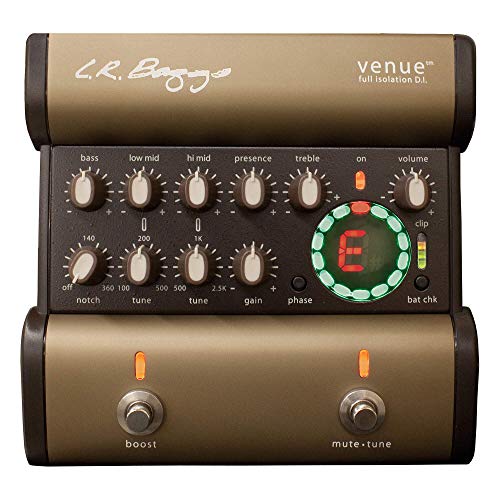
- Adjustable gain for passive and active pickups
- 5-band EQ with tunable mids
- Notch filter plus tuner and boost switch
Best For: Gigging players wanting a pro-grade acoustic DI
Acoustic Overdrive Pick
Fender Smolder Acoustic Overdrive Pedal

- Pickup Compensation control for instrument matching
- Drive, 3-band EQ, and filter controls
- Onboard cabinet simulation for added shaping
Best For: Players who want acoustic overdrive with broad tone-shaping controls
Compact DI Boost Pick
Caline CP-40 DI-Box for Acoustic Guitar
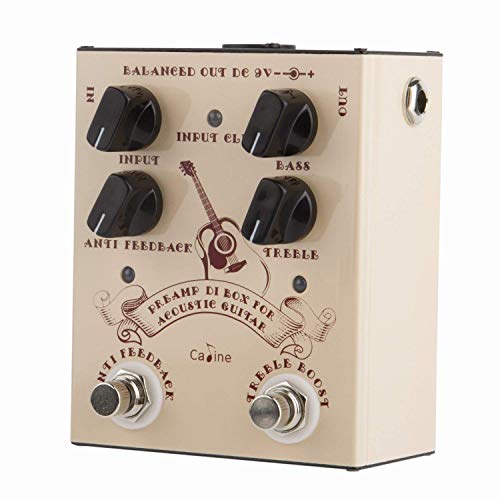
- True bypass preamp DI box design
- Anti-feedback foot switch for live use
- Higher boost in a compact footprint
Best For: Players who need a small acoustic preamp DI with boost and feedback control
Reverb Notch Pick
SONICAKE Acoustic Guitar Effects Pedal

- Analog preamp with digital reverb
- Built-in notch filter and mute controls
- XLR balanced output for stage use
Best For: Players who want acoustic preamp and reverb with feedback management
Dedicated Acoustic Simulator
BOSS AC-3 Advanced Acoustic Simulator

- Four acoustic simulation modes
- Built-in reverb for ambience
- Compact analog pedal design
Best For: Players wanting a simple acoustic-simulator pedal with reverb
Mini Acoustic Simulator
MOOER Acoustikar Acoustic Guitar Pedal

- Three modes: piezo, standard, jumbo
- Compact pedalboard-friendly size
- Simple analog knob controls
Best For: Players who want a small, no-frills acoustic simulator
Stage-Ready Acoustic Multi-Effects – SONICAKE Sonic Wood Preamp Chorus Delay Reverb
If you want acoustic guitar pedals with phase control-style feedback management in a single stage-ready box, the SONICAKE Sonic Wood is built as an all-in-one solution. It combines an analog preamp with 2-band EQ plus chorus, delay, and reverb, while the XLR output makes it easy to plug straight into a PA, mixer, or audio interface.
Best For: Players who want a compact acoustic pedalboard centerpiece with preamp, ambience effects, and direct-output convenience.
Pros:
- Analog preamp with 2-band EQ for warm, natural acoustic tone
- Built-in chorus, delay, and reverb cover common live playing needs
- XLR output is ready for direct connection to PA or recording gear
- Tap tempo and tail on/off add more precise effect control
Cons:
- Does not list a dedicated phase control feature
- Requires a 9V DC adapter
- More of a full-effects/preamp unit than a minimalist pedal
For acoustic players who want a practical live rig, this pedal stands out for blending core tone-shaping and space effects in one unit. It is especially useful when you need straightforward direct-output operation and a warm, amp-like acoustic sound.
Mini EQ With Feedback Control – Fishman AFX Pro EQ Mini Acoustic Preamp and EQ
Among acoustic guitar pedals with phase control, the Fishman AFX Pro EQ Mini focuses on simple tone shaping and feedback fighting in a very small footprint. Its 5-band EQ is voiced for acoustic instruments, and the feedback-fighting phase control gives you a practical way to deal with problem frequencies on stage.
Best For: Players who want a tiny acoustic preamp/EQ with useful feedback control and flexible bypass options.
Pros:
- 5-band EQ is specially voiced for acoustic instruments
- Phase control helps fight feedback
- True bypass with buffered bypass or mute options
- Super compact design fits almost anywhere
Cons:
- 9V external power is required and sold separately
- No built-in ambience effects like reverb or delay
- Minimal control set may be too basic for players wanting more shaping
This is a strong pick if you mainly need EQ and feedback management rather than a full effects chain. Its small size and phase control make it well suited to tight pedalboards and simple acoustic setups.
Simple Resonance Enhancer – TC Electronic BODYREZ Acoustic Pickup Enhancer
If you are comparing acoustic guitar pedals with phase control, the TC Electronic BODYREZ is a focused pickup enhancer rather than a full preamp. It is designed to restore natural acoustic resonance for under-saddle pickups, and its phase control footswitch mode helps kill low-frequency feedback when you need cleaner live sound.
Best For: Acoustic players using under-saddle pickups who want simple resonance restoration and feedback suppression.
Pros:
- Restores natural acoustic resonance for under-saddle pickups
- Phase control footswitch mode helps reduce low-frequency feedback
- Ultra-compact and easy to fit on a crowded board
- One-knob control keeps operation extremely simple
Cons:
- Only offers one main control, so it is not very flexible
- Designed more as an enhancer than a full preamp
- No EQ or ambience effects listed
This pedal makes sense when your main issue is pickup tone that feels too artificial or feedback-prone. It is a straightforward utility pedal for players who want to improve feel and resonance without adding complexity.
Full-Featured Acoustic DI – L.R. Baggs Venue DI Acoustic Preamp and DI
For players shopping acoustic guitar pedals with phase control-related feedback management, the L.R. Baggs Venue DI is a serious stage preamp and direct box. It adds adjustable gain, a 5-band EQ with tunable low-mid and high-mid bands, a notch filter for feedback control, and a tuner with mute/tune footswitch functions.
Best For: Touring and gigging acoustic players who want a full-featured preamp/DI with strong feedback tools.
Pros:
- Adjustable gain works with both passive and active pickups
- 5-band EQ with tunable mids for detailed tone shaping
- Notch filter provides effective feedback control
- Built-in chromatic tuner and boost footswitch add stage utility
Cons:
- Larger than mini pedal options
- No dedicated phase control is listed in the supplied notes
- More complex than a basic acoustic pedal
This is the most full-featured option in the group for players who need control and reliability on stage. If you want a central acoustic rig with tone shaping, feedback management, and tuning built in, it is an easy model to justify.
Acoustic Overdrive Pick – Fender Smolder Acoustic Overdrive Pedal
If you want acoustic guitar pedals with phase control-style shaping in the sense of taming harshness and adding grit, the Fender Smolder Acoustic Overdrive Pedal is built for that kind of practical tone control. It combines acoustic distortion, pickup compensation, drive, a 3-band EQ, filter controls, and onboard cabinet simulation, so you can shape an acoustic signal without relying on a lot of extra gear.
Best For: Players who want acoustic overdrive, EQ shaping, and cabinet simulation in one pedal.
Pros:
- Pickup Compensation control helps tailor the pedal to your instrument.
- Drive, 3-band EQ, and Filter controls give flexible tone shaping.
- Onboard cabinet simulation adds another layer of sound control.
- Analog signal format and 1/4-inch audio interface keep it straightforward.
Cons:
- It is focused on overdrive and filtering, not a dedicated phase effect.
- Uses 200 mA at 9V, so power planning matters.
For acoustic players looking for a more expressive pedalboard sound, this model offers the most built-in shaping tools of the group. It is a strong fit when you want controlled grit plus EQ and filtering in a single unit.
Compact DI Boost Pick – Caline CP-40 DI-Box for Acoustic Guitar
For players searching for acoustic guitar pedals with phase control-adjacent utility, the Caline CP-40 is more of a practical preamp and DI box than a special-effects pedal. Its true-bypass design, anti-feedback foot switch, and higher boost make it a useful option when you need a simple way to manage level and feedback on acoustic guitar.
Best For: Acoustic players who want a compact preamp DI box with boost and anti-feedback control.
Pros:
- True bypass design keeps the signal path simple.
- Anti-feedback foot switch adds useful live control.
- Higher boost can help bring acoustic signals forward.
- Compact build is easy to fit on a pedalboard.
Cons:
- Does not include a dedicated phase effect.
- Function set is narrower than a full multi-effect acoustic pedal.
This is a straightforward choice if your priority is utility rather than special effects. It focuses on boosting and feedback management, which makes it a practical stage tool for acoustic setups.
Reverb Notch Pick – SONICAKE Acoustic Guitar Effects Pedal
This SONICAKE acoustic guitar effects pedal is built for players who want useful stage control in one box. It pairs an analog preamp with digital reverb, plus a built-in notch filter and mute function with gain and frequency adjustment, making it a solid practical option among acoustic guitar pedals with phase control-style problem solving.
Best For: Acoustic players who want preamp, reverb, notch filtering, and XLR output in a compact pedal.
Pros:
- Analog preamp and digital reverb cover core acoustic processing.
- Built-in notch filter and mute help manage feedback issues.
- High-impedance input and XLR balanced output suit stage use.
- Buffer bypass circuit is designed to keep the sound pristine.
Cons:
- Regular 9V center-negative power supply is not included.
- No dedicated phase switch is listed in the supplied features.
As a live-ready acoustic pedal, this one stands out for combining tone shaping and output flexibility. If you want a focused effects unit that also handles feedback control, it is easy to see the appeal.
Dedicated Acoustic Simulator – BOSS AC-3 Advanced Acoustic Simulator
If you want acoustic guitar pedals with phase control-style versatility for shaping an electric guitar into an acoustic voice, the BOSS AC-3 is a practical compact option. It focuses on acoustic-guitar simulation with built-in reverb and four selectable sound models, making it easy to dial in a usable live or practice tone.
Best For: Players who want a simple acoustic-simulator pedal with multiple body-style options and onboard reverb.
Pros:
- Four simulation modes: standard, jumbo, enhanced, and piezo-equipped
- Built-in reverb for added acoustic-style ambience
- Compact pedal format with analog signal path
- Works as Boss’s advanced acoustic-guitar modeling pedal for electric guitars
Cons:
- Focused on acoustic simulation rather than a full multi-effects set
- Requires 9V power and draws 30 mA
Overall, the AC-3 is a straightforward choice if you want multiple acoustic voicings in one pedal and prefer a dedicated simulator over a more complex processor.
Feature-Rich Acoustic Processor – LEKATO Acoustic Multi Effects Pedal
For players looking for acoustic guitar pedals with phase control-style flexibility in a practice-friendly format, the LEKATO multi-effects pedal stands out for its editing, preset, and IR features. It combines chorus, tremolo, delay, and reverb with 9 amp models and 8 IR cabinets, so you can shape acoustic tones, save setups, and switch between them quickly.
Best For: Guitarists who want an all-in-one acoustic effects unit with presets, battery power, and recording support.
Pros:
- Includes chorus, tremolo, delay, and reverb effects
- 9 amp models plus 8 IR cabinet body models
- Preset, edit, and live modes for flexible workflow
- Built-in battery with 6-8 hour runtime and charging-while-playing support
Cons:
- More complex than a basic acoustic simulator pedal
- Uses third-party IR files through software workflow
- Battery and USB features may be more than some players need
This is the most feature-rich option here, especially if you want to experiment, save tones, and practice quietly with the headphone output and mobile or PC recording support.
Mini Acoustic Simulator – MOOER Acoustikar Acoustic Guitar Pedal
The MOOER Acoustikar is a compact choice for players who want acoustic guitar pedals with phase control-style tone shaping in a small simulator format. It offers three modes—piezo, standard, and jumbo—aimed at restoring a warm acoustic sound from an electric guitar while keeping the pedalboard footprint minimal.
Best For: Guitarists who want a tiny acoustic simulator with simple mode switching and a warm, natural sound.
Pros:
- Three acoustic modes: piezo, standard, and jumbo
- Designed to restore acoustic guitar texture from an electric guitar
- Very compact footprint for tight pedalboards
- Analog signal format with knob controls
Cons:
- No built-in reverb or multi-effects extras
- Requires adapter or electric power source
- More focused on basic acoustic simulation than advanced processing
For players who want a straightforward acoustic simulator without extra features, the Acoustikar keeps the setup simple and the controls easy to manage.
How We Picked the Best Acoustic Guitar Pedals with Phase Control
We focused on pedals that support real-world acoustic use: clean preamp stages, useful EQ, DI output options, compact layouts, and features that help manage feedback or phase issues. For Acoustic Guitar Pedals with Phase Control, the main goal is reliable tone shaping without making the instrument sound processed.
Quick Comparison
In this group, some pedals are built as preamps and direct boxes, while others add multi-effects, simulation, or enhancement tools. If you want the most transparent signal path, look first at preamp/DI units. If you want more creative control, multi-effects and acoustic simulators may fit better. Players who mainly need simple tone correction should favor compact enhancers or EQ-focused models.
Key Buying Factors for Acoustic Guitar Pedals with Phase Control
Phase Switching and Feedback Control
Phase control is most useful when you play through pickups, especially in louder rooms. It can help reduce low-end buildup and make feedback easier to manage. Look for a pedal that gives you quick access to phase reversal or related anti-feedback tools, not just basic tone knobs.
Preamp Quality and EQ Range
A good acoustic pedal should keep transients clear and avoid harsh top end. Adjustable EQ, gain control, and input sensitivity matter because different pickups react very differently. If you use piezo systems, a pedal with smoothing or impedance-aware design can make a noticeable difference.
Outputs and Connectivity
For live use, balanced XLR out, DI functionality, and ground lift features can simplify your rig. If you record at home, look for quiet operation and direct-output flexibility. Headphone or auxiliary options can also be helpful for practice-focused setups.
Effects Vs. Straight Tone Shaping
Some players want only clean reinforcement; others need chorus, delay, reverb, or acoustic modeling. Choose the simplest pedal that covers your actual use case. More features are useful only if they do not compromise your core acoustic tone.
Who Should Buy Which Acoustic Guitar Pedals with Phase Control?
Gigging singer-songwriters usually benefit most from a preamp/DI with strong EQ and phase tools. Studio players and home recordists may prefer cleaner enhancement and simulation pedals that keep setup easy. If you want one pedal to handle multiple jobs, a multi-effects unit is a practical choice. If you mainly need dependable tone correction, a compact acoustic pedal with phase control and minimal coloration is often the smartest buy.