A wooden soprano recorder can be a rewarding step up for a student—or a first instrument for someone who prefers the feel of wood. The right choice depends on more than its appearance: fingering system, tuning, build quality, and care all matter.
These nine options include beginner kits and simple two-piece models in maple, pearwood, and hornbeam. Use the guide below to narrow the field before choosing one.
Best 9 Wooden Soprano Recorders Picks for 2026
Baroque Beginner Kit
Eastar ERS-31BM Maple Soprano Recorder

- Baroque fingering in C
- Adjustable three-piece maple body
- Chart, cleaning kit, and hard case included
Best For: Beginners needing a Baroque-fingering kit
Listing-Details Caution

- Title describes two-piece pearwood
- Specifications list plastic material
- Fingering details conflict
Best For: Buyers prepared to confirm material and fingering
German Fingering Kit
Eastar ERS-31GM Maple Soprano Recorder
- German fingering in C
- Adjustable three-piece maple body
- Chart, cleaning kit, and hard case included
Best For: Beginners following German-fingering lessons
German-Made Pearwood Pick
Hohner B9560/9522 C-Soprano Recorder

- Pearwood with natural finish
- C key with Baroque fingering
- Two-piece, German-made design
Best For: Players ages 6+ seeking a pearwood Baroque recorder
Maple Practice Pick
rayzm Wooden C Soprano Recorder

- Solid maple body
- Baroque fingering in C
- Detachable two-piece design
Best For: Learners wanting a maple recorder for regular practice
Compact Hornbeam Pick
8-Hole Wooden Soprano Recorder

- Hornbeam wood body
- Eight-hole layout
- About 32 cm long
Best For: Beginners seeking a compact recorder for practice
For Baroque Fingering
Two-Piece Wood Soprano Recorder Kit
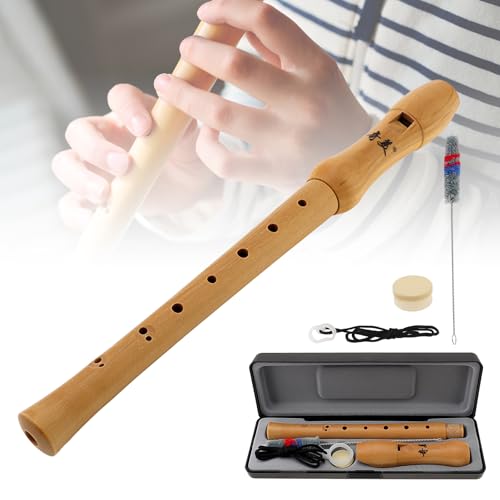
- C-key Baroque fingering
- Case, brush, and lanyard included
- Confirm conflicting wood descriptions
Best For: Players wanting Baroque fingering and a case-equipped kit
Simple Starter Pick
Wooden 8-Hole Soprano Recorder

- Beginner-oriented 8-hole design
- Listed at 2.4 ounces
- Fingering system not specified
Best For: Beginners seeking a basic wooden practice instrument
For German Fingering
rayzm Maple C-Key Soprano Recorder

- C-key German fingering
- Solid maple, two-piece body
- Finished mouthpiece and tone holes
Best For: Students using German-fingering lessons
Baroque Beginner Kit – Eastar ERS-31BM Maple Soprano Recorder
Among wooden soprano recorders for new players, the Eastar ERS-31BM offers Baroque fingering, a maple body, and a three-piece design that lets you adjust the hole position to suit your hands.
Best For: Beginners who need a Baroque-fingering recorder with practice and cleaning accessories.
Pros:
- Three-piece construction allows hole-position adjustment.
- Polished North American maple body with a warm sound profile.
- Includes a fingering chart, cleaning kit, and hard case.
Cons:
- Baroque fingering may not match a class that specifies German fingering.
- Three-piece construction means checking joint alignment after assembly.
Check your teacher’s fingering requirement first; if it calls for Baroque, this kit covers the instrument and basic upkeep supplies in one purchase.
Listing-Details Caution – Hohner 9560 Soprano Recorder
FLAUTA DULCE SOPRANO - Hohner (9560) (Madera Peral Natural) (Barroca) (2 Piezas)
Check Price On AmazonThe Hohner 9560 listing may interest shoppers comparing wooden soprano recorders: its title describes a natural pearwood, two-piece Baroque soprano recorder in C. However, the supplied specifications also call its material plastic and identify the set and style as German.
Best For: Buyers willing to verify material and fingering before ordering this Hohner model.
Pros:
- Title identifies a two-piece soprano design.
- Listed in the key of C.
- Natural-wood color and polished finish are specified.
Cons:
- Title says pearwood, while specifications say plastic.
- Title says Baroque, while set and style fields say German.
Confirm the actual body material and fingering system with the seller before buying, especially if a class requires a specific type.
German Fingering Kit – Eastar ERS-31GM Maple Soprano Recorder
If your lessons call for German fingering, the Eastar ERS-31GM is one of the wooden soprano recorders here that explicitly meets that requirement. Its three-piece maple body lets you adjust the hole position for your hands.
Best For: Beginning players whose teacher or course specifies German fingering.
Pros:
- German-fingering soprano recorder in C.
- Three-piece design allows hole-position adjustment.
- Includes a fingering chart, cleaning kit, and hard case.
Cons:
- Not the right fingering system for a Baroque-specific class.
- Joint alignment needs checking when assembling the three pieces.
This is the more direct Eastar choice when German fingering is required; otherwise, confirm the course requirements before choosing between the two kits.
German-Made Pearwood Pick – Hohner B9560/9522 C-Soprano Recorder
Among wooden soprano recorders, this Hohner model offers a pearwood body, natural finish, and Baroque fingering. Its two-piece construction and patented mouthpiece make it worth considering for players ages 6 and older.
Best For: Players ages 6 and older seeking a German-made pearwood recorder with Baroque fingering.
Pros:
- Pearwood construction with a natural finish.
- Baroque fingering in C.
- Two-piece design with a patented mouthpiece.
Cons:
- Baroque fingering may not match a class that requires another system.
- Only the mouthpiece is listed among the included components.
Choose this one if pearwood and German manufacture matter to you; check your course’s fingering requirements before ordering.
Maple Practice Pick – rayzm Wooden C Soprano Recorder
For shoppers comparing wooden soprano recorders for regular practice, this rayzm model pairs a solid maple body with C-key Baroque fingering. Its detachable two-piece design also makes cleaning and storage more convenient.
Best For: Learners who want a maple recorder with Baroque fingering and a detachable body.
Pros:
- Solid maple construction with a warm, resonant sound profile.
- Hand-finished mouthpiece with a red cedar block.
- Two-piece design separates for cleaning and storage.
- Finely processed tone holes have smooth edges.
Cons:
- Baroque fingering needs to match your lesson materials.
- The cork connection is a part to account for when assembling the two pieces.
This is a practical match if comfortable finishing and easy access for cleaning are priorities. Confirm that Baroque fingering is the system you need.
Compact Hornbeam Pick – 8-Hole Wooden Soprano Recorder
This hornbeam option keeps things simple for buyers browsing wooden soprano recorders: it has an eight-hole layout, a smooth polished surface, and an approximately 32 cm body for carrying to lessons or practice.
Best For: Beginners and hobby players wanting a compact hornbeam recorder for everyday practice.
Pros:
- Hornbeam wood construction with a smooth, burr-free surface.
- Eight-hole layout intended for beginner-friendly fingering.
- Approximately 32 cm long and listed at 2.72 ounces.
Cons:
- The supplied details do not specify a fingering system.
- The package lists one recorder and no extra accessories.
It suits straightforward practice, but ask about the fingering system if you need to match a particular class or method book.
For Baroque Fingering – Two-Piece Wood Soprano Recorder Kit
Among wooden soprano recorders, this C-key model is worth considering if you want Baroque fingering and a maintenance kit. Its two-piece body comes with a hard case, cleaning brush, and lanyard. The listing calls it solid maple in the title but red cedar in the description, so confirm the body wood before buying.
Best For: Players seeking Baroque fingering and an included case and cleaning accessories.
Pros:
- Two-piece design separates for cleaning, storage, and tuning adjustments.
- Includes a hard case, cleaning brush, and lanyard.
- Specified for a three-octave range.
Cons:
- Conflicting maple and red cedar material descriptions need clarification.
- Baroque fingering may not match a German-fingering class or method book.
The included accessories make this a convenient package, but verify the wood specification and fingering requirements before ordering.
Simple Starter Pick – Wooden 8-Hole Soprano Recorder
If you are comparing wooden soprano recorders for early music practice, this 8-hole model offers a straightforward, beginner-oriented option. The listing describes a wooden body, clear and rich sound, and a compact 12.59-inch length.
Best For: Beginners who want a basic wooden recorder for practice or early music education.
Pros:
- Beginner-friendly design is intended to make learning approachable.
- Wooden construction is described as sturdy, with a clear, rich sound.
- Listed weight is 2.4 ounces.
Cons:
- The supplied details do not specify German or Baroque fingering.
- Only the instrument is listed as included; no case or cleaning tool is specified.
This is a simple option for getting started, but check its fingering system if you need it to match a particular class or lesson book.
For German Fingering – rayzm Maple C-Key Soprano Recorder
For students shopping wooden soprano recorders, the rayzm is a clearly identified German-fingering option in C. Its solid maple body, hand-finished mouthpiece, and two-piece construction suit everyday practice, provided German fingering matches the lessons being used.
Best For: Beginners and school learners whose materials call for German fingering.
Pros:
- Solid maple body is described as producing a warm, resonant tone.
- Hand-polished mouthpiece and smooth tone holes prioritize comfortable playing.
- Two-piece design separates for cleaning and storage.
Cons:
- German fingering will not match lessons requiring Baroque fingering.
- No case or cleaning accessories are specified in the supplied details.
This model stands out for its stated fingering system and player-focused finishing; confirm that your course uses German fingering before choosing it.
How We Picked These Wooden Soprano Recorders
We focused on C soprano models and compared the details buyers can check before ordering: stated fingering system, wood, construction, and included accessories. The selection spans Baroque- and German-fingered instruments, beginner kits, and simpler models for buyers who already own cleaning supplies. A listing alone cannot establish how consistently an individual recorder plays, so check recent buyer feedback and the seller’s return policy, especially when tuning and finish are priorities.
Quick Comparison
The clearest first split is fingering. The Eastar ERS-31BM and ERS-31GM offer Baroque and German options, respectively; rayzm also lists versions in both systems. The Hohner 9560 and B9560/9522 listings describe two-piece pearwood C sopranos, while other options list maple or hornbeam. Check the exact variant before checkout: similar-looking listings may differ in fingering, accessories, or even how the wood is described.
Key Buying Factors for Wooden Soprano Recorders
Choose the Fingering System First
Baroque, also called English fingering, is a practical choice if you plan to follow common method books or continue studying recorder. German fingering can make an early F fingering feel simpler, but it uses different fingerings for some notes. Match your teacher, class, or existing instrument rather than switching systems based on price.
Check Fit, Construction, and Accessories
A soprano is small, but comfortable thumb and finger-hole coverage still matters, particularly for children. A two-piece design may allow limited tuning adjustment at the joint and can make cleaning easier; do not assume every model offers the same adjustment. Beginner bundles can be convenient, but verify whether a case, cleaning rod, fingering chart, and care instructions are actually included.
Plan for Wooden-Instrument Care
Wood needs more attention than plastic. Warm a cold recorder gradually, play short sessions while breaking it in, and let it dry thoroughly after use. Follow the maker’s instructions on oiling—some finishes and woods require different care. Avoid leaving the instrument in a hot car or near a heater, where rapid temperature and humidity changes can cause problems.
Who Should Buy Which Wooden Soprano Recorders?
For a first recorder, choose the fingering system required by your lessons, then look for a kit with clear care guidance. For an adult beginner or a player moving from plastic, prioritize a well-documented model with a suitable return policy over extra accessories. If you already know your preferred fingering, compare the stated wood and construction, then check current listing details before buying. When in doubt, a familiar fingering system and straightforward maintenance are more useful than a particular wood species.