Wood body resonator guitars deliver a warm, woody voice with the metallic snap and projection players want for blues, slide, and roots music.
Below, we’ve narrowed the field to ten standout options for different skill levels, playing styles, and budgets.
Best 10 Wood Body Resonator Guitars Picks for 2026
Square-Neck Slide Pick
Gretsch G9210 Boxcar Mahogany Resonator

- Square-neck design for lap-style slide playing
- Mahogany body with hand-spun cone
- Resonant midrange with traditional build
Best For: slide players wanting a square-neck wood-body resonator
Electro Acoustic Starter Set
Pyle Full-Size Round Neck Resonator

- Built-in preamp with tone controls
- Includes gig bag, tuner, strap, strings, and picks
- Bright, metallic acoustic-electric resonator sound
Best For: beginners who want an all-in-one acoustic-electric resonator
Vintage Slide Choice
Recording King RR-41-VS Rattlesnake Resonator

- Mahogany body with open pedestal sound well
- Hand-spun cone and biscuit bridge
- Compact size for easier handling
Best For: slide players who want a small, classic biscuit-bridge resonator
Round-Neck Traditionalist
Gretsch G9200 Boxcar Mahogany Resonator

- Round-neck design for standard fretting
- Mahogany body with hand-spun cone
- Classic fixed-bridge resonator setup
Best For: players wanting a traditional round-neck wood-body resonator
Compact Electric Resonator
Dirty 30s Mini Bucker Resonator Guitar, Wabash Blue

- 38.5-inch compact resonator design
- Spruce top with wood body
- Mini Humbucker pickup included
Best For: Players wanting a smaller resonator with pickup-equipped versatility
Best for Everyday Use
Gretsch G9210 Boxcar Square-Neck Resonator Guitar

- Laminated mahogany body and neck
- Ampli-Sonic aluminum resonator cone
- Square-neck build for slide playing
Best For: Slide players seeking a traditional square-neck resonator
Budget Resonator Kit
Pyle Resophonic Resonator Acoustic Electric Guitar

- Complete kit with bag, tuner, strap, and picks
- Built-in preamp with 3-band EQ controls
- Spruce and mahogany plywood body
Best For: Beginners or budget buyers wanting a complete acoustic-electric resonator kit
Spider Cone Starter Pick
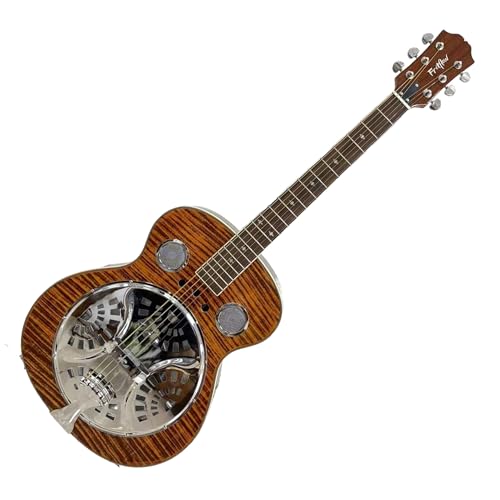
- Spider cone design for loud, rich projection
- Spruce top with sapele body and back
- Bronze strings for classic resonator tone
Best For: Beginner players wanting a traditional wood-body resonator
Electric Resonator Upgrade

- Built-in preamp with tone controls
- Sapele wood body with metallic resonator
- Designed for warm, vibrant acoustics
Best For: Acoustic-electric players needing onboard control
Sky Blue Resonator Pick

- Spider cone design for loud, rich tone
- Spruce top and sapele body
- Adjustable bridge for setup flexibility
Best For: Players wanting a colorful resonator with adjustable setup
Square-Neck Slide Pick – Gretsch G9210 Boxcar Mahogany Resonator
Gretsch G9210 Boxcar Square-neck, Mahogany Body Resonator - Natural, Padauk Fingerboard
Check Price On AmazonIf you want wood body resonator guitars with a strong, traditional slide feel, the Gretsch G9210 Boxcar is built for square-neck playing and a focused acoustic voice. Its mahogany top, sides, back, and body pair with a hand-spun cone and padauk fingerboard for a resonant midrange that suits blues and slide work.
Best For: Players who want a square-neck resonator for slide-focused acoustic performance.
Pros:
- Square-neck design is suited to lap-style slide playing.
- All-mahogany body construction supports a warm, resonant midrange.
- Hand-spun cone helps deliver classic resonator response.
- Padauk fingerboard and 25-inch scale give it a traditional feel.
Cons:
- Square-neck setup is not ideal for standard fretted guitar playing.
- Heavier build at 10 pounds may be less convenient for long sessions.
This is a straightforward choice if your priority is authentic square-neck resonance and a wood-bodied instrument with a classic acoustic character.
Electro Acoustic Starter Set – Pyle Full-Size Round Neck Resonator
For buyers comparing wood body resonator guitars that can handle both practice and plugged-in use, the Pyle Electro Resophonic stands out as a full-size round-neck option with a built-in preamp. It combines spruce and mahogany plywood construction with a metal resonator cone and dual sound holes, giving it a bright, metallic voice that works for acoustic sessions or amplified playing.
Best For: Beginners or casual players who want a versatile acoustic-electric resonator package.
Pros:
- Built-in preamp with volume, treble, mid, and bass controls.
- Complete set includes gig bag, strap, tuner, spare strings, and picks.
- Round-neck full-size design supports standard playing styles.
- Acoustic-electric layout adds flexibility for practice, rehearsal, or recording.
Cons:
- Body uses plywood construction rather than solid wood.
- Metal resonator tone is bright and metallic, which may not suit every player.
If you want an accessible resonator package with onboard electronics, this model offers a lot of value and versatility in one ready-to-play set.
Vintage Slide Choice – Recording King RR-41-VS Rattlesnake Resonator
Among wood body resonator guitars, the Recording King RR-41-VS is aimed at players who want a compact, traditional biscuit-bridge resonator with a mahogany body. Its open pedestal-style sound well, hand-spun cone, and padauk fretboard give it the kind of setup many blues and slide players look for in a small resonator package.
Best For: Players who want a compact mahogany resonator built around classic biscuit-bridge tone.
Pros:
- Mahogany body and top provide a traditional wood-bodied build.
- Open pedestal-style sound well and hand-spun cone support resonator projection.
- Biscuit bridge is a classic fit for vintage-style slide tones.
- Small body size may be easier to manage than larger resonators.
Cons:
- Small size may not appeal to players who prefer a larger body.
- Not equipped with the broader electronics found on acoustic-electric models.
This model keeps the focus on old-school resonator design and a wood body, making it a strong fit if you value classic tone and simpler construction.
Round-Neck Traditionalist – Gretsch G9200 Boxcar Mahogany Resonator
Gretsch G9200 Boxcar Round-Neck, Mahogany Body Resonator - Natural, Padauk Fingerboard
Check Price On AmazonIf you are shopping wood body resonator guitars for standard playing and traditional acoustic tone, the Gretsch G9200 Boxcar is a round-neck model built around mahogany construction and a hand-spun Eastern European cone. The fixed bridge, padauk fingerboard, and 25-inch scale keep it rooted in a classic resonator format while remaining suitable for regular fretted playing.
Best For: Players who want a round-neck resonator for standard fretting and classic acoustic response.
Pros:
- Round-neck design works for standard guitar playing.
- Mahogany body and back offer a traditional wood-body build.
- Hand-spun Eastern European cone supports authentic resonator character.
- Fixed bridge and 25-inch scale keep the setup classic and familiar.
Cons:
- At 9.5 pounds, it is not a lightweight instrument.
- Traditional design may feel specialized if you want a highly modern feature set.
For players who want a no-frills round-neck resonator with classic construction, this Boxcar keeps the focus on core acoustic performance.
Compact Electric Resonator – Dirty 30s Mini Bucker Resonator Guitar, Wabash Blue
If you want wood body resonator guitars with a smaller footprint and amplified flexibility, this Dirty 30s model is built around a spruce top, wood body, and biscuit bridge. The Mini Humbucker pickup adds electric-ready versatility, while the 38.5-inch size keeps it more compact than a full-size resonator.
Best For: Players who want a compact resonator with pickup-equipped versatility for practice, recording, or plugged-in playing.
Pros:
- Spruce top with wood body construction
- Mini Humbucker pickup for amplified use
- Biscuit bridge and hand-spun European Recording King cone
- Compact 38.5-inch instrument size
Cons:
- Smaller format may not suit players wanting a full-size resonator
- Designed for right-hand orientation only
This is a practical choice if you want the resonator sound in a manageable size with built-in pickup support. The Wabash Blue finish also gives it a distinct look without changing the basic player-focused feature set.
Best for Everyday Use – Gretsch G9210 Boxcar Square-Neck Resonator Guitar
For wood body resonator guitars with a traditional square-neck setup, the Gretsch G9210 Boxcar focuses on classic resonator construction and simple acoustic projection. Its laminated mahogany body, Ampli-Sonic resonator cone, and nickel-plated hardware make it a straightforward option for slide-style players.
Best For: Slide and square-neck players who want a traditional resonator with a mahogany build.
Pros:
- Laminated mahogany body with mahogany neck
- Ampli-Sonic Eastern European aluminum resonator cone
- Rosewood fretboard and nickel-plated hardware
- Optional gig bag available
Cons:
- Square-neck design is specialized, not a general-purpose acoustic
- Included components are listed as not included
This model stays close to the traditional resonator formula, making it a solid fit if you want a square-neck instrument built for slide playing. The mahogany construction and aluminum cone should appeal to players who value familiar resonator materials and setup.
Budget Resonator Kit – Pyle Resophonic Resonator Acoustic Electric Guitar
If you want wood body resonator guitars in a ready-to-play package, this Pyle resophonic model bundles the guitar with useful accessories and onboard preamp controls. It pairs a spruce and mahogany plywood body with a metal resonator cone and a built-in preamp for acoustic or amplified use.
Best For: Beginners or budget-minded players who want a complete resonator kit with amp-ready features.
Pros:
- Includes gig bag, strap, tuner, spare strings, and picks
- Built-in preamp with volume, treble, mid, and bass controls
- Spruce and mahogany plywood construction
- Traditional metal resonator cone for bright projection
Cons:
- Plywood construction may not appeal to players seeking premium woods
- At 39.8 inches, it is a full-size instrument
This is a practical all-in-one choice if you want an affordable resonator setup without sourcing accessories separately. The combination of acoustic-electric controls and a traditional resonator voice makes it especially flexible for practice and casual performance.
Spider Cone Starter Pick – 40-Inch Beginner Resonator
If you’re shopping wood body resonator guitars for bluegrass, blues, or country-style playing, this 40-inch model gives you a straightforward entry point with a spruce top, sapele body, and bronze strings. The spider cone resonator is designed for a loud, rich tone with focused projection, which can make it a practical choice for players who want that classic resonator voice without extra complication.
Best For: Beginner players who want a wood-body resonator with a loud, rich, traditional tone.
Pros:
- Spider cone resonator design delivers a distinctive loud and rich sound.
- Sapele body and spruce top give it a traditional wood-body build.
- Bronze strings and fixed bridge suit classic resonator-style playing.
- Built for blues, country, and bluegrass use.
Cons:
- No pickup is included.
- Beginner-focused design may not suit players wanting advanced features.
Overall, this is a practical wood body resonator guitar if your priority is classic acoustic projection and a familiar resonator tone. It keeps the feature set simple while still covering the core ingredients players expect from this style.
Electric Resonator Upgrade – Black Sapele Resonator
This resonator electric guitar combines a sapele wood build with a built-in preamplifier, so it’s aimed at players who want a resonator voice with more control for lessons, rehearsals, or performances. The metallic resonator is described as producing warm, vibrant acoustics with higher volume, making it a useful option when you want a wood body resonator guitar that can also handle amplified use.
Best For: Players who want an acoustic-electric resonator with a warm, vibrant sound and onboard controls.
Pros:
- Built-in preamplifier with volume, treble, mid, and bass controls.
- Sapele wood body and top keep the construction rooted in a wood-body design.
- Metallic resonator is designed for higher volume and classic blues resonance.
- Suitable for lessons, recitals, rehearsals, or performances.
Cons:
- Pickup configuration is listed simply as S, so feature detail is limited.
- Black finish may not appeal if you want a more traditional natural look.
For players who want a resonator with more flexibility than a purely acoustic model, this one stands out for its onboard preamp and control set. It’s a practical choice when amplified use is part of the plan.
Sky Blue Resonator Pick – Adjustable 40-Inch Model
If you want wood body resonator guitars with a slightly different look, this sky blue 40-inch model keeps the same basic resonator formula while adding an adjustable bridge. The spruce top, sapele body, and bronze strings support the familiar loud, rich resonator sound, and the spider cone design makes it a straightforward fit for blues, country, and bluegrass players.
Best For: Players who want a colorful 40-inch resonator with an adjustable bridge and classic tone.
Pros:
- Spider cone resonator design delivers loud, rich projection.
- Spruce top and sapele body provide a traditional wood-body build.
- Adjustable bridge adds extra setup flexibility.
- Bronze strings and single-resonator setup suit classic styles.
Cons:
- MIDI pickup configuration may not be what players expect in a basic beginner resonator.
- Color choice is bold if you prefer a more traditional finish.
This is a solid pick if you want the standard resonator sound but also value the adjustability of the bridge. It keeps the core materials and tone profile familiar while offering a more distinctive finish.
How We Picked These Wood Body Resonator Guitars
We focused on instruments that balance tone, playability, build quality, and value. For Wood Body Resonator Guitars, that means looking closely at body construction, neck style, resonator type, hardware reliability, and whether the guitar fits lap-style or standard fretted playing.
We also prioritized options that cover the most common buyer needs: beginner-friendly affordability, traditional round-neck models, square-neck slide setups, and a few more premium picks for players who want stronger projection or a more refined feel.
Quick Comparison
Round-neck models are the best choice if you want to play standard guitar chords and slide with flexibility. Square-neck guitars are built for lap playing and dedicated slide work, offering a different feel and setup. Compact and budget-friendly models can be great for learning or travel, while full-size wood-bodied options usually provide the fullest tone and best sustain.
Key Buying Factors for Wood Body Resonator Guitars
Body Wood and Tone
Wood Body Resonator Guitars generally sound warmer and less metallic than metal-body models. Mahogany tends to emphasize warmth and midrange, while spruce-and-sapele combinations can add brightness and projection. If you want a rounder, more traditional acoustic character, wood is often the right call.
Neck Style
Choose square-neck if you plan to play lap style or use a dedicated slide setup. Choose round-neck if you want a more versatile guitar for standard tuning, fretting, and occasional slide work. This is one of the most important decisions because it affects how the instrument is played.
Pickup and Amplification
If you gig or record, an acoustic-electric resonator can be worth the extra cost. Built-in preamps and pickups make it easier to control stage volume and shape your tone, though unplugged resonance still matters most.
Playability and Setup
Action height, neck profile, and string spacing matter a lot on resonators. Beginners should look for a setup that feels manageable out of the box, while slide players may prefer slightly higher action for cleaner note separation.
Size and Portability
Full-size models usually offer more bass response and volume, while smaller bodies can be easier to carry and more comfortable for smaller players. A compact guitar can be a smart practice or travel option, but it may not deliver the same low-end power.
Who Should Buy Which Wood Body Resonator Guitars?
If you want traditional slide or lap playing, a square-neck model is the clear choice. If you need one guitar for chords, fingerstyle, and light slide, go with a round-neck resonator. Players on a tighter budget may prefer simpler entry-level Wood Body Resonator Guitars, while gigging musicians should lean toward acoustic-electric designs with dependable electronics.
In the end, the best pick depends on how you plan to use it: warmth and portability for practice, projection for performance, or classic resonator feel for roots and blues styles.