Metal body resonator guitars deliver the loud, cutting voice that made resonators a staple for blues, folk, and slide playing. Their mix of projection, sustain, and vintage style makes them a favorite for players who want more bite than a standard acoustic.
In this roundup, we focus on models that balance tone, build quality, comfort, and value so you can find the right resonator for your playing style and budget.
Best 10 Metal Body Resonator Guitars Picks for 2026
Brass-bodied round-neck pickup
Gretsch G9201 Honey Dipper Round-Neck Metal Resonator

- Brass body with bell brass back
- Biscuit cone, midrange resonant tone
- Mahogany neck, Padauk fingerboard
Best For: players wanting a brass-body round-neck resonator for slide or traditional styles
Vintage-green all-brass model
Swamp Dog Style-0 Chicken Foot Resonator

- Bell brass body, top, and back
- Handspun cone with biscuit bridge
- Grover open gear tuners
Best For: buyers wanting a vintage-looking bell brass resonator with classic hardware
Nickel-plated tricone classic
Regal RC-51 Tricone Resophonic Guitar
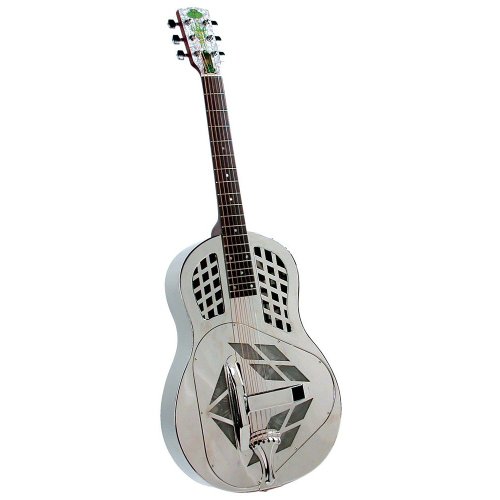
- Nickel-plated bell brass tricone body
- 12th fret neck joint, vintage style
- Maple saddle, bone nut, open-back tuners
Best For: players and collectors seeking a classic tricone resonator with vintage sustain
Weathered bronze roots model
Gretsch LTD Roots Honey Dipper Resonator Guitar

- Brass body, back, and top
- Biscuit cone with fixed bridge
- Mahogany neck and Padauk fingerboard
Best For: players wanting a weathered brass-body resonator with traditional Honey Dipper styling
Vintage Steel Tone

- Antiqued nickel-plated steel Triolian-style body
- 9.5" aluminum resonator with biscuit bridge
- Slim mahogany neck with 15:1 die-cast tuners
Best For: Vintage-style slide players seeking warm tone and strong projection
Square-Neck Midrange

- Mahogany body construction with hand-spun cone
- Square-neck design with 2-inch nut width
- Padauk fingerboard and Tune-O-Matic bridge
Best For: Lap-style players wanting a resonant midrange and square-neck feel
Blues Heritage Build

- Steel Duolian-style body with vintage finish
- 9-1/2" hand-spun cone and biscuit bridge
- Rosewood fingerboard and 15:1 sealed tuners
Best For: Blues players wanting a classic steel-body resonator with vintage style
Metal Body Classic Parlor

- Nickel-plated bell brass body
- Hand-spun 9.5" cone with biscuit bridge
- Compact parlor size and 24-1/4" scale
Best For: Players who want a small, traditional metal-body resonator
Metal Body Stage-Ready Kit

- Built-in preamp with 3-band controls
- Includes gig bag, strap, tuner, strings, and picks
- Traditional resonator cone with dual sound holes
Best For: Players who want an acoustic-electric resonator kit
Metal Body Electric Resonator

- Built-in preamp with volume, treble, mid, bass
- Full-size 6-string for lessons and performances
- Sapele body with okoume neck and purple heart fingerboard
Best For: Players who want a full-size acoustic-electric resonator
Brass-bodied round-neck pickup – Gretsch G9201 Honey Dipper Round-Neck Metal Resonator
Gretsch G9201 Honey Dipper Round-Neck Metal Resonator - Brass Body, Padauk Fingerboard
Check Price On AmazonIf you want metal body resonator guitars with a classic voice and a straightforward round-neck feel, the Gretsch G9201 Honey Dipper is built around a brass body and biscuit cone design. Its 25-inch scale, mahogany neck, and Padauk fingerboard make it a practical choice for players who want resonant midrange character in a right-handed 6-string format.
Best For: Players who want a brass-body round-neck resonator with a focused midrange tone for slide or traditional playing.
Pros:
- Brass body with bell brass back for resonant metal-body construction
- Biscuit cone design aimed at a mesmerizing midrange resonant tone
- Mahogany neck and Padauk fingerboard for a traditional feel
- 2-year warranty adds some reassurance for long-term ownership
Cons:
- Round-neck setup may not suit players seeking a dedicated square-neck slide model
- No pickup listed in the supplied details
- At 13.9 pounds, it is relatively heavy
This model makes sense if you want a metal body resonator guitar that stays close to a classic brass-bodied recipe. It focuses on core resonator traits rather than extra electronics or modern add-ons.
Vintage-green all-brass model – Swamp Dog Style-0 Chicken Foot Resonator
The Swamp Dog Resonator, Style-0 is a strong fit if you are shopping metal body resonator guitars and want a bell brass instrument with a distressed vintage look. It pairs a handspun resonator cone and biscuit bridge with a mahogany neck, giving you a right-handed 6-string setup that leans into classic resonator construction.
Best For: Players who want a bell brass resonator with a vintage finish and traditional biscuit-bridge setup.
Pros:
- Bell brass body, top, and back for a fully metal-bodied build
- Handspun resonator cone and biscuit bridge for traditional resonator response
- Grover open gear tuners for reliable tuning hardware
- 5-year warranty is the longest in this group
Cons:
- No pickup is listed in the supplied details
- Heavier than some alternatives at 11.2 pounds
- Shorter 3.5-inch body depth may not appeal to every player
This is a sensible choice for buyers who prioritize metal construction and a vintage aesthetic over added electronics. The package is centered on traditional resonator fundamentals, not modern feature expansion.
Nickel-plated tricone classic – Regal RC-51 Tricone Resophonic Guitar
Among metal body resonator guitars, the Regal RC-51 stands out for its tricone construction and nickel-plated bell brass body. The 12th fret neck joint, mahogany neck, and rosewood fretboard give it a traditional feel, while the rock maple saddle and bone nut are there to support strong projection and sustain.
Best For: Players and collectors who want a classic tricone resonator with vintage styling and strong sustain.
Pros:
- Nickel-plated bell brass body with a tricone design
- 12th fret neck joint for a classic pre-war style
- Rock maple saddle and bone nut for better transmission and sustain
- 15:1 open-back tuners for precise tuning control
Cons:
- Supplied details do not list an included accessory package
- No pickup is mentioned in the notes
- The tricone format may be more specialized than a simple biscuit-bridge resonator
This is the most heritage-focused option here, especially if you value tricone tone and a visually striking metal body. It suits players who want a resonator that emphasizes tradition, sustain, and a refined vintage presentation.
Weathered bronze roots model – Gretsch LTD Roots Honey Dipper Resonator Guitar
If you are comparing metal body resonator guitars and want a weathered finish with familiar resonator specs, the Gretsch LTD Roots Honey Dipper keeps the focus on brass-bodied construction. It uses a biscuit cone, mahogany neck, and Padauk wood fingerboard, which makes it a straightforward right-handed resonator built for classic resonant tone.
Best For: Players who want a brass-body resonator with a weathered look and traditional Honey Dipper styling.
Pros:
- Brass body, back, and top for full metal-body construction
- Biscuit cone resonator setup with a fixed bridge
- Mahogany neck and Padauk wood fingerboard
- Listed pickup configuration as resonator for resonator-focused use
Cons:
- Large body size may feel bulky for some players
- At 13.6 pounds, it is fairly heavy
- Only the included guitar is listed, with no extra accessories noted
This model is a good fit if you want the Honey Dipper formula in a weathered Bell Bronze finish. It stays close to the essentials, which should appeal to players who want a traditional resonator experience without distractions.
Vintage Steel Tone – Regal RC-43 Triolian
If you’re comparing metal body resonator guitars for classic blues feel and strong projection, the Regal RC-43 Triolian is built around an antiqued nickel-plated steel body and a spun 9.5″ aluminum resonator cone. It aims for that warm, carrying voice players want in slide and traditional styles, while keeping the neck comfortable enough for extended sessions.
Best For: Players who want a vintage-style metal body resonator with warm tone, strong sustain, and a comfortable neck for bottleneck or traditional playing.
Pros:
- Authentic steel Triolian-style body with antiqued nickel-plated finish
- Spun 9.5″ aluminum resonator and biscuit bridge for warm voice and carrying power
- Slim mahogany neck suits bottleneck and traditional playing styles
- Rock maple saddle, bone nut, and 15:1 die-cast tuners support sustain and tuning precision
Cons:
- Vintage-oriented design may not suit players looking for a modern resonator feel
- Right-hand setup only, based on the supplied specs
This is a focused choice if you want the classic steel-body resonator formula with dependable hardware and a tone described as warm and powerful. It leans into old-school character rather than versatility.
Square-Neck Midrange – Gretsch G9210 Boxcar
Gretsch G9210 Boxcar Square-neck, Mahogany Body Resonator - Natural, Padauk Fingerboard
Check Price On AmazonAmong metal body resonator guitars, the Gretsch G9210 Boxcar takes a different path with a mahogany resonator build and a hand-spun cone aimed at a resonant midrange voice. Its square-neck format and 2-inch nut width make it a more specialized option for players who want the feel associated with lap-style resonator use.
Best For: Players looking for a square-neck resonator with a resonant midrange and a mahogany build.
Pros:
- Mahogany body, top, sides, back, and neck for a consistent wood construction
- Hand-spun cone supports a resonant midrange sound profile
- Square-neck design with 2-inch nut width suits lap-style playing
- Padauk fingerboard and Tune-O-Matic bridge round out the setup
Cons:
- Square-neck format is more specialized than a standard round-neck resonator
- Sound profile is focused on resonant midrange rather than broader tonal variety
This model is a good fit if your buying priorities center on lap-style playability and a resonator voice with clear midrange presence. It is less of an all-purpose pick and more of a targeted instrument for a specific style.
Blues Heritage Build – Regal Duolian RC-1
If you’re shopping metal body resonator guitars for classic blues character, the Regal Duolian RC-1 is built around a steel body and a 9-1/2″ hand-spun cone with a biscuit bridge. Its warm, rich, resonant voice and vintage styling make it a straightforward pick for stage, studio, or jam use.
Best For: Players who want a steel-body resonator with prewar-style blues tone and vintage aesthetics.
Pros:
- Duolian-style steel body with gun-metal gray polychrome finish
- 9-1/2″ hand-spun resonator cone and biscuit bridge for classic blues sound
- Rosewood fingerboard with M.O.P. dot markers for smooth fretting
- Rock maple saddle, bone nut, and 15:1 sealed tuners for sustain and stability
Cons:
- Blues-leaning design may be less appealing if you want a more modern resonator voice
- Steel-body styling and setup are tuned toward a traditional feel rather than broad flexibility
Overall, this is the most heritage-driven option in the group, with the kind of spec choices that support classic resonator tone and dependable tuning. It should appeal to players who value vintage personality as much as sound.
Metal Body Classic Parlor – Nickel-Plated Bell Brass
If you’re shopping for metal body resonator guitars with a compact feel, this nickel-plated bell brass parlor model is built around classic resonator ingredients: a hand-spun 9.5″ cone, mahogany neck, and biscuit bridge. Its small size and 24-1/4″ scale make it a practical choice for players who want traditional resonator bite in a more manageable format.
Best For: Players who want a small, metal-body resonator with traditional brass construction and a shorter scale.
Pros:
- Nickel-plated bell brass body for a traditional resonator build.
- Hand-spun 9.5″ cone and biscuit bridge for classic resonator response.
- Mahogany neck and rosewood fretboard add familiar feel.
- Compact parlor size with a 24-1/4″ scale.
Cons:
- Small-body design may not suit players wanting a larger instrument.
- Right-hand only configuration.
This is a straightforward option for buyers who want the sound and construction of a metal-body resonator without moving to a full-size body. It focuses on traditional materials and a smaller footprint rather than extra features.
Metal Body Stage-Ready Kit – Sunburst Round Neck
For buyers comparing metal body resonator guitars that can cover practice and performance, this round-neck model stands out with a built-in preamp, onboard tone controls, and a complete accessory kit. It keeps the traditional resonator cone and dual sound holes while adding acoustic-electric flexibility for plugging into an amp, PA system, or recording setup.
Best For: Players who want a resonator kit with acoustic-electric output and included accessories.
Pros:
- Built-in preamp with volume, treble, mid, and bass controls.
- Includes gig bag, strap, tuner, spare strings, and picks.
- Traditional metal resonator cone with dual circular sound holes.
- Round-neck full-size body with 24.8″ scale length.
Cons:
- Body is listed as wood construction rather than metal body.
- Full-size 39.8″ length may feel less portable than a parlor model.
This is a practical all-in-one resonator package for players who want stage-ready connectivity and starter accessories in one box. The sunburst finish and traditional layout make it easy to fit into blues, country, folk, or slide setups.
Metal Body Electric Resonator – Black Sapele Build
If you want a resonator-style instrument with a more modern electric-acoustic setup, this black full-size model brings a built-in preamplifier, 1/4-inch output, and classic resonator character. It uses sapele construction with an okoume neck and purple heart fingerboard, giving shoppers a feature set that fits lessons, rehearsals, and performances.
Best For: Players looking for a full-size acoustic-electric resonator with onboard controls.
Pros:
- Built-in preamplifier with volume, treble, mid, and bass controls.
- Full-size 6-string design for lessons, recitals, and rehearsals.
- Sapele body with okoume neck and purple heart fingerboard.
- Fixed bridge and stainless steel strings for a straightforward setup.
Cons:
- Listed as a resonator-electric style rather than a clearly metal-body build.
- 30-day no-reason return window is shorter than some alternatives.
As a feature-forward resonator option, this model emphasizes acoustic-electric versatility over ornate traditional styling. It’s a sensible pick for players who want onboard tone shaping and a large-body format.
How We Picked the Best Metal Body Resonator Guitars
We prioritized instruments that offer strong acoustic projection, consistent build quality, and the tonal character players expect from Metal Body Resonator Guitars. We also weighed neck style, body material, finish, playability, and whether the guitar is better suited to blues fingerpicking, bottleneck slide, or lap-style playing.
Because resonators can vary widely in feel and response, we looked for clear options across beginner-friendly, intermediate, and more specialized designs.
Quick Comparison
Think of the list in terms of use case: round-neck models are the most versatile for standard fretted playing, square-neck models are usually aimed at lap steel and open tunings, and tricone designs tend to emphasize smoother sustain and complex overtones. Single-cone metal-body guitars often deliver a drier, punchier attack with strong midrange presence.
Key Buying Factors for Metal Body Resonator Guitars
Body Material
Brass, steel, and bell bronze each influence tone and feel differently. Brass often sounds warm and balanced, steel can be brighter and more cutting, and bronze tends to add depth and complexity. If you want a traditional delta-blues edge, a steel or brass body is a strong place to start.
Resonator Design
Single-cone guitars are common and generally deliver a direct, focused sound. Tricone models usually cost more, but they can provide richer sustain and a more refined response. Your choice should match the style you play most often.
Neck Style and Playability
Round-neck guitars work for standard playing and slide, while square-neck models are designed for lap-style technique. Neck profile, action, and fret access matter a lot, especially if you plan to alternate between fretted chords and slide work.
Electronics and Setup
If you play live, built-in electronics can be useful, but acoustic resonance should still be the priority. A good setup is especially important on resonators, since bridge height and string tension affect both comfort and tone.
Who Should Buy Which Metal Body Resonator Guitars?
If you want a flexible all-rounder, choose a round-neck model with a single-cone design. If your focus is traditional slide or lap steel, a square-neck resonator is the better fit. Players chasing premium sustain and a more polished voice should consider a tricone, while budget-minded buyers may prefer a simpler metal-body model that still captures the essential resonator sound.
For most shoppers, the best choice comes down to how you plan to play: standard fretted work, dedicated slide, or a mix of both. Once that’s clear, Metal Body Resonator Guitars become much easier to compare.