As a techno producer, you know that the right synthesizer can make all the difference in your sound. With 2026 bringing a fresh wave of innovative options, it’s essential to stay ahead of the curve. From versatile workhorses to compact powerhouses, these synths cater to every style and skill level. Let’s explore the top choices that can elevate your production game and redefine your live performances. What features should you prioritize?
Yamaha 61-Key Music Synthesizer (MODX M6)

If you’re a synthesist looking to elevate your techno production, the Yamaha 61-Key Music Synthesizer (MODX M6) is a standout choice. Its lightweight design makes it perfect for both stage and studio settings. With three powerful sound engines, you can recreate classic analog sounds, modern FM synths, and realistic instruments effortlessly. The intuitive performance controls, including 8 physical faders and the Super Knob, allow you to express your creativity in real-time. Plus, the upgraded navigation and color touch screen streamline your workflow, while the semi-weighted keys guarantee responsive playability. Integrate it seamlessly into your DAW for ultimate sound manipulation.
Best For: The Yamaha 61-Key Music Synthesizer (MODX M6) is best for synthesists seeking a versatile and lightweight instrument for both live performances and studio production.
Pros:
- Exceptional sound quality with three powerful engines for diverse sound creation.
- Intuitive performance controls, including 8 physical faders and Super Knob, enhance real-time expression.
- Upgraded user interface with a color touch screen simplifies sound editing and navigation.
Cons:
- Semi-weighted keys may not appeal to pianists who prefer fully-weighted options.
- Some users may find the learning curve steep for advanced features.
- Limited onboard sounds compared to some competitors might require additional sound libraries for full versatility.
Akai Professional MPC Key 37 Standalone Synthesizer and Drum Machine

The Akai Professional MPC Key 37 stands out as an ideal choice for producers looking to create techno music without the need for a computer. This standalone synthesizer and drum machine features a 37-note synth-action keybed with aftertouch, allowing for expressive performances. With its powerful multi-core processor, you can support 128 audio tracks and nearly unlimited plugins. Enhanced features like the intuitive MPC3 interface and built-in USB audio interface make your workflow seamless. Plus, enjoy wireless updates and access to Splice libraries, ensuring you always have fresh sounds at your fingertips. Get ready to elevate your sound game!
Best For: Producers seeking a versatile standalone synthesizer and drum machine for creating techno music without relying on a computer.
Pros:
- Intuitive operation with the MPC3 interface enhances workflow and creativity.
- Versatile connectivity options including MIDI, audio inputs, and USB ports allow for seamless integration with other equipment.
- Access to Splice libraries and wireless updates provide a constantly evolving sound palette.
Cons:
- Limited storage with only 22GB available for user content may require external storage solutions.
- Learning curve for beginners unfamiliar with standalone production devices and the MPC workflow.
- Price point may be higher compared to entry-level synthesizers and drum machines.
Akai Professional MPC Live III Portable Music Production Center
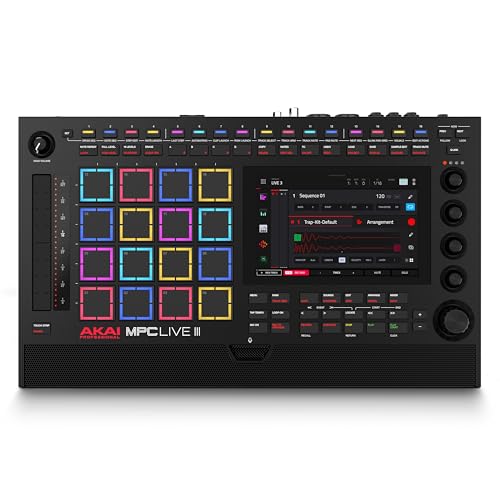
For techno producers seeking a powerful and portable solution, the Akai Professional MPC Live III stands out with its fully standalone capabilities. You’ll love the 8-core processor and 8GB RAM, making your workflow ultra-fast and your sound design professional-grade. The expressive MPCe Pads deliver dynamic articulations, while the 16-step sequencer allows for real-time control and clip looping. With 128GB of internal storage and expandable options, you’ll easily manage large sample libraries. Plus, connectivity options like USB-C and MIDI I/O guarantee seamless integration with your favorite gear, making this MPC an essential tool for versatile music production.
Best For: Techno producers and musicians seeking a powerful, portable, and fully standalone music production solution.
Pros:
- Ultra-fast workflow with 8-core processor and 8GB RAM, enhancing sound design capabilities.
- Expressive MPCe Pads that provide dynamic articulations for creative performances.
- Versatile connectivity options including USB-C and MIDI I/O, allowing seamless integration with various equipment.
Cons:
- Higher price point compared to entry-level music production tools may be a barrier for beginners.
- Learning curve associated with the advanced features and functionalities for new users.
- Limited built-in effects may require additional purchases or plugins for some producers.
Arturia KeyLab Essential mk3 49 Key MIDI Keyboard Controller

Designed with creativity in mind, the Arturia KeyLab Essential mk3 49 Key MIDI Keyboard Controller is perfect for both aspiring producers and seasoned musicians. This USB MIDI controller features 49 keys and includes Analog Lab V software, offering 2000 presets that span vintage to modern sounds. With innovative features like Scale Mode, Chord Mode, and an Arpeggiator, you can elevate your compositions effortlessly. Its custom DAW scripts enhance integration with platforms like Ableton Live and Logic Pro X. Plus, the RGB-backlit pads and 2.5” LCD screen deliver real-time feedback, making your music production experience smoother and more intuitive.
Best For: The Arturia KeyLab Essential mk3 is best for aspiring producers and seasoned musicians looking for a versatile MIDI keyboard controller with advanced features for music composition and production.
Pros:
- Wide range of sounds: Includes 2000 presets in Analog Lab V, covering vintage, modern synths, and orchestral options.
- Enhanced workflow: Custom DAW scripts facilitate deeper integration with popular software like Ableton Live and Logic Pro X.
- User-friendly interface: Features RGB-backlit pads, velocity sensitivity, and a 2.5″ LCD screen for real-time feedback.
Cons:
- Limited key range: The 49-key layout may not be sufficient for users who prefer a full-size keyboard for complex compositions.
- Software reliance: Some users may find the bundled software essential for getting the most out of the controller, which could be a drawback for those who use alternative software.
- Build quality: While generally good, some users may perceive the overall build quality as less robust compared to higher-end models.
Arturia MicroFreak Synthesizer Keyboard
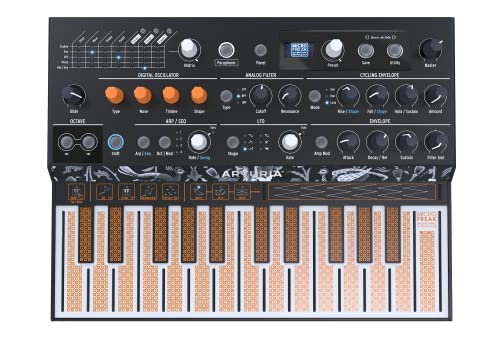
If you’re looking to explore innovative sound design in your techno productions, the Arturia MicroFreak Synthesizer Keyboard stands out with its unique hybrid engine that combines both digital oscillators and an analog filter. Weighing just 2.3 pounds, this 25-key synth is incredibly portable and features 17 paraphonic oscillator modes, including options from Mutable Instruments and Noise Engineering. The super-flat PCB keyboard tracks notes with impressive speed and responsiveness. With extensive modulation capabilities and CV outputs, you can integrate it seamlessly into your setup. Rated 4.5 stars, it’s a powerful tool to elevate your music production game.
Best For: Musicians and producers seeking a compact and versatile synthesizer for innovative sound design in electronic music.
Pros:
- High portability with a lightweight design (2.3 pounds) and compact dimensions.
- Extensive sound design capabilities with 17 paraphonic oscillator modes and a hybrid engine.
- Responsive super-flat PCB keyboard that tracks notes quickly and detects pressure and aftertouch.
Cons:
- Limited to 25 keys, which may not suit users needing a full-size keyboard for performance.
- Some users may find the lack of traditional moving keys less appealing for tactile playing experience.
- Potentially steep learning curve for those unfamiliar with advanced synthesis and modulation techniques.
MOOG Messenger Monophonic Analog Keyboard Synthesizer

The MOOG Messenger Monophonic Analog Keyboard Synthesizer is perfect for producers looking to infuse their techno tracks with rich, analog warmth and intricate sound design. With 32 semi-weighted keys, a powerful 64-step sequencer, and 256 presets, it offers endless creative possibilities. The unique wavefolding oscillators and next-gen ladder filter guarantee you’ll achieve deep bass and crisp highs. Plus, its intuitive design and robust metal build make it portable without sacrificing durability. The extensive connectivity options, including MIDI over USB-C and CV patch points, let you integrate it seamlessly into your setup. Elevate your sound game with the MOOG Messenger!
Best For: Producers and musicians seeking a versatile and portable analog synthesizer for rich sound design and intricate sequencing in their music production.
Pros:
- Intuitive design: Timeless build inspired by iconic MOOG synths, making it easy to use.
- Rich sound capabilities: Unique wavefolding oscillators and next-gen ladder filter produce deep bass and crisp highs.
- Extensive connectivity options: Includes MIDI over USB-C and multiple CV patch points for seamless integration into existing setups.
Cons:
- Monophonic limitation: Being a monophonic synthesizer, it can only play one note at a time, which may limit certain musical styles.
- Portability concerns: While designed to be portable, the robust metal build may add some weight compared to plastic alternatives.
- Potential learning curve: The extensive features and modulation options may require time to fully master for beginners.
Akai Professional MPK Mini MK3 USB MIDI Keyboard Controller
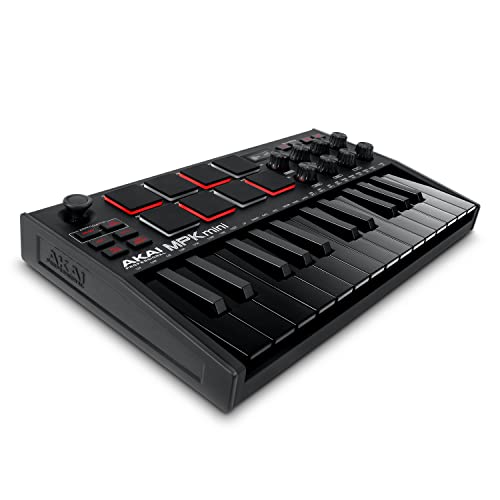
Whether you’re a beginner or a seasoned producer, the Akai Professional MPK Mini MK3 is an ideal choice for creating techno music. This compact 25-key USB MIDI keyboard controller packs a punch with 8 backlit drum pads and 8 assignable knobs, perfect for controlling your DAW and plugins. The velocity-sensitive keys, 4-way thumbstick, and built-in arpeggiator enhance your production experience. Plus, you’ll love the included software bundle, featuring MPC Beats and virtual instruments. Weighing just 1.98 pounds, it’s portable and durable, making it a top pick for any electronic music setup. Elevate your sound effortlessly with this powerful tool.
Best For: The Akai Professional MPK Mini MK3 is best for both beginners and experienced music producers looking for a compact and versatile MIDI controller for electronic music production.
Pros:
- Compact and lightweight design makes it easy to transport and set up anywhere.
- Velocity-sensitive keys and pads provide dynamic control for expressive playing and programming.
- Comprehensive software bundle includes MPC Beats and virtual instruments, offering a complete music production experience.
Cons:
- Mini keys may not be suitable for those who prefer full-sized keys for more comfortable playing.
- Limited number of pads and knobs may be restrictive for advanced users with extensive production needs.
- Durable construction, but still plastic, which may not appeal to users looking for more premium materials.
Akai Professional MPK Mini Plus USB MIDI Keyboard Controller

Designed for aspiring and seasoned producers alike, the Akai Professional MPK Mini Plus USB MIDI Keyboard Controller stands out with its compact 37 mini keys and versatile connectivity options. Weighing just 2.86 pounds, this controller offers USB-powered MIDI I/O and CV/Gate connections, making it compatible with computers, synthesizers, and external devices. The Gen 2 dynamic keybed enhances your creative flow, while the 64-step sequencer streamlines melody and drum track creation. With 8 RGB MPC pads and assignable knobs, you’ll have tactile control over your DAW. Plus, the bundled MPC Beats software gives you thousands of sounds to elevate your productions.
Best For: Aspiring and seasoned music producers looking for a compact and versatile MIDI keyboard controller to enhance their creativity.
Pros:
- Compact and lightweight design makes it easily portable for on-the-go music production.
- Versatile connectivity options (USB, MIDI I/O, CV/Gate) allow for integration with various devices and software.
- Bundled MPC Beats software provides access to a wide range of sounds and samples, enhancing the production experience.
Cons:
- Mini keys may not be ideal for players accustomed to full-sized keys, potentially affecting playability.
- Limited number of pads (8 RGB pads) may not be sufficient for users who require more for complex performances.
- Corded electric power source may limit mobility in certain setups compared to battery-powered options.
Korg minilogue xd 37-key Polyphonic Analog Synthesizer
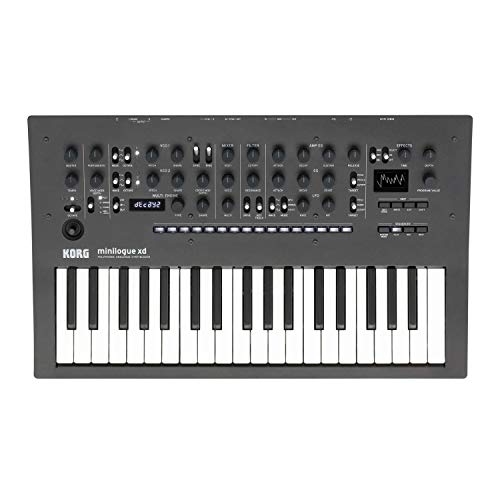
If you’re a techno producer looking for a versatile and powerful synthesizer, the Korg minilogue xd stands out with its dual-oscillator synthesis engine and four-voice polyphony. You can explore a wide array of waveforms and utilize its digital multi-engine for innovative sound design. With four voice modes—POLY, UNISON, CHORD, and ARP/LATCH—you can create complex sounds effortlessly. The built-in 16-step sequencer lets you record and save sequences, while a variety of effects enhance your sound. Plus, its compact design and OLED oscilloscope display make it easy to visualize and manipulate your sounds on the go.
Best For: Techno producers and musicians seeking a versatile and powerful synthesizer for complex sound design and performance.
Pros:
- Dual-oscillator synthesis engine offers a wide selection of waveforms for rich, analog sound modeling.
- Built-in sequencer allows for easy recording and saving of sequences, enhancing workflow during live performances.
- Compact design and OLED oscilloscope display make it portable and user-friendly for sound visualization.
Cons:
- Limited to four-voice polyphony, which may restrict more complex arrangements.
- The learning curve for utilizing all features and effects may be challenging for beginners.
- User slots for digital multi-engine may require additional setup for advanced sound design.
Akai Professional MPK Mini IV USB-C MIDI Keyboard Controller

The Akai Professional MPK Mini IV USB-C MIDI Keyboard Controller stands out as the perfect choice for budding producers and those new to music creation. With 25 mini velocity-sensitive keys, it’s optimized for studio and beat production. The vibrant full-color screen and 8 assignable knobs give you real-time control over your settings. Its 8 MPC pads allow for expressive finger drumming, enhanced by dynamic RGB feedback. Plus, it integrates seamlessly with major DAWs, letting you start producing in under 15 minutes. Lightweight and portable, it also includes valuable learning resources, making it an essential tool for your music journey.
Best For: The Akai Professional MPK Mini IV USB-C MIDI Keyboard Controller is best for beginners and producers looking for an intuitive and portable music production tool.
Pros:
- Compact and Portable: Lightweight design with USB-C connectivity makes it easy to set up anywhere.
- Real-Time Control: 8 assignable knobs and a vibrant full-color screen provide immediate access to settings and DAW functions.
- Comprehensive Software Bundle: Comes with a Studio Instrument Collection and integrates seamlessly with major DAWs for quick production.
Cons:
- Mini Keys: The 25 mini keys may not be suitable for users who prefer full-sized keys for piano-style playing.
- Limited Pad Sensitivity: Though pressure-sensitive, some users may find the MPC pads less responsive compared to larger models.
- Learning Curve: Beginners may need time to fully explore the advanced features like arpeggiator and scale modes.
Factors to Consider When Choosing Synthesizers for Techno Production
When choosing a synthesizer for techno production, you need to take into account several key factors. Sound design flexibility and performance controls play an essential role in your creative process, while connectivity options can enhance your setup. Don’t forget about portability and integrated effects, as these can greatly impact your workflow and sound.
Sound Design Flexibility
Choosing the right synthesizer for techno production means considering sound design flexibility, which is vital for crafting unique tracks. Look for a synthesizer with multiple oscillator modes; this lets you create diverse textures and timbres, perfect for the rich soundscapes of techno. Polyphony is another key feature, allowing you to layer sounds for more complex arrangements. Integrated effects like reverb, delay, and modulation can enhance your sonic character, making your sounds more engaging. User-assignable modulation destinations give you the power to create dynamic sounds that evolve, which is essential for building tension. Finally, a robust sequencer with extensive recording capabilities will help you program intricate rhythms that drive your tracks’ energy forward.
Performance Controls Importance
While sound design is essential, the importance of performance controls can’t be overlooked in techno production. Faders, knobs, and pads allow you to manipulate sound parameters in real time, enhancing the expressiveness of your live sets. Intuitive controls make it easy to adjust effects and modulation dynamically, ensuring the flow of your performance remains uninterrupted. Additionally, velocity-sensitive pads and keys enhance the responsiveness of rhythmic elements, which are crucial in techno. Advanced features like arpeggiators and sequencers help you create complex patterns and variations, keeping your tracks engaging. Finally, performance controls with visual feedback—like color displays or RGB lighting—help you quickly identify settings during live shows or studio sessions, making your workflow smoother and more efficient.
Connectivity Options Available
Performance controls enhance your live techno sets, but connectivity options are just as important when selecting synthesizers for production. Look for models with MIDI In/Out ports to connect with other devices and controllers, expanding your creative possibilities. USB connectivity is vital for seamless integration with your computer and digital audio workstations (DAWs), making music production a breeze. If you’re into modular synth systems, verify your synthesizer supports CV/Gate outputs for complex sound design. Additionally, having audio inputs and outputs can enhance your setup by allowing you to integrate external audio sources and effects. Don’t overlook wireless capabilities, like Bluetooth or Wi-Fi, which can declutter your workspace and improve your workflow during both live performances and studio sessions.
Portability and Weight
When you’re diving into techno production, portability and weight play an essential role in your overall setup. A lightweight synthesizer can considerably enhance your ability to transport gear to gigs or studios. Opting for compact designs, especially those under 3 pounds, allows for convenient setup and mobility during live performances. This choice not only simplifies relocation but also integrates smoothly into various performance setups when time is tight. Many modern synthesizers come equipped with USB-C connectivity, making it easy to connect to laptops and mobile devices on the go. Additionally, a synthesizer’s weight and form factor can greatly influence your comfort and accessibility, particularly during extended live sessions or studio work. Choose wisely to elevate your techno production experience.
Integrated Effects Capabilities
Integrated effects capabilities can greatly transform your techno production by offering a range of sound-shaping options right at your fingertips. With built-in effects processors, you can apply modulation, reverb, and delay in real-time, giving you immediate auditory feedback during both live performances and studio sessions. The variety of effects like chorus, phaser, and flanger provides a versatile toolkit for crafting complex, layered sounds that define techno music. Some synthesizers even allow user-defined effects slots, letting you customize your signal chain and experiment with unique sound combinations. This integration streamlines your workflow, reducing the need for external processing units and ensuring seamless compatibility within your digital audio workstation, making sound creation and editing more efficient than ever.