The best portable camera external recorders make it easier to capture clean video, dependable audio, or both when your camera’s built-in tools fall short. This roundup covers compact monitors, field audio recorders, body cameras, camcorders, and analog-to-digital capture devices.
Use the comparison and buying advice below to match your workflow with the right recording format, inputs, monitoring features, battery setup, and portability.
Best 10 Portable Camera External Recorders Picks for 2026
Compact HDMI Monitor Recorder
RH35 Unlimited Recording Monitor
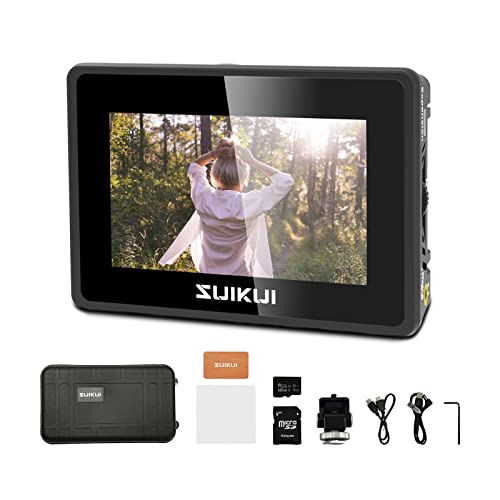
- 1080p30 H.264 recording from HDMI
- 3.5-inch, 600-nit LCD monitor
- Peaking, zebra, waveform, and false color
Best For: Small camera rigs needing monitoring and recording
Flexible Audio Capture Recorder
Zoom H1 XLR 2-Channel Recorder

- 32-bit float recording up to 96kHz
- Two locking XLR/TRS combo inputs
- SDXC support up to 1TB
Best For: External audio for films, podcasts, and music
All-in-One 4K Video Recorder

- 4K video with a 150-degree lens
- X/Y microphones rated to 120dB SPL
- USB live streaming and HDR presets
Best For: Concerts, rehearsals, musicians, and live streaming
Pro Audio Timecode Pick

- 32-bit float recording helps prevent clipped audio.
- Dual XLR/TRS inputs plus a 3.5 mm input.
- Built-in timecode generation and synchronization.
Best For: Videographers needing portable, synchronized external audio
All-in-One Vlogging Camera

- Captures 5K video and 64MP still photos.
- 270-degree rotatable touch screen for flexible framing.
- Includes microphone, batteries, tripod, and 32GB card.
Best For: Beginners building a ready-to-use vlogging kit
Analog Conversion Pick

- Converts VHS, 8mm, MiniDV, and other AV sources.
- Records PAL or NTSC video to microSD cards.
- Compact clip mount and 2.4-inch monitoring screen.
Best For: Digitizing legacy video and portable SD AV capture
Night-Vision Pick

- 4K, 2.7K, and 1080p recording
- 850nm IR for pitch-black video
- External mic, fill light, and two batteries
Best For: Night recording, vlogging, and specialty footage
Wearable Recorder Pick

- Compact clip-on design
- 128GB storage and six-hour battery claim
- Loop, motion, night-vision, and audio recording
Best For: Hands-free outdoor and activity recording
Budget Webcam Pick
Full HD Camcorder with Rotating LCD
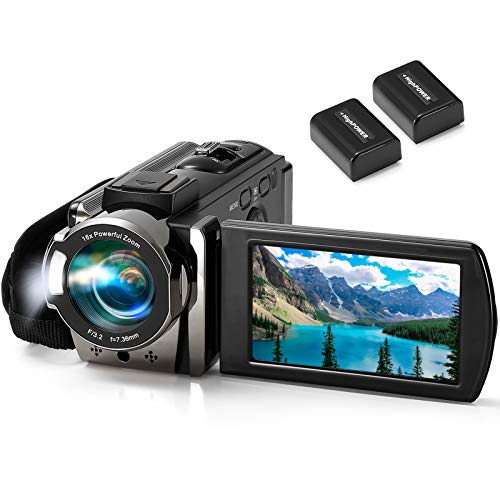
- 1080p video and 24MP stills
- 270-degree rotating 3-inch LCD
- Webcam mode, pause recording, and two batteries
Best For: Casual videos, video calls, and simple vlogging
Compact HDMI Monitor Recorder – RH35 Unlimited Recording Monitor
For creators comparing portable camera external recorders, the RH35 combines a small on-camera monitor with HDMI recording. It captures 1080p video at 30 fps in H.264 without a stated recording limit and supports microSD cards or USB flash drives.
Best For: Camera operators who want a lightweight preview monitor with basic recording and exposure-assist tools.
Pros:
- Accepts 1080p60 HDMI input and output while recording 1080p30.
- Includes peaking, zebra, waveform, focus assist, exposure assist, and false color.
- Compact 3.5-inch display weighs about 120 g and reaches 600 nits brightness.
- Records MP4 video to a microSD card or USB flash drive.
Cons:
- The 800×480 display is useful for monitoring but not a Full HD preview.
- Its recording workflow is centered on HDMI-connected sources.
The RH35 is a practical choice when monitoring tools matter as much as recording. Its small footprint and broad camera-assist features suit compact rigs, though users seeking a higher-resolution monitor may want a larger display.
Flexible Audio Capture Recorder – Zoom H1 XLR 2-Channel Recorder
Among portable camera external recorders, the Zoom H1 XLR is an audio-focused option for adding cleaner, more flexible sound to camera productions. It records 32-bit/96kHz audio and provides two XLR/TRS combo inputs for microphones, instruments, and other sources.
Best For: Filmmakers, podcasters, and musicians who need external two-channel audio capture for a camera or standalone setup.
Pros:
- Supports 32-bit float recording at up to 96kHz for clip-resistant audio capture.
- Two locking XLR/TRS combo inputs accommodate microphones and instruments.
- OLED waveform display helps with level monitoring.
- Offers 3.5mm stereo input, headphone output, USB-C, and SDXC support up to 1TB.
Cons:
- It records WAV audio rather than video, so a separate camera is required for footage.
- Requires two AA batteries and has a compact 0.96-inch screen.
The H1 XLR is best viewed as an external audio recorder rather than a complete camera recorder. Its inputs and 32-bit float capability make it a strong companion for video shoots where dependable sound is the priority.
Wearable 5K Vlogging Camera – BOBLOV W5 Body Camera
The BOBLOV W5 is a self-contained alternative for shoppers seeking portable camera external recorders in a wearable format. It records 5K at 15 fps or 4K at 60 fps, includes 128GB of storage, and accepts an external microphone for clearer voice capture.
Best For: Vloggers and active users who want a compact body camera for travel, meetings, daily clips, or first-person footage.
Pros:
- Offers detailed 5K/15fps capture or smoother 4K/60fps recording.
- 270-degree rotating lens supports selfie and first-person shooting positions.
- External microphone support can improve voice clarity in outdoor or meeting recordings.
- Includes clip and strap mounting options plus 128GB of installed microSD storage.
Cons:
- 5K recording is limited to 15 fps.
- Digital stabilization is listed, and the camera is not water resistant.
- The compact 1.3-inch display may be less convenient for detailed framing.
The W5 favors portability and flexible wearing options over traditional camera controls. It is a useful all-in-one recorder for quick, hands-free footage, especially when external audio and easy mounting are important.
All-in-One 4K Video Recorder – Zoom Q2n-4K Video Recorder
The Zoom Q2n-4K brings video and high-level onboard audio together in a pocket-sized design. For portable camera external recorders, it stands out with 4K video, a 150-degree lens, X/Y microphones rated to 120 dB SPL, and USB streaming support.
Best For: Musicians, performers, streamers, and creators recording rehearsals, concerts, or live broadcasts.
Pros:
- Records 4K video through a wide 150-degree lens with five field-of-view settings.
- X/Y microphones handle sound levels up to 120 dB SPL for loud performances.
- HDR and 12 scene presets assist with changing stage and venue lighting.
- Supports streaming to platforms such as YouTube, Twitch, and Facebook through USB.
Cons:
- Fixed focus and no image stabilization limit flexibility for moving subjects.
- Uses two AA batteries and records to microSD media.
- It does not provide interchangeable lenses or external-camera HDMI recording.
The Q2n-4K is a convenient single-device solution when synchronized video and performance audio are more important than interchangeable-camera flexibility. Its wide lens, loud-sound handling, and direct streaming make it particularly suitable for music-focused creators.
Pro Audio Timecode Pick – TASCAM FR-AV2 Field Recorder
For videographers comparing portable camera external recorders, the TASCAM FR-AV2 is a focused audio solution built for dependable, flexible capture. Its 32-bit float recording, dual XLR/TRS inputs, and internal timecode generation help streamline production sound without requiring a separate timecode device.
Best For: Videographers who need high-quality external audio recording and timecode support in a compact unit.
Pros:
- 32-bit float recording with dual ADCs supports worry-free capture and helps avoid clipping.
- Dual XLR/TRS combo inputs, Ultra HDDA preamps, and a 3.5 mm input offer flexible connectivity.
- Built-in timecode generation, input, output, and synchronization reduce setup complexity.
- Compact 9.5-ounce design supports portable field work.
Cons:
- Requires three AA batteries.
- Wireless monitoring requires the optional AK-BT2 adapter, which is the only compatible adapter.
- Designed primarily as an audio recorder rather than a video capture device.
The FR-AV2 is the strongest fit here when clean production audio and synchronized workflows matter more than recording video internally. Its compact build and timecode features make it especially practical for mobile shoots.
All-in-One Vlogging Camera – 5K X70 Camcorder
For shoppers seeking portable camera external recorders with video capture built in, the X70 camcorder combines 5K recording with a creator-oriented accessory bundle. It is designed for vlogging, interviews, travel footage, and webcam use, with a flip screen, WiFi control, and included external microphone.
Best For: Beginners and content creators who want a ready-to-use camcorder package for vlogging, interviews, and casual video production.
Pros:
- Records 5K video at 20 fps and also supports 4K at 60 fps.
- 270-degree rotatable 3-inch touch screen supports selfies, low-angle shots, and group filming.
- Includes a 32GB memory card, two batteries, tripod, external microphone, remote, and lens hood.
- WiFi control, HD output, and webcam support expand its usefulness for streaming and video calls.
Cons:
- At 2.5 pounds, it is less lightweight than the dedicated recorders in this roundup.
- Manual focus may require more user involvement during shooting.
- It is not water resistant.
The X70 is a practical starter package rather than a specialized standalone recorder. Its included accessories and flexible screen make it convenient for creators who want to begin filming without assembling a separate kit.
Analog Conversion Pick – PowerPlay Portable DVR
The PowerPlay DVR is a compact option among portable camera external recorders for capturing AV sources and converting older footage to digital files. It accepts analog video from FPV systems, camcorders, VCRs, and tape players, recording to a microSD card while providing a small built-in preview screen.
Best For: Users digitizing VHS and other legacy tape formats, or recording standard-definition AV footage in the field.
Pros:
- Converts VHS, VHS-C, 8mm, MiniDV, and Digital8 sources to microSD card.
- Supports PAL recording at 720×576 and NTSC recording at 720×480.
- Compact clip-mount design supports hands-free portability and field recording.
- Built-in 2.4-inch 640×480 LCD helps with monitoring during capture.
Cons:
- Records in standard definition rather than HD or 4K.
- Rechargeable battery support is included, but the battery is not.
- Requires compatible AV connections and a microSD card for recording.
The PowerPlay DVR makes the most sense for analog capture and archival work, not modern high-resolution production. Its small size and clip mount are useful when portability and simple AV recording are the priorities.
Night-Vision Pick – 4K IR Ghost Camera Camcorder
For shoppers comparing portable camera external recorders, this handheld camcorder stands out with 4K recording, infrared night vision, an external microphone, and a fill light. It is suited to creators who need flexible recording features in changing light, though its digital zoom and compact-camcorder design should be considered when evaluating image quality.
Best For: Night recording, paranormal or wildlife observation, vlogging, and travel videos.
Pros:
- Supports 4K, 2.7K, and 1080p video recording.
- 850nm infrared illumination enables black-and-white recording in complete darkness.
- Includes an external microphone, fill light, two batteries, and a 360-degree tripod.
- Can record while charging and includes webcam, time-lapse, motion-detection, and slow-motion modes.
Cons:
- Uses 20x digital zoom rather than an optical zoom specification in the supplied features.
- Not water resistant.
- Electronic and optical image stabilization are listed, but real-world stabilization performance is not specified.
This is the most feature-rich option here for low-light and specialty recording. Choose it if infrared capability, external audio, and higher-than-HD capture matter more than rugged weather protection.
Wearable Recorder Pick – 1080p Mini Body Camera
This compact body camera is a practical choice among portable camera external recorders for hands-free documentation. Its clip-friendly design, 1080p video, 128GB storage, loop recording, and long stated battery life make it more appropriate for activities, meetings, driving records, and personal carry than traditional handheld camcorders.
Best For: Hiking, cycling, outdoor activities, meeting records, driving documentation, and wearable video capture.
Pros:
- Compact 0.23 kg body can be clipped to a backpack or carried in a pocket.
- Includes 128GB storage and supports recording for at least about 60 hours of video storage.
- Stated six-hour battery life, with recording while charging through a power bank.
- Offers night vision, 180-degree horizontal and 90-degree vertical lens rotation, loop recording, motion recording, and audio-only recording.
Cons:
- Records at 1080p rather than 4K.
- Not water resistant.
- The 1.4-inch screen is small for reviewing footage on the device.
Its wearable form and included high-capacity storage make this the strongest fit for extended, hands-free recording. It is less suitable for polished vlogging or high-resolution cinematic work.
Budget Webcam Pick – Full HD Camcorder with Rotating LCD
For buyers seeking straightforward portable camera external recorders, this compact Full HD camcorder covers basic video capture, webcam use, and direct playback. Its 3-inch rotating LCD, pause function, two batteries, and charging-while-recording support are useful for casual vlogging, family videos, video calls, and travel.
Best For: Casual 1080p recording, webcam use, family videos, video calls, and simple vlogging.
Pros:
- Records Full HD 1080p at 15fps and captures 24MP still images.
- 270-degree rotating 3-inch LCD helps with framing from different angles.
- Supports webcam mode, pause recording, fill light, anti-shake, self-timer, and face capture.
- Includes two batteries and supports recording while charging.
Cons:
- 1080p recording is limited to 15fps.
- Uses manual focus and 16x digital zoom.
- SD/SDHC storage up to 128GB is supported, but the memory card is not included.
This is a sensible entry-level option when ease of use and webcam functionality are priorities. Its lower frame rate and manual focus make it better for uncomplicated recording than fast action or demanding production work.
How We Picked These Portable Camera External Recorders
We selected products that address different recording needs rather than treating every device as interchangeable. The lineup includes HDMI capture monitors, dedicated XLR and field recorders, compact music and streaming cameras, wearable body cameras, consumer camcorders, and an analog video recorder. We prioritized recording quality, input and output options, portability, ease of operation, compatibility, and practical use cases.
Because “external recorder” can describe several device types, check the product category carefully. A field recorder is designed primarily for audio, while an HDMI monitor recorder captures a camera feed. A body camera or camcorder may record independently, but it may not accept the same professional inputs or deliver the same workflow benefits.
Quick Comparison
- For camera monitoring and HDMI capture: Choose an HDMI monitor recorder such as the RH35.
- For professional location audio: Look at the Zoom H1 XLR or TASCAM FR-AV2.
- For music and live streaming: The Zoom Q2n-4K combines a camera with focused audio recording.
- For wearable recording: Body cameras offer hands-free operation and compact storage.
- For vlogging: Rotating-screen camcorders and compact 4K cameras simplify self-recording.
- For legacy video sources: The PowerPlay DVR is aimed at recording analog AV/RCA signals.
Key Buying Factors for Portable Camera External Recorders
Recording Format and Resolution
Confirm the maximum resolution and frame rate you actually need. 4K can provide extra detail and cropping flexibility, while 1080p generally requires less storage and processing power. Frame-rate claims can vary by resolution, so review the specifications for the exact mode you plan to use.
Inputs, Compatibility, and Monitoring
Check whether the recorder accepts HDMI, XLR, TRS, USB, analog RCA, or an external microphone. For camera-based setups, verify HDMI compatibility, signal type, supported frame rates, and whether the device records the incoming feed or only displays it. Headphone monitoring and level controls are especially valuable for production audio.
Audio Quality and Reliability
Built-in microphones are convenient, but external microphone support gives you more control. For demanding shoots, 32-bit float recording can reduce the risk of unusable audio from sudden volume changes. Also consider preamps, timecode support, wind protection, and whether the device can record continuously without overheating or filling storage quickly.
Power, Storage, and Portability
Portable recorders should fit your camera bag and operate for the length of a shoot. Compare battery type, charging options, removable storage, file limits, and storage capacity. A compact design is useful only if it still provides accessible controls and enough runtime for your workflow.
Who Should Buy Which Portable Camera External Recorders?
Choose a monitor recorder if you need to watch and capture a camera’s HDMI output. Choose a dedicated audio recorder for filmmaking, interviews, podcasts, or music where microphone quality matters most. Choose a compact camera recorder if simple, self-contained video and easy streaming are your priorities.
Choose a body camera for hands-free personal, security, activity, or point-of-view recording. Choose a consumer camcorder for straightforward family, travel, or YouTube filming with a rotating screen and integrated lens. Finally, choose an analog DVR when your goal is preserving footage from older composite-video equipment rather than recording a modern camera feed.