If you want bass tone that can move from subtle growl to full-on wall of fuzz, the right pedal matters. The best options preserve low end, respond well to playing dynamics, and stay usable in a band mix.
Below, we focus on fuzz pedals for bass guitar that offer strong value, practical controls, and tones that suit everything from classic rock to modern heavy styles.
Best 10 Fuzz Pedals for Bass Guitar Picks for 2026
Vintage-Voiced Bass Fuzz
Electro-Harmonix Bass Big Muff Pi

- Classic Big Muff-inspired bass fuzz
- Dry switch blends clean low end
- Bass boost EQ helps preserve lows
Best For: bassists who want a familiar fuzz sound with simple low-end control
DI Fuzz with EQ

- Distortion channel with gain, volume, and blend
- 3-band EQ for tone shaping
- Phantom power support adds flexibility
Best For: bassists who want drive, EQ, and DI-style control in one pedal
Flexible Modern Fuzz
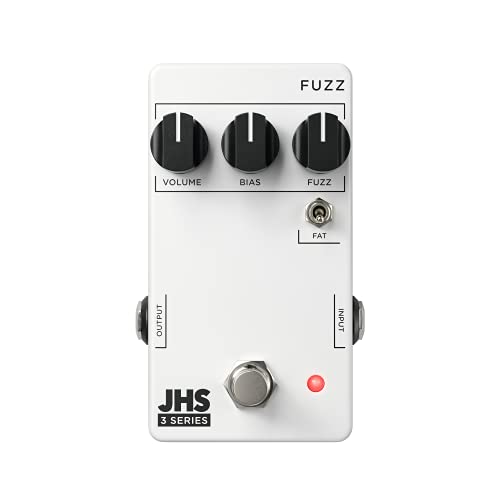
- Full-range fuzz knob with wide tonal sweep
- Bias control adds gated texture options
- Fat toggle boosts bass for a thicker sound
Best For: bassists who want a versatile fuzz with extra low-end shaping
Studio-Ready Bass Fuzz
Electro-Harmonix Deluxe Bass Big Muff Pi

- Blend control mixes clean and distorted signals
- Crossover section shapes low and high bands
- Three outputs include effect, direct, and XLR DI
Best For: bassists who want detailed fuzz control and direct-output flexibility
Dynamic Blend Fuzz

- Modified vintage fuzz circuit
- Separate dry and wet controls
- Analog 9V compact pedal
Best For: Players who want flexible fuzz blending and strong bass retention
Octave Fuzz Texture
EHX Lizard King Bass Octave Fuzz Pedal

- Blend knob from clean to fuzz
- Octave control with Sun/Shadow toggle
- True bypass, 9V battery included
Best For: Bassists who want octave fuzz with flexible blending
Vintage Boost Fuzz

- Vintage germanium transistor
- Clean-to-fuzz Boost switch
- True bypass aluminum casing
Best For: Bass players who want a smooth vintage fuzz with a simple boost
EHX Low-End Fuzz

- Blend knob mixes wet and dry signals.
- Bass Boost adds extra low-end support.
- True bypass helps preserve your clean tone.
Best For: bassists who want Big Muff fuzz with stronger low-end control
MXR Octave Thunder

- Adds a growling sub octave to your fuzz.
- Separate dry volume keeps low end intact.
- Two fuzz voices and mid control improve mix flexibility.
Best For: bassists who want huge octave fuzz with controllable clean support
Best Simple Pick

- Vintage-style silicon fuzz with thick sustain.
- Independent boost adds gain and drive.
- True bypass and analog path support clean operation.
Best For: players who want classic fuzz with an extra boost section
Vintage-Voiced Bass Fuzz – Electro-Harmonix Bass Big Muff Pi
If you’re comparing fuzz pedals for bass guitar, the Electro-Harmonix Bass Big Muff Pi is a straightforward option built around classic Big Muff-style distortion with bass-friendly controls. The sustain, tone, and volume knobs let you shape the core sound, while the dry switch and bass boost EQ help keep low end present when you want more bite up top.
Best For: Bassists who want a familiar fuzz character with easy low-end preservation and simple control.
Pros:
- Dry switch mixes clean bass back into the distorted signal.
- Bass boost EQ switch helps restore low frequencies at higher tone settings.
- Three-knob layout keeps setup simple and practical.
- Based on the Russian Big Muff style for a recognizable fuzz voice.
Cons:
- Powered by a 9V battery rather than an included power supply.
- More focused on classic fuzz than flexible multi-mode shaping.
Overall, this pedal is a solid pick if you want an easy-to-use bass fuzz that can stay thick without losing your fundamental low end. Its dry blend and bass boost features make it especially useful when you need distortion that still works in a mix.
DI Fuzz with EQ – MXR Bass D.I.+
For players shopping fuzz pedals for bass guitar with more utility than a simple stompbox, the MXR Bass D.I.+ adds distortion, EQ, and direct-output flexibility in one unit. Its distortion channel includes gain, volume, and blend controls, and the 3-band EQ gives you additional control over shaping the final bass sound.
Best For: Bassists who want distortion plus DI-style control for direct recording or live use.
Pros:
- Distortion channel includes gain, volume, and blend controls.
- 3-band EQ adds useful tone-shaping flexibility.
- Phantom power support improves versatility in some setups.
- Compact pedal format keeps it practical on a board.
Cons:
- Described as a distortion unit rather than a dedicated fuzz pedal.
- Requires corded electric power instead of battery operation.
This is a strong choice if you need bass drive with more routing and control options than a typical fuzz pedal. The blend and EQ features make it easier to keep the distorted sound usable in both stage and studio situations.
Flexible Modern Fuzz – JHS Pedals 3 Series Fuzz
The JHS Pedals 3 Series Fuzz is a practical option if you want fuzz pedals for bass guitar that can move beyond a single vintage voice. It offers a usable fuzz knob across the full sweep, a Bias control for gated textures, and a Fat toggle that adds bass boost for a fuller sound.
Best For: Bassists who want a versatile fuzz with a bass boost option and a wide range of tones.
Pros:
- Fuzz knob is usable across the full sweep for a wide range of sounds.
- Bias control can push the pedal toward a more gated response.
- Fat toggle engages a bass boost for a thicker output.
- Made in Kansas City, USA.
Cons:
- Runs on 9V DC negative center power, so it needs compatible pedalboard power.
- More feature-focused than a purely classic one-sound fuzz.
In practice, this pedal stands out for bass players who like to experiment with texture while keeping the option to add more low-end weight. It covers a broad range from vintage-style fuzz to more aggressive, gated tones.
Studio-Ready Bass Fuzz – Electro-Harmonix Deluxe Bass Big Muff Pi
If you want fuzz pedals for bass guitar that do more than just add dirt, the Electro-Harmonix Deluxe Bass Big Muff Pi is built for deeper signal control. Its blend control lets you mix direct and distorted signals, while the crossover section helps shape the low and high bands so your bass stays clear and focused.
Best For: Bassists who want advanced control over fuzz tone, clarity, and signal routing.
Pros:
- Blend control mixes direct and distorted signals to taste.
- Three outputs include effect out, direct out, and XLR DI out.
- Foot-switchable crossover section helps sculpt low and high frequencies.
- Low end can stay clear and focused while the distorted top stays bright.
Cons:
- Larger and heavier than the simpler Bass Big Muff Pi.
- More complex than a basic fuzz pedal if you just want quick setup.
This is a strong choice for players who need fuzz and utility in the same box. The blend and crossover controls make it especially appealing when you want aggressive distortion without sacrificing bass clarity.
Dynamic Blend Fuzz – MXR Bass Fuzz Deluxe
If you want fuzz pedals for bass guitar that keep the low end intact, the MXR Bass Fuzz Deluxe is built around a modified vintage fuzz circuit with separate dry and wet controls. That makes it easier to dial in everything from a subtle growl to a fuller fuzz texture without losing the core bass signal.
Best For: Bass players who want flexible fuzz blending and easy low-end control.
Pros:
- Separate dry and wet controls for blending clean bass with fuzz
- Modified vintage fuzz circuit for a classic-style sound
- Simple knob-based control layout
- Compact analog pedal powered by 9V
Cons:
- No extra tone-shaping options beyond the core controls
- Battery-powered operation may not suit every rig
Overall, this is a practical choice if you want a bass fuzz pedal focused on blend and usability rather than lots of extras. The dry/wet setup is the main selling point for players who need fuzz without sacrificing definition.
Octave Fuzz Texture – EHX Lizard King Bass Octave Fuzz Pedal
The Electro-Harmonix Lizard King Bass Octave Fuzz Pedal is a strong option if you want fuzz pedals for bass guitar with more character than a basic fuzz box. Its blend control, tone shaping, octave control, and Sun/Shadow toggle give you a wide range of sounds, from clean mix-in tones to brighter or darker octave fuzz textures.
Best For: Bassists who want octave fuzz with flexible blending and tone shaping.
Pros:
- Blend knob mixes from 100% clean to 100% fuzz
- Octave knob adds retro octave tone
- Sun/Shadow toggle changes the octave effect brighter or darker
- True-bypass design and 9V battery included
Cons:
- More controls may take a little extra time to dial in
- 9V adapter is optional, not included
For players who want a more textured bass fuzz, this pedal offers a lot of useful control in a compact format. It’s especially appealing if you like octave-style sounds and want to shape the fuzz rather than just turn it on and off.
Vintage Boost Fuzz – Caline CP-82 Bass FUZZ Pedal
The Caline CP-82 Bass FUZZ Pedal is aimed at players looking for fuzz pedals for bass guitar with a vintage flavor and a simple boost option. It uses a vintage germanium transistor and can move from clean to vintage fuzz sound with its Boost switch, while the true-bypass design and metal casing make it straightforward for pedalboard use.
Best For: Bass players who want a smooth vintage fuzz with an easy boost switch.
Pros:
- Uses a vintage germanium transistor for a classic fuzz character
- Boost switch helps move from clean to vintage fuzz
- True-bypass design
- Aluminium alloy casing for durability
Cons:
- Requires 9V DC center-negative power
- Current draw is listed at 100mA
This pedal makes sense if you want a bass fuzz that stays focused on a vintage sound and simple operation. The boost switch gives it a useful range without complicating the controls.
EHX Low-End Fuzz – Bass Big Muff Pi 2
If you want fuzz pedals for bass guitar that keep the bottom end intact, the Electro-Harmonix Bass Big Muff Pi 2 is built around that goal. Its bass-focused controls and wet/dry blend make it easy to add heavy fuzz without losing the core low-end foundation of your bass line.
Best For: Bassists who want classic Big Muff-style fuzz with extra low-end control and a blendable clean signal.
Pros:
- BLEND knob lets you mix wet and dry signal for better note definition.
- BASS BOOST adds extra low-end support to the output.
- VOL, TONE, and SUSTAIN controls give you the standard fuzz shaping tools.
- True bypass switching helps keep your signal clean when the pedal is off.
Cons:
- Single-character fuzz voicing may feel less flexible than multi-voice pedals.
- Adapter is optional, so you may need to power it separately.
Overall, this is a straightforward bass fuzz choice for players who want the Big Muff character with more practical low-end management. The blend and bass boost features make it especially useful when you need fuzz that still sits solidly in a mix.
MXR Octave Thunder – Sub Octave Bass Fuzz
For players comparing fuzz pedals for bass guitar, the MXR Sub Octave Bass Fuzz stands out for combining fuzz with a growling sub octave section. It gives you independent control over the fuzz, octave, and dry signals, so you can build tones that stay huge without sacrificing your natural bass character.
Best For: Bassists who want thick sub-octave fuzz with separate dry output control for mix-friendly low end.
Pros:
- Combines fuzz with a sub octave signal for thunderous low-end tones.
- Separate dry volume control helps retain your clean bass foundation.
- Two fuzz voices offer warm/compressed or bright/aggressive options.
- Mid Level control lets you push clean mids so the bass cuts through.
Cons:
- More controls mean a bit more setup time to dial in the right balance.
- Its feature set is focused on heavy textures rather than simple one-knob fuzz.
This is a strong pick if you want a bass fuzz pedal that can get massive while still giving you tools to stay articulate. The separate level controls make it especially practical for players who need both depth and definition.
Best Simple Pick – FLEOR Fuzz Pedal with Boost
If you’re shopping for fuzz pedals for bass guitar and want a classic-style circuit with extra gain on tap, the FLEOR Fuzz Pedal with Boost is worth a look. It uses a vintage-inspired silicon fuzz voice, plus a separate boost control that can add sustain and push your amp or other pedals harder.
Best For: Players who want vintage-style fuzz with an independent boost section for extra sustain and drive.
Pros:
- Vintage-style silicon fuzz aims for thick, gritty, heavily compressed tones.
- Independent boost control adds gain and helps push the front end of your rig.
- Four knobs give you Volume, Sustain, Tone, and Boost shaping.
- True bypass and analog circuitry support clean signal handling when disengaged.
Cons:
- It is a general fuzz/boost design rather than a bass-specific circuit.
- Power supply is required, since it runs on standard 9V DC center-negative power.
For bassists who want a more traditional fuzz feel with added flexibility, this pedal offers a simple but useful control layout. Its boost section and high compatibility make it a versatile option for bass, guitars, synths, and fuller pedal chains.
How We Picked These Fuzz Pedals for Bass Guitar
We prioritized pedals that bassists can actually use on real stages and recordings, not just in isolation. That means solid low-frequency retention, useful tone-shaping controls, reliable bypassing or switching, and enough output to match different rigs. We also looked for options that cover a range of budgets and fuzz flavors, from vintage-style saturation to more aggressive octave and boosted textures.
Quick Comparison
In this group, some pedals lean toward classic Muff-style thickness, while others add octave content, clean blend-style practicality, or extra gain staging. If you want a familiar heavy bass fuzz, start with the more traditional designs. If you need extra versatility, look at models with boost, multiple modes, or broader EQ control. For players chasing a bigger experimental voice, octave and sub-focused pedals can deliver more character.
Key Buying Factors for Fuzz Pedals for Bass Guitar
Low-End Retention
The biggest concern with bass fuzz is losing fundamental notes. Look for pedals that are known to keep the bottom end intact or provide tone shaping that lets you recover it. A pedal that sounds huge alone but disappears in a mix usually is not the best choice.
Blend, EQ, and Control Range
Some fuzz pedals are simple and immediate; others offer blend controls, bass and treble adjustment, or a dedicated clean path. More control can help you tailor the pedal to active pickups, different cabinets, and louder live situations.
Gain Character
Fuzz comes in many forms: smooth sustain, woolly breakup, gated texture, octave clang, or compressed distortion-like grind. Choose the character that matches your genre and how often you want the effect to stay on.
True Bypass and Noise
If you use fuzz as an always-available texture, switching noise and pedal hiss matter less. But if your board is already crowded, true bypass and sensible noise behavior are worth prioritizing.
Who Should Buy Which Fuzz Pedals for Bass Guitar?
Players who want a classic, dependable bass fuzz should focus on straightforward Muff-style models. Bassists who need more versatility for multiple genres may prefer pedals with boost or expanded tone shaping. If you play heavy rock, stoner, doom, or modern alt styles, a thicker, more aggressive fuzz may be the best fit. If you want experimentation, octave and sub-octave pedals can add unique layers without needing extra gear.
For most buyers, the best choice comes down to one question: do you want a foundational fuzz sound, or a more specialized effect that becomes part of your signature tone?