If you need more than a basic 2-in interface, four-input models open up serious flexibility for home studios, podcast setups, and small bands. They make it easier to record multiple microphones, instruments, or a mix of both without constantly repatching gear.
Below, we’ve narrowed the field to standout options that balance sound quality, input options, software value, and everyday usability. Whether you’re tracking demos, livestreaming, or building a compact studio, this roundup helps you find the right fit faster.
Best 10 Audio Interfaces with Four Inputs Picks for 2026
Studio-Ready 4x4 Hub
Focusrite Scarlett 4i4 4th Gen

- Two 4th Gen mic preamps and two Hi-Z inputs
- Four line inputs, four line outputs, and MIDI I/O
- Auto Gain, Clip Safe, and 24-bit/192kHz recording
Best For: Musicians and creators who need a flexible 4-in/4-out interface
Tank-Build 4x4 Interface

- 4x4 USB interface with MIDI I/O
- Four MIDAS-designed mic preamps with phantom power
- 24-bit/192kHz audio in an impact-resistant metal chassis
Best For: Users who want rugged hardware and four mic inputs on a budget
Budget 4-Input Mixer Style

- 2 combo inputs and 2 balanced 1/4" TRS inputs
- Direct monitoring with mono and stereo modes
- 24-bit/192kHz support plus 48V phantom power
Best For: Home studios and podcasters wanting a simple 4-input interface
All-in-One Creator Bundle

- Scarlett 4i4 4th Gen with mic, instrument, line, and MIDI support
- Includes headphones, pop filter, and XLR cables
- Auto Gain, Clip Safe, and 24-bit/192kHz conversion
Best For: Beginners who want an interface bundle with essential accessories
Portable 2-Input Starter Pick
M-AUDIO M-Track Duo USB Audio Interface
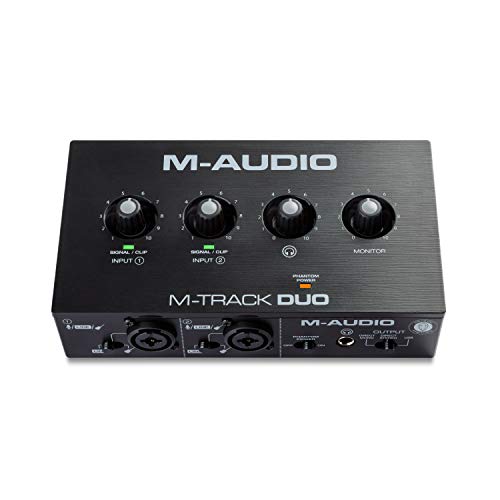
- Two combo XLR/line/instrument inputs
- USB/direct zero-latency monitoring
- Includes MPC Beats software
Best For: Solo creators and podcasters who want a compact, easy-to-use interface
High-Channel Producer Hub
Focusrite Scarlett 18i16 4th Gen Bundle

- Four mic preamps and broad I/O
- 24-bit/192kHz converters with 122dB dynamic range
- Auto Gain and Clip Safe workflow tools
Best For: Producers who need expandable recording capacity and polished workflow features
True 4-Input Creator Interface
CIXUN 4x4 USB-C Audio Interface

- Four combo XLR/TRS inputs
- Dual headphone outputs with independent volume
- Built-in FX reverb/delay monitoring
Best For: Bands, podcasters, and small studios needing a true 4-input interface
Top Pick for Expanding Home Studios
Focusrite Scarlett 18i16 4th Gen

- 4 mic preamps with expandable I/O
- 24-bit/192kHz converters and 122dB dynamic range
- Auto Gain, Clip Safe, and included software
Best For: Users who need four inputs plus room to expand
Budget-Friendly Portable Choice
PIYONE 2X2 USB C Audio Interface

- USB-C, bus-powered, and plug-and-play
- 24-bit/192kHz audio with direct monitoring
- Two combo inputs with phantom power
Best For: Portable solo recording and beginner setups
Best Starter Bundle
Focusrite Scarlett 2i2 Studio 4th Gen

- Includes mic, headphones, and cables
- 24-bit/192kHz converters with 120dB dynamic range
- Auto Gain, Clip Safe, and Air mode
Best For: Beginners wanting an easy all-in-one setup
Studio-Ready 4×4 Hub – Focusrite Scarlett 4i4 4th Gen
If you want audio interfaces with four inputs that can handle mics, guitars, synths, and drum machines, the Focusrite Scarlett 4i4 4th Gen is built as a flexible studio hub. It pairs two 4th Gen mic preamps, two Hi-Z instrument inputs, and four line inputs with 24-bit/192kHz recording, so it fits a wide range of home and project studio setups.
Best For: Musicians, songwriters, guitarists, and content creators who need a versatile 4-in/4-out interface with strong recording features.
Pros:
- Two 4th Gen mic preamps plus two Hi-Z inputs for mics and instruments
- Four line inputs and four line outputs with MIDI I/O for expanded gear setups
- 120dB dynamic range and 24-bit/192kHz conversion for studio-quality capture
- Auto Gain and Clip Safe help prevent bad levels while recording
Cons:
- Higher-end feature set may be more than a basic starter setup needs
- Designed around USB computer recording rather than standalone use
This is a strong choice if you want a modern interface that balances input flexibility, recording safety features, and bundled software. The Scarlett 4i4 4th Gen is especially appealing for users who want room to grow without moving to a much larger interface.
Tank-Build 4×4 Interface – Behringer UMC404HD
Among audio interfaces with four inputs, the Behringer U-PHORIA UMC404HD is aimed at users who want a straightforward 4×4 USB/MIDI interface with pro-grade specs. It offers 24-bit/192kHz audio, four MIDAS-designed mic preamps, and ultra-low-latency streaming for recording microphones and instruments on a computer.
Best For: Budget-conscious recordists who want four mic inputs, MIDI, and rugged hardware.
Pros:
- 4×4 USB 2.0 interface with 4 inputs / 4 outputs plus MIDI I/O
- Four MIDAS-designed mic preamps with +48V phantom power
- 24-bit/192kHz resolution for high-quality recording
- Metal chassis is described as impact-resistant and built like a tank
Cons:
- Listed compatibility focuses on PC and older Windows versions in the supplied details
- More basic feature set than some newer interfaces in this class
The UMC404HD stands out if durability and straightforward routing matter more than extras. It is a practical pick for home studios that need four real input channels and MIDI in a no-frills box.
Budget 4-Input Mixer Style – AR007 USB Audio Interface
If you are shopping for audio interfaces with four inputs and want a simple setup for vocals, instruments, or a small home studio, this AR007 USB audio interface gives you a flexible 4-in/4-out layout. It supports up to 24-bit/192kHz recording, includes 48V phantom power, and offers direct monitoring with mono or stereo modes for delay-free tracking.
Best For: Home studio users, podcasters, and musicians who want a compact interface with combo inputs and direct monitoring.
Pros:
- 2 XLR/1/4″ combo inputs plus 2 balanced 1/4″ TRS inputs
- 4 outputs for monitor or headphone-style playback routing
- Direct monitoring with mono and stereo switch options
- 24-bit/192kHz support and 48V phantom power
Cons:
- Brand and model are less established than some major-name alternatives
- Item weight is listed as 1 g in the supplied details, so specs should be double-checked before buying
This model makes sense if you want broad input flexibility without overcomplicating the signal path. It is a practical low-friction option for basic recording, monitoring, and small-session work.
All-in-One Creator Bundle – Focusrite Scarlett 4i4 Bundle
For buyers comparing audio interfaces with four inputs, this Focusrite Scarlett 4i4 4th Gen bundle adds useful starter accessories to the same proven interface platform. You still get two 4th Gen mic preamps, two Hi-Z instrument inputs, four line inputs, four line outputs, and MIDI I/O, plus bundled monitor headphones, a pop filter, and XLR cables.
Best For: Beginners and creators who want the Scarlett 4i4 hardware with essential recording accessories included.
Pros:
- Same 4th Gen Scarlett 4i4 connectivity: mic, instrument, line, and MIDI support
- Includes headphones, pop filter, and XLR cables for a more complete starter setup
- 120dB dynamic range and 24-bit/192kHz conversion
- Auto Gain and Clip Safe help simplify recording sessions
Cons:
- Bundle adds extras, so it may cost more than buying the interface alone
- Best if you actually need the included accessories
This bundle is a convenient pick if you want to start recording right away without piecing together accessories separately. It keeps the strengths of the Scarlett 4i4 while making the first setup easier.
Portable 2-Input Starter Pick – M-AUDIO M-Track Duo USB Audio Interface
If you’re comparing audio interfaces with four inputs, the M-AUDIO M-Track Duo is a simpler alternative for small recording setups. It gives you two combo XLR/line/instrument inputs, 48kHz recording, and USB/direct monitoring, making it a practical choice for solo creators who want a compact interface for vocals, guitar, or podcasting.
Best For: Solo creators, podcasters, and home recordists who only need two inputs but want easy monitoring and portable design.
Pros:
- Two combo XLR/line/instrument inputs with phantom power
- USB/direct monitoring for zero-latency playback
- Transparent Crystal Preamps for microphone recording
- Includes MPC Beats software and a software suite
Cons:
- Only 2 channels, so it is not a true four-input interface
- Max sample rate is 48kHz, which is lower than some studio-focused models
The M-Track Duo makes sense when simplicity matters more than input count. It covers basic recording and streaming needs well, but buyers specifically shopping for four-input interfaces will likely need a larger model.
High-Channel Producer Hub – Focusrite Scarlett 18i16 4th Gen Bundle
For buyers looking at audio interfaces with four inputs, the Focusrite Scarlett 18i16 stands out as a full-featured expansion-friendly option. It includes four mic preamps, two Hi-Z inputs, eight line inputs, ADAT, S/PDIF, and MIDI I/O, so it is built for sessions that need room to grow beyond a basic four-input setup.
Best For: Producers and studio users who want a high-input interface with serious expandability and pro workflow tools.
Pros:
- Four mic preamps plus two Hi-Z inputs and eight line inputs
- 24-bit/192kHz converters with 122dB dynamic range
- Air modes add presence and harmonic drive
- Auto Gain and Clip Safe help manage levels quickly
Cons:
- Far more interface than needed for very small setups
- Bundles and connectivity are geared toward more advanced workflows
This is a strong pick if you want a centerpiece interface rather than a minimal recording box. The four preamps and broader I/O make it especially practical for producers who expect to add more sources over time.
True 4-Input Creator Interface – CIXUN 4×4 USB-C Audio Interface
If you specifically want audio interfaces with four inputs, the CIXUN 4×4 is built around that exact use case. It offers four combo XLR/TRS inputs, 24-bit/192kHz conversion, and four TRS outputs, so it suits multi-source recording, podcast setups, and small studio sessions that need independent tracking.
Best For: Bands, podcasters, and home studios that want a compact true 4-input interface with flexible monitoring.
Pros:
- Four combo XLR/TRS inputs for simultaneous recording
- 24-bit/192kHz conversion for high-definition audio
- Two headphone outputs with independent volume controls
- Built-in FX reverb/delay monitoring engine
Cons:
- Limited to PC and Mac use
- FX features are focused on monitoring, not a full production suite
The CIXUN 4×4 is the most direct match in this group for anyone shopping specifically for four-input hardware. Its combination of four inputs, dual headphone outs, and onboard effects makes it a practical choice for collaborative recording and streaming.
Top Pick for Expanding Home Studios – Focusrite Scarlett 18i16 4th Gen
If you’re comparing audio interfaces with four inputs, the Scarlett 18i16 4th Gen is built for projects that need more routing headroom than a basic 2-channel box. It gives you four mic preamps, two Hi-Z inputs, and eight line inputs, plus ADAT, S/PDIF, and MIDI I/O for a more expandable recording setup.
Best For: Songwriters, producers, and podcasters who want a high-input interface with plenty of room to grow.
Pros:
- Four mic preamps plus Hi-Z, line, ADAT, S/PDIF, and MIDI connections
- 24-bit/192kHz converters with a 122dB dynamic range
- Auto Gain and Clip Safe help speed up setup and prevent overloads
- Includes Pro Tools Intro+, Ableton Live Lite, Cubase LE, and Hitmaker Expansion
Cons:
- More interface than you need if you only record one or two sources at a time
- Requires more desk space and setup than a compact portable unit
The 18i16 makes the most sense if you want a serious studio hub rather than a simple recording front end. Its combination of four preamps, strong conversion, and workflow tools makes it a practical upgrade for multi-source sessions.
Budget-Friendly Portable Choice – PIYONE 2X2 USB C Audio Interface
For buyers focused on simple audio interfaces with four inputs-style flexibility, this PIYONE unit is really a compact 2-channel option that keeps setup fast and portable. Its class-compliant USB-C design, bus power, and combo jacks make it easy to connect a mic or instrument without a bulky power adapter.
Best For: Mobile creators and beginners who want a lightweight USB-C interface for straightforward recording.
Pros:
- USB-C, bus-powered, and class-compliant for plug-and-play use
- 24-bit/192kHz recording with low-noise converters
- Two combo jacks plus 48V phantom power for mic recording
- Direct monitoring and built-in 3.5mm headphone jack
Cons:
- Only 2 channels, so it won’t suit multi-mic tracking needs
- Windows support is listed in the details, so compatibility should be checked carefully
This is a practical pick if portability matters more than input count. It covers the basics well for solo recording, but it is not the right choice if you specifically need a true four-input interface.
Best Starter Bundle – Focusrite Scarlett 2i2 Studio 4th Gen
If you want audio interfaces with four inputs in mind but only need a simple starting point, this Scarlett 2i2 Studio bundle is designed for straightforward home recording. It pairs the 2i2 interface with a condenser mic and headphones, making it easy to start tracking vocals, guitar, and podcast audio right away.
Best For: Beginners and songwriters who want an all-in-one recording bundle with a simple 2-input interface.
Pros:
- Complete bundle includes mic, headphones, and cables
- 24-bit/192kHz recording with a 120dB dynamic range
- Auto Gain and Clip Safe help capture cleaner takes
- Air mode adds presence and harmonic drive to vocals and guitars
Cons:
- Only 2 inputs, so it is not suited to four-source recording sessions
- Less expandable than larger interfaces with more connectivity options
This bundle is a strong value if you want a ready-to-record setup rather than a separate interface purchase. It delivers the essentials well, but users needing multiple simultaneous inputs should step up to a larger model.
How We Picked These Audio Interfaces with Four Inputs
We focused on interfaces that offer practical four-input workflows, dependable conversion, solid preamp performance, and features that matter in real-world use. That includes combo XLR/TRS inputs, usable gain range, phantom power, direct monitoring, MIDI support where relevant, and USB connectivity that works smoothly with modern computers.
We also considered bundle value, because software, cables, and headphones can meaningfully change the total cost of getting started. For Audio Interfaces with Four Inputs, the best choice is usually the one that matches your recording style instead of simply offering the most specs.
Quick Comparison: What Matters Most
If you’re comparing these interfaces quickly, think in terms of workflow. Some models are ideal for two mics plus stereo sources. Others are better suited to drums, multiple singers, podcast guests, or hybrid setups with external gear. A compact desktop interface may be enough for solo creators, while a larger unit makes sense if you expect your sessions to grow.
Key Buying Factors for Four-Input Interfaces
Input type: Combo inputs are the most versatile because they accept XLR microphones and line-level or instrument sources. If you plan to record guitars, keys, or synths, check whether the inputs support instrument mode or proper line gain staging.
Mic preamps and phantom power: Clean preamps matter more than marketing language. If you use condenser microphones, make sure phantom power is available and ideally switchable by pair or channel.
Monitoring and routing: Low-latency direct monitoring is essential for tracking. Extra outputs, loopback, or MIDI can be useful for streaming, external hardware, and more advanced studio setups.
Software and build quality: Bundled software can help you start recording immediately, but hardware stability and driver support should come first. A good interface should feel reliable after months of regular use, not just good on paper.
Who Should Buy What
If you’re a solo creator or singer-songwriter, a compact four-input interface gives you room to expand without overbuying. Podcasters and streamers should prioritize easy monitoring and simple routing. Musicians recording multiple sources at once should look for stronger input flexibility, solid preamps, and enough outputs to support monitors or external gear. For buyers who want a simple, future-friendly setup, Audio Interfaces with Four Inputs offer one of the best balances of affordability and versatility.