Acoustic curtains can help reduce reflections, soften room noise, and improve the working environment around a home recording setup. The best choice depends on coverage, fabric weight, mounting options, and whether you also need blackout or thermal insulation.
We’ve gathered 10 sound-dampening curtains and blanket-style barriers suited to bedrooms, offices, windows, doors, and larger studio openings.
Best 10 Acoustic Curtains for Home Studios Picks for 2026
Best Layered Blackout Pick
RYB HOME 3-Layer Soundproof Curtains

- Detachable felt liner for noise reduction
- Two 52-inch-wide blackout panels
- Thermal insulation and machine-washable care
Best For: Home studios needing blackout coverage and flexible sound dampening
Best Linen-Look Pick
RYB HOME Linen-Textured Acoustic Curtains

- Linen-textured two-panel design
- Detachable felt liner for sound dampening
- Blackout and thermal insulation
Best For: Stylish studios and living spaces needing layered window coverage
Best Heavy-Duty Acoustic Coverage
850GSM Sound Dampening Blankets

- Dense 850GSM recycled-cotton filling
- Large 96-by-80-inch blanket format
- Nine grommets for versatile hanging
Best For: Home studios prioritizing echo reduction and portable acoustic coverage
Everyday Blackout Pick
NICETOWN Noise Reducing Curtains
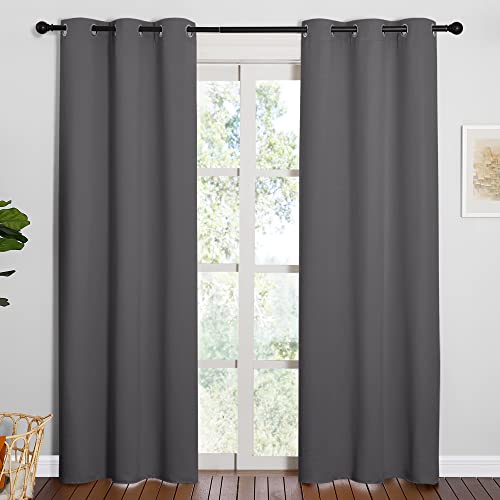
- Triple-weave fabric with light and UV blocking
- Two 42-by-84-inch grommet panels
- Machine washable and thermally insulating
Best For: Studio windows needing blackout coverage and modest noise reduction
Maximum Coverage
VEVOR Sound Dampening Blankets

- Large 96-by-80-inch coverage per blanket
- Three-layer design for echoes and reflections
- Grommets and straps enable flexible mounting
Best For: Large studio openings and temporary acoustic barriers
Decor-Friendly Acoustic Panel

- Dense layers help soften noise and reflections
- Soft velvet backing suits modern interiors
- Works as a room divider or acoustic barrier
Best For: Compact studios and shared rooms needing a refined divider
Heavy-Duty Acoustic Blanket

- Two large 96-by-80-inch blankets
- Grommets support flexible hanging
- Washable and light-blocking
Best For: Broad studio, window, and door coverage
Decor-Friendly Acoustic Curtain

- Dense multi-layer sound-dampening design
- Soft velvet backing suits home décor
- Includes mounting accessories
Best For: Visible home offices, bedrooms, and compact studio setups
Door-Fit Sound Barrier

- Sized for standard doors
- Thick weighted cotton-filled construction
- Includes permanent and temporary mounting options
Best For: Doorway noise reduction and temporary booth setups
Best Layered Blackout Pick – RYB HOME 3-Layer Soundproof Curtains
For acoustic curtains for home studios, the RYB HOME 3-in-1 curtain combines blackout fabric with a detachable felt liner designed to absorb some unwanted noise. It comes as two 52-inch-wide panels measuring 95 inches long, making it suitable for covering a standard window or opening when the dimensions fit.
Best For: Home studios that also need strong light blocking, thermal insulation, and a removable noise-absorbing liner.
Pros:
- Three-layer construction includes a detachable felt liner for noise reduction.
- Blackout design blocks harsh light and UV rays.
- Machine washable after removing the felt liner.
Cons:
- It is not 100% soundproof, and results vary by room and listener.
- At 95 inches long, it may not suit every window or studio opening.
This is a practical choice when acoustic treatment needs to double as a blackout window covering. The removable liner adds flexibility, though it should be viewed as a noise-reduction aid rather than a replacement for dedicated studio treatment.
Best Wide-Door Option – NICETOWN Thermal Sound-Dampening Curtain
If your studio includes a sliding door, patio door, or unusually wide opening, this NICETOWN panel is a useful option among acoustic curtains for home studios. The single 80-by-84-inch panel uses heavy triple-weave polyester to reduce light, support thermal insulation, and help dampen noise.
Best For: Sliding doors, patio doors, and large windows where a single wide panel is more convenient than multiple narrower curtains.
Pros:
- Wide 80-inch panel covers large openings.
- Triple-weave fabric provides blackout coverage and thermal insulation.
- Grommet top supports straightforward hanging and machine-washable care.
Cons:
- Only one panel is included.
- It is unlined, without the dedicated felt layer found in some acoustic curtains.
- For proper fullness, the opening may require more than one panel.
This curtain makes the most sense for controlling light and softening some outside noise around a large glass opening. Measure the opening and rod first, and remember that the supplied product is one panel rather than a pair.
Best Linen-Look Pick – RYB HOME Linen-Textured Acoustic Curtains
These RYB HOME curtains are a strong fit for acoustic curtains for home studios where appearance matters as much as light control. The two 52-inch-wide, 95-inch-long panels have a linen-textured front, blackout construction, and a detachable felt liner intended to absorb some annoying noise.
Best For: Living rooms or home studios that want a softer linen-style appearance along with blackout coverage and basic sound dampening.
Pros:
- Linen-textured front offers a more decorative look.
- Detachable felt liner adds a noise-reduction layer.
- Blackout and thermal-insulating construction helps manage light and temperature.
Cons:
- It is not 100% soundproof, with results dependent on the environment.
- The 95-inch length may not fit every installation.
Choose this version when you want acoustic functionality without a utilitarian studio aesthetic. Its layered design can help reduce distractions and reflections around a window, but serious recording spaces may still need additional acoustic treatment.
Best Heavy-Duty Acoustic Coverage – 850GSM Sound Dampening Blankets
For more demanding acoustic curtains for home studios, these 96-by-80-inch sound-dampening blankets provide substantially denser coverage than ordinary drapes. Each blanket uses 850GSM recycled-cotton filling, weighs 9.2 pounds, and includes nine grommets for hanging over windows, doors, walls, or as a room divider.
Best For: Recording spaces, vocal areas, doors, and windows where heavy, portable sound absorption is more important than a conventional curtain appearance.
Pros:
- Dense 850GSM recycled-cotton construction is designed to absorb echoes and reduce reverb.
- Two large blankets provide flexible coverage, with nine grommets on each for hanging.
- Reinforced stitching and double-stitched edges support repeated use.
- Can also block light, divide rooms, or travel between locations.
Cons:
- They dampen sound but do not provide 100% soundproofing.
- The heavy 9.2-pound-per-blanket weight requires secure hanging hardware.
- A mild initial odor may require 24–48 hours of airing out.
These blankets are the most studio-focused option in the group, especially for reducing room echo and improving vocal clarity. For stronger performance, the supplied guidance recommends using two layers with an air gap, but that setup also requires careful support and space planning.
Everyday Blackout Pick – NICETOWN Noise Reducing Curtains
For shoppers comparing acoustic curtains for home studios, the NICETOWN pair is a practical window-treatment option when light control, temperature insulation, and modest noise reduction all matter. Its triple-weave polyester fabric is soft, heavy, and available in a convenient ready-made size.
Best For: Home studios, offices, or media rooms that need blackout coverage and a cleaner finished look.
Pros:
- Triple-weave fabric helps reduce noise and sound reflections while improving TV or recording-room comfort.
- Blocks approximately 85%–99% of light and UV rays, with darker colors performing best.
- Includes two 42-by-84-inch panels with six grommets per panel for straightforward rod installation.
- Machine washable in cold water and tumble-dry friendly.
Cons:
- Designed primarily as blackout curtains, so sound-control performance is more limited than a dedicated acoustic blanket.
- The gray color may block less light than darker options.
This is a sensible choice for a studio window where everyday practicality matters as much as acoustics. Choose it for light and thermal control with some noise reduction, rather than as a standalone soundproofing solution.
Maximum Coverage – VEVOR Sound Dampening Blankets
Among acoustic curtains for home studios, the VEVOR sound dampening blankets stand out for their large format and barrier-style construction. The three-layer polyester and recycled-cotton design is intended to absorb echoes, reduce reflections, and block light across windows, doors, or other openings.
Best For: Recording spaces, doors, windows, and temporary partitions where broad coverage is more important than a decorative curtain finish.
Pros:
- Large 96-by-80-inch blankets provide wide coverage with fewer seams.
- Three-layer construction helps absorb indoor echoes and reduce sound reflections.
- Dense black material effectively blocks light for recording, projection, or theater use.
- Grommets and woven straps support installation with hooks, screws, or curtain rods.
Cons:
- The product provides limited sound insulation and is mainly a protective barrier.
- Its 18.5-pound weight may require sturdy mounting hardware.
- It should be kept dry and promptly air-dried if wet.
For a home studio that needs to cover a wide opening or create a temporary acoustic and light barrier, this is the more substantial option in the group. It is functional rather than room-decor focused, and it should not be treated as complete soundproofing.
Decor-Friendly Acoustic Panel – JaneTech Soundproof Curtain
For acoustic curtains for home studios that need to blend with living spaces, the JaneTech panel combines dense multi-layer construction with a soft velvet backing. Its neutral oatmeal-sand finish and room-divider design make it suitable for smaller recording, podcasting, streaming, or shared-room setups.
Best For: Compact studios, podcast stations, home offices, and room dividers where appearance and flexible placement are priorities.
Pros:
- Dense multi-layer construction helps reduce unwanted noise and soften sound reflections.
- Soft velvet backing offers a more refined alternative to tarp-style acoustic barriers.
- Can hang across windows, doors, walls, or open areas as a privacy and acoustic divider.
- Mounting accessories are included for quick installation.
Cons:
- The 70.9-by-39.4-inch size provides less coverage than the VEVOR blankets.
- The supplied details do not specify blackout performance or machine-washing instructions.
- It is a sound-dampening aid, not a complete soundproofing system.
This panel is a strong fit when a studio shares space with a bedroom, office, or living area and needs a softer visual treatment. Its relatively compact dimensions make it easier to place, but larger openings may require multiple panels.
Heavy-Duty Acoustic Blanket – 850GSM Studio Sound Dampening
For shoppers comparing acoustic curtains for home studios, this two-pack offers broad coverage and substantial weight. The 96-by-80-inch recycled-cotton blankets are designed to absorb echoes, reduce reverb, block light, and help muffle noise around windows, doors, walls, or recording areas.
Best For: Home studios, podcast rooms, home theaters, and larger windows or doors needing flexible sound dampening.
Pros:
- Large 96-by-80-inch panels provide generous coverage.
- 850GSM construction and 9.2-pound-per-blanket weight support sound absorption and noise reduction.
- Heavy-duty grommets allow hanging from walls, doors, windows, or ceilings.
- Machine washable, foldable, light-blocking, and useful in multiple spaces.
Cons:
- Hardware is not included.
- The bulky, heavy design may require sturdy mounting points.
- Its listed NRC rating is 0.35, so it is intended to dampen sound rather than fully soundproof a room.
This is the most versatile option of the three when you need two large panels for broader coverage. For improved performance, the supplied guidance recommends double-layering with an air gap.
Decor-Friendly Acoustic Curtain – Soft Velvet Home Studio Panel
If you want acoustic curtains for home studios that blend more naturally with living spaces, this JaneTech panel emphasizes a softer, contemporary appearance. Its dense multi-layer construction and velvet backing are intended to reduce unwanted noise, soften reflections, and provide privacy across windows, doors, walls, or open areas.
Best For: Bedrooms, home offices, streaming areas, podcast setups, and smaller recording spaces where appearance matters.
Pros:
- Soft velvet backing offers a more refined alternative to tarp-style materials.
- Can function as a curtain, room divider, or temporary acoustic barrier.
- Mounting accessories are included for quick setup.
- Linen beige color and contemporary styling suit modern interiors.
Cons:
- Only one panel is included.
- At 70.9 by 39.4 inches, coverage is more limited than the larger blanket options.
- The short seven-day manufacturer warranty provides limited coverage.
This panel is a practical choice for shared rooms and visible setups where flexibility and décor compatibility are priorities. Its smaller size makes it less suitable for covering a full wall or wide opening alone.
Door-Fit Sound Barrier – Thick Studio Acoustic Curtain
For a doorway-focused solution, this TroyStudio blanket is sized for standard doors and combines a thick cotton filler with dirt-resistant outer fabric. It helps reduce noise, absorb reverb and echo, block light, and provide thermal insulation in recording rooms, bedrooms, offices, or rehearsal spaces.
Best For: Standard doors, music rooms, recording studios, rehearsal areas, and temporary vocal-booth or drum-cage projects.
Pros:
- 41.5-by-86.6-inch dimensions are designed for standard doors.
- Weighted 0.8-inch-thick construction helps with sound blocking and absorption.
- Includes screws and hooks for permanent mounting plus adhesive hook-and-loop strips for temporary use.
- Also blocks light and may help reduce heating and cooling loss.
Cons:
- One panel is included, limiting coverage to a focused area.
- The heavy blanket may be demanding to install on lighter door frames or walls.
- The manufacturer advises ventilation before use for odor-sensitive users.
This is the most targeted pick for sealing or treating a doorway rather than covering a broad wall. The two installation methods make it useful for both longer-term studio treatment and temporary recording arrangements.
How We Picked the Best Acoustic Curtains for Home Studios
We focused on products designed to reduce airborne sound and room reflections rather than treating them as complete soundproofing systems. The selection includes conventional grommet curtains, wide room dividers, and heavy acoustic blankets that can cover doors, windows, walls, or temporary recording areas.
We also considered practical details such as listed dimensions, fabric or blanket weight, installation flexibility, blackout performance, thermal insulation, backing materials, and suitability for home recording spaces. Because manufacturers use terms such as “soundproof” and “noise reducing” inconsistently, buyers should treat these products as sound-dampening aids—not substitutes for construction-based isolation.
Quick Comparison
- Best for windows and patio doors: Choose a wide, grommeted curtain with enough overlap to minimize uncovered gaps.
- Best for doors and temporary walls: Heavy 850GSM blankets or thick door barriers offer broad coverage and flexible placement.
- Best for multipurpose rooms: Blackout and thermal-insulated curtains can improve light control and comfort alongside acoustic performance.
- Best for portable setups: Grommets make it easier to hang, remove, reposition, or pair panels on a standard rod or hooks.
Key Buying Factors
Coverage and Overlap
Measure the opening first, then allow extra width for pleats and side overlap. A curtain that barely spans a window or door will leave sound and light paths around its edges. For walls or room dividers, compare the full panel dimensions with the area you want to treat.
Weight and Construction
Heavier, denser materials generally provide more useful sound absorption and blocking than lightweight decorative drapes. Look for multilayer construction, thick velvet-like surfaces, or high-GSM acoustic blankets, while checking that your rod, track, hooks, or mounting hardware can safely support the load.
Mounting and Everyday Use
Grommets are convenient for rods and hooks, while blanket-style products may need stronger hardware or a dedicated hanging system. Consider whether the curtain must open frequently, remain permanently installed, or move between recording and living areas.
What “soundproof” Means Here
These products can reduce echo, soften high-frequency reflections, and limit some sound transfer through windows or doors. They will not fully block bass, footsteps, voices, or music through walls. Use them with weatherstripping, door seals, rugs, acoustic panels, and proper room treatment when isolation matters.
Who Should Buy Which Acoustic Curtains for Home Studios?
Bedroom or home-office users should prioritize attractive curtains with blackout or thermal features that can stay installed. Vocalists, podcasters, and musicians may prefer dense blankets or thick velvet-backed curtains positioned around the recording area. Renters should look for grommeted panels that work with removable rods or hooks. Users treating large openings should choose oversized blankets or wide room-divider curtains and plan for sturdy support hardware.