A good pop filter helps reduce plosive bursts from sounds such as “P” and “B,” making spoken-word recordings cleaner and easier to mix. The right design can also limit breath noise, wind interference, and moisture reaching your microphone.
These 10 microphone pop filters for podcasting cover common setups, including Blue Yeti, RØDE PodMic, Shure MV7, handheld microphones, and general-purpose studio rigs. Use the guide below to match the filter style, mounting system, and coverage level to your recording space.
Best 10 Microphone Pop Filters for Podcasting Picks for 2026
Flexible Dual-Layer Shield
NEEWER Professional Pop Filter

- Dual-layer screen helps contain air blasts
- Adjustable steel gooseneck and swivel mount
- Clamp fits compatible tubular stands and booms
Best For: Podcasters needing flexible external filter placement
PodMic-Fit Foam Filter

- Purpose-built for PodMic and PodMic USB
- Low-profile design for on-camera use
- Rib-supported high-density foam construction
Best For: PodMic users wanting a discreet fitted filter
Three-Layer Mic Cover
PEMOTech Upgraded Three-Layer Pop Filter

- Foam, metal mesh, and etamine construction
- Fits compatible 45–61 mm microphones
- Elastic bands and rubber ring support direct fitting
Best For: Creators with a compatible cylindrical microphone
360° Gooseneck Filter
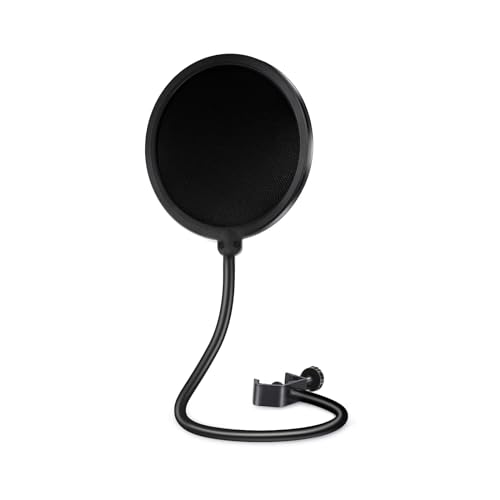
- Two nylon mesh layers reduce plosives and wind
- Flexible 360° steel gooseneck
- Suitable for podcasting, streaming, gaming, and voiceover
Best For: Creators who frequently adjust microphone position
MV7 Pop Shield

- Made for the Shure MV7
- Steel mesh and foam three-layer design
- 360-degree gooseneck with padded C-clamp
Best For: Adjustable MV7 podcasting setups
Studio Isolation Filter

- Fits compatible 50–75 mm microphones
- Five-sided foam design reduces noise and reflections
- Portable 120g enclosure mounts to several stand types
Best For: Broader acoustic coverage in home or studio recording
Best Three-Layer Fit
PEMOTech Pop Filter for Blue Yeti

- Three-layer foam, mesh, and etamine construction
- Fits compatible 55–75 mm microphones
- Installs with bands and a protective rubber ring
Best For: Blue Yeti podcasting and voice recording
Best Adjustable Shield
Dual-Layer Pop Filter with Gooseneck Arm

- 360-degree flexible gooseneck for positioning
- Adjustable clamp attaches to a microphone stand
- Dual-layer shield helps reduce plosives and sibilance
Best For: Adjustable home-studio and podcast setups
Flexible Dual-Layer Shield – NEEWER Professional Pop Filter
For shoppers comparing microphone pop filters for podcasting, the NEEWER Professional Microphone Pop Filter Shield offers a dual-layer design and adjustable positioning. Its gooseneck and clamp make it practical for podcast, streaming, vocal, and voice recording setups.
Best For: Podcasters and vocal creators who need flexible placement on a compatible stand or boom.
Pros:
- Dual screens help disperse and contain air blasts.
- Adjustable steel gooseneck supports angle and distance changes.
- Clamp has a scratch-proof gripper and swivel mount for installation and adjustment.
- Helps reduce plosives, hissing, and lisping while protecting the microphone from saliva.
Cons:
- Requires a tubular boom or microphone stand for clamping.
- Microphone is not included.
The NEEWER is a versatile choice when adjustable positioning matters. Its metal construction and dual-screen layout suit creators who want a conventional external pop filter for a range of compatible recording setups.
PodMic-Fit Foam Filter – RØDE WS14 Premium Pop Filter
The RØDE WS14 is a purpose-built option for microphone pop filters for podcasting with the PodMic or PodMic USB. Its low-profile shape keeps the filter discreet on camera, while dense foam and supporting ribs are designed to retain its form.
Best For: PodMic and PodMic USB users who want a compact, camera-friendly foam filter.
Pros:
- Designed specifically for the PodMic and PodMic USB.
- Low-profile design supports a discreet on-camera appearance.
- High-density foam construction includes supporting ribs to maintain shape.
- Available in multiple colors, including black, white, red, blue, green, orange, purple, and pink.
Cons:
- Purpose-built compatibility limits it to the specified PodMic models.
- Foam construction may be less suitable for shoppers seeking an adjustable external screen.
The WS14 makes the most sense for an existing PodMic setup. It prioritizes model-specific fit, a low visual profile, and simple foam construction rather than broad microphone compatibility.
Three-Layer Mic Cover – PEMOTech Upgraded Three-Layer Pop Filter
Among microphone pop filters for podcasting, the PEMOTech Upgraded Three Layers cover stands out as a direct-fit option for many microphones measuring 45 to 61 mm in diameter. Its foam, metal mesh, and etamine layers target plosives, breath sounds, wind interference, and saliva.
Best For: Users with a compatible 45–61 mm microphone who prefer a fitted cover over a gooseneck-mounted screen.
Pros:
- Three-layer construction combines foam, metal mesh, and etamine.
- Designed to reduce plosives, crackles, wind interference, and breath sounds.
- Elastic bands and an inner rubber ring support quick attachment and removal.
- Metal mesh helps prevent saliva from reaching the microphone.
Cons:
- Not compatible with the Blue Yeti, according to the supplied notes.
- Fits microphones within the stated 45–61 mm diameter range.
- Microphone is not included.
This PEMOTech cover is worth considering when your microphone matches the diameter range and you want an integrated shield. Confirm fit before buying, particularly if you use a Blue Yeti or another unusually sized microphone.
360° Gooseneck Filter – SUUNTOK Dual-Layer Pop Filter
The SUUNTOK Dual-Layered Wind Screen is a flexible choice for microphone pop filters for podcasting, live broadcasting, gaming, and voice recording. Its two nylon mesh layers help address plosives and wind interference, while the 360° gooseneck allows positioning around compatible microphones, including Blue Yeti setups.
Best For: Podcasters, streamers, and gamers who need an adjustable filter arm for changing recording positions.
Pros:
- Double nylon mesh layers help reduce plosives, wind interference, and saliva spray.
- 360° adjustable steel gooseneck supports flexible positioning.
- Suitable for podcasts, voiceovers, vlogging, singing, and broadcasting.
- Designed to help reduce hissing, lisping, and B/P plosives.
Cons:
- The supplied notes do not specify a clamp or detailed mounting compatibility.
- At 6.9 inches wide, it may take more space than a fitted microphone cover.
The SUUNTOK is a practical pick when adjustability is more important than a minimal footprint. Its broad application range makes it suitable for multi-purpose creator stations where microphone distance and angle change frequently.
PodMic Plosive Shield – PodMic Foam Cover
For creators seeking microphone pop filters for podcasting with a Rode PodMic, this fitted foam cover is a simple, lightweight option. Its porous foam design helps reduce plosives, breath, wind, and some background noise while also protecting the microphone from dust, moisture, and spittle.
Best For: Rode PodMic owners who want a low-profile foam windscreen for podcasting, streaming, or gaming.
Pros:
- Designed to fit the Rode PodMic.
- Helps reduce plosives, breath, wind, and pop noise.
- Protects the microphone from dust, moisture, and flying spittle.
- Lightweight design weighs about 10g.
Cons:
- Compatible specifically with the Rode PodMic rather than a broad range of microphones.
- Does not include the Rode PodMic.
This is a practical choice if you already use a PodMic and prefer a fitted foam cover over a separate adjustable pop-filter arm. Its main limitation is the model-specific fit.
MV7 Pop Shield – Three-Layer Metal Filter
For microphone pop filters for podcasting with a Shure MV7, this three-layer metal windscreen combines steel mesh with an internal foam layer. The flexible 360-degree gooseneck allows positioning in front of the mic, while the padded C-clamp helps secure it without scratching the mounting surface.
Best For: Shure MV7 users who want an adjustable pop shield with a clamp-mounted gooseneck.
Pros:
- Designed for compatibility with the Shure MV7.
- Three-layer construction uses two steel mesh layers and one foam layer.
- 360-degree flexible gooseneck supports varied placements.
- Rubber-padded C-clamp grips surfaces up to 1.85 inches.
Cons:
- Not water resistant.
- Designed around the Shure MV7 rather than universal compatibility.
- Does not include the MV7 microphone.
The adjustable arm makes this a more flexible setup than a slip-on windscreen, especially when you want to fine-tune filter placement. Check your desk or stand thickness before relying on the included clamp.
Studio Isolation Filter – Five-Sided Acoustic Ball
Among microphone pop filters for podcasting, this isolation-ball design is aimed at users who want broader acoustic coverage than a small front-facing screen. Its five-sided foam enclosure and double-layered opening help reduce plosives, wind interference, reflections, and saliva exposure for compatible microphones measuring 50–75 mm in diameter.
Best For: Home, live, or studio recording setups using compatible XLR or USB microphones with removable jackets.
Pros:
- Fits many microphones with removable jackets measuring 50–75 mm in diameter.
- Five-sided sealed design helps reduce noise and reflections from multiple directions.
- Double-layered opening helps limit divergent sound during recording.
- Lightweight 120g design can mount to desktop stands, tripods, arms, or floor stands.
Cons:
- Compatibility depends on the microphone’s removable-jacket diameter.
- The larger enclosure may be less compact than a standard pop screen.
- Its listed design is oriented toward compatible microphones rather than every mic type.
This filter is worth considering when reducing surrounding reflections and off-axis noise matters alongside plosive control. Confirm your microphone dimensions and available stand space before buying.
Best Three-Layer Fit – PEMOTech Pop Filter for Blue Yeti
For creators seeking microphone pop filters for podcasting, the PEMOTech pop filter is a practical choice for compatible 55–75 mm microphones, including several Blue Yeti models. Its three-layer construction is designed to reduce plosives, breath sounds, wind interference, crackles, hissing, and lisping during voice recording.
Best For: Blue Yeti owners, podcasters, singers, vloggers, and voiceover creators using a 55–75 mm microphone.
Pros:
- Three layers combine foam, metal mesh, and etamine to address pops and breath noise.
- Elastic bands and an inner rubber ring make installation and removal straightforward.
- Adjustable padding helps protect the microphone from scratches.
- Helps keep the microphone cleaner by blocking saliva and dust.
Cons:
- Designed for microphones measuring 55–75 mm in diameter.
- The product is a microphone-mounted cover rather than a separate stand-mounted filter.
Its tailored fit and layered design make this a strong option when you want a compact pop filter specifically for a compatible Blue Yeti-style microphone.
Best PodMic-Specific Cover – Foam Windscreen for Rode PodMic
Among microphone pop filters for podcasting, this foam cover is made specifically for the Rode PodMic. The porous foam is designed to soften plosives, breath noise, wind, and some higher-frequency pop noise while helping protect the microphone from dust, moisture, and flying spittle.
Best For: Rode PodMic users who want a simple, fitted foam windscreen for podcasting, gaming, or streaming.
Pros:
- Customized fit for the Rode PodMic.
- Helps block plosives, breath noise, and wind noise.
- Foam design protects against dust, moisture, and saliva.
- Compact cover requires no separate arm or clamp.
Cons:
- Compatibility is focused on the Rode PodMic.
- Foam may be less suitable than an adjustable external shield for users who want flexible positioning.
- Rode PodMic is not included.
If you own a Rode PodMic and prefer a low-profile cover that slips over the microphone, this windscreen offers a straightforward way to reduce common vocal noise and add basic protection.
Best Adjustable Shield – Dual-Layer Pop Filter with Gooseneck Arm
For microphone pop filters for podcasting that offer flexible positioning, this dual-layer shield uses a 360-degree gooseneck arm and an adjustable clamp. It is intended to reduce plosives, hissing, lisping, and saliva buildup with a setup that can be positioned around a Blue Yeti or another compatible microphone.
Best For: Podcasters and home-studio users who want a movable shield that attaches to a microphone stand.
Pros:
- Flexible 360-degree gooseneck allows convenient positioning.
- Adjustable clamp is designed to secure the filter to a microphone stand.
- Dual-layer screen helps address “B,” “P,” and “S” vocal sounds.
- Swivel mount supports easier installation.
Cons:
- Requires a microphone stand for the clamp attachment.
- The microphone is not included.
- The supplied notes do not specify a detailed microphone diameter range.
This is the most adaptable option of the three for users who want to adjust filter placement rather than attach a cover directly to the microphone body.
How We Picked These Microphone Pop Filters for Podcasting
We focused on the factors that matter most for spoken-word recording: plosive control, microphone compatibility, mounting stability, coverage, material design, and ease of adjustment. The selection includes traditional framed screens, layered metal-and-foam designs, flexible gooseneck filters, foam wind covers, and larger isolation-style shields.
Model-specific options were included where a close fit can improve protection and reduce setup hassle. General-purpose choices are useful for creators who switch microphones or need one filter for multiple recording positions.
Quick Comparison
| Filter type | Best suited to | Main advantage |
|---|---|---|
| Framed pop screen | Desk-mounted podcast microphones | Balanced plosive control and monitoring visibility |
| Layered metal, foam, and fabric | Budget studio and handheld setups | Multiple barriers against air bursts |
| Foam cover | PodMic and similar broadcast mics | Compact, simple, and portable protection |
| Isolation ball or shield | Untreated rooms and close-mic recording | Broader airflow and reflection management |
Key Buying Factors for Microphone Pop Filters for Podcasting
Compatibility and Fit
Check the microphone’s shape, grille position, and mounting space before buying. A filter designed for the RØDE PodMic or Shure MV7 may sit more securely than a universal screen, while a Blue Yeti setup usually benefits from a filter that can clear the microphone body and its desk stand or boom arm.
Filter Construction
Single-layer fabric screens are lightweight and transparent, while metal mesh filters are durable and easy to clean. Multi-layer designs combine materials to interrupt airflow more effectively, but they can be bulkier. Foam covers are convenient for portable or close-range use, though they may slightly change the microphone’s high-frequency response.
Mounting and Adjustment
A strong clamp and flexible gooseneck help keep the filter in position during long recording sessions. Confirm that the clamp fits your desk, boom arm, or stand. For isolation shields, check available space and microphone clearance because larger designs can make positioning less convenient.
Cleaning and Maintenance
Choose removable or wipe-clean materials if you record frequently. Fabric and foam can collect moisture and dust, so allow them to dry fully and replace them when they become compressed, damaged, or visibly contaminated.
Who Should Buy Which Microphone Pop Filters for Podcasting?
- New podcasters: Start with an adjustable framed screen or layered gooseneck filter for an affordable, flexible setup.
- RØDE PodMic owners: A fitted PodMic foam cover or dedicated RØDE filter offers a cleaner, lower-profile installation.
- Blue Yeti users: Choose a compatible dual-layer or three-layer screen that clears the Yeti’s body and stand.
- Shure MV7 users: Look for a filter with enough diameter and adjustment range to sit directly in front of the broadcast-style grille.
- Mobile and handheld recordists: Foam windscreens are compact and less dependent on a desk clamp or boom arm.
- Untreated-room users: A larger isolation shield may provide broader airflow and reflection control, but it needs more room and careful positioning.