A good pop filter is one of the simplest ways to improve vocal recordings with a condenser microphone. It helps reduce plosive bursts from “P” and “B” sounds while adding a protective barrier between your voice and the mic capsule.
These 10 options include dual-layer screens, three-layer designs, foam windshields, gooseneck mounts, and microphone-specific accessories. Use the guide below to choose the right balance of protection, positioning flexibility, and recording performance.
Best 10 Microphone Pop Filters for Condenser Microphones Picks for 2026
Best All-Around Choice
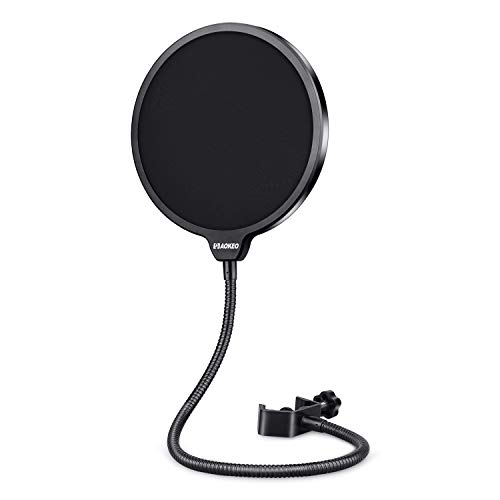
- Dual-layer screen helps reduce plosives
- 360-degree adjustable steel gooseneck
- Clamp mount fits many stands and booms
Best For: Adjustable home vocal and streaming setups
Best Foam Covers

- Two foam covers included
- Designed for AT2020-series microphones
- Helps protect against dust and moisture
Best For: Compatible AT2020 owners wanting simple covers
Best Three-Layer Shield
PEMOTech Three-Layer Windscreen

- Foam, metal mesh, and etamine layers
- Fits microphones measuring 45–61 mm
- Not compatible with Blue Yeti microphones
Best For: Compatible condenser microphones needing a fitted shield
Best Simple Gooseneck Filter

- 4.75-inch dual-layer nylon screen
- Flexible 8-inch gooseneck
- Universal microphone stand adapter
Best For: Compact studio vocal setups
Reliable Dual-Layer Control
NEEWER Professional Microphone Pop Filter Shield

- Dual-layer screen design
- Adjustable steel gooseneck
- Rotating clamp mount
Best For: Flexible vocal recording setups
Maximum Airflow Blocking
Aokeo Three-Layer Microphone Pop Filter

- Three-layer screen structure
- 360-degree filter and gooseneck rotation
- One-year warranty included
Best For: Highly adjustable vocal recording setups
Clean, Standalone Mesh Design
HyperX Shield Microphone Pop Filter

- Corrosion-resistant metal mesh
- 35 cm flexible gooseneck
- Toolless padded C-clamp
Best For: Streaming and HyperX microphone setups
Best for Directional Noise Control
Five-Sided Microphone Isolation Ball

- Five-sided foam design reduces noise and reflections
- Fits compatible 50–75 mm XLR and USB microphones
- Lightweight and mounts to multiple stand types
Best For: Home studios and portable recording setups
Best for Rode Microphone Owners

- Fits numerous compatible Rode microphone models
- Adds protection against wind noise and plosives
- Compact 10 g foam windscreen
Best For: Compatible Rode condenser microphone setups
Best Adjustable Budget Pick
Double-Screen Studio Pop Filter

- Double screen reduces pops, lisps, and hisses
- 360-degree swivel and flexible 13.5-inch gooseneck
- Broad compatibility with many microphones and stands
Best For: Home vocal recording and adjustable budget setups
Best All-Around Choice – Aokeo Dual-Layer Pop Filter
For shoppers comparing microphone pop filters for condenser microphones, the Aokeo Professional Pop Filter is a flexible option with a dual-layer screen, adjustable gooseneck, and clamp mount. Its design helps reduce plosives, hissing, and lisping during vocals, streaming, acting, and other spoken recordings.
Best For: Singers, streamers, actors, and home-recording setups needing adjustable positioning.
Pros:
- Dual-layer screen disperses air pressure to help contain vocal blasts.
- 360-degree steel gooseneck supports angle and distance adjustments.
- Rotating clamp is designed to fit various tubular booms and microphone stands.
- Includes a warranty and a swivel mount for easier installation and repositioning.
Cons:
- The clamp-style design may require a suitable boom or stand for mounting.
- It is larger and heavier than simple foam windscreen covers.
The Aokeo stands out when adjustability and broad compatibility matter. Its clamp and gooseneck make it practical for a fixed recording position, while the two-screen construction adds protection against plosives and moisture from close vocal work.
Best Foam Covers – YOUSHARES AT2020 Windscreens
Audio-Technica AT2020 Pop Filter - 2 Windscreens for AT2020 & AT-2035 Microphones (Black)
Check Price On AmazonThese YOUSHARES foam covers are a compact alternative for people choosing microphone pop filters for condenser microphones, especially compatible Audio-Technica AT2020-series models. The two-pack is designed to help reduce unwanted noise while protecting the microphone from dust and moisture.
Best For: AT2020, AT2020USB, and AT2020USB+ users who prefer simple slip-on foam covers.
Pros:
- Designed for Audio-Technica AT2020-series microphones.
- Two foam windscreen covers provide a spare or replacement.
- Lightweight, durable, and easy-to-clean quilted material.
- Suitable for vocals, instruments, podcasts, voiceovers, interviews, and calls.
Cons:
- These are foam covers rather than an adjustable external mesh filter.
- Compatibility is more limited than universal clamp-mounted pop filters.
- The microphone is not included.
Choose this two-pack when convenience and microphone coverage are more important than fine positioning control. It is a straightforward fit-focused option for compatible AT2020 microphones and a range of everyday recording applications.
Best Three-Layer Shield – PEMOTech Three-Layer Windscreen
The PEMOTech microphone windscreen uses three layers—foam, metal mesh, and etamine—to help reduce plosives, crackles, wind interference, and breath sounds. Among microphone pop filters for condenser microphones, it is a useful fit-on shield for compatible microphones measuring 45 to 61 mm in diameter.
Best For: Owners of compatible AT2020, AT2035, Rode, MXL, CAD, and similar microphones who want a fitted shield.
Pros:
- Three-layer construction targets plosives, wind, breath sounds, and crackles.
- Elastic bands and an inner rubber ring help secure the shield to the microphone.
- Metal mesh and plastic frame help prevent saliva from reaching the microphone.
- Fits microphones with listed diameters from 45 to 61 mm.
Cons:
- Not designed for Blue Yeti microphones.
- Compatibility depends on the microphone measuring within the specified diameter range.
- The package includes one pop filter and does not include a microphone.
This PEMOTech model is a strong choice when you want a snug, microphone-mounted design instead of a stand-mounted gooseneck. Check your microphone’s diameter carefully before buying, particularly because the manufacturer specifically excludes Blue Yeti compatibility.
Best Simple Gooseneck Filter – Samson PS04 Pop Filter
The Samson PS04 is a straightforward stand-mounted option for shoppers seeking microphone pop filters for condenser microphones in a studio setting. Its 4.75-inch dual-layer nylon screen is designed to reduce P-pops, while the flexible 8-inch gooseneck allows practical position adjustments.
Best For: Studio vocal setups using a compatible microphone stand and universal adapter.
Pros:
- Dual-layer nylon mesh screen helps reduce P-pops.
- Flexible 8-inch gooseneck makes positioning easier.
- Universal microphone stand adapter supports use with most microphones in a studio setting.
- Steel construction is intended for durability.
Cons:
- Its 4.75-inch screen is smaller than some larger pop filters.
- It requires a microphone stand or compatible mounting point.
- The notes specify general microphone compatibility rather than particular condenser models.
The PS04 keeps the setup uncomplicated: attach it to a stand, position the gooseneck, and place the screen between the vocalist and microphone. It is a sensible studio choice if you want a compact dual-layer filter without a microphone-mounted cover.
Reliable Dual-Layer Control – NEEWER Professional Microphone Pop Filter Shield
For singers, streamers, and actors seeking microphone pop filters for condenser microphones, the NEEWER Professional Microphone Pop Filter Shield uses a dual-layer design to reduce plosive bursts and unwanted sibilance. Its adjustable gooseneck and rotating clamp make positioning straightforward.
Best For: Vocal recording setups that need flexible positioning and dual-layer pop protection.
Pros:
- Dual-layer screens help disperse and contain air blasts.
- Adjustable steel gooseneck supports angle and distance changes.
- Rotating clamp fits a variety of tubular booms or microphone stands.
- Swivel mount simplifies installation and removal.
Cons:
- The microphone is not included.
- Its clamp-based design requires a compatible stand or boom.
The NEEWER is a practical choice when adjustability and straightforward plosive control matter most. Its metal construction and scratch-proof clamp add useful durability for regular vocal work.
Maximum Airflow Blocking – Aokeo Three-Layer Microphone Pop Filter
The Aokeo Mic Mask Shield is a strong option among microphone pop filters for condenser microphones when layered airflow control is a priority. Its three-layer screen, 360-degree adjustments, and stabilizing clamp support precise placement for recording, streaming, or performance.
Best For: Users who want three-layer pop protection with broad positioning flexibility.
Pros:
- Three-layer construction provides enhanced airflow blocking and noise control.
- Both the gooseneck and circular filter rotate 360 degrees.
- Scratch-resistant clamp is compatible with various microphone stands.
- Includes a one-year warranty.
Cons:
- The metal-and-plastic construction may not suit buyers seeking an all-metal filter.
- It requires a compatible stand or mount for installation.
With its extra screen layer and highly adjustable mount, the Aokeo is well suited to users who frequently fine-tune microphone placement. It also addresses both plosives and harsh S sounds during vocal work.
Clean, Standalone Mesh Design – HyperX Shield Microphone Pop Filter
HyperX Shield Microphone Pop Filter | Microphone Pop Filter | HyperX Shield Design
Check Price On AmazonThe HyperX Shield offers a durable alternative for microphone pop filters for condenser microphones, using a corrosion-resistant metal mesh to defend against plosive sounds. Its flexible 35 cm gooseneck and padded C-clamp make it easy to position on many microphone arms or stands.
Best For: Streamers, gamers, and vocalists who prefer a cleanable metal mesh filter with tool-free mounting.
Pros:
- Corrosion-resistant metal mesh is durable and easy to clean.
- Flexible 35 cm gooseneck holds the filter in position.
- Rubber-padded C-clamp mounts without metal-to-metal contact.
- Compatible with most HyperX shock mounts, including QuadCast and ProCast families.
Cons:
- Its listed compatibility with HyperX shock mounts may be more limited than fully universal fit claims.
- The clamp design still requires a suitable arm, stand, or mount.
The HyperX Shield stands out for its easy-clean metal mesh and tool-free attachment. It is especially compelling for HyperX owners, while its adaptable clamp also supports many general microphone-arm setups.
Best for Directional Noise Control – Five-Sided Microphone Isolation Ball
For creators comparing microphone pop filters for condenser microphones, this penypeal isolation ball takes a more enclosed approach than a conventional mesh screen. Its five-sided foam design targets noise and reflections from multiple directions while the double-layered opening helps reduce plosives and wind interference.
Best For: Home studios, live recording, and users who want portable acoustic shielding for compatible XLR or USB microphones.
Pros:
- Fits many condenser microphones with removable jackets measuring 50–75 mm.
- Five-sided seal helps reduce noise and reflections from different directions.
- Lightweight 120 g design can mount to stands, tripods, arms, and desktops.
- Helps limit plosives, wind interference, saliva spray, and microphone exposure to saliva.
Cons:
- Compatibility depends on the microphone’s removable jacket diameter.
- The enclosed foam design is less conventional than a simple external pop screen.
This is a strong choice when reducing surrounding reflections and directional noise matters as much as controlling vocal pops. Confirm your microphone’s dimensions before purchasing.
Best for Rode Microphone Owners – WS2 Foam Pop Filter
The Rode WS2 is a compact foam windscreen for specific Rode microphones, making it a focused option among microphone pop filters for condenser microphones. It provides added protection against wind noise and plosives without the size or setup of a separate gooseneck-mounted screen.
Best For: Owners of compatible Rode microphones such as the NT1-A, NT2-A, NT1000, NT2000, NTK, K2, Podcaster, Procaster, or Broadcaster.
Pros:
- Designed for a broad range of listed Rode microphone models.
- Helps protect the microphone capsule from wind noise and plosives.
- Very light at approximately 10 g.
- Compact foam construction is convenient for podcasting, speech, streaming, and recording.
Cons:
- Compatibility is primarily centered on the listed Rode microphone models.
- It does not offer the adjustable positioning of a separate pop-filter arm.
Choose the WS2 when you want a lightweight, model-specific foam shield and already use a compatible Rode microphone. It is less suitable if you need a universal clamp or adjustable screen placement.
Best Adjustable Budget Pick – Double-Screen Studio Pop Filter
Pop Filter For Studio Microphone, Pop Shield Mic Wind Screen For Better Vocal Recordings
Check Price On AmazonFor shoppers seeking microphone pop filters for condenser microphones on a budget, this studio pop shield offers a traditional adjustable setup. Its double screen, 360-degree swivel mount, flexible gooseneck, and clamp make it easy to position between the performer and microphone.
Best For: Home vocal recording, streaming, and users who need a broadly compatible pop filter with flexible placement.
Pros:
- Double screen helps reduce pops, lisps, and hisses during vocal recording.
- 360-degree swivel mount and 13.5-inch gooseneck allow flexible positioning.
- Adjustable clamp is compatible with many listed microphones and stands, including Blue Yeti, Rode PSA1, and MXL series.
- Helps protect the microphone from saliva during energetic performances.
Cons:
- The microphone is not included.
- The 6-inch screen and gooseneck require available space near the microphone stand.
This is the most versatile conventional option in the group for users who want adjustable positioning and broad compatibility at a low cost. Check your stand setup to ensure the clamp and gooseneck have room.
How We Picked These Microphone Pop Filters for Condenser Microphones
We focused on products designed for vocal recording and compatible with common studio, USB, and handheld microphones. The selection covers several filter styles, including fabric or mesh screens, layered designs, foam covers, acoustic isolation shields, and model-specific windshields.
We also considered mounting flexibility, likely durability, ease of positioning, and the type of recording each filter suits best. A pop filter should reduce plosives without making it difficult to maintain a consistent distance or access the microphone’s controls.
Quick Comparison
| Filter type | Best suited to | Main advantage |
|---|---|---|
| Dual- or three-layer mesh | Studio vocals, podcasts, streaming | Strong plosive control with broad compatibility |
| Metal mesh | Frequent home-studio use | Durable and easy to clean |
| Foam windscreen | Handheld mics and close speech | Simple fit and portability |
| Model-specific shield | Compatible Rode, Audio-Technica, or HyperX microphones | Neater fit and straightforward setup |
| Isolation ball or acoustic shield | Untreated recording spaces | Additional surrounding sound absorption |
Key Buying Factors for Microphone Pop Filters for Condenser Microphones
Filter Construction
Single-layer screens can be effective, but dual- and three-layer filters typically provide more consistent plosive reduction. Metal mesh is durable, while fabric and etamine layers may offer a softer barrier. Foam covers are compact but can slightly change the microphone’s high-frequency response.
Mounting and Positioning
Look for a sturdy clamp and a flexible gooseneck that holds its position. A filter should sit a few inches in front of the microphone without pressing against the grille. Check clamp size and available desk or stand space before buying.
Compatibility
Most universal shields fit standard microphone stands, but model-specific accessories may fit more securely. Confirm the filter’s opening, mounting method, and microphone dimensions, especially for large-diaphragm condenser microphones or USB models such as the Blue Yeti.
Cleaning and Durability
Choose a washable or replaceable screen if the filter will be used for frequent vocals, streaming, or podcasting. A rigid frame and firm clamp are worthwhile when the accessory will be repositioned often.
Who Should Buy Which Microphone Pop Filters for Condenser Microphones?
For most home studios: Choose a dual- or three-layer screen with a flexible arm. It offers the best all-around balance for vocals, narration, podcasts, and streaming.
For frequent recording: A metal-mesh design is a practical choice because it is durable and easy to maintain.
For a specific microphone: A compatible Audio-Technica, Rode, or HyperX filter can provide a cleaner fit and simpler installation than a universal model.
For handheld microphones: A foam windscreen or compact shield is easier to carry and works well for close-mic speech or performance.
For reflective rooms: An isolation ball or acoustic shield may help reduce nearby reflections, but it should complement—not replace—room treatment and good microphone technique.