The best samplers for recording range from tiny beat-making instruments to full production centers with sequencing, effects, and multitrack connectivity. The right choice depends on whether you prioritize portability, hands-on performance, sound design, or studio expansion.
We compared these 10 options by workflow, recording capability, connectivity, portability, and value so you can choose a sampler that fits your music setup instead of paying for features you will not use.
Best 10 Samplers for Recording Picks for 2026
Best Portable MPC Sampler

- Standalone battery-powered sampler with mic and speaker
- 16 pads, chopping, timestretching, repitching, and resampling
- USB-C, microSD, MIDI, line I/O, and onboard effects
Best For: Portable beatmaking and DAWless sampling
Best Complete Recording Bundle
AudioBox USB 96 Studio Package

- Two-channel USB audio/MIDI interface
- Includes mic, headphones, stand, cables, and software
- Records at sample rates up to 96 kHz
Best For: First home recording setup with a computer
Best Ultra-Portable Micro Sampler

- Built-in microphone and 3.5 mm sampling input
- Melodic and drum modes with sequencing
- 40-second memory and 16 onboard effects
Best For: Pocket-sized sketches and spontaneous sampling
Best Pro Standalone Sampler

- Standalone MPC3 workstation with 8-core processor and 8GB RAM
- MPCe pads, 7-inch touchscreen, mic, speakers, and battery
- 128GB storage with broad audio, MIDI, CV/Gate, and USB-C connectivity
Best For: Full standalone production, performance, and arrangement
Versatile Multitrack Choice
Zoom R24 Recorder and Pad Sampler

- Eight XLR combo inputs and up to 24 tracks
- Built-in stereo condenser microphones
- USB interface with phantom power and vocal effects
Best For: Multitrack recording, overdubs, and portable tabletop production
Portable Starter Bundle
PreSonus AudioBox Go Creator Studio

- Compact 24-bit, 96 kHz USB-C interface
- Includes condenser microphone and monitoring headphones
- Studio One 6 Artist software included
Best For: Beginners and portable vocal, instrument, or podcast recording
Texture-Focused Performance Sampler

- Four parallel stereo sampling tracks
- Granular engine with up to 128 grains
- Scenes, macros, modulation, and USB-C audio interface
Best For: Granular sound design, evolving textures, loops, and live performance
Reggae Groove Sampler

- 400+ handcrafted reggae sounds
- Synced loops plus bass and lead synths
- Eight remixable producer tracks
Best For: Reggae beatmaking and compact groove production
Streaming Studio Bundle

- Two condenser microphones included
- Four voice variations and 10 effects
- USB-C and multi-platform compatibility
Best For: Podcasting, livestreaming, and vocal recording
Entry Recording Bundle
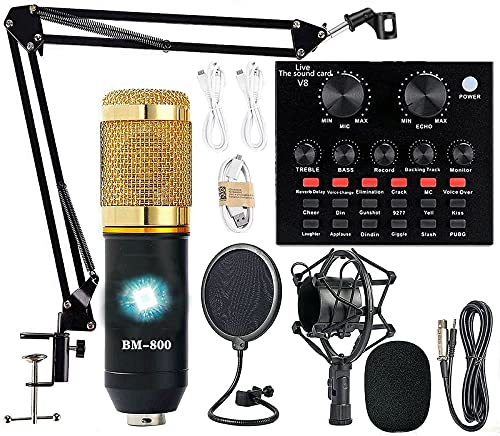
- Complete microphone and arm setup
- Cardioid condenser mic for vocals
- Voice effects and 192 kHz support
Best For: Beginner podcasting, vocals, and streaming
Best Portable MPC Sampler – MPC Sample
The Akai Professional MPC Sample is a practical choice among samplers for recording when you want a portable, computer-free setup. Its rechargeable battery, built-in microphone and speaker, pads, sample chopping tools, sequencing, and onboard effects support beatmaking at home, on the move, or in a DAWless rig.
Best For: Beginners, beatmakers, finger drummers, live performers, and DAWless creators who want an approachable standalone sampler.
Pros:
- Standalone, battery-powered design with built-in microphone and speaker.
- 16 MPC pads, color display, sample chopping, timestretching, repitching, and resampling.
- Includes four FX processors with 60 effect types and over 100 factory kits.
- Offers USB-C audio/MIDI, microSD storage, MIDI, line I/O, and smart-device sampling.
Cons:
- MIDI DIN connection requires a separately sold 1/8-inch-to-DIN adapter.
- The 2.4-inch display may feel compact for users accustomed to larger production screens.
Choose the MPC Sample if quick sampling and the familiar MPC workflow matter more than extensive screen space or a larger feature set. It balances portability and hands-on control particularly well.
Best Complete Recording Bundle – AudioBox USB 96 Studio Package
The PreSonus AudioBox USB 96 25th Anniversary Studio Recording Package is a practical starting point for recording vocals and instruments, though it is an interface bundle rather than a standalone sampler. It combines a two-channel USB interface with a condenser microphone, headphones, software, cables, and a desktop stand.
Best For: New home recordists who need a complete computer-based setup for capturing vocals, instruments, and basic productions.
Pros:
- Includes the AudioBox USB 96 interface, M7 condenser microphone, HD7 headphones, cable, and desktop stand.
- Two-channel recording supports vocals and instruments.
- Supports recording software including Studio One, Ableton Live, FL Studio, Cubase, Pro Tools, Logic Pro, and Reaper.
- Includes Studio One Artist and Studio Magic software, plus a maximum sample rate of 96 kHz.
Cons:
- Not a dedicated hardware sampler with pads, sample chopping, or standalone operation.
- Requires a computer or compatible host for the software-based recording workflow.
This package makes more sense for recording a microphone or instrument into a DAW than for sample-based beatmaking. Consider it when your priority is getting the essential home-recording hardware and software in one purchase.
Best Ultra-Portable Micro Sampler – PO-33 K.O.!
The teenage engineering PO-33 K.O.! is one of the smallest samplers for recording and quick musical sketches. Its built-in microphone and 3.5 mm input let you capture sounds, while melodic and drum modes, sequencing, and effects turn short samples into compact compositions.
Best For: Mobile beatmakers, beginners, experimental producers, and anyone who wants an inexpensive pocket-sized sampling tool.
Pros:
- Samples through the built-in microphone or 3.5 mm line input.
- Includes melodic and drum modes with eight slots for each sample type.
- Provides sequencing and 16 built-in effects in a highly portable battery-powered design.
- Offers a built-in speaker and 3.5 mm line output for headphones or external speakers.
Cons:
- Sample memory is limited to 40 seconds.
- Its nano-sized layout may be less comfortable for detailed editing than larger samplers.
- Uses two AAA batteries rather than a rechargeable battery.
The PO-33 K.O.! is best viewed as a creative sketchpad rather than a full production center. Its limited memory is offset by an extremely portable format that makes spontaneous sampling easy.
Best Pro Standalone Sampler – MPC Live III
The Akai Professional MPC Live III is a high-end option for samplers for recording when you need a standalone production center rather than a basic sample capture device. Its 8-core processor, 8GB of RAM, large touchscreen, MPCe pads, built-in microphone, battery, storage, and extensive connectivity support recording, sequencing, mixing, and performance without a computer.
Best For: Experienced producers, performers, and creators who want a powerful standalone workstation for sampling, arranging, live clips, and full-track production.
Pros:
- Runs MPC3 OS standalone with an 8-core processor, 8GB RAM, and support for up to 32 plugin instances.
- Expressive MPCe pads provide velocity, pressure, and X/Y control.
- Includes a microphone, stereo monitors, rechargeable battery, 128GB internal storage, and expandable storage options.
- Provides a 7-inch multitouch display, clip launching, touch-strip control, MIDI, CV/Gate, USB-C, and multiple audio connections.
Cons:
- Its extensive feature set may be more than beginners need for simple sampling.
- The larger production-center design is less pocketable than compact samplers.
The MPC Live III is the strongest fit here for building complete projects without a computer. Its higher-level sequencing, plugin, storage, and connectivity features make it a more capable long-term hub for serious standalone production.
Versatile Multitrack Choice – Zoom R24 Recorder and Pad Sampler
The Zoom R24 is a practical option for recording musicians, podcasters, and creators who want a tabletop unit that combines multitrack recording, USB interfacing, control functions, and pad sampling. Its eight XLR combo inputs, built-in stereo condenser microphones, and support for up to 24 tracks make it one of the more capable samplers for recording in this group.
Best For: Multitrack projects, mobile recording setups, overdubs, and users who want built-in microphones plus external-input flexibility.
Pros:
- Supports up to 24 tracks and eight XLR combo inputs.
- Built-in stereo condenser microphones can capture effects, speeches, and dialogue.
- Includes phantom power, microphone preamps, vocal effects, and USB audio-interface connectivity.
- Records 16- or 24-bit WAV files at 44.1 or 48 kHz.
Cons:
- Maximum sample rate is 48 kHz.
- SD and SDHC card support is limited to 32 GB.
- The unit weighs 2.9 pounds, so it is less pocketable than a compact interface.
The R24 is the strongest fit here for hands-on multitrack work and recording several sources at once. It is especially useful when built-in microphones and standalone controls matter as much as computer connectivity.
Portable Starter Bundle – PreSonus AudioBox Go Creator Studio
The PreSonus AudioBox Go Creator Complete Studio Bundle is a straightforward entry point for recording vocals, instruments, podcasts, and demos. Rather than focusing on standalone sampling, it supplies a compact USB-C interface, condenser microphone, headphones, and Studio One 6 Artist software for an immediately usable recording setup.
Best For: Beginners, portable musicians, podcasters, and producers who need the core hardware and software in one small package.
Pros:
- Includes the AudioBox GO interface, M7 condenser microphone, HD7 headphones, and Studio One 6 Artist.
- Compact 24-bit, 96 kHz USB-C interface weighs 8.16 ounces.
- Works with major DAWs including Ableton Live, FL Studio, Cubase, Pro Tools, Logic Pro, and Reaper.
- Supports microphones, instruments, headphones, speakers, computers, and mobile devices.
Cons:
- Its two-channel design is less suitable for recording many sources simultaneously.
- It is a recording bundle rather than a dedicated sampler with onboard sample manipulation.
- The supplied notes list Windows and macOS support, not Linux support.
This bundle is a sensible choice if you are building a first recording rig and value convenience over extensive sampling features. The included microphone, headphones, and software reduce the need to assemble a system piece by piece.
Texture-Focused Performance Sampler – S4 Sculpting Sampler
The S4 Sculpting Sampler is designed for creators who want to capture, reshape, and perform with sound rather than simply record clean takes. With four parallel stereo tracks, real-time recording, overdubbing, sound-on-sound loops, granular processing, modulation, scenes, macros, and a USB-C audio interface, it is the most sound-design-oriented of these samplers for recording.
Best For: Experimental production, evolving textures, live performance, granular sound design, and loop-based composition.
Pros:
- Offers four parallel stereo tracks, each with Material, Granular, Filter, Color, and Space processing.
- Supports real-time recording, overdub, sound-on-sound loops, varispeed recording, and external audio processing.
- Granular engine provides up to 128 grains and a four-second audio buffer.
- Includes assignable modulators, scenes, global macros, and performance-focused sound shaping.
Cons:
- Four stereo tracks may be limiting for larger multitrack recording sessions.
- Its highly specialized processing workflow may be more than beginners need.
- The supplied details do not specify a maximum sample rate or storage capacity.
The S4 stands out when the goal is transformation, movement, and live manipulation of recorded material. Choose it over a conventional interface if granular processing, modulation, and performance control are central to your workflow.
Reggae Groove Sampler – EP-40 RIDDIM
For producers seeking samplers for recording with a distinct rhythmic identity, the teenage engineering EP-40 RIDDIM combines synced loops, bass and lead synths, and more than 400 handcrafted sounds in a compact format. Its reggae-focused library, dub siren, and remixable tracks support quick beat and arrangement ideas.
Best For: Producers and beatmakers who want a portable reggae-oriented rhythm, bass, and synth workstation.
Pros:
- Includes 400+ handcrafted sounds with a reggae-focused sound library.
- Combines sampler functions with bass and lead synth engines.
- Offers synced loops, a dub siren, and eight remixable tracks from top producers.
- Compact, lightweight body measuring 12.6 x 12.6 x 1.18 inches and weighing 0.73 kg.
Cons:
- The sound library and overall design are specifically centered on reggae and riddim production.
- Plastic construction may not suit buyers seeking a metal-bodied instrument.
The EP-40 RIDDIM is a focused choice for creating groove-based material rather than a general-purpose recording bundle. Its combination of loops, synthesis, and curated sounds makes it appealing for hands-on sketching and remixing.
Streaming Studio Bundle – V8SS Podcast Kit
This V8SS bundle approaches samplers for recording from a podcast and livestreaming angle, pairing two condenser microphones with a USB-C live sound card. Smart noise reduction, omnidirectional capture, voice variations, and sound effects provide practical tools for recording, broadcasting, and creative vocal processing.
Best For: Podcasters, streamers, and creators who need microphones, a sound card, and voice effects in one kit.
Pros:
- Includes two broadcast-grade condenser microphones with anti-vibration suspension arms.
- Provides four voice variations and 10 sound effects.
- Supports USB-C connections and compatibility with Windows, Mac OS, Android, iOS, and Chrome OS.
- Can accept electric guitar, bass, and electronic drum inputs.
Cons:
- It has two channels and is primarily designed around podcasting, streaming, and voice production.
- The battery should be fully charged before initial use or after extended storage.
Choose this package when a complete vocal and streaming setup matters more than a dedicated hardware sampler. Its instrument inputs broaden its use, while the built-in effects target live and spoken-content workflows.
Entry Recording Bundle – BM-800 AM100-V8
The BM-800 AM100-V8 is a broad recording package for buyers comparing samplers for recording alongside microphone-based setups. It includes a condenser microphone, adjustable arm, shock mount, pop filter, cables, and a live sound card with voice effects for podcasting, music recording, streaming, and short-form video.
Best For: Beginners who want an all-in-one microphone and live sound card package for voice recording and streaming.
Pros:
- Includes the BM-800 microphone, suspension arm, shock mount, pop filter, foam cover, cables, and sound card.
- Cardioid pickup is designed for podcasts, vocals, and other front-facing voice work.
- Works with Windows and Mac OS, plus smartphones, tablets, PS4, Xbox, and Switch.
- Supports a maximum sample rate of 192 kHz and includes multiple sound effects.
Cons:
- The audio input is a 3.5mm jack rather than an XLR input.
- The bundle has one channel and does not include recording software.
- The sound card should be charged before use.
This kit is better suited to voice-centered recording than sample manipulation, but it offers a low-friction starting point for creators building a basic studio. Its included accessories reduce the need to source a microphone setup separately.
How We Picked the Best Samplers for Recording
We evaluated each product for its actual usefulness in a recording workflow, not just its feature list. Key considerations included sampling method, sequencing, track capacity, audio inputs, monitoring, effects, portability, computer connectivity, and ease of use. The selection includes dedicated samplers, portable production systems, multitrack recorders, and creator bundles because “sampler” can mean different things to beat makers, electronic musicians, podcasters, and home-recording users.
We also considered whether each option works best as a standalone instrument, a front end for a computer-based studio, or an affordable entry point for recording and content creation.
Quick Comparison
| Best For | Look For | Strongest Fit |
|---|---|---|
| Portable beat making | Battery operation, compact controls, onboard sequencing | Pocket samplers and portable MPC-style units |
| Full music production | Large storage, multiple tracks, effects, flexible sampling | Standalone production centers |
| Recording several sources | Multiple microphone inputs and multitrack recording | Tabletop multitrack recorders |
| Granular sound design | Polyphonic sampling, modulation, and sample manipulation | Dedicated sculpting samplers |
| Podcasting and voice content | Microphone, interface, monitoring, and bundled accessories | Complete recording packages |
Key Buying Factors for Samplers for Recording
Sampling and Recording Workflow
Check whether the device records through a built-in microphone, line input, microphone preamp, USB connection, or some combination. Sampling from external instruments requires suitable inputs, while field recording benefits from portability and an integrated microphone. If you plan to record vocals or instruments, confirm the input type, gain range, and monitoring options.
Tracks, Memory, and Storage
Small samplers may be excellent for short chops, loops, and one-shot sounds but limited for long recordings. Production centers and multitrack recorders generally provide more room for arrangements and live takes. Review internal storage, expansion support, maximum sample time, and whether projects can be backed up easily.
Sequencing and Sound Shaping
Look for the workflow that matches how you create. Step sequencing is useful for patterns and drums; linear recording is better for rehearsals, podcasts, and song-length takes. Effects, filters, granular processing, modulation, and resampling can make a sampler much more versatile for sound design.
Connectivity and Expansion
USB audio and MIDI make integration with a computer, controller, or other instruments easier. Multiple outputs, headphone monitoring, and balanced connections matter in a larger studio. Also check whether the device can transfer samples without proprietary software.
Who Should Buy Which Samplers for Recording?
Choose a pocket sampler if you want an inexpensive, highly portable tool for sketches, beats, and sample-based experimentation. Choose a standalone MPC-style system if you want to produce complete tracks without relying on a computer. A multitrack tabletop recorder is the better fit for bands, rehearsals, interviews, and recording several microphones at once.
For advanced experimental work, prioritize a dedicated sampler with granular processing and modulation. If your main goal is podcasting, streaming, or voice recording, a complete bundle may be more practical than a music-focused sampler because it combines the microphone, interface, and accessories you need to begin.