A guitar effects processor can replace a pile of pedals, add amp and cabinet sounds, and make it easier to save tones for different songs. The right one depends less on the longest effects list than on how you play and connect your gear.
These 10 picks span straightforward practice units, hands-on stage pedals, and compact processors for more involved rigs. Use the guide below to narrow the field before comparing the individual models.
Best 10 Guitar Effects Processors Picks for 2026
Best for AI-Assisted Tone Building

- Built-in AI tone assistant
- MNRS, NAM A2, and third-party IR support
- 80-second stereo looper and 40 drum rhythms
Best For: Players who want guided tone creation and connected editing
Best for Four-Footswitch Control

- Four multipurpose footswitches
- 200 presets and 55 amp preamps
- 80-second looper and USB OTG recording
Best For: Players who want hands-on preset and practice-tool control
Best for Portable Practice

- Battery-powered operation
- 71 effects and 13 amp models
- 68 rhythms and a 30-second looper
Best For: Guitarists practicing with headphones or away from an amp
Best for Flexible Effects Routing

- 15 assignable routing blocks
- 32 amp types and 170+ effects
- Touch display and assignable footswitches
Best For: Players who prioritize detailed routing and live control
Most Flexible Routing

- 240-plus built-in effects
- Up to 11 simultaneous effect blocks
- FX loop, MIDI, XLR, and USB-C
Best For: Players building flexible guitar or bass rigs
Easiest Hands-On Control
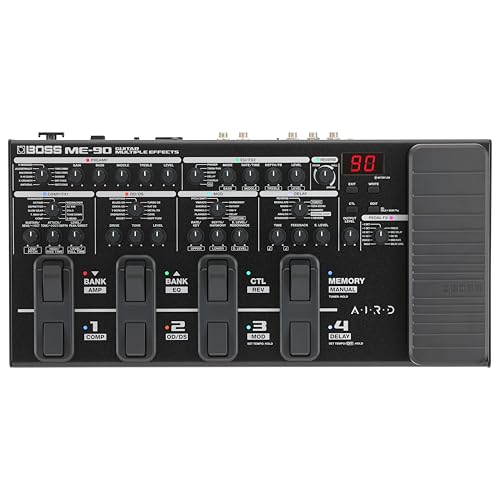
- Stompbox-style knob controls
- 60 effects and 11 AIRD amp models
- Battery operation and eight footswitches
Best For: Performers who want quick physical tone adjustments
Best Compact Rig Builder

- More than 300 effects and models
- Up to six simultaneous blocks
- Compact enclosure with IR loading
Best For: Space-conscious guitarists building a modeling rig
Best with Extra Features
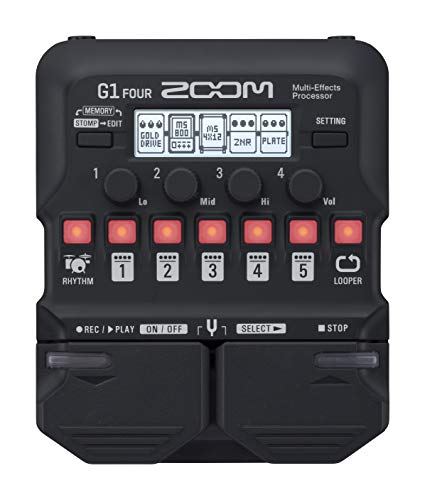
- 65 effects and 13 amp models
- 30-second looper and 68 rhythms
- Battery-powered with aux input
Best For: Portable practice with effects and backing rhythms
Connected Rig Builder
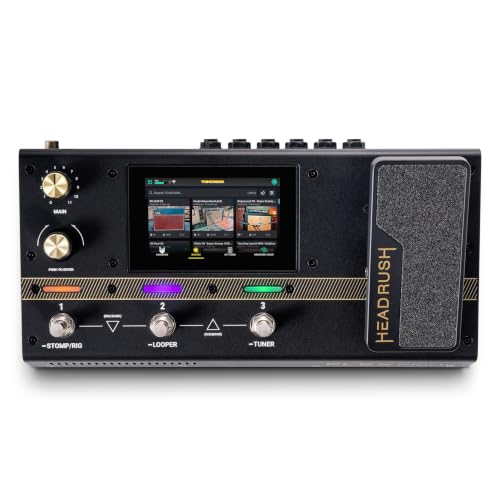
- 700-plus gear emulations
- NAM support and onboard Wi-Fi
- FX loop, MIDI, and USB audio
Best For: Connected rigs and extensive tone customization
Long-Loop Practice Pick

- 180-second looper and drum machine
- 80 preset and 80 user patches
- Expression pedal; adapter or AA power
Best For: Longer loops and hands-on practice
Best for AI-Assisted Tone Building – MOOER GE100 Pro
Among guitar effects processors, the MOOER GE100 Pro stands out for players who want help shaping sounds. Its built-in AI tone assistant, 3.5-inch color display, and support for MNRS, NAM A2, and third-party IR files give you several ways to build and expand your tones.
Best For: Guitarists who want guided tone creation alongside app and desktop editing.
Pros:
- AI tone assistant helps with sound creation.
- Supports MNRS, NAM A2, and third-party IR files.
- Includes an 80-second stereo looper, 40 drum rhythms, and an expression pedal.
Cons:
- This standard GE100 Pro uses an AC adapter; the battery-powered option is a separate Li version.
- Deep parameter editing relies on the companion app or desktop software.
The GE100 Pro is a practical choice if expandable sounds and connected editing matter more to you than battery-powered operation in this version.
Best for Four-Footswitch Control – MOOER GE150 Pro
The MOOER GE150 Pro is one of the guitar effects processors here with four multipurpose footswitches, making preset changes and onboard functions easier to manage while playing. It combines 200 factory presets, 55 amp preamps, 26 cabinet simulations, and an expression pedal in one unit.
Best For: Players who want hands-on switching for practice and performance.
Pros:
- Four footswitches can handle presets and functions, including looping and rhythms.
- Includes an 80-second stereo looper, 40 drum rhythms, and 10 metronome modes.
- USB-C supports computer editing and OTG audio recording and playback.
Cons:
- The standard GE150 Pro is mains-powered; the battery-powered Li edition is separate.
- Its 20 AMP and 20 CAB sample slots set a defined limit on loaded samples.
Choose this model if foot-operated flexibility is a priority and you want practice tools and recording connectivity in the same processor.
Best for Portable Practice – Zoom G1X Four
If you are comparing guitar effects processors primarily for practice, the Zoom G1X Four offers 71 effects, 13 amp models, and an included expression pedal. Battery power, an aux input, and headphone monitoring make it useful for playing away from your usual amp setup.
Best For: Guitarists who want a battery-powered practice processor with built-in rhythms.
Pros:
- Offers 68 rhythm patterns and a 30-second looper.
- Supports aux audio input and headphone monitoring for practice.
- Zoom Guitar Lab on Mac and Windows lets you edit patches.
Cons:
- The looper is limited to 30 seconds.
- Guitar Lab editing requires a Mac or Windows computer.
The G1X Four makes the most sense when convenient practice features and battery operation are higher priorities than a longer looper.
Best for Flexible Effects Routing – BOSS GX-100
The BOSS GX-100 suits players shopping for guitar effects processors with detailed signal-chain control. It pairs 32 amplifier types and more than 170 effects with 15 assignable blocks, a color touch display, and a rugged metal chassis.
Best For: Guitarists and bassists who want extensive routing and foot-controlled sound changes.
Pros:
- Offers 15 assignable blocks for flexible amp and effect routing.
- Includes assignable footswitches and an expression pedal with toe switch.
- Supports WAV speaker IR loading and computer editing through BOSS Tone Studio.
Cons:
- Mobile editing and audio streaming require an optional Bluetooth adaptor.
- At 23.7 inches long and 9.7 pounds, it takes more space to carry and set up than a small pedal.
Pick the GX-100 if customizable routing and onboard performance controls justify a larger, corded processor for your setup.
Most Flexible Routing – VALETON GP-200
Valeton GP-200 Multi-Effects Processor for Guitar & Bass, Expression Pedal, MIDI, USB Interface
Check Price On AmazonThe VALETON GP-200 is a feature-packed choice among guitar effects processors if you want to build detailed guitar or bass rigs in one floor unit. It offers 240-plus built-in effects, amp and cab simulations, and an adjustable signal chain with up to 11 simultaneous effect blocks.
Best For: Players who want extensive routing, connections, and recording options in one processor.
Pros:
- Stores up to 20 third-party impulse responses alongside its built-in cab simulations.
- Includes an FX loop, MIDI input, stereo outputs, XLR outputs, and a USB-C audio interface.
- Eight customizable footswitches and a 4.3-inch color screen support onstage control.
Cons:
- Its many effects and routing options may take time to set up.
- The 13.58-inch-wide enclosure needs more floor space than a compact pedal.
The GP-200 makes sense when flexible signal chains and connection options matter more than keeping your setup small.
BOSS ME-90 Guitar Multi-Effects Guitar Processor | All-In-One Guitar Processor
Check Price On AmazonThe BOSS ME-90 stands out among guitar effects processors for its stompbox-style knob layout, which makes it easier to shape sounds without relying on software. It combines 60 effects, 11 AIRD amp models, and eight multi-function footswitches in an all-in-one unit.
Best For: Performing guitarists who prefer hands-on tone adjustments.
Pros:
- Dedicated knobs make quick adjustments practical during practice or performance.
- Supports IR loading and includes an effects loop for external pedals.
- Offers battery-powered operation, an expression pedal, and 36 user patches.
Cons:
- Mobile editing and audio streaming require an optional Bluetooth adaptor.
- Its 21.35-inch length calls for substantial floor space.
Choose the ME-90 if immediate physical control is a higher priority than minimizing the size of your floor setup.
The Line 6 HX Stomp puts Helix-family modeling into a compact option among guitar effects processors. Its library includes more than 300 effects and models, with room for up to six simultaneous amp, cab, and effect blocks.
Best For: Guitarists who want a small modeling pedal for a streamlined rig.
Pros:
- Uses the same HX Modeling technology as Helix.
- Supports impulse-response loading and a looper within its six-block signal chain.
- Three capacitive-sensing footswitches with color-coded LED rings help with editing.
Cons:
- Six simultaneous blocks can constrain more elaborate patches.
- Only three onboard footswitches; expanded control requires the expression pedal/footswitch input.
The HX Stomp is a strong fit when pedalboard space is limited, provided its block and footswitch counts suit the way you play.
Best with Extra Features – Zoom G1 Four
Among guitar effects processors for practice, the Zoom G1 Four combines 65 effects, 13 amp models, a 30-second looper, and 68 rhythm patterns in a battery-powered unit. An aux input lets you play along with external audio, while the amp/headphone output supports private practice.
Best For: Guitarists who want a portable practice setup with effects, backing rhythms, and basic looping.
Pros:
- 65 built-in effects and 13 amp models offer plenty to explore.
- 68 rhythm patterns and an onboard looper support solo practice.
- Battery power and an aux input make practice setups flexible.
Cons:
- The 30-second looper is short compared with longer-loop options.
- No built-in expression pedal is listed.
The G1 Four is a practical choice if you want varied sounds and practice tools without making your setup complicated. Zoom Guitar Lab software adds a Mac/Windows option for working with effects.
The HeadRush Flex Prime is one of the more feature-packed guitar effects processors here, pairing a 4-inch touchscreen with 700-plus gear emulations, Neural Amp Modeler support, and onboard Wi-Fi. It also offers an FX loop, MIDI I/O, and USB audio for players building a connected rig.
Best For: Players who want deep sound selection, downloadable captures, and recording and routing options in one pedal.
Pros:
- Touchscreen and Wi-Fi access support on-device editing and cloud preset browsing.
- 700-plus emulations, NAM support, and impulse responses provide extensive sound options.
- FX loop, MIDI I/O, stereo outputs, and USB audio suit more involved setups.
- Includes an expression pedal and a looper with save/load and MIDI sync.
Cons:
- Its many editing and connection options may be more than a simple practice setup needs.
- Corded power limits battery-powered portability.
Choose the Flex Prime if its capture ecosystem and routing flexibility matter to you. Its three customizable footswitches and integrated expression pedal also put key controls underfoot.
For players comparing guitar effects processors with hands-on practice features, the MOOER GE100 offers 66 effects, 80 preset patches, and 80 user patches. Its 180-second looper, drum machine, and assignable expression pedal give you several ways to build and control ideas without a computer.
Best For: Guitarists who want longer loops, onboard rhythms, and expression control for practice.
Pros:
- 180-second looper leaves room for longer practice phrases.
- 80 user patches let you save preferred tones.
- Assignable expression pedal supports six control parameters.
- Can run from a 9V adapter or four AA batteries.
Cons:
- No USB editing or audio interface is listed.
- The display and knob controls may feel limited if you prefer touchscreen editing.
The GE100 stands out for loop length and onboard practice tools. Its adjustable output mode also provides a line-out setting for playing without an amp.
How We Picked These Guitar Effects Processors
We looked for a useful spread of prices, sizes, and workflows rather than treating the model with the most effects as the automatic winner. The selection includes simple practice processors, pedals with expression control, and units aimed at players who need more routing and recording options. We weighed control layout, preset access, amp and cabinet modeling, connectivity, and how readily each unit could fit into a typical guitar setup. Features and included accessories can vary by listing, so confirm the current specifications before buying.
Quick Comparison: Find Your Starting Point
For a straightforward practice setup, start with the Zoom G1 Four or MOOER GE100; the Zoom G1X Four adds an expression pedal for real-time control. The MOOER GE100Pro and GE150 Pro are worth a look if you want to explore more sounds and presets. If you prefer direct, pedal-style adjustments, consider the BOSS ME-90. The BOSS GX-100, VALETON GP-200, Line 6 HX Stomp, and HeadRush Flex Prime are stronger starting points when a board or rig needs more flexible integration. Compare their exact inputs, outputs, and control options against your own equipment rather than choosing solely by size or feature count.
Key Buying Factors for Guitar Effects Processors
Controls and Preset Changes
Think about what must happen mid-song. If you switch between several sounds live, check the number of footswitches, whether you can assign them, and how easily you can see the active preset. A hands-on layout can be faster for small adjustments; a screen-based workflow may suit players who build and save detailed patches. An expression pedal matters if you regularly use wah, volume swells, or parameter changes.
Amp Sounds and Signal Path
If you play through headphones, studio monitors, or a PA, pay close attention to amp and cabinet simulation. If you mainly use a guitar amplifier, check whether those simulations can be adjusted or bypassed for the output you use. Consider whether you need an effects loop to place external pedals in a specific part of the signal chain, and check stereo connections if your rig depends on them.
Recording and Setup Needs
USB connectivity can be useful for editing or recording, but confirm what a particular model supports. Also check power requirements, physical dimensions, and whether its outputs match your amp, interface, or mixer. Download the manual if a specific routing or MIDI task is essential.
Who Should Buy Which Guitar Effects Processors?
Beginners and home players should prioritize quick setup and approachable controls over a long specification sheet. Players who want foot-controlled wah or volume should shortlist models with an expression pedal or a suitable connection for one. Gigging guitarists should focus on reliable access to the sounds they need, visible controls, and the right outputs for their stage rig. If you already have favorite pedals or record directly, choose based on routing and connectivity first; extra effects only help if the processor fits the way you actually play.