Choosing among guitar effects processors for beginners can feel overwhelming, especially when every unit promises dozens of tones and features. The best starter pick should be simple to use, inspiring to play, and useful enough to grow with your skills.
In this roundup, we focus on beginner-friendly models that balance ease of setup, practical practice tools, and enough sound options to keep you experimenting without getting lost in menus.
Best 10 Guitar Effects Processors for Beginners Picks for 2026
Easy Practice All-Rounder
Zoom G1X Four Multi-Effects with Expression Pedal

- 71 effects and 13 amp models
- 30-second looper and 68 rhythms
- Expression pedal for added control
Best For: Beginners who want lots of tones and built-in practice tools
Pocket Studio Choice
LEKATO Multi Effects Pedal with Bluetooth and USB

- 125 effects with amp and cab sims
- Bluetooth app editing and USB audio interface
- Rechargeable compact design with looper
Best For: Beginners who want portable practice and recording features
Simple Starter Standard
Zoom G1 Four Multi-Effects Processor
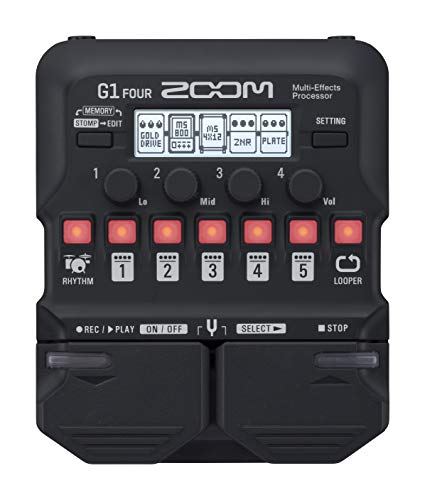
- 65 effects and 13 amp models
- 30-second looper and 68 rhythm patterns
- Aux input and headphone output
Best For: New guitarists who want core tones and practice tools
Portable Beginner Multi-Effects Board

- 9 amp models and 8 IR cabinets
- Built-in battery and headphone out
- Bluetooth playback plus PC/phone recording
Best For: Beginners who want compact practice-friendly effects and amp modeling
Feature-Packed Practice Processor
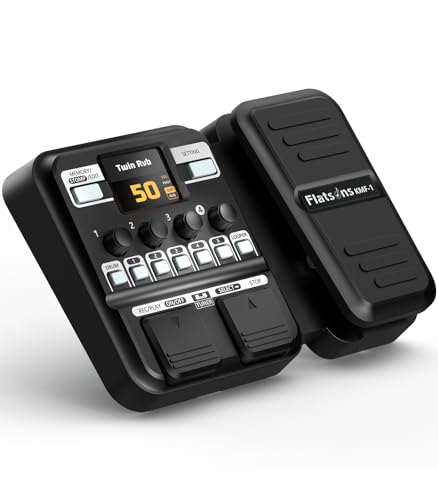
- 77 effects with 18 amp models
- 50 presets, tuner, looper, and drum rhythms
- Clear LCD and intuitive controls
Best For: Beginners who want presets now and deeper editing later
AI Tone Companion Pick
AME-100 Guitar Multi-Effects Processor

- AI Tone Companion for app-based tone creation
- 147 effects with 80 preset slots
- Looper, drum machine, Bluetooth, and USB recording
Best For: Beginners who want guided tone shaping and all-in-one practice tools
Best Heavy-Duty Pick
SK17 Multi Effects Guitar Processor

- ANN amp modeling with 6 effect modules
- 80 presets and customizable signal chain
- USB audio interface plus rechargeable battery
Best For: Beginners who want a pocket-size processor for practice and recording
Ultra-Portable Starter Pick
Flatsons P1 Multi Effects Guitar Pedal

- Tiny 145 g body with color display
- 80 presets, amp models, and IR cab sims
- Wireless, battery power, and OTG recording
Best For: Beginners who want an ultra-compact, phone-friendly practice processor
Easy Practice All-Rounder – Zoom G1X Four Multi-Effects with Expression Pedal
If you’re comparing guitar effects processors for beginners, the Zoom G1X Four is a practical place to start. It gives you a wide range of tones with 71 effects, 13 amp models, an expression pedal, a 30-second looper, and 68 rhythm patterns, so you can experiment without needing extra gear.
Best For: New players who want lots of effects, built-in practice tools, and simple home use.
Pros:
- 71 built-in effects and 13 amp models for broad tone exploration
- 30-second looper for songwriting and solo practice
- 68 rhythm patterns help make practice feel more musical
- Aux input plus amp/headphone output supports flexible practice setups
Cons:
- Many effects and options can take time to learn
- Guitar Lab editing requires a Mac or Windows computer
The G1X Four stands out as a beginner-friendly multi-effects unit because it mixes creativity and practice features in one compact pedal. If you want one processor that can cover basic tones, looping, and silent practice, it offers a lot to work with.
Premium Portable Pick – BOSS GX-1 Ultra-Portable Multi-Effects Processor
For guitar effects processors for beginners who want an easier path into BOSS sound, the GX-1 keeps things straightforward while still offering a deep feature set. It includes 23 amplifier types, over 140 effects, preset memories, user memories, and a color display with category buttons for simpler navigation.
Best For: Beginners who want premium sound, portable hardware, and easy front-panel control.
Pros:
- 23 amp types and over 140 BOSS effects provide plenty of room to grow
- Color display and effect category buttons make operation more intuitive
- 99 preset memories and 99 user memories support quick starting points and custom sounds
- Bluetooth, USB, battery, and adapter power options add flexibility
Cons:
- More expensive and feature-rich than a basic starter processor
- Large memory and routing options may be more than some beginners need at first
The GX-1 is a strong choice if you want a beginner-friendly unit that still feels premium and future-proof. Its easy layout and portable design make it practical, while the large effect library gives you plenty of sounds to explore over time.
Pocket Studio Choice – LEKATO Multi Effects Pedal with Bluetooth and USB
The LEKATO multi-effects pedal is a compelling option if you want guitar effects processors for beginners with modern connectivity and a compact footprint. It offers 125 effects, amp and cab modeling, a 40-second looper, 100 drum rhythms, Bluetooth app editing, and USB audio interface features for recording and practice.
Best For: Beginners who want a portable all-in-one pedal with recording, Bluetooth editing, and rechargeable power.
Pros:
- 125 effects, amp models, and cab sims provide a wide tone range
- Bluetooth app control and parameter editing add convenience
- USB audio interface and OTG support make recording easier
- Rechargeable battery and compact size suit travel or grab-and-go practice
Cons:
- Deep feature set may feel crowded for absolute first-time users
- Short 4-hour battery life may limit long unplugged sessions
This pedal is best viewed as a compact practice-and-recording hub that still stays approachable through its screen and app support. For beginners who want to experiment with tones and record right away, it delivers a lot in a small package.
Simple Starter Standard – Zoom G1 Four Multi-Effects Processor
The Zoom G1 Four is one of the more straightforward guitar effects processors for beginners if you want the essentials without extra hardware. It includes 65 effects, 13 amp models, a 30-second looper, 68 rhythm patterns, and support for guitar lab software so you can shape sounds on a computer.
Best For: New guitarists who want a simpler multi-effects pedal with core practice and tone-shaping tools.
Pros:
- 65 built-in effects and 13 amp models cover a wide range of tones
- 30-second looper and 68 rhythm patterns support practice and creativity
- Aux input and amp/headphone output help with silent or backing-track practice
- Zoom Guitar Lab software adds editing flexibility on Mac or Windows
Cons:
- No expression pedal included
- Fewer effects than the more advanced Zoom G1X Four
As a starter processor, the G1 Four keeps the feature set practical and easy to understand. It’s a good fit if you want basic multi-effects, looping, and rhythm support without paying for extras you may not use yet.
Portable Beginner Multi-Effects Board – LEKATO CUBE BABY
If you’re shopping for guitar effects processors for beginners, this LEKATO unit is a practical place to start because it combines a handful of core tones with simple preset and live modes. You get distortion, overdrive, delay, and reverb, plus amp and IR cabinet modeling, so it’s useful for practicing, experimenting, and basic recording without a complicated setup.
Best For: Beginners who want an easy, compact multi-effects pedal with amp modeling, headphone practice, and recording support.
Pros:
- Includes 9 amp models and 8 IR cabinet models for broader tone shaping.
- Built-in battery supports portable practice and can charge while in use.
- 3.5mm headphone output is handy for quiet home practice.
- Bluetooth playback and PC/phone recording support add practice flexibility.
Cons:
- Uses a small preset workflow, so deep editing may feel limited compared with larger units.
- Third-party IR loading requires the included USB workflow and Cube-Suite software.
Overall, this LEKATO pedal focuses on convenience and essential sounds rather than complex programming. For a beginner who wants an all-in-one practice tool with portable power and basic recording features, it offers a lot in a very small package.
Pocket Modeling Processor – SONICAKE QME-10 Pocket Master
Among guitar effects processors for beginners, the SONICAKE QME-10 stands out for packing a lot of features into a pocket-sized unit. It offers 100+ built-in effects, amp models, drum rhythms, and a looper, while the clear color screen and companion software help keep setup and preset management approachable.
Best For: Beginners who want a portable digital processor with lots of built-in sounds and easy editing tools.
Pros:
- 100+ guitar, bass, and acoustic effects with 20 amp models.
- 99 drum rhythms and a looper make practice and songwriting easier.
- USB audio interface and OTG support are useful for mobile recording.
- Rechargeable battery and compact size make it easy to carry.
Cons:
- Feature set is broad, so complete beginners may need time to learn the menus.
- Some advanced tones depend on software editing and preset management.
This is a strong pick if you want beginner-friendly hardware with room to grow into more advanced sounds. It is especially appealing for players who value portability, practice tools, and computer or phone connectivity in one device.
Feature-Packed Practice Processor – Flatsons KMF-1 Multi-Effects
For guitar effects processors for beginners who want plenty of room to experiment, the Flatsons KMF-1 offers 77 effects across multiple modules plus 18 amp models and 18 cabinet simulators. It also includes 50 preset patches, so you can start with ready-made sounds before digging into the more advanced edit and stomp modes.
Best For: Beginners who want a flexible practice processor with presets, tuner, looper, and drum rhythms.
Pros:
- 77 effects across 8 modules provide a wide range of tones.
- 50 preset patches make it easy to start playing right away.
- Built-in tuner, 30-second looper, and 42 drum rhythms support practice.
- Clear 128×32 LCD and intuitive controls help with day-to-day use.
Cons:
- More advanced editing options may be more than some beginners need at first.
- Battery use is limited to 6 AA batteries and about 2.5 hours.
- Cab simulation needs to be managed carefully depending on whether you’re using headphones, monitors, or a real amp.
The KMF-1 is a good fit if you want a beginner-friendly starting point that still leaves plenty of headroom for learning. Its presets make it approachable, while the deeper module control gives you a path to explore more advanced sounds later.
AI Tone Companion Pick – AME-100 Guitar Multi-Effects Processor
If you want one of the more approachable guitar effects processors for beginners, the AME-100 gives you a lot to explore without needing a separate board or interface. Its AI Tone Companion lets you describe the sound you want in the app, while the 147 built-in effects, IR/ADT support, looper, and drum machine make it useful for practice, recording, and simple livestream setups.
Best For: Beginners who want app-guided tone building, practice tools, and wireless-friendly recording features in one unit.
Pros:
- AI Tone Companion can generate and modify tones from text descriptions in the AUDOTA STUDIO app.
- 147 effect models with 80 preset slots and customizable signal chains.
- Supports third-party IRs and official ADT files for more cab and amp options.
- Includes a 20-second looper, drum machine, Bluetooth audio, and USB OTG recording support.
Cons:
- AI Tone Companion requires login through the app.
- More advanced than a basic starter pedal, so there may be a learning curve.
- Some features depend on app, USB, or wireless setup.
This is a feature-rich choice if you want a beginner-friendly processor that can grow with you. It focuses on experimentation, practice, and mobile control rather than keeping things overly simple.
Best Heavy-Duty Pick – SK17 Multi Effects Guitar Processor
The SK17 is a practical option in guitar effects processors for beginners who want a portable unit with amp modeling, preset storage, and recording support. It packs 6 effect modules, 80 presets, IR loading, and a built-in USB sound card, so you can practice quietly, shape tones, and capture ideas from a phone or PC.
Best For: Beginners who want a compact, battery-powered processor for practice, travel, and simple home recording.
Pros:
- ANN amp modeling is designed to deliver more natural response and harmonics.
- 80 presets with 6 independent modules and fully customizable chains.
- Built-in USB audio interface supports OTG recording and loopback.
- Portable 120g design with a rechargeable battery rated up to 7 hours.
Cons:
- Smaller form factor may be less immediate than larger floor units.
- Clip-on design may not suit every playing setup.
- Only one 3.5mm headphone output, so it is geared toward personal use.
This processor stands out if portability matters as much as tone flexibility. It gives new players a lightweight way to practice, record, and carry a usable effects rig anywhere.
Ultra-Portable Starter Pick – Flatsons P1 Multi Effects Guitar Pedal
Flatsons P1 is a strong fit for beginners looking for a small, rechargeable entry into guitar effects processors for beginners. It combines 80 preset slots, amp and cab simulation, third-party IR loading, and OTG recording in a compact body that is easy to carry and simple to use for bedroom practice, travel, or quick home recording.
Best For: New players who want a tiny, battery-powered processor with headphone practice and phone-friendly recording.
Pros:
- Very compact and lightweight at 145 g, with a bright color display.
- Includes 6 modules, amp models, IR cab sims, and 80 preset slots.
- Built-in wireless, plus 7 to 9 hours of battery life from the 2000mAh battery.
- Supports third-party IR loading and USB/OTG recording for phones and computers.
Cons:
- OTG adapter is sold separately.
- App-based control may feel less hands-on than knob-heavy pedals.
- Compact layout may not be ideal for players wanting a larger floorboard format.
If you value portability and simple practice convenience, the P1 makes a lot of sense. It offers useful core features without taking up much space in a gig bag or on a desk.
How We Picked These Guitar Effects Processors for Beginners
We focused on models that are approachable for first-time users, offer clear preset-based operation, and include the features beginners actually use most: amp and cab simulation, built-in effects, headphone practice, looping, drum beats, and USB or app connectivity where it adds real value. We also favored portable units and rechargeable designs when they improve everyday use.
Quick Comparison
For the simplest learning curve, look at compact units with fewer moving parts and strong factory presets. If you want the most room to grow, choose a processor with amp modeling, IR support, or deeper editing options. Players who practice silently should prioritize headphone out and rhythm tools, while home recorders may value USB audio and easy preset management.
Key Buying Factors for Guitar Effects Processors for Beginners
Ease of Use
Beginners usually benefit from straightforward controls, readable displays, and presets that sound good right away. A complicated interface can slow practice and make it harder to learn how effects work.
Practice Features
Built-in drum machines, loopers, headphone outputs, and aux inputs can make a huge difference for new players. These features help you develop timing, build routines, and practice without needing extra gear.
Sound Variety Vs. Simplicity
More effects are not always better for a first pedal. A solid mix of core sounds such as overdrive, delay, reverb, chorus, and amp models is often enough to cover most beginner needs.
Portability and Power
Compact size, rechargeable batteries, and USB power can make practice more convenient. If you plan to move between home, lessons, and rehearsal, portability matters.
Recording and Expansion
Some Guitar Effects Processors for Beginners include USB audio, IR loading, NAM support, or app-based editing. These features are helpful if you want to record or expand your tones later, but they are not required for every player.
Who Should Buy Which Guitar Effects Processors for Beginners?
If you want the easiest start, choose a model with intuitive presets and minimal setup. If you want a practice-first unit, prioritize drum rhythms and a looper. If you are interested in recording or tone experimentation, look for USB audio, amp modeling, and IR support. And if portability matters most, a pocket-sized rechargeable processor is usually the best fit.
For most newcomers, the best choice is the one that keeps you playing consistently. A beginner-friendly processor should make it easier to practice, explore effects, and build confidence without turning the learning process into a technical project.