Finding the right drum machine for worship is about more than having a beat. Church musicians need dependable timing, simple controls, and sounds that support songs without distracting from the service.
Below, we’ve rounded up 10 options that can fit rehearsal rooms, small stages, and modern worship setups, from compact pedals to tabletop groove machines.
Best 10 Drum Machines for Church Musicians Picks for 2026
Classic Standalone Choice
Alesis SR-16 Standalone Drum Machine
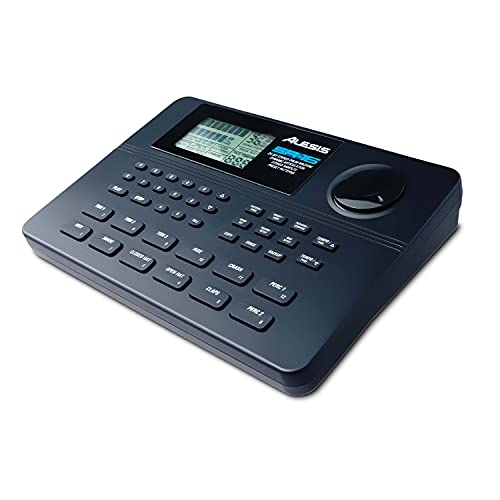
- 233 professional sounds with Dynamic Articulation
- 50 preset and 50 user kits
- MIDI support and 4 stereo pair outputs
Best For: Church musicians wanting a proven standalone drum machine with flexible routing
Pedalboard Rhythm Helper
MOOER Drum Machine Guitar Pedal

- 121 grooves across 11 music styles
- Tap tempo, fill, and dual-footswitch control
- 11 song banks with 7 rhythm slots each
Best For: Guitarists and bassists needing compact, foot-controlled rhythm support
Portable Practice Pad
Pyle Electronic Tabletop Digital Drum Set

- 8 touch-sensitive pads with pedals
- 600 sounds with edit and record controls
- USB MIDI, headphone jack, and battery power
Best For: Portable practice and MIDI-based rehearsal in a compact tabletop format
Looper Plus Rhythm
FLAMMA FS21 Stereo Guitar Looper Pedal & Drum Machine

- 2-in-1 looper and drum machine
- 100 grooves across 10 musical styles
- Up to 160 minutes of loop recording
Best For: Solo worship players who want looping and drum support in one pedal
Compact Worship Rhythm Starter
Medeli MR101S Portable Drum Machine

- 16 touch-sensitive pads for manual triggering
- 48 drum kits and 100 preset patterns
- USB-C or battery power with included foot pedal
Best For: Portable rehearsal and basic worship accompaniment
Pad-Control Production Rig
Donner STARRYPAD MIDI Drum Controller

- 16 backlit pads with adjustable velocity curves
- 48 assignable pads across 3 banks
- 2 faders, 2 knobs, and USB-C MIDI support
Best For: DAW-based beat building and sample triggering
Looper-Plus Rhythm Pedal

- Tuner, drum machine, looper, and mix modes in one pedal
- 30 preset patterns plus app-based drum editing
- 11 minutes total loop time with unlimited layering
Best For: Worship players who need rhythm and looping together
Church Practice Groove Pedal
AITONE AT-06 Drum Machine Guitar Pedal

- 48 preset grooves in 6 styles
- Tap tempo with real-time fills
- Compact pedal for practice and small sets
Best For: Church musicians needing a simple rhythm pedal for rehearsal and songwriting
Tabletop Learning Drum Kit
Pyle Pro PTED06 Electronic Drum Kit

- 7 pads with kick and hi-hat pedals
- 55 preset kits plus 10 custom kits
- Trainer mode and USB MIDI support
Best For: Beginners and church musicians who want a portable tabletop practice kit
Portable Drum Practice Station
Pyle Pro PTED06.5 Electronic Drum Kit
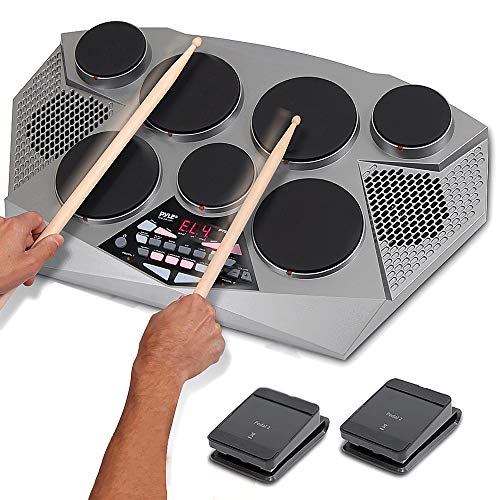
- 7 pads with hi-hat and bass pedals
- 55 preset kits and 300+ sounds
- USB MIDI connection for desktop software
Best For: Church musicians and beginners wanting a portable tabletop practice kit
Classic Standalone Choice – Alesis SR-16 Standalone Drum Machine
If you need drum machines for church musicians that can sit on a keyboard rig or work on their own, the Alesis SR-16 is a practical classic to consider. It offers 233 professional sounds, 50 preset and 50 user kits, and the kind of MIDI and output options that make it easy to fit into a service setup.
Best For: Church players who want a proven standalone drum machine with broad sound selection and flexible connectivity.
Pros:
- 233 included sounds with Dynamic Articulation for more realistic response
- 12 velocity-sensitive pads plus 50 preset and 50 user drum kits
- Seamless MIDI support for keyboards, computers, DAWs, and electronic drum kits
- 4 stereo pair outputs and footswitch jacks for start/stop and count/A/B/fill control
Cons:
- Not a pedal-style unit, so it takes more space than compact stompbox options
- Its classic design may feel less immediate than newer touch-style or software-based tools
The SR-16 stands out as a straightforward workhorse for churches that value reliability, routing flexibility, and a wide palette of sounds. It is especially appealing when you want a dedicated rhythm box rather than a multi-effect pedal.
Pedalboard Rhythm Helper – MOOER Drum Machine Guitar Pedal
For church musicians who want drum machines for church musicians in a compact pedal format, the MOOER X2 is built for quick rhythm control on a pedalboard. It includes 121 grooves across 11 styles, plus tap tempo, fill, and dual-footswitch control for easy use during rehearsal or live sets.
Best For: Guitarists and bassists who want simple pedalboard drum support with fast foot control.
Pros:
- 121 built-in grooves across 11 musical genres
- Tap tempo, fill function, and dual-footswitch control for live use
- 11 customizable song banks with 7 rhythm slots each
- Stereo input/output plus editor software for preset management and firmware updates
Cons:
- Pedal-style workflow is best for groove support, not full drum programming
- Runs on an included 9V adapter, so it is not battery powered
The X2 is a strong fit if your priority is compact, hands-on rhythm accompaniment rather than a full-featured drum workstation. Its footswitch-driven controls make it easy to stay focused while playing guitar or bass in worship settings.
Portable Practice Pad – Pyle Electronic Tabletop Digital Drum Set
If you are comparing drum machines for church musicians and want something portable for practice, the Pyle tabletop digital drum set offers an easy way to sketch out parts and rehearse at home or on the go. It packs 8 touch-sensitive pads, 600 sounds, MIDI/USB connectivity, and both headphone and speaker-friendly output options.
Best For: Players who want a compact tabletop drum setup for practice, MIDI use, and portable rehearsal.
Pros:
- 8 touch-sensitive pads with pedals for an acoustic-style layout
- 600 sounds plus recording and editing controls
- USB MIDI controller function for use with computer software
- Headphone jack and battery power for quieter, portable sessions
Cons:
- Tabletop format is less convenient than a floor pedal for quick live control
- Best suited to practice and programming rather than a pro-level stage drum system
This model is a flexible choice when portability and hands-on practice matter more than live performance features. For churches needing a compact way to work on rhythm ideas or MIDI parts, it covers the basics well.
Looper Plus Rhythm – FLAMMA FS21 Stereo Guitar Looper Pedal & Drum Machine
For worship players looking at drum machines for church musicians, the FLAMMA FS21 combines looping and rhythm support in one pedal. It offers 100 drum grooves, 10 metronome settings, tap tempo, and up to 160 minutes of loop recording, making it useful for practice, songwriting, and layered parts.
Best For: Solo players and worship leaders who want looping and drum support in a single pedal.
Pros:
- 2-in-1 design with a looper and drum machine in one unit
- 100 drum grooves across 10 musical styles
- Up to 160 minutes of loop recording capacity across 40 preset slots
- Tap tempo, metronome settings, and dual footswitch control
Cons:
- Exported audio files from software only include looper audio, not drum sounds
- Rhythm editing and data management depend on computer software for deeper control
The FS21 makes sense when you want one compact pedal to cover both practice grooves and looping. It is especially useful for musicians who want a streamlined setup without sacrificing basic rhythm flexibility.
Compact Worship Rhythm Starter – Medeli MR101S Portable Drum Machine
If you need drum machines for church musicians that are simple to carry and quick to start, the Medeli MR101S keeps the focus on practice and accompaniment. Its 16 touch-sensitive finger pads, 48 drum kits, and 100 preset patterns give you plenty of rhythmic options for rehearsals, youth services, and run-throughs without taking up much space.
Best For: Church players who want a portable, hands-free drum machine for practice, rehearsal, and basic live accompaniment.
Pros:
- 16 touch-sensitive finger pads for hands-on triggering.
- 48 drum kits and 100 preset drum patterns for quick starting points.
- Included foot pedal adds hands-free flexibility.
- USB-C or battery power makes it easy to use in different setups.
Cons:
- Built around preset patterns rather than deep production features.
- Portable design suggests a lighter-feature approach than full studio units.
The MR101S makes sense if your priority is convenience, portability, and immediate rhythm access. For church musicians who need a straightforward tool for keeping time and supporting rehearsals, it offers a practical balance of pattern variety and easy mobility.
Pad-Control Production Rig – Donner STARRYPAD MIDI Drum Controller
Among drum machines for church musicians, the Donner STARRYPAD is better suited to players who work with software and want more control over samples, beats, and MIDI mapping. It offers 16 backlit silicone pads, 3 pad banks for 48 assignable pads total, plus 2 faders, 2 knobs, and 3 buttons for shaping your setup in a DAW-based workflow.
Best For: Church musicians and producers who build drum parts in software and want a compact MIDI pad controller.
Pros:
- 16 soft silicone backlit pads with adjustable velocity sensitivity.
- 3 pad banks expand control to 48 assignable pads.
- 2 faders, 2 knobs, and 3 buttons add extra control options.
- Class-compliant USB-C connection and included MIDI cable support easy setup with compatible devices.
Cons:
- It needs DAW software to produce sound on its own.
- Not a standalone drum machine for immediate out-of-the-box audio.
- Mobile device use may require an additional Apple Lightning to USB adapter.
This is a strong pick if your church setup already depends on software instruments and MIDI control. It is less about standalone rhythm playback and more about shaping parts inside a production or live-triggering environment.
Looper-Plus Rhythm Pedal – Hoerev Drum Machine Looper V2
Hoerev Drum Machine Looper with Tuner APP Editingl 11 Minutes Loop, 30 Preset Drums,V2
Check Price On AmazonIf you want drum machines for church musicians that can also handle looping, the Hoerev Drum Machine Looper V2 combines several tools into one compact pedal. It includes a tuner, drum machine, looper, and drum-plus-looper mix modes, along with 30 preset drum patterns and app-based editing for users who want to customize rhythms from a phone.
Best For: Guitarists, singer-songwriters, and worship leaders who want rhythm, looping, and tuning in one pedal.
Pros:
- Combines tuner, drum machine, looper, and mix modes in one unit.
- 30 preset drum patterns cover styles like pop, rock, jazz, and metal.
- App support allows drum-code editing and saving from a phone.
- 11 minutes of total loop recording time with unlimited layering per song.
Cons:
- Drum editing is app-based, and PC editing is limited to looper import/export.
- Only 4 loop song storage slots are available.
- More feature-heavy than a simple rhythm box, so setup may take more time.
For church players who need one pedal to cover rhythm support and looping, this model stands out for versatility. It is especially useful when you want to move between practice, live service use, and recording with fewer devices on the board.
Church Practice Groove Pedal – AITONE AT-06 Drum Machine Guitar Pedal
If you want drum machines for church musicians that feel more musical than a metronome, the AITONE AT-06 gives you preset grooves, tap tempo, and a real-time fill function in a compact pedal format. It is geared toward practice, riff writing, and small solo setups where a steady sampled drum backing helps keep worship parts locked in.
Best For: Church musicians who want a simple rhythm pedal for practice, songwriting, and small rehearsals.
Pros:
- 48 preset grooves across Pop, Funk, Metal, Rock, Blues, and Jazz
- Real-time fill function helps create transitions while a groove is playing
- Tap tempo and 40-240 BPM range make it easy to set the pulse
- Compact metal pedal format fits a small pedalboard
Cons:
- Fixed preset patterns only; no editable drum kits or custom song arrangements
- Some grooves within a bank may feel similar
- Requires a regulated 9V DC center-negative power supply, not included
The AT-06 is a practical choice if you need rhythmic support without stepping up to a full drum workstation. Its strength is simplicity: pick a groove, set the tempo, and use it to sharpen timing or support lightweight rehearsal settings.
Tabletop Learning Drum Kit – Pyle Pro PTED06 Electronic Drum Kit
Among drum machines for church musicians, the Pyle Pro PTED06 is a tabletop electronic drum kit rather than a backing-track pedal, so it makes more sense for hands-on practice and learning. With 7 pads, kick and hi-hat pedals, preset kits, and a trainer mode, it is built for players who want a compact drum setup they can use at home or in a rehearsal space.
Best For: Beginners and church musicians who want a portable tabletop drum kit for practice and learning.
Pros:
- 7 drum pads plus hi-hat and kick pedal controllers for a fuller drum set feel
- 55 preset kits and 10 custom preloaded kits with 300+ sounds
- Drum trainer learning mode supports starter practice
- USB MIDI, AUX in, and phone out add flexible connection options
Cons:
- Tabletop format is less compact than a single pedal solution
- Designed more for practice and learning than traditional live drumming hardware
- Uses AC power or 6 C batteries, so portability depends on setup
This model works well when the goal is to practice real drum parts instead of just following a click. It offers enough kit variety and connectivity to be useful for home practice, basic recording, and beginner training.
Portable Drum Practice Station – Pyle Pro PTED06.5 Electronic Drum Kit
The Pyle Pro PTED06.5 is another tabletop option for church musicians who want a portable way to practice drum parts, build timing, or work through patterns away from a full acoustic kit. It includes 7 pads, hi-hat and bass pedal controllers, preset and custom kits, and MIDI-style USB connectivity for use with desktop software.
Best For: Church musicians and beginners who want a portable tabletop drum kit for practice and software use.
Pros:
- 7 pads with hi-hat and bass drum pedal controllers for a complete practice layout
- 55 preset kits, 10 custom kits, and 300+ sounds
- Trainer learning mode is helpful for developing drumming skills
- USB connection works with desktop software as a MIDI connection
Cons:
- Not a traditional drum machine groove player for accompaniment
- Tabletop design takes more space than a single pedal
- Best suited to practice and recording rather than live drum replacement
If you need a compact kit-style setup instead of a rhythm pedal, this Pyle model gives you a lot of sounds and basic learning tools. It is especially useful for players who want to practice drum parts, connect to software, or keep a portable drum surface nearby.
How We Picked These Drum Machines for Church Musicians
We focused on rhythm tools that are practical for live worship, rehearsal, and quick setup. That means straightforward operation, usable preset grooves, tap tempo support, portability, and enough rhythm variety to cover modern worship, hymns, and practice sessions.
We also favored models that can work in tighter church budgets and smaller spaces, where a dependable, easy-to-use device matters more than deep studio features.
Quick Comparison: What to Expect
Some of these units are best as simple practice partners, while others are better for guitar-based worship teams or tabletop band rehearsals. Pedal-style models are convenient for guitarist-led sets. Tabletop machines and pad units are better when you want fuller control, more hands-on programming, or drum-kit-style triggering.
Key Buying Factors for Drum Machines for Church Musicians
1. Ease of Use
Church settings often require fast changes between songs and minimal setup time. Clear buttons, preset grooves, and visible tempo controls are important when multiple volunteers may use the same gear.
2. Rhythm Variety and Worship Fit
Look for rhythms that can support common worship tempos, from soft ballads to mid-tempo praise songs. A good library should offer straight rock, pop, shuffle, and metronomic practice patterns.
3. Tempo Control and Sync
Tap tempo is especially useful for live ministry, since it lets you match the song quickly without menu diving. If your team uses click tracks or backing loops, consistency and tempo stability matter even more.
4. Portability and Volume Control
Many churches need gear that can move between rooms or travel for outreach events. Compact size, headphone support, and manageable output levels help keep rehearsal flexible and controlled.
5. Inputs, Outputs, and Workflow
Check whether the unit plays nicely with guitar rigs, headphones, pedals, or other instruments. Drum Machines for Church Musicians should fit the team’s workflow, not force a complicated studio-style process.
Who Should Buy Which Drum Machines for Church Musicians?
If you want the simplest live rhythm support, choose a pedal-style drum machine. If you need more tactile control for rehearsals or youth rooms, a tabletop pad machine may be the better fit. Worship guitarists who want looping plus rhythm should look at the 2-in-1 looper/drum models. For budget-conscious teams, prioritize dependable presets and easy tempo control over advanced editing features.
In short, the best option is the one your volunteers will actually use confidently every week. For most churches, that means a device with clear controls, useful grooves, and enough flexibility to support worship without getting in the way.