Choosing the right drum machine can make a home studio feel faster, more creative, and easier to record with. The best options balance sound quality, hands-on control, and a footprint that fits real-world spaces.
Below, we’ve selected 10 drum machines for home studios with different strengths, from classic analog groove boxes to compact practice-friendly and MIDI-focused tools.
Best 10 Drum Machines for Home Studios Picks for 2026
Legendary Classic
Alesis SR-16 Standalone Drum Machine
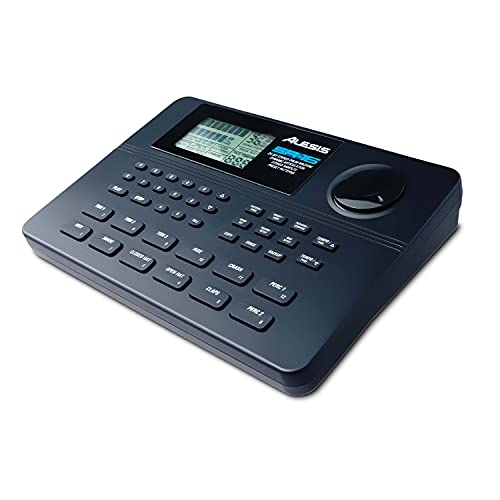
- 233 sounds with 50 preset and 50 user kits
- 12 velocity-sensitive pads with Dynamic Articulation
- MIDI support for DAWs, keyboards, and drum kits
Best For: Songwriters and home studio users who want a classic standalone drum machine with MIDI flexibility.
Software-First Beatpad
Akai Professional MPC Studio USB MIDI Pad Controller

- 8 banks of 16 RGB pads with aftertouch
- 1:1 integration with MPC2 software and DAWs
- MPC2 license included with plugins and FX
Best For: Beat makers and producers who want a portable USB pad controller tied closely to MPC software.
Analog Punch
Arturia DrumBrute Impact Analog Drum Machine

- Separate accent per drum for expressive sequencing
- Song mode for chaining patterns
- Optional Color shaping on most instruments
Best For: Home studio producers who want an analog drum machine with performance-friendly sequencing features.
Portable Practice Pad
Pyle Electronic Tabletop Digital Drum Set

- 8 touch-sensitive pads with pedals
- 600 sounds plus editing and recording controls
- USB MIDI and headphone output for home use
Best For: Beginner-friendly home drummers who want a compact tabletop kit with MIDI and headphone monitoring.
Looper & Rhythm Workhorse
FLAMMA FS21 Stereo Guitar Looper Pedal & Drum Machine

- 44.1kHz/24-bit looper plus drum machine in one pedal
- 100 drum grooves, 10 styles, and 10 metronome settings
- Dual footswitches and auto-save support practical home use
Best For: Guitarists who want looping and built-in rhythms for songwriting
Quiet Practice Pick
Electronic Drum Set with Mesh Pads and Bluetooth

- All-mesh pads help keep home practice quieter
- 360 sounds with 20 preset kits and 1 user kit
- Recording, metronome, and dual Bluetooth support
Best For: Beginners and apartment players wanting a quiet electronic kit
Analog Beat Builder
Behringer RD-78 Classic Drum Machine

- 15 authentic analog drum sounds
- 34 rhythm presets and a 16-step sequencer
- Compact, durable design for studio or live use
Best For: Producers who want fast, classic beat programming
Portable Tabletop Practice Kit
Pyle PTED06 Tabletop Drum Machine

- 7 pads with hi-hat and kick pedal
- 55 preset kits, 10 custom kits, 300+ sounds
- USB MIDI, AUX in, and headphone out
Best For: Beginners who want a portable drum practice unit for home-studio use
Compact Stylus Rhythm Box
Stylophone Beat Portable Drum Machine

- Stylus-controlled rhythm machine
- 4 drum kits and 4 bass sounds
- Pattern layering with tempo lock
Best For: Portable sketching and quick beat ideas in a small home studio
USB MIDI Beat Pad Controller
Donner STARRYPAD MIDI Drum Pad

- 16 backlit pads with 3 pad banks
- 2 faders, 2 knobs, and 3 buttons
- USB-C MIDI with DAW-dependent sound
Best For: DAW-based producers who want a compact beat pad controller
Legendary Classic – Alesis SR-16 Standalone Drum Machine
If you want drum machines for home studios that are straightforward, reliable, and easy to integrate, the Alesis SR-16 is still a practical option. It gives you a large built-in sound set, velocity-sensitive pads, and MIDI support for working with keyboards, computers, DAWs, and electronic drum kits.
Best For: Songwriters and home studio users who want a classic standalone drum machine with MIDI flexibility.
Pros:
- 233 professional sounds with 50 preset and 50 user drum kits
- 12 velocity-sensitive pads with Dynamic Articulation
- Built-in digital effects plus reverb and ambience for added realism
- Complete MIDI support for DAWs, keyboards, and electronic drum kits
Cons:
- Older-style standalone workflow may feel less modern than software-based options
- Best suited to users who want a dedicated drum machine rather than a pad controller
The SR-16 makes sense if you value a proven hardware box with production-ready features and broad connectivity. For home studios, it remains a dependable way to sketch rhythms, layer parts, and trigger sounds without relying entirely on software.
Software-First Beatpad – Akai Professional MPC Studio USB MIDI Pad Controller
For producers looking at drum machines for home studios, the Akai Professional MPC Studio is a strong software-centered choice. It combines velocity- and pressure-sensitive pads, tactile controls, and deep MPC2 integration so you can build beats inside your DAW with hands-on control.
Best For: Beat makers and producers who want a portable USB pad controller tied closely to MPC software.
Pros:
- 8 banks of 16 RGB velocity- and pressure-sensitive pads with aftertouch
- Designed for 1:1 integration with MPC2 software and cross-compatibility with major DAWs
- Ribbon touch strip and transport controls for real-time beat control
- MPC2 software license included, along with instrument plugins and FX
Cons:
- Requires a computer and MPC2 software to function as intended
- Less of a standalone drum machine and more of a controller-based workflow
This is a smart pick if you want expressive pads and a production suite in one package. It fits home studios especially well when your workflow centers on software beat-making and you want visual, tactile control.
Analog Punch – Arturia DrumBrute Impact Analog Drum Machine
The Arturia DrumBrute Impact is a compact analog option for drum machines for home studios when you want hands-on pattern building and immediate sound shaping. Its separate accent per drum, song mode, and optional color controls make it easy to create evolving rhythm parts without diving into menus.
Best For: Home studio producers who want an analog drum machine with performance-friendly sequencing features.
Pros:
- Separate accent per drum for more expressive sequencing
- Song mode lets you chain patterns
- Optional Color sound-shaping on all instruments except Cowbell
Cons:
- Feature set is focused and may be less expansive than larger production boxes
- Not designed around software integration like USB controller-based solutions
If you want a hardware drum machine that encourages direct pattern creation, this is an appealing choice. It is especially useful in home studios where quick rhythm programming and analog character matter more than broad digital feature counts.
Portable Practice Pad – Pyle Electronic Tabletop Digital Drum Set
If you need drum machines for home studios that are also portable and practice-friendly, the Pyle Electronic Tabletop Digital Drum Set offers a compact all-in-one approach. It includes touch-sensitive pads, pedals, MIDI and USB connectivity, and headphone output for quiet sessions.
Best For: Beginner-friendly home drummers who want a compact tabletop kit with MIDI and headphone monitoring.
Pros:
- 8 touch-sensitive pads plus pedals in a compact tabletop format
- 600 sounds and recording/editing controls for customization
- USB connection works as a MIDI controller for computer software
- Headphone output and battery power support private or portable use
Cons:
- More of a tabletop digital drum kit than a traditional dedicated drum machine
- Sound and workflow may appeal more to practice and experimentation than advanced production
This model is a good fit if you want a compact drum setup that can double as a MIDI controller. For home studios, it is most useful when portability, practice, and simple computer connectivity are top priorities.
Looper & Rhythm Workhorse – FLAMMA FS21 Stereo Guitar Looper Pedal & Drum Machine
For home studios that need both looping and rhythm support in one box, the FLAMMA FS21 is a practical fit among drum machines for home studios. It combines a stereo looper with a drum machine, so you can sketch song ideas, build layers, and keep time without adding extra gear.
Best For: Guitarists and home-recording players who want a compact looper with built-in drum grooves for practice and songwriting.
Pros:
- Combines a 44.1kHz/24-bit phrase looper with drum machine functionality.
- Offers 100 drum grooves across 10 musical styles plus 10 metronome settings.
- Dual footswitches give separate control of looper and rhythm functions.
- Saves recorded content automatically if power is lost.
Cons:
- Exported files include only looper audio, not the drum kit sounds.
- Rhythm switching waits until the current 4-beat bar finishes.
- Requires a 9V DC center-negative power supply.
Overall, the FS21 makes sense if you want a streamlined practice and writing tool rather than a dedicated drum program box. Its editing and data-management support add flexibility, but the strongest appeal is its all-in-one loop-and-groove workflow.
Quiet Practice Pick – Electronic Drum Set with Mesh Pads and Bluetooth
If your version of drum machines for home studios is a quieter, more hands-on practice setup, this electronic drum set is built for that role. It includes mesh heads, a kick drum, and a broad sound library, making it suitable for beginners who want a full kit feel with recording and metronome features.
Best For: Beginners and apartment players who want a quiet electronic kit with modern connectivity and included accessories.
Pros:
- All-mesh drum heads help reduce playing noise while still giving an elastic feel.
- Includes 360 sounds, 20 preset drum kits, and 1 user custom kit.
- Supports recording, metronome, speed adjustment, and dual Bluetooth.
- Comes with headphones, sticks, cables, and other needed setup items.
Cons:
- It is a full electronic drum kit, so it takes more space than a compact drum machine.
- Best suited to practice and learning rather than beat programming on its own.
This kit is a strong choice if you want realistic drumming practice at home with less noise and easy device connectivity. It is especially appealing for first-time buyers who want everything included in one starter package.
Analog Beat Builder – Behringer RD-78 Classic Drum Machine
For home studios that want a dedicated beat box, the Behringer RD-78 is a straightforward option among drum machines for home studios. It focuses on classic analog-style drum sounds, preset rhythms, and simple step sequencing, which makes it useful for quick composition and live-style pattern building.
Best For: Producers and performers who want a compact, easy-to-use analog drum machine for programming beats fast.
Pros:
- Includes 15 authentic drum sounds for classic-style rhythm creation.
- Provides 34 rhythm presets to speed up idea generation.
- 16-step sequencer supports hands-on beat programming.
- Compact and durable design suits studio and live use.
Cons:
- Has a narrower sound set than larger modern drum machines.
- Focused on classic rhythm work rather than multi-feature connectivity.
The RD-78 is a good pick if you value immediacy, classic drum tones, and a no-fuss interface. It is less about feature overload and more about getting usable patterns into your tracks quickly.
Portable Tabletop Practice Kit – Pyle PTED06 Tabletop Drum Machine
For drum machines for home studios that double as a practice rig, the Pyle PTED06 is a compact tabletop option with a full set of trigger pads and built-in sounds. It gives you a straightforward way to sketch drum ideas, practice patterns, and connect to a computer when you want to move into recording or MIDI-based software.
Best For: Beginners and home-studio players who want an all-in-one portable drum practice unit with computer connectivity.
Pros:
- 7 drum pads plus hi-hat and kick bass pedal controller for a fuller drumset layout
- 55 preset kits, 10 custom preloaded kits, and 300+ drum or cymbal sounds
- USB MIDI connection for Mac and PC, plus AUX in and headphone/phone out
- Runs on AC power or 6 C batteries for portable use
Cons:
- Tabletop design is best for practice and programming rather than acoustic-style performance
- Sound shaping depends on the onboard panel rather than a deep software workflow
The PTED06 makes sense if you want a self-contained drum machine for home studios that can handle practice, basic creation, and computer hookup without taking up much space. Its strength is convenience and variety rather than advanced production features.
Compact Stylus Rhythm Box – Stylophone Beat Portable Drum Machine
If you want drum machines for home studios that are small, immediate, and easy to carry, the Stylophone Beat is built around a stylus-based workflow. It includes multiple drum kits and bass sounds, along with looping and layering tools that make it useful for quick rhythm sketches and portable beat building.
Best For: Portable beatmakers and home-studio users who want a tiny rhythm machine for hands-on sketching.
Pros:
- Compact stylus drum machine with 4 drum kits and 4 bass sounds
- Record multiple patterns and multiple layers for building ideas
- Click track and tempo lock help keep timing steady
- Built-in speaker plus headphone support for flexible practice
Cons:
- Powered by 3 AA batteries, so it is not a plug-in desktop production unit
- Sound set is intentionally limited compared with larger drum machines
The Stylophone Beat is a good fit if your home-studio setup values portability and fast idea capture over deep editing. Its strengths are simplicity, pattern recording, and a tactile stylus interface that encourages experimentation.
USB MIDI Beat Pad Controller – Donner STARRYPAD MIDI Drum Pad
Among drum machines for home studios, the Donner STARRYPAD is aimed more at beat programming and software control than standalone sound generation. Its 16 backlit pads, faders, knobs, and MIDI connectivity make it a practical choice when you want to trigger samples, control a DAW, and work with external instruments.
Best For: Producers who need a compact MIDI drum pad controller for software-based home-studio work.
Pros:
- 16 soft silicone backlit pads with 3 banks for 48 assignable pads
- 2 faders, 2 knobs, and 3 buttons for extra control
- Class-compliant USB-C connection for easy plug-and-play use
- Works with Android, iOS, Mac, and Windows, and includes MIDI in/out
Cons:
- Does not produce sound on its own and needs DAW software
- Editor is for pad setup rather than recording or arranging music
The STARRYPAD is best viewed as a hands-on MIDI controller for building beats inside software, not as a standalone drum machine. If your studio already runs on a DAW, it offers a lot of triggering and control in a compact footprint.
How We Picked These Drum Machines for Home Studios
We focused on instruments that make sense in small studios: compact size, easy integration with recording setups, dependable rhythm tools, and controls that encourage quick ideas rather than menu diving. We also considered sound variety, sequencing features, headphone use, MIDI/USB support, and whether the unit is better for standalone beat-making or controller-style production.
Quick Comparison
If you want a classic drum machine workflow, look at standalone groove boxes and analog units. If you mainly produce inside a DAW, pad controllers and MIDI beat makers may be the better fit. For practice spaces or multi-use rooms, tabletop kits and quieter electronic drum options can be more practical than full-size hardware.
Key Buying Factors for Drum Machines for Home Studios
Sound Engine and Style
Choose the sound character you’ll use most. Analog-style machines can deliver punchy, immediate drum tones, while digital and sample-based units usually offer wider sound libraries and more versatility for genre hopping.
Sequencing and Workflow
A good sequencer matters as much as the sounds. Step sequencing, pattern chaining, and live performance controls can speed up songwriting and make it easier to build arrangements without extra software.
Connectivity
For home studio use, USB, MIDI, headphone output, and sync options are important. These connections help the unit work with computers, monitors, audio interfaces, pedals, and other gear.
Size, Noise, and Portability
Drum Machines for Home Studios should fit your desk, rack, or recording corner. If space is tight, prioritize compact hardware and quiet operation. If you plan to travel or jam away from the studio, battery-friendly or highly portable models are worth a closer look.
Who Should Buy Which Drum Machines for Home Studios?
Producers who want hands-on beat programming should favor dedicated drum machines and grooveboxes. Guitarists or solo musicians who need rhythm support may prefer combo units with looper and drum features. Electronic drummers and practice-focused users should lean toward tabletop drum pad kits or mesh-pad alternatives. If you mainly work in a DAW, an MPC-style pad controller can be the most efficient bridge between hardware feel and software production.
In short, the best choice depends on whether you want fast songwriting, studio integration, realistic practice, or portable beat creation. Match the hardware to your workflow, and your home studio setup will feel much more inspiring.