If you want smoother dynamics without adding hiss, the right compressor can make a guitar rig feel more polished and controlled. The best quiet compressor pedals for guitar keep your attack natural, your sustain steady, and unwanted noise to a minimum.
Below, we’ve narrowed the field to 10 options that balance tone, transparency, and practical features for players who want compression that works quietly in the background.
Best 10 Quiet Compressor Pedals for Guitar Picks for 2026
Quiet Workhorse
Boss CS-3 Compressor/Sustainer Pedal

- Low-noise design for super-quiet operation
- Level, Tone, Attack, and Sustain controls
- Compressor and sustainer in one pedal
Best For: Players who want a simple, low-noise compressor with flexible sustain control
Studio Standard

- In-line compressor evens out the signal
- Useful for increased sustain and stable dynamics
- Simple sensitivity control and constant output
Best For: Guitarists who want a straightforward compressor for smoothing dynamics and adding sustain
Modern Blend

- Blend control retains peaks and signal character
- Release switch for single coils or humbuckers
- Tone control adds harmonic shaping
Best For: Players who want a flexible compressor with blend control and pickup-specific settings
Budget Analog Pick
Amazon Basics Analog Compressor
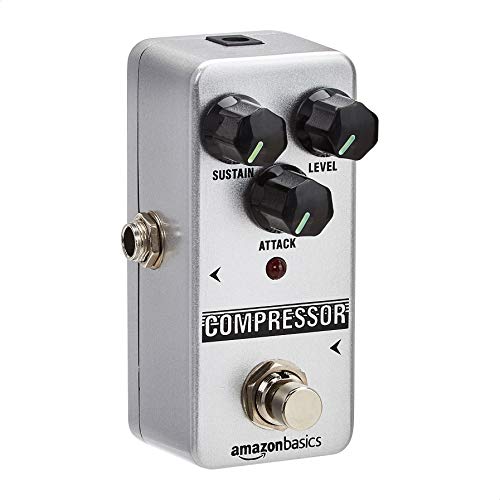
- Fully analog circuit with true bypass
- Compact aluminum-alloy pedal housing
- LED indicator and anti-skid pads
Best For: Budget-conscious players wanting a simple analog compressor
Dual-Mode Value Pick
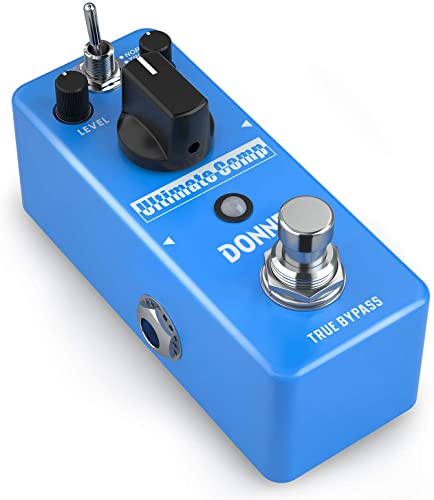
- Pure analog circuit with true bypass
- COMP, TONE, and LEVEL controls
- NORMAL and TREBLE modes for flexibility
Best For: Players wanting affordable compression with extra tone shaping
Most Adjustable Quiet Compressor
JOYO AVALLON R-19 Studio Compressor

- Ratio, attack, and release controls for studio-style shaping
- Independent input/output knobs plus 12-LED meter
- Transparent true-bypass compression for guitar and bass
Best For: Guitarists who want detailed, studio-like compression controls and a visual meter
Compact Quiet Compressor
NUX Sculpture Mini Compressor Pedal

- Mini footprint for tight pedalboards
- Blend knob for dry/wet compression balance
- Clean and Clip modes with selectable buffer bypass
Best For: Players who want a compact compressor with blend control and mode options
Quiet Workhorse – Boss CS-3 Compressor/Sustainer Pedal
If you’re comparing quiet compressor pedals for guitar, the Boss CS-3 is a practical option built around a low-noise design and straightforward controls. It gives you Level, Tone, Attack, and Sustain knobs, so you can shape compression for cleaner rhythm parts, added sustain, or a more controlled lead sound without a complicated setup.
Best For: Players who want a simple, low-noise compressor with flexible control over tone and sustain.
Pros:
- Low-noise design for super-quiet operation
- Four onboard controls for Level, Tone, Attack, and Sustain
- Useful as both a compressor and sustainer
- Compact, standard pedal format for easy board placement
Cons:
- No blend control is listed in the supplied notes
- May take a little dialing in if you want very specific attack behavior
Overall, the CS-3 is a dependable choice if your priority is quiet compression with enough control to tailor the feel of your guitar signal. It is aimed more at practical tone shaping than feature-heavy experimentation.
Studio Standard – MXR Dyna Comp Compressor
For players shopping quiet compressor pedals for guitar, the MXR Dyna Comp is a classic inline compressor that evens out the signal and adds stable dynamics. Its strength is in simple, proven compression that can increase sustain and keep your output consistent, which makes it easy to use as an always-on studio-style pedal.
Best For: Guitarists who want a straightforward compressor for smoothing dynamics and boosting sustain.
Pros:
- In-line compression evens out the guitar signal
- Useful for increased sustain with stable dynamics
- Constant output signal for consistent levels
- Simple sensitivity control keeps operation direct
Cons:
- Fewer controls than more modern compressor designs
- Not specifically described as a low-noise model in the supplied notes
The Dyna Comp remains a practical choice if you want a familiar compressor voice with uncomplicated controls. It is best approached as a tried-and-true dynamics tool rather than a highly adjustable modern compressor.
Modern Blend – Keeley Compressor Plus Pedal
If you want quiet compressor pedals for guitar with more control over feel, the Keeley Compressor Plus adds a blend control, tone shaping, and a release switch tuned for single coils or humbuckers. That makes it a strong fit for players who want compression that stays musical while preserving more of the original pick attack and signal character.
Best For: Players who want a more flexible compressor with blend control and pickup-specific release settings.
Pros:
- Blend control helps retain peaks and proper signal phasing
- Release switch is tuned for single coils or humbuckers
- Tone control emphasizes sensitive harmonics
- Battery powered and compact pedal format
Cons:
- More controls may take extra time to dial in
- Not marketed in the supplied notes specifically as a low-noise model
This pedal is a good match if you want compression that feels more transparent and adaptable than a basic two-knob design. It offers a practical middle ground between strong compression and keeping your guitar’s natural response intact.
Mini Quiet Option – MXR Dyna Comp Mini Compressor
Among quiet compressor pedals for guitar, the MXR Dyna Comp Mini stands out for its space-saving size and quieter operation features. It keeps the classic MXR compression idea but adds a rare CA3080 metal-can IC for greater transparency, increased dynamic range, and quieter performance, along with an attack switch for fast or slow response.
Best For: Players who want a compact compressor with quieter operation and simple attack switching.
Pros:
- Mini housing saves pedalboard space
- CA3080 metal-can IC is designed for quieter operation
- Greater transparency and increased dynamic range
- Attack switch toggles between slow and fast settings
Cons:
- Fewer controls than larger compressor pedals
- Supplied notes do not list tone or blend controls
If you want a smaller-format compressor that still aims for clean, quiet performance, this mini version is an easy one to consider. It keeps the setup simple while offering just enough control to adjust feel.
Budget Analog Pick – Amazon Basics Analog Compressor
Amazon Basics Compressor Guitar Pedal, Fully Analog Circuit with True Bypass, Silver
Check Price On AmazonIf you want quiet compressor pedals for guitar without spending much, the Amazon Basics Compressor keeps things simple with a fully analog circuit and true bypass. It is built for basic compression duties, with a broader adjustable range and a compact pedal format that fits easily on a crowded board.
Best For: Players who want an affordable, no-frills compressor with analog signal path and true bypass.
Pros:
- Fully analog circuit for straightforward compression
- True bypass helps preserve your dry signal when disengaged
- Compact aluminum-alloy housing with anti-skid rubber pads
- LED status indicator for quick on/off checking
Cons:
- Power adapter is not included
- Requires 9V DC regulated power, minimum 300mA
- Basic feature set compared with more flexible compressor pedals
For players who mainly need a clean, compact compressor with quiet operation and simple control, this is a practical entry-level choice. It focuses on the essentials rather than extra shaping options.
Sustain Specialist – TC Electronic Forcefield Compressor
The TC Electronic FORCEFIELD COMPRESSOR is aimed at players who want quiet compressor pedals for guitar with a classic compressor/limiter approach and endless sustain. It is the kind of pedal you choose when you want compression that supports longer notes and smoother dynamics on a pedalboard.
Best For: Guitarists looking for a classic compressor/limiter pedal with strong sustain.
Pros:
- Classic compressor/limiter design
- Designed for endless sustain
- Well suited to smoothing playing dynamics
- Simple choice for players who want a focused compressor
Cons:
- No detailed specs or control list were provided
- Less information available about power and bypass details
If your priority is sustain and a classic compression feel, this pedal is positioned for that job. It is a straightforward option for players who want the compressor to do one thing well.
Dual-Mode Value Pick – Donner Ultimate Comp Pedal
The Donner Compressor Pedal is a strong fit for quiet compressor pedals for guitar if you want more shaping control. Its pure analog design, true bypass, and NORMAL/TREBLE mode switch give it more flexibility than a basic one-knob comp, while still aiming for a warm, smooth result.
Best For: Players who want an affordable analog compressor with extra tone-shaping controls.
Pros:
- Pure analog signal path with true bypass
- COMP, TONE, and LEVEL controls for detailed adjustment
- NORMAL and TREBLE modes add extra versatility
- Designed for warm, smooth, and balanced compression
Cons:
- Power adapter is not included
- Uses corded electric power only
- Mode and tone controls may take a little setup time
For players who want quiet compression plus more control over brightness and output, this Donner model offers a lot of value. It is a practical step up if you want a compressor that can adapt to different guitars and playing styles.
Quiet Studio Compressor Pick – Orange Class A VCA Compressor Pedal
If you want quiet compressor pedals for guitar that keep your tone clear and musical, the Orange Class A VCA Compressor is built for exactly that job. Its low-noise Class A VCA design is meant to add studio-style dynamics control without stripping away touch sensitivity, so it can tighten clean parts and smooth single-note lines while still feeling amp-like under the fingers.
Best For: Players who want a warm, transparent compressor with precise control and low noise.
Pros:
- Super low-noise Class A VCA circuit for clean dynamics control
- Brings clarity and warmth without losing touch sensitivity
- Attack and release knobs make the response easy to shape
- Balanced, warm, and clear sound profile suits clean tones and lead lines
Cons:
- Fewer controls than studio-style pedals with ratio/input/output shaping
- Modern analog design may be more straightforward than some players want
Overall, this is a strong pick if your priority is low-noise compression with a natural feel rather than heavy coloration. It should appeal to players who want a simple, polished pedalboard compressor that still responds musically.
Most Adjustable Quiet Compressor – JOYO AVALLON R-19 Studio Compressor
For quiet compressor pedals for guitar with more studio-style control, the JOYO AVALLON R-19 stands out with ratio, attack, release, input, and output knobs. It is built to behave more like a studio compressor in pedal form, giving you detailed control over how hard the signal is squeezed, how fast it engages, and how much level you send through the circuit. The gain reduction meter also helps you dial in compression with confidence.
Best For: Guitarists who want detailed, studio-like compression controls and a visual gain reduction display.
Pros:
- Ratio, attack, and release controls provide deep compression shaping
- Independent input and output knobs add precise level control
- 12-LED gain reduction meter gives clear visual feedback
- Transparent analog circuit with true bypass preserves your core tone
Cons:
- Requires a 9V DC adapter and does not include a battery compartment
- For the quietest performance, it relies on a regulated, isolated supply
This is the best choice here if you want maximum control over a compressor’s behavior rather than just a simple sustain knob. It should work especially well for players who like repeatable settings and want to see how much compression they are using.
Compact Quiet Compressor – NUX Sculpture Mini Compressor Pedal
If you need quiet compressor pedals for guitar in a small footprint, the NUX Sculpture Mini Compressor is designed to keep your signal even while staying easy to fit on a crowded board. It offers Clean and Clip modes, a Blend knob for balancing dry and compressed sound, and a selectable buffer bypass, so you can tailor the response to either single-coil or humbucker setups.
Best For: Players who want a compact compressor with blend control and multiple mode options.
Pros:
- Mini size saves pedalboard space
- Blend knob lets you mix dry and wet signal for a natural feel
- Clean and Clip modes offer different compression responses
- Selectable buffer bypass adds routing flexibility
Cons:
- Uses battery power rather than the adapter-focused setup some players prefer
- Hardware interface details are less conventional than typical pedal listings
The Sculpture Mini is a practical option if you want flexible compression without taking up much space. Its blend control and mode switching make it useful for dialing in subtle smoothing or a tighter squeeze, depending on the guitar and style.
How We Picked the Quiet Compressor Pedals for Guitar
We focused on pedals that are known for low noise, reliable bypass or buffering behavior, and useful compression controls rather than hype. Priority went to models that can handle single-coil and humbucker setups without making hiss or pumping more noticeable. We also considered build quality, ease of dialing in, and whether each pedal makes sense for home practice, live use, or recording.
Quick Comparison
Some options lean toward simple, always-useful compression, while others offer more control over attack, blend, or sustain. If you want a straightforward stompbox, classic designs are usually easiest to live with. If you need more tailoring, look for pedals with blend, ratio, or multi-mode controls. Among Quiet Compressor Pedals for Guitar, the best choice often depends on how much transparency versus character you want.
Key Buying Factors for Quiet Compressor Pedals for Guitar
Noise Floor
A compressor raises quieter notes, which can also raise hiss. Look for pedals with a reputation for low self-noise and smooth gain reduction. If you use bright pickups or high-gain amp settings, this matters even more.
Control Layout
Simple controls are great if you want quick setup, but more advanced controls help you avoid over-compressing. Blend, attack, release, and output level can make it easier to keep the pedal quiet while preserving pick dynamics.
True Bypass Vs. Buffering
True bypass can be a plus in minimalist rigs, while buffered designs may help keep your signal stronger across longer pedalboards. The best choice depends on the rest of your chain and whether you value absolute bypass simplicity or signal stability.
Compression Style
Optical, VCA, and Ross-style circuits all feel different. Some emphasize punch and squash, while others stay more transparent. For players seeking Quiet Compressor Pedals for Guitar, a smoother, less aggressive circuit often produces the cleanest results.
Who Should Buy Which Quiet Compressor Pedals for Guitar?
Beginners usually do best with a simple two- or three-knob model that is easy to set and hard to misuse. Players chasing classic country snap or funk rhythm may prefer a more characterful compressor. If you want subtle leveling for worship, pop, or recording, choose a quieter, more transparent option with blend or attack control. If your board is crowded, a mini pedal can save space without giving up useful compression.
In short, match the pedal to your playing style, pickup type, and noise tolerance. The right compressor should make your guitar feel more consistent without calling attention to itself.