Choosing the right compressor can make an acoustic rig feel more even, responsive, and polished without sounding over-processed. The best models help tame peaks, add sustain, and keep fingerstyle and strumming balanced.
Below, we focus on compressor pedals for acoustic guitar that suit different budgets, signal chains, and performance needs, so you can quickly narrow down the right fit.
Best 10 Compressor Pedals for Acoustic Guitar Picks for 2026
Mini Acoustic Compressor
Fishman AFX AcoustiComp Mini Compressor

- Super compact pedalboard-friendly size
- Simple compression and level controls
- True bypass with buffered bypass option
Best For: Players who want a tiny, easy-to-use acoustic compressor
Warmth and Control
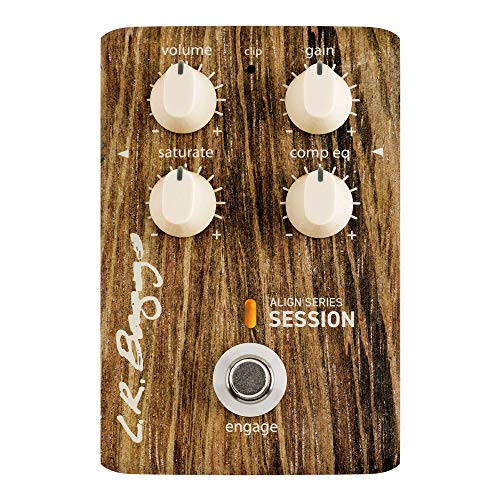
- Analog saturation adds warmth and harmonics
- Compression/EQ smoothes problem frequencies
- Adjustable gain for passive or active pickups
Best For: Players who want compression and tone shaping together
Simple Tone Smoothing

- Attack and Sustain shape compression feel
- Volume can set unity or boost
- Bright toggle helps keep tone clear
Best For: Players who want a simple, flexible compressor
All-in-One Acoustic Preamp
SONICAKE A Factory Acoustic Effects Pedal

- Analog preamp plus digital reverb
- Notch filter and mute for live control
- XLR balanced output for stage use
Best For: Performers who want a multi-function acoustic pedal
Studio Standard Compression

- Evening-out in-line compression
- Adds sustain with stable dynamics
- Simple sensitivity control
Best For: Players who want a classic, no-fuss compressor for smoother dynamics
Flexible Tone Shaping

- Blend control preserves peaks
- Tone control highlights harmonics
- Release switch for single coils or humbuckers
Best For: Players who want more control over feel, tone, and signal balance
Budget Dual-Mode Compression
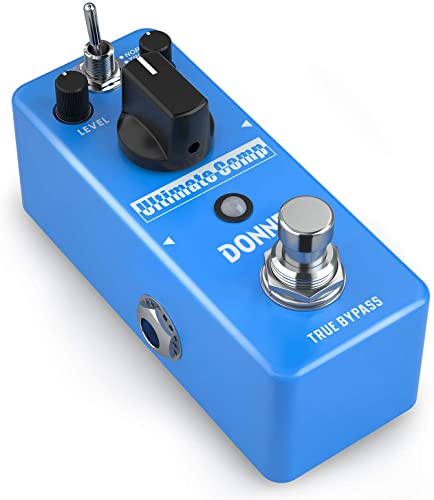
- COMP, TONE, and LEVEL controls
- Normal and Treble modes
- True bypass for transparent tone
Best For: Budget-conscious players who want simple compression and easy tone shaping
Budget Analog Pick
Amazon Basics Compressor Guitar Pedal
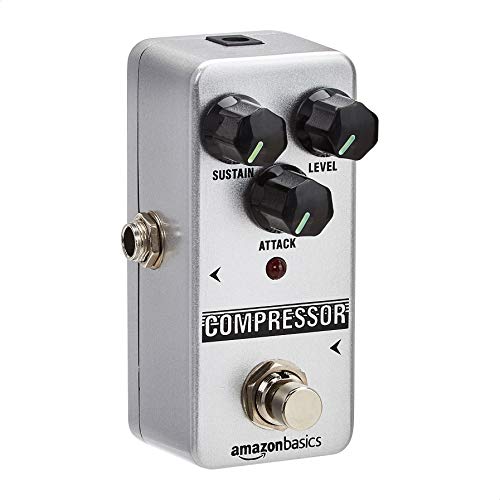
- Fully analog circuit with true bypass
- Broad adjustable range for easy control
- Compact aluminum alloy build
Best For: budget-minded players wanting a simple compressor
Transparent Studio-Style
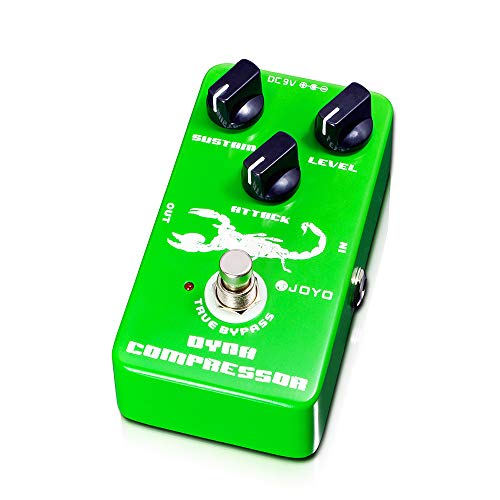
- Transparent analog compression with low noise
- Sustain, attack, and level controls
- Compact aluminum alloy housing
Best For: players who want subtle, transparent compression
Mini Noise-Reduced Choice

- Noise-reduction focus for quieter operation
- Sustain and attack knobs for timing control
- Mini aluminum alloy body with true bypass
Best For: compact setups that need simple, quiet compression
Mini Acoustic Compressor – Fishman AFX AcoustiComp Mini Compressor
If you want compressor pedals for acoustic guitar that stay out of the way physically, the Fishman AFX AcoustiComp Mini is built for exactly that job. Its compact footprint, simple compression and level controls, and true bypass with an optional buffered bypass make it a practical fit for players who want easy control without a crowded pedalboard.
Best For: Acoustic players who want a tiny compressor with straightforward control and flexible bypass options.
Pros:
- Super compact design fits almost anywhere on a pedalboard
- Compression Amount and Level controls keep setup simple
- True bypass plus buffered bypass option adds routing flexibility
- Analog compression signal path for a straightforward pedal approach
Cons:
- 9V external power is required and sold separately
- Only basic control set compared with more feature-heavy pedals
Overall, this is a clean, minimal compressor for acoustic guitar players who care more about space-saving utility than extra features. If you want an easy way to smooth dynamics without adding clutter, the AcoustiComp Mini keeps the focus on the essentials.
Warmth and Control – L.R. Baggs Align Session
Among compressor pedals for acoustic guitar, the L.R. Baggs Align Session is aimed at players who want more than simple leveling. Its analog saturation adds warmth and harmonic content, while the compression/EQ section is designed to smooth common problem frequencies and help the guitar sit better in a mix.
Best For: Acoustic players who want compression plus tone-shaping warmth and EQ help in one pedal.
Pros:
- Analog saturation adds warmth and harmonic content
- Compression/EQ helps smooth common problem frequencies
- Adjustable gain works with both passive and active pickups
- Footswitch offers affected signal or true bypass operation
Cons:
- Does more than basic compression, so setup may take a little more time
- Not the smallest or simplest option for a minimal pedalboard
This is a strong choice if you want compression to be part of a fuller acoustic tone tool rather than just a dynamics fix. The Align Session is especially appealing for players who want warmth, control, and bypass flexibility in one unit.
Simple Tone Smoothing – JHS 3 Series Compressor
The JHS 3 Series Compressor is a straightforward option for compressor pedals for acoustic guitar when you want easy dialing rather than lots of extras. With Attack, Sustain, Volume, and a Bright toggle, it covers the core controls needed to go from subtle smoothing to a more heavily compressed sound.
Best For: Players who want a simple compressor with familiar controls and a brighter option when needed.
Pros:
- Attack and Sustain knobs let you shape compression feel and response
- Volume control can set unity or a boosted output
- Bright toggle adds a brighter EQ option for clearer tone
- Runs on 9V DC negative center power and draws only 8mA
Cons:
- Not specifically voiced only for acoustic guitar use
- Requires standard 9V DC power
If you want a compressor that is easy to understand and flexible enough for different playing situations, this one makes sense. It keeps the control layout simple while still giving you enough range to fine-tune how your acoustic reacts.
All-in-One Acoustic Preamp – SONICAKE A Factory Acoustic Effects Pedal
If you are comparing compressor pedals for acoustic guitar and want a broader stage tool, the SONICAKE A Factory goes beyond compression with an analog preamp and digital reverb. It also includes a notch filter, mute function, high-impedance input, XLR balanced output, and buffer bypass circuit, making it a practical option for players who need more than a basic compressor.
Best For: Acoustic performers who want preamp, reverb, notch filtering, and balanced output in one pedal.
Pros:
- Analog preamp and digital reverb in one unit
- Notch filter and mute help manage troublesome feedback and quick silence
- High-impedance input and XLR balanced output support stage use
- Buffer bypass circuit is designed to keep the sound pristine
Cons:
- Uses 150mA and needs a 9V center-negative supply that is not included
- More of an all-in-one acoustic pedal than a dedicated compressor
This is best viewed as a full acoustic utility pedal rather than a pure compressor. For players who want one box to handle multiple live-sound needs, the A Factory offers a lot of practical features.
Studio Standard Compression – MXR Dyna Comp Compressor
If you want compressor pedals for acoustic guitar that focus on smoothing peaks and adding sustain, the MXR Dyna Comp is a straightforward classic. Its in-line compression circuit evens out the signal to your amplifier, which can help acoustic players keep dynamics stable without a complicated control set.
Best For: Players who want a simple, studio-standard compressor for stable dynamics and added sustain.
Pros:
- In-line compressor is designed to even out the signal
- Useful for increased sustain with stable dynamics
- Simple sensitivity control keeps operation easy
- Widely known Nashville studio standard
Cons:
- Limited control layout compared with more flexible compressor pedals
- Does not include advanced blend or tone-shaping options
The Dyna Comp is a practical choice if you value a familiar compression feel over extra features. It keeps the focus on consistency and sustain, which makes it a dependable entry in a compression setup.
Flexible Tone Shaping – Keeley Compressor Plus Pedal
Among compressor pedals for acoustic guitar, the Keeley Compressor Plus stands out for adding useful control without making the pedal hard to dial in. Its blend control helps retain peaks and proper phasing, while the tone control is designed to emphasize sensitive harmonics that can get lost in compression.
Best For: Players who want a refined compressor with blend, tone control, and easy instrument matching.
Pros:
- Blend control retains peaks in your playing
- Release switch is tuned for single coils or humbuckers
- Tone control emphasizes sensitive harmonics
- Offers flexible compression for different instruments
Cons:
- More controls may be more than needed for players seeking a very simple compressor
- Battery-powered 9V DC design may require planning for power setup
This pedal is a strong pick if you want compression that preserves musical detail while still smoothing the signal. It adds flexibility in a way that should suit players who like adjusting feel and response rather than just setting one fixed compression sound.
Budget Dual-Mode Compression – Donner Ultimate Comp
If you are comparing compressor pedals for acoustic guitar and want a simple, affordable option, the Donner Ultimate Comp offers basic tone shaping with useful mode switching. Its COMP, TONE, and LEVEL controls make it easy to smooth dynamics, adjust brightness, and set output volume while keeping the sound transparent through true bypass.
Best For: Players looking for a budget-friendly compressor with straightforward controls and two voicing modes.
Pros:
- COMP, TONE, and LEVEL controls cover the basics
- Normal and Treble modes add flexibility
- True bypass helps keep the signal transparent
- Designed to smooth dynamics without degrading the original sound
Cons:
- Power adapter is not included
- Less advanced than higher-end compressor pedals
The Ultimate Comp is a sensible choice when you want practical compression without a steep learning curve. It focuses on everyday utility, making it a solid option for players who need simple dynamics control and a warm, balanced result.
Budget Analog Pick – Amazon Basics Compressor Guitar Pedal
Amazon Basics Compressor Guitar Pedal, Fully Analog Circuit with True Bypass, Silver
Check Price On AmazonIf you’re comparing compressor pedals for acoustic guitar and want a simple, affordable option, the Amazon Basics Compressor Guitar Pedal brings a fully analog circuit, true bypass, and a broader adjustable range. Its compact metal build and straightforward knob control make it easy to slot into a basic acoustic rig when you want smoother dynamics without a complicated setup.
Best For: Players who want an inexpensive, no-frills compressor with analog signal path and true bypass.
Pros:
- Fully analog compression with true bypass
- Broad adjustable range for dialing in control
- Durable aluminum alloy enclosure
- Small footprint for tight pedalboards
Cons:
- Power adapter is not included
- Requires a 9V DC regulated supply with at least 300mA
Overall, this is a practical entry-level compressor that focuses on the essentials: analog tone, stable build quality, and easy operation. It makes the most sense if you want a dependable budget pedal rather than extra features or advanced shaping.
Transparent Studio-Style – JOYO Dynamic Compressor JF-10
For players shopping compressor pedals for acoustic guitar who want a subtle, transparent effect, the JOYO Dynamic Compressor JF-10 is built around smooth, low-noise analog compression. Its sustain, attack, and level controls make it easy to shape response without taking over your core tone, which is useful when you want a more polished acoustic sound.
Best For: Guitarists who want transparent compression with simple sustain, attack, and level controls.
Pros:
- Transparent, studio-style analog compression
- Low-noise circuit with true bypass
- Sustain, attack, and level knobs for flexible control
- Rugged aluminum alloy housing
Cons:
- Power supply is not included
- Budget adapters may add noise or switch pop
The JF-10 stands out as a straightforward compressor for players who want their tone to stay intact while gaining a little sustain and balance. Its compact size and simple layout make it a strong fit for pedalboards that need practical compression, not a heavily colored effect.
Mini Noise-Reduced Choice – Pogolab Compressor Pedal
If you want compressor pedals for acoustic guitar in a mini format, the Pogolab Compressor Pedal focuses on noise reduction, true bypass, and easy two-knob control. The sustain and attack controls help you tailor compression timing, while the compact aluminum alloy body keeps the pedalboard footprint small.
Best For: Players who want a compact compressor with simple control and noise-conscious design.
Pros:
- Noise-reduction design for quieter compression
- Sustain and attack controls for timing adjustment
- True bypass switching
- Mini aluminum alloy enclosure
Cons:
- Power adapter and cable are not included
- More limited control layout than larger compressors
This pedal is a good fit when space is tight and you still want practical compression control. Its small size, center-negative 9V power requirement, and straightforward layout make it easy to integrate into a simple acoustic or electric setup.
How We Picked These Compressor Pedals for Acoustic Guitar
We prioritized pedals that are easy to dial in, quiet enough for live use, and able to smooth out volume spikes without dulling the natural character of an acoustic instrument. We also looked for practical features such as true bypass, attack and sustain controls, blend options, and acoustic-friendly voicing.
Because Compressor Pedals for Acoustic Guitar can affect dynamics in subtle ways, we favored models that offer enough control to avoid the “squashed” sound that players often want to avoid.
Quick Comparison
If you want the most transparent control, look for pedals with blend or tone-shaping options. If you want the simplest setup, a straightforward two- or three-knob compressor may be enough. For full acoustic rigs, some products in this roundup add preamp or DI-style functionality, which can be useful if you need more than compression alone.
Key Buying Factors for Compressor Pedals for Acoustic Guitar
Transparency Vs. Color
Some compressors are designed to be nearly invisible, while others add character and sustain in a more obvious way. For acoustic guitar, transparency usually matters most unless you specifically want a warmer, more produced feel.
Controls and Ease of Use
Attack, sustain, ratio, and blend controls help you fine-tune the response. More controls can improve results, but simple pedals are often easier to set correctly on a live stage.
Noise and Headroom
Acoustic pickups can be sensitive to noise and clipping. A good compressor should stay quiet and offer enough headroom to handle stronger strumming without distortion.
Bypass and Signal Chain
True bypass is helpful if you want minimal tone loss when the effect is off. Also consider where the compressor sits in your chain, especially if you use reverb, preamp, or EQ pedals.
Power and Form Factor
Mini pedals save space on crowded boards, while larger units may offer better control layouts. Check power requirements and placement if you use a compact live rig.
Who Should Buy Which Compressor Pedals for Acoustic Guitar?
Gigging players who want subtle leveling and more polish should lean toward more adjustable, acoustic-focused designs. Fingerstyle players often benefit from a transparent compressor with smooth attack control, while strummers may prefer a pedal that evens out peaks without killing dynamics.
If you are on a budget, a simpler analog compressor can still do the job well. If your setup needs more than compression, consider pedals that combine preamp or output options for a more complete acoustic stage solution.