If you play acoustic-electric guitar live, the right DI box can make a bigger difference than most pedals or preamps. It helps preserve tone, reduce noise, and send a clean signal to the mixer or interface.
Below, we focus on practical options for players who want dependable performance, simple setup, and better control on stage or in the studio.
Best 10 Di Boxes for Acoustic Electric Guitars Picks for 2026
Best for Onstage Tone Shaping

- 5-band EQ with tunable notch filter
- Adjustable gain for passive or active pickups
- Phase inversion and dual power options
Best For: Acoustic-electric players who want detailed EQ control and strong feedback management.
Best Passive DI
Radial Pro DI Passive Direct Box

- Passive mono DI with simple plug-and-play use
- Custom transformer helps reduce hum and ground loops
- Rugged build suited for stage and studio
Best For: Acoustic-electric players who want a reliable passive DI with clean, quiet output.
Best for Simple Acoustic Boost
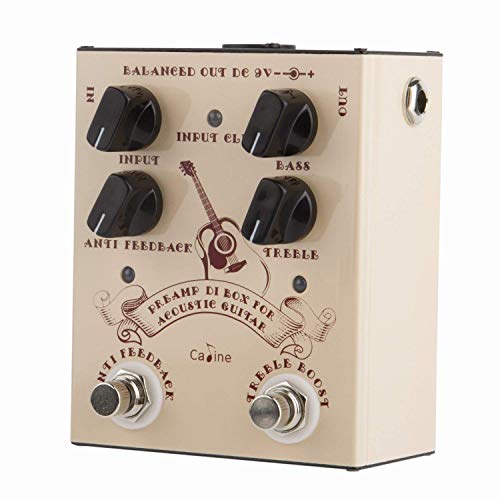
- True-bypass signal path
- Anti-feedback foot switch
- Built-in preamp/DI boost
Best For: Acoustic-electric players who want an affordable DI/preamp with boost and feedback control.
Best Budget Workhorse
Whirlwind IMP 2 Passive DI Box
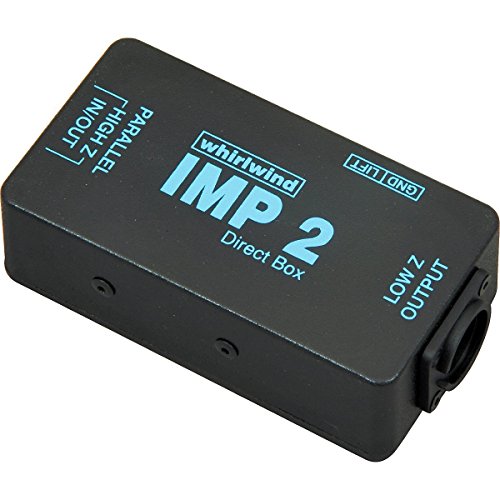
- Low-cost passive DI for acoustic-electric guitars
- Rugged metal build with ground lift
- Simple, reliable signal balancing for stage or studio
Best For: Players who want a durable, no-fuss DI for acoustic-electric guitars on a budget.
Best for Versatile Pickup Systems
AMUMU GLORIFIER Acoustic Guitar Preamp DI Box
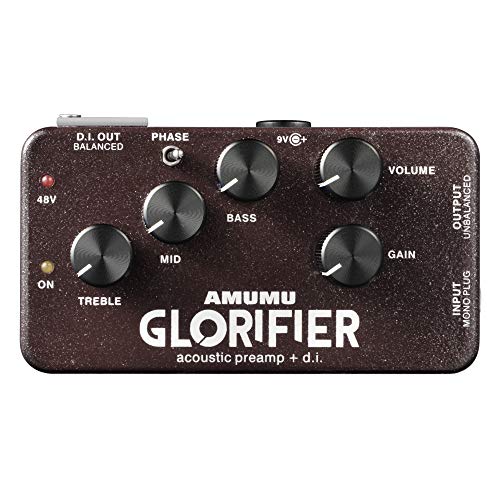
- Supports piezo, magnetic, under-saddle, and mic pickups
- 3-band EQ, +/-20 dB gain, and phase switch for tone shaping
- XLR balanced out plus 1/4" output for live and recording use
Best For: Acoustic-electric players who need a flexible DI with broad pickup compatibility and onboard tone control.
Best Passive Tone Shaper

- Passive transformer adds warmth and smooths peaks
- 15dB pad helps with hotter acoustic pickups
- Stereo-to-mono merge keeps setup flexible
Best For: Acoustic-electric players who want a compact passive DI with a warm, simple stage-ready sound.
Best Dual-Channel Passive DI
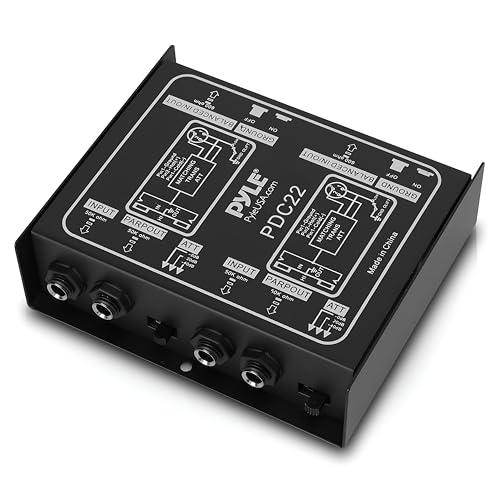
- Dual channels in one compact steel box
- Ground lift plus 0/-20/-40 dB attenuation
- Suitable for guitars, bass, keyboards, and more
Best For: Players who want an affordable dual DI for acoustic-electric guitar and other unbalanced sources.
Best for Simple Passive Routing
Passive DI direct box for instruments

- Passive 1/4" input with XLR output
- Through jack for amp or tuner feeding
- Pad and ground lift for cleaner stage signal
Best For: Players who want a simple passive DI for acoustic-electric guitars and other instrument sources.
Best for Hum Rejection
Passive DI Box with Ground Lift

- Ground lift switch helps cut hum and ground loops
- Passive metal build keeps it simple and durable
- ATT switch adds flexible input attenuation for louder sources
Best For: Acoustic-electric guitarists who want a basic passive DI for cleaner live signal transfer.
Best Budget Hum Eliminator

- Passive DI with hum and buzz reduction
- Input attenuator for hotter signals
- Works with guitar, bass, and keyboards
Best For: Affordable signal cleanup for acoustic-electric guitar and other unbalanced instruments.
Best for Onstage Tone Shaping – LR Baggs Para Acoustic D.I.
If you want one of the most flexible di boxes for acoustic electric guitars, the LR Baggs Para Acoustic D.I. is built for players who need reliable DI output plus serious tone control. Its 5-band EQ, tunable notch filter, phase inversion, and gain control make it easy to dial in a clean, feedback-resistant sound on stage or into a PA.
Best For: Acoustic-electric players who need a roadworthy DI with precise EQ shaping, feedback control, and support for passive or active pickups.
Pros:
- 5-band EQ with tunable midrange and notch for detailed sound shaping
- Adjustable gain works with both passive and active pickups
- Phase inversion helps reduce feedback and improve live consistency
- XLR and 1/4" outputs plus 9V battery or 48V phantom power support
Cons:
- More feature-rich than a simple plug-and-play DI
- Can take a little dialing in if you just want a basic acoustic signal boost
For players comparing di boxes for acoustic electric guitars, this one stands out because it combines pro-level flexibility with dependable live performance. It is especially appealing if you need to tame stage feedback while keeping your acoustic tone full and natural.
Best Passive DI – Radial Pro DI Passive Direct Box
If you want a simple, rugged choice among di boxes for acoustic electric guitars, the Radial ProDI is a passive direct box that focuses on clean signal transfer and dependable noise reduction. Its custom transformer helps tame ground loops and keep your acoustic-electric tone full and natural, making it an easy fit for stage or studio use.
Best For: Players who want a no-fuss passive DI for acoustic-electric guitars, bass, keys, or other mono instruments.
Pros:
- Passive design is easy to use and very reliable.
- Custom transformer helps reduce noise and ground-loop problems.
- Rugged I-beam construction holds up well on the road.
- Works well with acoustic guitars and other mono sources.
Cons:
- Mono only, so it is not ideal for stereo setups.
- No powered or active features for extra gain shaping.
For players comparing di boxes for acoustic electric guitars, the ProDI stands out as a straightforward, durable solution that prioritizes clean output over extra features. If you mainly need dependable signal balancing and noise control, it is an easy pick.
Best for Simple Acoustic Boost – Caline CP-40 DI-Box
The Caline CP-40 is a straightforward option for players comparing di boxes for acoustic electric guitars and wanting a compact preamp/DI with a bit of extra lift. Its true-bypass design and anti-feedback foot switch make it especially appealing if you need a simple stage tool for taming issues without overcomplicating your pedalboard.
Best For: Acoustic-electric players who want an affordable DI/preamp with a boost and feedback control for live use.
Pros:
- True-bypass design helps keep your signal path clean when disengaged
- Anti-feedback foot switch is useful on louder stages
- Built-in preamp/DI format adds practical boost for acoustic performance
Cons:
- Limited feature set compared with more advanced acoustic preamps
- Best suited to basic live setups rather than detailed tone shaping
For players who want a no-fuss box that can add level and help manage feedback, the CP-40 fits well among di boxes for acoustic electric guitars. It is a practical, budget-friendly choice when simplicity matters more than deep EQ or studio-style flexibility.
Best Budget Workhorse – Whirlwind IMP 2 Passive DI Box
If you need one of the most dependable di boxes for acoustic electric guitars without spending much, the Whirlwind IMP 2 is a simple, road-ready passive DI that gets the job done. It converts an unbalanced instrument signal to a balanced mic-level output, helping your acoustic-electric run cleanly into a mixer or interface.
Best For: Guitarists, live sound users, and home-recording players who want a rugged, no-frills passive DI for acoustic-electric instruments.
Pros:
- Affordable and widely trusted for live and studio use
- Passive transformer design is simple and reliable
- Ground lift helps reduce hum and buzz
- Compact metal enclosure is easy to throw in a gig bag
Cons:
- No advanced features or onboard tone shaping
- Passive design may not suit every high-impedance pickup setup
- Basic layout is functional, but not fancy
For players comparing di boxes for acoustic electric guitars, the IMP 2 stands out as a practical value pick: tough enough for stage use, inexpensive enough to keep as a backup, and straightforward enough for almost any basic acoustic-electric signal chain.
Best for Versatile Pickup Systems – AMUMU GLORIFIER Acoustic Guitar Preamp DI Box
If you need one of the more flexible di boxes for acoustic electric guitars, the AMUMU GLORIFIER is built to handle a wide range of pickup types while giving you simple control over stage or studio tone. Its preamp/DI design adds gain, EQ shaping, and balanced output conversion, making it a practical choice when you want to plug into a PA, mixer, or interface without extra hassle.
Best For: Players who use different acoustic-electric pickup systems and want an all-in-one preamp DI with easy tone shaping.
Pros:
- Works with piezo, magnetic, under-saddle, and microphone pickups
- Includes +/-20 dB gain, 3-band EQ, and a phase switch for feedback control
- Offers balanced XLR out plus a 1/4″ output for flexible live or recording setups
- Can run on 9V adapter, phantom power, or battery power
Cons:
- More of a utility preamp than a simple, no-frills DI box
- Extra controls may be more than casual players need
For players comparing di boxes for acoustic electric guitars, this model stands out for versatility and onboard control rather than minimalism. It’s a smart fit if you want one box that can adapt to different guitars, pickup styles, and gigging situations.
Best Passive Tone Shaper – Radial StageBug SB-2 DI
If you want a compact, no-power DI for clean stage runs, the Radial StageBug SB-2 is a smart pick for di boxes for acoustic electric guitars. Its passive transformer design adds a touch of warmth while helping balance the signal and reduce hum, making it a practical choice when you need simple, reliable direct output.
Best For: Acoustic-electric players who want a compact passive DI with a slightly warm, musical sound and easy stereo-to-mono handling.
Pros:
- Passive transformer design adds natural warmth and smooths peaks
- Handles acoustic guitar signals well and helps cut ground-loop buzz
- 15dB pad gives extra headroom for hotter sources
- Stereo-to-mono merge is handy for quick setup changes
Cons:
- Mono-focused design may not suit true stereo rigs
- No active circuitry or advanced tone-shaping controls
For players comparing di boxes for acoustic electric guitars, the SB-2 stands out as a straightforward, road-ready option that favors simplicity and dependable sound over extra features. It is a strong fit if you want a compact passive DI that just works onstage.
Best Dual-Channel Passive DI – PylePro PDC22 Direct Box
If you need practical di boxes for acoustic electric guitars, the Pyle-Pro PDC22 is a simple passive direct box that helps clean up your signal before it hits a mixer or PA. Its dual-channel layout, ground lift, and switchable attenuation make it a handy utility box for live gigs, rehearsal rigs, and basic recording setups.
Best For: Guitarists who want an affordable dual DI for acoustic-electric, bass, and other unbalanced instrument sources.
Pros:
- Dual DI channels in one steel enclosure
- Ground lift and 0/-20/-40 dB pad for hum control and level matching
- Works well with guitars, bass, keyboards, and other line or instrument sources
Cons:
- Passive design may not suit every high-impedance or low-output setup
- Bulkier than a single-channel DI if you only need one instrument
For players comparing di boxes for acoustic electric guitars, this model stands out more for flexibility than frills: two channels, solid construction, and useful attenuation options in a straightforward package. It’s a good fit when you want a no-nonsense way to send cleaner balanced signal to the board.
Best for Simple Passive Routing – Passive DI direct box for instruments
If you want a straightforward signal-splitting solution, this passive direct box is a practical pick for di boxes for acoustic electric guitars. It takes a 1/4″ instrument input, sends a balanced XLR output to the mixer, and includes a through jack so you can keep feeding your amp or tuner at the same time.
Best For: Players who want an uncomplicated passive DI for acoustic-electric guitars, keyboards, or other line/instrument sources.
Pros:
- Passive design keeps setup simple and doesn’t need batteries or phantom power
- Pad switch helps tame hot signals before they hit the mixer
- Ground lift can reduce hum and buzz from grounding issues
- XLR out plus 1/4″ through jack gives flexible stage routing
Cons:
- Passive units may not suit every high-impedance or ultra-long cable setup
- Basic feature set means no extra tone shaping or onboard extras
- Best results depend on matching the source level correctly with the pad
This is a no-frills option that covers the essentials well, making it a solid contender in di boxes for acoustic electric guitars when you mainly need reliable conversion, a clean balanced feed, and fewer stage noise problems.
Best for Hum Rejection – Passive DI Box with Ground Lift
If you need a simple, rugged option among di boxes for acoustic electric guitars, this passive DI box is built to clean up signal paths and send an instrument-level feed to a mixer without fuss. It’s a practical choice for players who want balanced output, ground-noise control, and easy live-use connectivity.
Best For: Acoustic-electric guitarists and bass players who want a straightforward passive DI for reducing hum and interfacing with mixers.
Pros:
- Ground lift switch helps reduce hum and loop noise on stage
- Passive, compact metal build is easy to carry and stage-ready
- ATT switch offers -0dB, -20dB, and -40dB input attenuation
- XLR balanced output suits direct connection to a PA or console
Cons:
- Single-channel design limits it to one instrument at a time
- Passive format may not suit sources that need extra gain or active features
- Basic layout lacks onboard tone shaping or extras
For players comparing di boxes for acoustic electric guitars, this model stands out as a no-nonsense hum eliminator that focuses on reliability over bells and whistles. It’s a solid fit when clean balanced output and simple stage troubleshooting matter most.
Best Budget Hum Eliminator – Pyle Passive DI Box
If you need one of the simplest di boxes for acoustic electric guitars, the Pyle Premium Direct Injection Audio Box is a straightforward passive option for cleaning up unbalanced signals before they hit a mixer or PA. It adds an impedance transformer, ground-lift style hum reduction, and an input attenuator, making it a practical pick for basic stage and home-recording setups.
Best For: Players who want an affordable passive DI for acoustic-electric guitar, bass, keyboards, or other line-level sources.
Pros:
- Passive design with hum and buzz reduction
- Input attenuator helps tame hotter signals
- Works with guitars, bass, keyboards, and other unbalanced sources
- Simple XLR connection for mixing consoles and PAs
Cons:
- No active power or advanced tone-shaping features
- Basic build and feature set compared with pricier DI boxes
For players shopping di boxes for acoustic electric guitars on a budget, this Pyle unit is more about reliable signal conversion than boutique performance. It’s a sensible utility box if you mainly need clean output, ground-noise control, and an easy way to feed a PA or recording interface.
How We Picked the Best Di Boxes for Acoustic Electric Guitars
We looked for DI boxes that are relevant for acoustic-electric players, with an emphasis on clean signal transfer, low noise, durable build quality, and easy stage use. For Di Boxes for Acoustic Electric Guitars, the most useful models are the ones that balance tone preservation with dependable connectivity and straightforward controls.
Quick Comparison
In general, passive DI boxes are simple, rugged, and ideal when you want a reliable plug-and-play solution. Preamp-style DI units add more shaping and may be better if you want onboard tone control, EQ, or stronger impedance matching for piezo pickups. If you already like your guitar’s natural sound, a clean passive option may be enough. If your pickup needs help sounding fuller or more balanced, a feature-rich acoustic preamp DI can be the better fit.
Key Buying Factors for Di Boxes for Acoustic Electric Guitars
Input Type and Pickup Match
Piezo pickups often benefit from higher-impedance inputs or an acoustic preamp section. Magnetic pickups are usually easier to satisfy with a standard passive DI. Check whether your guitar’s output is passive or active before choosing.
Ground Lift and Hum Control
A ground lift switch is one of the most useful features for stage work. It can help reduce buzz and hum caused by grounding issues, especially when connecting to unfamiliar venue systems.
Pad and Gain Handling
If your guitar or onboard preamp can send a hot signal, an input pad helps prevent distortion. This is especially important if you strum hard or use stompboxes before the DI.
Tone Shaping and Output Options
Some players only need a clean balanced XLR output. Others want EQ, phase reversal, notch filtering, or a tuner out. Choose the feature set that matches your setup rather than paying for controls you will not use.
Build Quality and Portability
For gigging, a compact metal enclosure and simple layout matter. Smaller passive boxes are easy to carry as backups, while larger preamp DI units may be better if they stay on your pedalboard.
Who Should Buy Which Di Boxes for Acoustic Electric Guitars?
If you want the simplest and most reliable solution, choose a basic passive DI. If you play regular live shows and need more tone control, go with an acoustic preamp DI. If you are trying to solve hum, clipping, or weak signal issues, prioritize a model with ground lift, pad controls, and strong impedance matching. For most players searching for Di Boxes for Acoustic Electric Guitars, the best choice is the one that makes your guitar sound consistent from one venue to the next without extra fuss.