Choosing the right DI box can make a huge difference in live sound, especially when you need clean acoustic guitar tone and clear vocals from a simple stage rig.
Below, we’ve rounded up ten of the best options for performers who want reliable signal matching, lower noise, and easier mixing in 2026.
Best 10 Di Boxes for Acoustic Guitar and Vocals Picks for 2026
Best for Feedback Control

- 5-band EQ with tunable midrange and notch filter
- Phase inversion helps reduce feedback on stage
- Runs on 9V battery or 48V phantom power
Best For: Acoustic performers who want precise tone shaping and dependable feedback control.
Best for Stereo Sources
Radial ProD2 Passive 2 Channel DI

- Passive stereo DI with no power required
- Isolation transformer and ground lift reduce noise
- 15 dB pad helps with hotter signals
Best For: Acoustic players and engineers needing a durable passive stereo DI for clean, simple routing.
Best Budget
L.R. Baggs Venue DI Acoustic Preamp
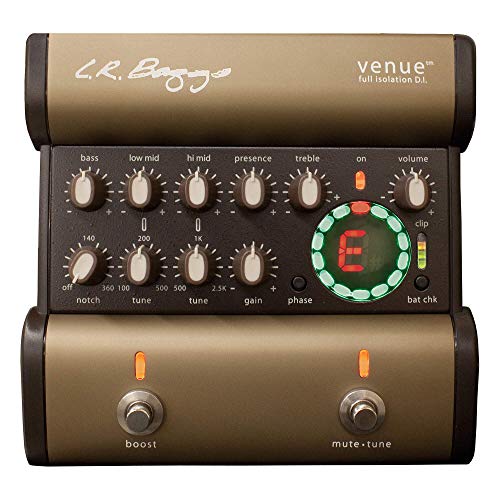
- 5-band EQ with tunable mids
- Notch filter for feedback control
- Built-in tuner and clean boost
Best For: Acoustic performers who want advanced tone shaping and feedback control in a single DI.
Best for Flexible Power
Bolanle J22 Active Stereo DI Box

- Dual-channel stereo active DI
- Runs on phantom, battery, or USB power
- Ground lift and polarity switch for cleaner signal
Best For: Acoustic players and live sound setups that need a flexible, feature-rich DI box.
Best All-in-One Vocal & Acoustic DI

- Vocal harmonies and studio-style effects in one stompbox
- BodyRez and feedback controls improve direct acoustic tone
- Separate or mixed outputs work well for live routing
Best For: Singer-songwriters who want one compact pedal for vocals, acoustic guitar, and DI routing.
Best Stereo DI Box

- Dual-channel passive design for stereo or two-source use
- Ground lift and pad switches help tame hum and overload
- Balanced XLR output supports studio and live signal runs
Best For: Musicians and engineers who want a versatile stereo DI for guitars, synths, and other line-level sources.
Best for Comfort
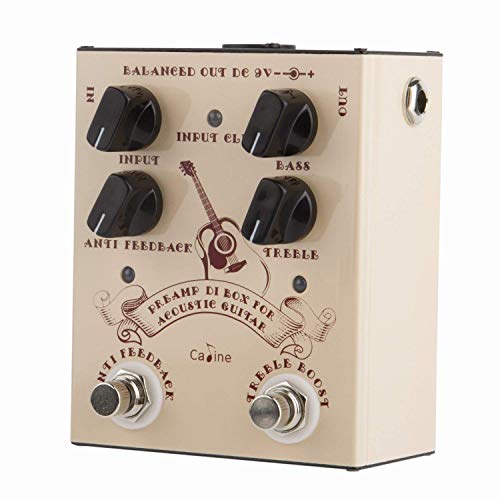
- Anti-feedback footswitch for live acoustic use
- True bypass keeps the signal path simple
- Preamp-style boost helps weak pickup signals
Best For: Acoustic performers who want a simple DI with feedback control and added boost.
Best for Stereo Routing
Bolanle Passive Dual Channel DI/LI Box

- DI and LI modes handle instruments and line-level gear
- Dual-channel passive design with stereo/mono flexibility
- Ground lift and -15dB pad help reduce noise and clipping
Best For: Players and small bands needing flexible routing, isolation, and stereo handling in one box.
Best Budget Passive DI

- Passive DI keeps setup simple
- Ground lift helps cut hum and buzz
- Works with guitar, bass, keyboards, and more
Best For: Budget-minded players needing a straightforward passive direct box for cleaner live and recording connections.
Best Budget Dual-Channel DI
Pyle PDC22 Direct Injection Box
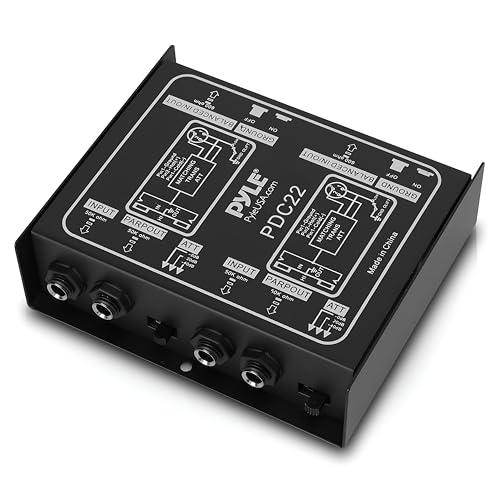
- Two DI channels in one passive steel box
- Ground lift and 0/-20/-40 dB pad options
- Good for acoustic guitar, vocals, bass, and keyboards
Best For: Affordable dual-channel DI use for acoustic instruments, vocals, and simple live rigs.
Best for Feedback Control – LR Baggs Para Acoustic D.I.
If you need one of the most capable di boxes for acoustic guitar and vocals, the LR Baggs Para Acoustic D.I. stands out for its onboard EQ, tunable notch filter, and dependable stage-ready output. It’s a smart choice when you want more control over harsh resonance, feedback, and overall tone before the signal ever hits the mixer.
Best For: Acoustic players and vocalists who want flexible tone shaping and feedback control in a rugged DI.
Pros:
- 5-band EQ with tunable midrange and notch for detailed shaping
- Phase inversion helps tame feedback on louder stages
- Works with 9V battery or 48V phantom power for flexible use
- XLR and 1/4" outputs suit both live and direct rig setups
Cons:
- More features than a basic DI, so it may be overkill for simple setups
- Not the smallest or cheapest option in this category
For performers who want a more polished live sound, the Para Acoustic D.I. offers a strong balance of control, reliability, and clean output. Among di boxes for acoustic guitar and vocals, it’s especially appealing if your priority is dialing in tone and reducing feedback on demanding stages.
Best for Stereo Sources – Radial ProD2 Passive 2 Channel DI
If you need a no-fuss box for di boxes for acoustic guitar and vocals, the Radial ProD2 is a rugged passive stereo DI that handles clean, line-level sources with very little drama. It’s especially handy when you want to split two channels from an acoustic rig, keyboard, or playback device while keeping noise under control.
Best For: Players and engineers who need a reliable passive stereo DI for acoustic setups, stereo instruments, and simple stage or studio routing.
Pros:
- Passive stereo design means no batteries or phantom power needed
- Isolation transformer and ground lift help reduce hum and buzz
- 15 dB pad adds flexibility for hotter sources
- Solid build quality suited to regular gigging
Cons:
- Passive design is not the first choice for every low-output pickup
- Primarily aimed at stereo/dual-channel sources rather than single-mic vocal use
For di boxes for acoustic guitar and vocals, the ProD2 makes the most sense when your acoustic setup is stereo or you’re pairing guitar with another line source. It’s a dependable, straightforward DI that prioritizes noise rejection and durability over extra features.
Best Budget – L.R. Baggs Venue DI Acoustic Preamp
If you need one of the most capable di boxes for acoustic guitar and vocals, the L.R. Baggs Venue DI is built for fast setup, clean tone shaping, and reliable stage control. Its 5-band EQ, tunable low-mid and high-mid bands, notch filter, and onboard tuner make it a practical all-in-one preamp/DI for players who want more than a simple direct box.
Best For: Acoustic players, singer-songwriters, and small-stage performers who want detailed tone control and strong feedback management in one pedal.
Pros:
- 5-band EQ with tunable mid controls for precise acoustic shaping
- Notch filter helps tame feedback in live rooms
- Built-in chromatic tuner with mute/tune footswitch
- Clean boost gives you an easy level lift for solos or breaks
Cons:
- More expensive than basic DI boxes
- Extra controls may be overkill for simple plug-and-play use
This is a strong pick if you want studio-style control on stage, especially when vocals and acoustic guitar need to sit neatly in the mix. For players comparing di boxes for acoustic guitar and vocals, the Venue DI stands out by combining tone shaping, tuning, boost, and feedback suppression in one road-ready unit.
Best for Flexible Power – Bolanle J22 Active Stereo DI Box
If you want one box that can handle a few different setups, the Bolanle J22 is a practical option to consider among di boxes for acoustic guitar and vocals. Its dual-channel design, 48V phantom support, battery option, and USB power make it easier to use in rehearsals, live stages, and church rigs without depending on a single power source.
Best For: Players and sound teams who need a flexible active DI for acoustic guitar, vocals, keyboards, or other stereo sources.
Pros:
- Dual-channel stereo design works well for multi-source or stereo instruments
- Multiple power options add flexibility for stage and rehearsal use
- Ground lift and polarity switch help reduce noise and phase issues
- XLR and 1/4-inch connections make it easy to integrate into common setups
Cons:
- Bulkier than a simple single-channel passive DI
- May be more feature-rich than needed for basic solo acoustic setups
For players who need more than a basic direct box, the J22 stands out as a versatile choice for di boxes for acoustic guitar and vocals, especially when you want stereo capability and flexible powering in one unit.
Best All-in-One Vocal & Acoustic DI – TC Helicon Play Acoustic
If you want one pedal to handle singing, guitar shaping, and direct output, this is a strong fit for players comparing di boxes for acoustic guitar and vocals. The TC Helicon PLAY ACOUSTIC combines vocal harmony, body shaping, feedback control, and familiar TC effects in a single floor unit that’s easy to drop into a live rig.
Best For: Singer-songwriters and solo acoustic performers who need a compact all-in-one DI and effects solution for both voice and guitar.
Pros:
- Built-in vocal harmonies, reverb, delay, and chorus for a polished live sound
- BodyRez, EQ, notch filter, and phase controls help tighten acoustic tone and fight feedback
- Separate vocal and guitar outputs, or a combined stereo mix, make routing flexible
- Looping support adds extra utility for solo sets and practice
Cons:
- More features than a simple DI, so setup can take a little longer
- Not the best choice if you only need a basic, ultra-minimal acoustic DI
For performers who want more than a plain direct box, this pedal is a practical upgrade. It stands out among di boxes for acoustic guitar and vocals because it adds both performance effects and useful live-sound control in one pedalboard-friendly unit.
Best Stereo DI Box – Bolanle Passive 2-Channel DI
If you need a practical, noise-reducing option among di boxes for acoustic guitar and vocals, this passive 2-channel DI is built for clean balanced output, ground-loop control, and easy stereo routing. It’s a solid pick when you want to send multiple sources to a mixer without extra buzz or overload.
Best For: Players and engineers who need a simple stereo DI/reamp box for guitars, bass, synths, and other line-level sources in studio or live setups.
Pros:
- Dual-channel passive design supports stereo instruments and two-source routing.
- Ground lift and attenuation switches help reduce hum and prevent clipping.
- XLR balanced output is useful for longer cable runs on stage or in the studio.
- Road-ready build should hold up well to frequent transport and use.
Cons:
- Not the most specialized choice if you only need a single-mic vocal DI solution.
- Passive design may not suit every low-output or ultra-sensitive source.
- More features than a basic mono DI, so it may be overkill for simple acoustic guitar setups.
Overall, this Bolanle unit makes sense if you want flexible stereo connectivity and dependable noise control in one box. For buyers comparing di boxes for acoustic guitar and vocals, it’s strongest as a utility DI for clean signal transfer rather than a dedicated vocal processor.
Best for Comfort – Caline CP-40 DI Box
If you’re comparing di boxes for acoustic guitar and vocals, the Caline CP-40 is a simple, gig-friendly option that focuses on preamp-style boosting, true bypass, and anti-feedback control. It’s aimed at players who want an easy way to tighten up an acoustic signal before sending it to a mixer or PA.
Best For: Acoustic players and solo performers who want basic DI functionality with feedback control and a little extra boost.
Pros:
- Anti-feedback footswitch helps tame problem frequencies live
- True bypass design keeps the signal path straightforward
- Preamp/DI layout adds useful boost for acoustic pickup signals
Cons:
- More of a basic utility box than a fully featured pro DI
- Not the strongest choice if you need advanced vocal processing
Overall, the CP-40 makes sense for players who want an affordable, no-fuss box that can support acoustic performance needs, especially when looking at di boxes for acoustic guitar and vocals in small venues or rehearsal setups.
Best for Stereo Routing – Bolanle Passive Dual Channel DI/LI Box
If you need flexible routing more than a simple one-trick DI, this passive dual-channel box is a smart pick for di boxes for acoustic guitar and vocals, especially in setups that also include keyboards or other line-level sources. The DI/LI switch, -15dB pad, and ground lift make it easier to tame noisy stages and protect your mixer from hot signals.
Best For: Players and small bands who want one passive box that can handle instruments, line-level gear, and stereo-to-mono routing on stage or in the studio.
Pros:
- DI and line isolator modes cover both instruments and line-level devices
- Dual channels with stereo, mono, and summed routing add flexibility
- Ground lift and -15dB pad help reduce hum and prevent clipping
- Passive design means no batteries or phantom power required
Cons:
- More feature-rich than a basic single-channel DI, so it may be overkill for simple acoustic-only rigs
- Passive transformers may not be the best match for every low-output source
For di boxes for acoustic guitar and vocals, this model stands out when your setup needs more than a basic XLR conversion. It’s especially useful if you also run keyboards, interfaces, or other sources that benefit from isolation and flexible channel handling.
Best Budget Passive DI – Pyle Premium Passive DI Box
If you need a simple, affordable way to clean up signal runs, this Pyle DI box is a practical pick for di boxes for acoustic guitar and vocals. It converts unbalanced instrument-level sources to balanced XLR, helping reduce buzz and hum when sending a guitar, keyboard, or other line source to a mixer or PA.
Best For: Budget-minded players and home/stage users who want a basic passive direct box for cleaner live and recording connections.
Pros:
- Passive design keeps setup straightforward and requires no power
- Ground lift and hum elimination help reduce noise on long cable runs
- Input attenuator adds flexibility for different source levels
- Works with guitars, bass, keyboards, and other unbalanced sources
Cons:
- Not the most feature-rich option for more demanding rigs
- Best suited to basic signal conversion rather than studio-grade refinement
For players building a low-cost live or rehearsal setup, this is a solid utility DI with the core features most people need. It’s a sensible choice if you want one of the more affordable di boxes for acoustic guitar and vocals without overcomplicating your signal chain.
Best Budget Dual-Channel DI – Pyle PDC22 Direct Injection Box
If you need practical di boxes for acoustic guitar and vocals without spending much, the Pyle PDC22 is a simple dual-channel passive direct box that handles everyday live and recording duties. It offers ground lift, switchable attenuation, and balanced XLR output to help tame hum and get a cleaner signal to the mixer.
Best For: Players and small bands who want an affordable passive DI for acoustic instruments, vocals, and other unbalanced sources.
Pros:
- Dual DI channels in one steel chassis
- Ground lift and 0/-20/-40 dB attenuation for flexible gain staging
- Useful for acoustic guitar, keyboards, bass, and line-level sources
- Passive design keeps setup straightforward
Cons:
- Not as feature-rich as higher-end active DI boxes
- Bulkier than single-channel compact units
- Better suited to utility use than pro touring rigs
For budget-minded buyers, this is a solid utility pick among di boxes for acoustic guitar and vocals when you want hum reduction, simple controls, and two channels in one box. It is not the fanciest option, but it covers the essentials well for rehearsals, gigs, and basic recording.
How We Picked the Best Di Boxes for Acoustic Guitar and Vocals
We focused on models that suit singer-songwriters, small bands, and solo performers who need dependable signal conversion without adding unnecessary complexity. Priority went to noise handling, impedance matching, balanced XLR output quality, stereo or dual-channel support where useful, and practical stage features such as ground lift, polarity control, and phantom power options.
Quick Comparison
For acoustic guitar and vocal use, active DI boxes tend to work best when you need more headroom, onboard tone shaping, or powered features. Passive models are often the better fit for straightforward, low-maintenance setups and can be especially useful when your source is already strong. Dual-channel units are ideal if you run stereo acoustic rigs, combine guitar and vocal sources, or need extra routing flexibility.
Key Buying Factors for Di Boxes for Acoustic Guitar and Vocals
Signal Type and Power
Check whether your gear outputs mic-level, instrument-level, or line-level signals. Active DI boxes may need phantom power, a battery, or an external power source, while passive units work without power and are often simpler on stage.
Noise Control and Ground Lifting
Ground lift switches, polarity controls, and good shielding help reduce hum and buzz. If you play in venues with inconsistent power or multiple connected devices, these features matter a lot.
Mono, Stereo, or Dual-Channel
Mono DI boxes are fine for a single acoustic guitar or vocal source. Stereo or dual-channel designs are better for acoustic rigs with pickups, effects, or stereo outputs, and they can also simplify setup for players combining sources.
Tone Shaping and Extras
Some Di Boxes for Acoustic Guitar and Vocals include EQ, notch filtering, preamps, or body resonance shaping. These extras can help correct harshness, tame feedback, or improve stage tone, but they are most useful when you want onboard control rather than a fully transparent path.
Who Should Buy Which Di Boxes for Acoustic Guitar and Vocals?
If you want the simplest reliable solution, a passive DI is usually the safest choice. If your acoustic pickup sounds thin or you want more control over your live tone, an active DI or preamp-DI makes more sense. Players running both guitar and vocals, or using stereo acoustic rigs, should look closely at dual-channel options. For gigging musicians who value flexibility, the best choice is the one that matches your source, power availability, and monitoring needs rather than the most feature-packed model.