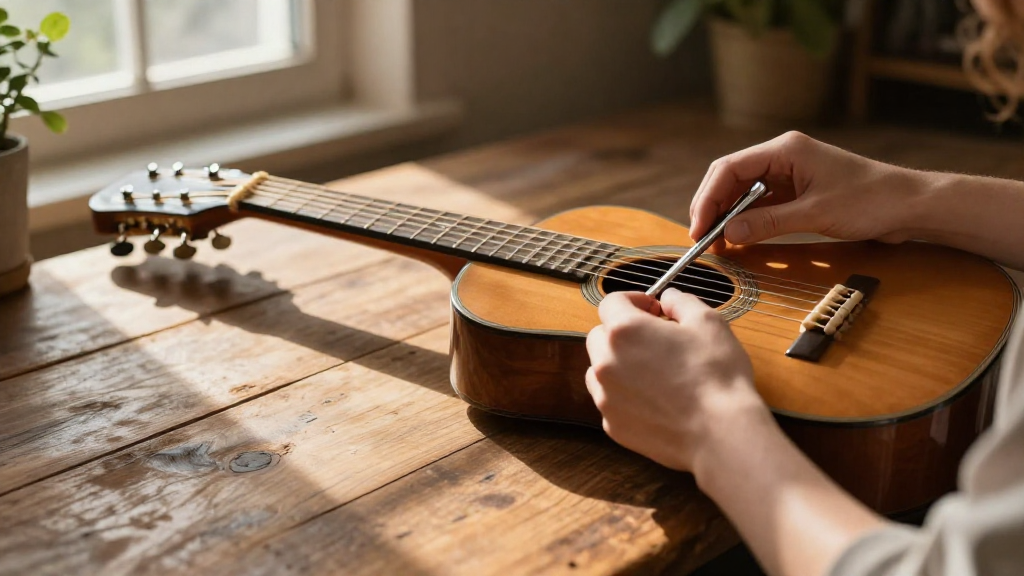
If you’re looking to explore the soulful sounds of the slide guitar, you’ve come to the right place for understanding the slide guitar basics.
What is Slide Guitar?
Slide guitar, a technique used in various musical genres such as blues, rock, and country, involves the use of a slide, typically made of glass, metal, or ceramic.
It allows musicians to create unique sounds and express themselves in ways that standard fretting cannot.
In essence, you glide the slide across the strings, producing a smooth, glissando-like effect.
You can play slide guitar on an electric or acoustic guitar, making it a versatile technique to master.
What Equipment Do You Need for Slide Guitar?
To get started with slide guitar basics, you need a few key pieces of equipment:
-
Guitar: While you can use any guitar, a resonator guitar is often preferred due to its strong, rich tones.
-
Slide: Choose a slide made of glass, metal, or ceramic. For beginners, glass slides provide a smoother sound, while metal offers a brighter tone.
-
Tuning: Many slide guitar players use open tunings, such as Open G (D-G-D-G-B-D) or Open D (D-A-D-F#-A-D), to make playing easier.
-
Picks (Optional): Some players prefer using fingerpicks for greater control.
-
Amp and Effects (For Electric Slide Guitar): If you’re playing electric slide guitar, a good amplifier and effects such as reverb or delay can enhance your sound.
How Do You Hold the Slide?
Proper technique is crucial when you’re learning the slide guitar basics.
Here’s how to hold the slide correctly:
-
Choose the Correct Finger: Most players use the ring finger for sliding, as it allows the other fingers more freedom for fretting notes.
-
Angle the Slide: Hold the slide at a slight angle to avoid touching adjacent strings, which helps produce a clear sound.
-
Use the Right Pressure: Apply just enough pressure to make contact with the strings without pressing them down completely; you want to create a smooth slide.
What Are the Basic Techniques?
Mastering the slide guitar basics is all about practicing a few essential techniques:
1. Sliding
To execute a slide:
-
Start from a note, press the slide onto the string,
-
Glide up or down to another note.
-
Maintain a light touch – you should be able to feel the guitar vibrating beneath the slide.
2. Hammer-ons and Pull-offs
These techniques add expression to your playing:
-
Hammer-ons: Strike the string with the slide to hit a note, then hammer onto a higher note without picking again.
-
Pull-offs: Reverse the process, pulling the slide off the string to sound a lower note.
3. Muting Strings
To avoid unwanted noise, use your picking hand to mute strings that you don’t want to sound. This will help maintain a clean tone while you practice the slide guitar basics.
Which Songs Are Great for Beginners?
Learning to play slide guitar is best done by playing along with songs. Here are some beginner-friendly tunes that feature slide guitar techniques:
-
“Sweet Home Chicago” – Robert Johnson
-
“Little Red Rooster” – Willie Dixon
-
“The Weight” – The Band
-
“In My Time of Dying” – Led Zeppelin
-
“Dust My Broom” – Elmore James
These songs incorporate various slide techniques, making them perfect for practicing the slide guitar basics.
How Can You Practice Effectively?
Effective practice is key to mastering slide guitar. Here are some tips:
-
Set Goals: Focus on learning one technique at a time or one song during each practice session.
-
Use a Metronome: This will help you develop timing and rhythm.
-
Record Yourself: Listening to your playing can reveal areas for improvement.
-
Learn Songs by Ear: Try to pick out melodies and solos to strengthen your skills without relying solely on tabs.
What Are Common Mistakes to Avoid?
While learning the slide guitar basics, new players often make some common mistakes:
-
Too Much Pressure: Applying too much pressure can cause a muted sound.
-
Poor Slide Placement: The slide should be positioned directly over the fret for a clean tone.
-
Neglecting Muting: Not muting the strings can lead to unwanted noise, which can be distracting.
-
Lack of Patience: Slide guitar takes practice; don’t rush the learning process.
How Does Slide Guitar Differ from Regular Guitar Playing?
Slide guitar offers a different approach than standard fretting techniques:
-
Finger Position: Instead of pressing down strings to create notes, you use the slide to glide across the strings.
-
Expression: The smooth transitions of the slide provide a unique vocal-like expression that’s impossible to achieve with frets alone.
-
Tuning: Open tunings simplify the finger placements, making it easier to reach chord shapes with the slide.
Where Can You Learn More?
For those eager to dive deeply into slide guitar basics, consider the following resources:
-
YouTube Tutorials: Many skilled guitarists share free lessons online.
-
Online Courses: Websites like Udemy or Skillshare offer structured slide guitar courses.
-
Books: Look for method books specifically focused on slide guitar techniques.
-
Private Lessons: A guitar teacher can provide personalized guidance tailored to your learning style and pace.
Conclusion
Starting with slide guitar can be one of the most rewarding musical experiences.
By understanding the slide guitar basics, you can tap into a world of sound and express your creativity.
Remember to practice regularly and explore different techniques and songs.
With patience and dedication, you’ll be sliding like a pro in no time!
Feel free to adapt any section as necessary, and happy playing!