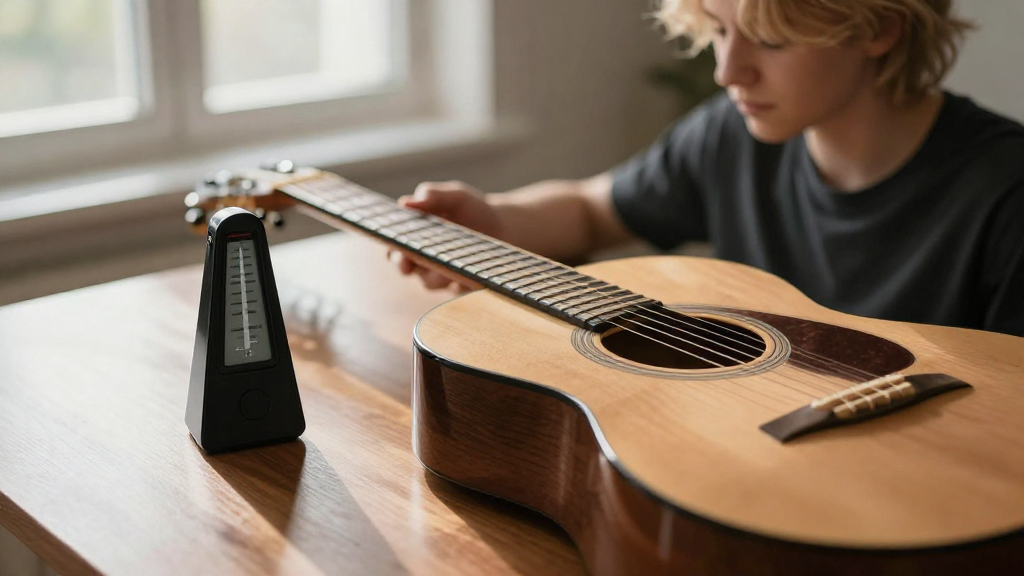
If you’ve ever wondered how to use a guitar metronome, you’re in the right place!
This article will guide you through the various techniques and benefits of practicing guitar with a metronome.
What is a Guitar Metronome and Why Should You Use One?
A guitar metronome is an essential tool for musicians, especially for guitarists aiming to improve their timing and rhythm.
Here’s why using a metronome is beneficial:
-
Improved Timing: It helps you understand and develop a strong sense of timing, which is crucial for any musician.
-
Consistency: Practicing with a metronome ensures that you maintain a steady tempo throughout your practice sessions.
-
Skill Development: Gradually increasing the tempo will help you master challenging pieces without compromising your technique.
-
Confidence Boost: Playing along with a steady beat builds confidence, especially for performances.
How to Use a Guitar Metronome: Getting Started
Now that you understand the importance of a metronome, let’s delve into how to use a guitar metronome effectively.
What Settings Should You Start With?
When you first start using a metronome, it can be beneficial to follow these steps:
-
Select a Comfortable Tempo: Start somewhere between 60-80 BPM (beats per minute) for beginners.
-
Set up Your Metronome: Turn it on and ensure you can hear the click clearly. Most metronomes will have visual markers, which can also be helpful.
-
Choose Your Time Signature: Most guitarists start with a 4/4 time signature.
-
Learn to Count: Before you start playing, practice counting the beats aloud to internalize the rhythm.
-
Play Simple Exercises: Begin with simple scales or chord progressions at your selected tempo.
How to Integrate a Metronome into Your Practice Routine?
Integrating a metronome into your guitar practice can be a game-changer.
Here’s how to do it:
-
Warm-Up: Start by warming up with simple finger exercises or scales while keeping time with the metronome.
-
Slow is Smooth: Play slowly with the metronome to ensure accuracy. Gradually increase the tempo as you become comfortable.
-
Complex Rhythms: Once you’re comfortable with simple patterns, challenge yourself with complex rhythms.
-
For example, practice playing eighth notes, quarter notes, and triplets against the beat.
-
Utilize Subdivisions: Use subdivisions to break down beats into smaller parts (e.g., playing two notes per click).
-
Song Practice: Apply what you’ve learned by playing songs with the metronome. It’s essential to maintain a steady tempo as you progress through the piece.
When Should You Increase the Tempo?
Knowing when to increase the tempo is crucial.
Here are some guidelines:
-
Master the Current Speed: Play through your exercise at the current speed without mistakes for several repetitions.
-
Small Increments: Increase the tempo by small increments, about 5-10 BPM.
-
Focus on Eradicating Mistakes: If you start to stumble or miss notes, revert back to your last comfortable tempo until you regain accuracy.
How to Maintain Concentration While Using a Metronome?
Practicing with a metronome may seem simple, but it can be quite challenging to maintain concentration.
Here are some tips:
-
Visual Reminders: If using a digital metronome, set a visual indicator, such as a blinking light, to help maintain your focus.
-
Stay Engaged: Engage your body by tapping your foot or nodding your head in time with the metronome’s beat.
-
Take Breaks: If you find yourself losing focus, take short breaks every 15-20 minutes to rejuvenate your concentration.
What Are Some Exercises to Try with a Metronome?
Experimenting with various exercises will enhance your skills while using a guitar metronome.
Here are some effective exercises:
-
Strumming Patterns: Practice different strumming patterns while keeping time.
-
Scale Practice: Run scales (major, minor, pentatonic) at different speeds.
-
Chord Changes: Focus by practicing changing chords in rhythm.
-
Single Note Melodies: Play melodies across the fretboard, ensuring each note lands precisely on the beat.
-
Alternate Picking: Use a metronome to guide your alternate picking technique.
How Often Should You Practice with a Metronome?
Finding the right balance is key when practicing with a metronome.
Consider the following:
-
Regular Use: Aim to incorporate metronome practice into each session, whether short or long.
-
Vary Focus: Spend dedicated time on specific techniques while using the metronome, then switch to free playing without it to gauge improvement.
-
Quality > Quantity: It’s better to focus on short sessions of purposeful practice rather than hours of distracted strumming with a metronome.
What Common Mistakes Should You Avoid?
To maximize the benefits of learning how to use a guitar metronome, be aware of these common pitfalls:
-
Setting the Metronome Too Fast: Starting at a speed that’s too fast can lead to frustration and mistakes.
-
Ignoring Consistency: Practice slowly and consistently rather than trying to speed through exercises.
-
Not Listening to the Metronome: Pay attention to the tick and adjust your playing rather than just going through the motions.
-
Skipping Timing Exercises: Even seasoned musicians can benefit from simple counting or tapping exercises.
Conclusion: Unlocking Your Potential with a Metronome
In summary, learning how to use a guitar metronome is vital for developing timing, rhythm, and overall musicality.
Integrate the metronome into your practice routine, experiment with various exercises, and take note of your progress.
By being mindful of the techniques outlined in this article, you will unlock your potential and become a more proficient guitarist.
Happy strumming! 🎸