When it comes to achieving professional audio quality in 2025, selecting the right XLR microphone is essential. With a variety of options available, from budget-friendly models to high-end choices, you’ll want to take into account your specific needs. Whether you’re a podcaster, vocalist, or just starting out, the perfect microphone can make all the difference. Let’s explore the top contenders that could elevate your sound to the next level.
Audio-Technica AT2020 Cardioid Condenser Studio XLR Microphone
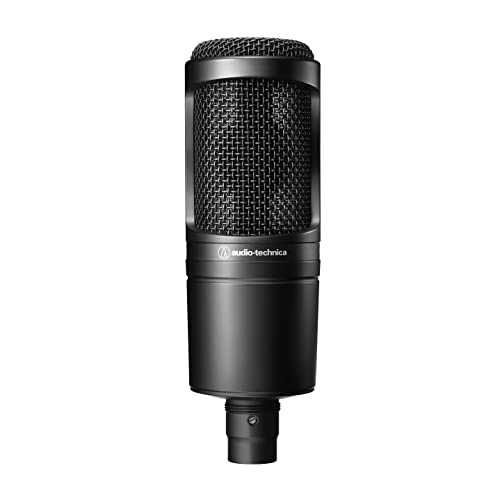
If you’re a budding musician or a home studio enthusiast, the Audio-Technica AT2020 Cardioid Condenser Studio XLR Microphone is the perfect choice for achieving professional audio quality. This microphone sets the standard in price and performance, boasting a low noise level of 20 dB SPL and high SPL handling, making it versatile for various recording situations. Its custom-engineered low mass diaphragm guarantees extended frequency response and superior transient response. The cardioid polar pattern effectively isolates your sound source, minimizing unwanted noise from the sides and rear. With its durable design and XLR output, it’s an excellent addition to your recording setup.
Best For: Budding musicians and home studio enthusiasts seeking professional audio quality at an affordable price.
Pros:
- High SPL handling allows for versatility across various recording situations.
- Cardioid polar pattern effectively isolates sound sources, reducing unwanted noise.
- Custom-engineered diaphragm ensures extended frequency response and superior transient response.
Cons:
- Requires an XLR interface, which may not be compatible with all recording devices.
- The cardioid pattern may not be suitable for capturing ambient sounds.
- Lacks built-in features like gain control or onboard effects, which may be preferred by some users.
Shure SM7B Vocal Dynamic Microphone
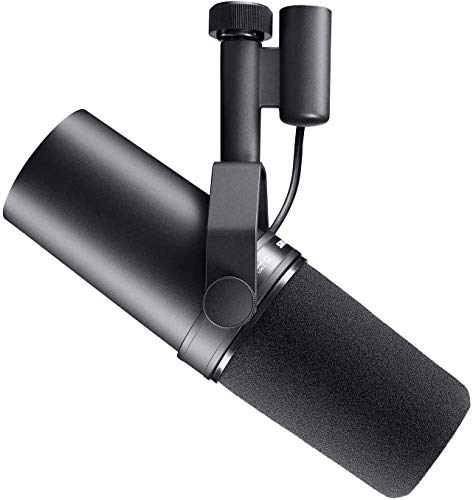
The Shure SM7B Vocal Dynamic Microphone stands out as an exceptional choice for audio professionals, particularly those involved in podcasting and streaming. With its smooth, warm sound and versatile design, it’s perfect for vocals, close-miking instruments, and more. The dynamic cartridge delivers natural audio through a wide frequency response, while the cardioid pattern effectively rejects unwanted noise. Constructed from rugged metal, it’s built to withstand heavy use. Plus, the included detachable windscreen and pop filter enhance sound isolation, ensuring clarity. With a 4.7-star rating from over 12,000 users, it’s a reliable investment for anyone serious about audio quality.
Best For: Audio professionals, podcasters, and streamers seeking high-quality vocal capture and sound isolation.
Pros:
- Versatile: Ideal for various applications including vocals, podcasting, and streaming.
- Sound Quality: Offers a smooth, warm sound with excellent noise rejection.
- Durable Design: Rugged metal construction ensures longevity and reliability in professional settings.
Cons:
- Gain Requirement: Requires a minimum of 60dB gain for optimal performance, which may necessitate additional equipment.
- Weight: At 2.7 pounds, it may be heavier than some competing microphones, affecting mounting options.
- No Phantom Power: While it does not require phantom power, some external pre-amps may need it for full functionality.
Shure SM58 Professional XLR Dynamic Vocal Microphone

Renowned for its exceptional vocal clarity, the Shure SM58 Professional XLR Dynamic Vocal Microphone is an ideal choice for performers and audio professionals alike. With a tailored frequency response that highlights midrange frequencies, your vocals will effortlessly cut through any mix. Its uniform cardioid pickup pattern isolates your voice while minimizing background noise, ensuring precise sound reproduction. Built for durability, the SM58 can handle the rigors of live gigs and studio sessions without skipping a beat. Plus, with a stellar customer rating of 4.7 out of 5, it’s a trusted choice for quality sound across various venues.
Best For: The Shure SM58 is best for live performers, studio recording artists, and podcasters seeking high-quality vocal clarity and reliability.
Pros:
- Legendary vocal clarity ensures that vocals stand out in any mix.
- Durable construction withstands the rigors of frequent use in various environments.
- Uniform cardioid pickup pattern effectively isolates the voice from background noise.
Cons:
- Corded design may limit mobility compared to wireless options.
- Single channel may not be suitable for users needing multi-channel setups.
- Weight at 310 grams may feel heavy for extended handheld use.
Shure MV7X XLR Dynamic Microphone for Podcasting and Vocal Recording

For podcasters and vocalists seeking exceptional audio quality, the Shure MV7X XLR Dynamic Microphone stands out with its professional XLR connection. This voice-isolating cardioid mic features advanced technology to focus on your voice while minimizing background noise, ensuring clarity in your recordings. With a robust all-metal construction, it’s built for daily use, making it perfect for content creators. The MV7X shares design traits with the legendary SM7B, offering a rich sound profile that’s hard to beat. Its versatility in mounting and impressive customer ratings make it a top choice for anyone serious about audio quality.
Best For: The Shure MV7X XLR Dynamic Microphone is best for podcasters and vocalists looking for exceptional audio quality with minimal background noise interference.
Pros:
- Professional XLR connection ensures high-quality output without the need for preamps or gain boosters.
- Voice isolation technology effectively focuses on the speaker’s voice while rejecting unwanted background noise.
- Durable all-metal construction makes it ideal for daily use in various recording environments.
Cons:
- Corded electric power source limits mobility during recordings.
- Lacks USB connectivity, which may be a drawback for users looking for plug-and-play options.
- Heavier weight (1.12 pounds) may require a sturdier stand for optimal stability.
Shure PGA48 Dynamic Microphone with XLR Cable and Accessories

If you’re seeking a reliable microphone that delivers professional audio quality without breaking the bank, the Shure PGA48 Dynamic Microphone is an excellent choice. This handheld mic features a cardioid pick-up pattern, ensuring sound isolation and minimizing feedback. You’ll appreciate its exceptional clarity, especially in mid-range and bass frequencies. The integrated shock mount reduces handling noise, while the rugged metal construction guarantees durability. With a 15′ XLR-to-XLR cable included, setup is a breeze. Plus, you’ll receive a stand adapter and a zipper pouch for easy transport. Whether you’re a beginner or a pro, the PGA48 is a smart investment for any audio setup.
Best For: The Shure PGA48 Dynamic Microphone is best for both beginners and professionals seeking reliable and high-quality audio performance for vocals.
Pros:
- Exceptional sound clarity with tailored frequency response for mid-range and bass.
- Cardioid pick-up pattern effectively isolates sound and reduces feedback.
- Durable construction and included accessories make it easy to use and transport.
Cons:
- Limited features compared to more advanced microphones.
- Dynamic microphones may not capture the full detail of some vocals as condenser mics do.
- The on/off switch may be prone to accidental activation during use.
MAONO XLR/USB Condenser Microphone (A04 Gen2)

The MAONO A04 Gen2 XLR/USB Condenser Microphone stands out as an ideal choice for content creators who demand professional audio quality without the complexity of high-end equipment. With a 192kHz/24bit sampling rate and a 30Hz-16kHz frequency response, it captures rich, studio-quality sound. Its cardioid polar pattern minimizes off-axis noise, ensuring clarity in your recordings. You’ll appreciate the dual connectivity options for easy use across devices. The package includes an adjustable scissor arm stand, pop filter, and shock mount, giving you everything you need to set up effortlessly. Just note, an XLR cable isn’t included.
Best For: Content creators, podcasters, and musicians seeking professional audio quality with user-friendly features.
Pros:
- Studio-quality sound with a high sampling rate and broad frequency response.
- Dual connectivity options (USB and XLR) for versatile use across devices.
- Comes with essential accessories like a scissor arm stand and pop filter for easy setup.
Cons:
- Requires phantom power for XLR connections, which may not be available on all devices.
- XLR cable is not included in the package.
- Not compatible with Xbox, limiting its use for gaming.
FIFINE USB/XLR Dynamic Microphone for Podcast and Gaming

Podcast creators and gamers seeking professional audio quality will find the FIFINE USB/XLR Dynamic Microphone (AmpliGame AM8) an excellent choice. With a frequency response of 50Hz-16KHz, this cardioid microphone isolates your voice, ensuring clarity by rejecting off-axis noise. Its plug-and-play USB connection is perfect for beginners, while the XLR option provides flexibility for advanced setups. You’ll appreciate features like the tap-to-mute function, real-time audio monitoring, and smooth mic gain control. Plus, the soothing RGB lighting adds a stylish touch. Lightweight and portable, it’s ideal for on-the-go recording, making it versatile for gaming, podcasting, and music.
Best For: Podcast creators and gamers seeking professional audio quality in a user-friendly microphone.
Pros:
- Plug-and-play USB connection makes it easy for beginners to set up and start recording immediately.
- Cardioid directional type effectively reduces off-axis noise for clearer vocal capture.
- Versatile design allows for both gaming and podcasting with stylish RGB lighting for aesthetics.
Cons:
- XLR cable is not included, requiring an additional purchase for those who want to use the XLR connection.
- RGB features only available in USB mode, limiting functionality when using XLR.
- Recommended recording distance (2 to 6 inches) may not suit all users’ preferences or setups.
FIFINE K688 Podcast Microphone Kit with Boom Arm

For creators seeking high-quality audio without hassle, the FIFINE K688 Podcast Microphone Kit with Boom Arm stands out with its dual USB/XLR connectivity. With a 130dB SPL, this dynamic microphone captures your voice clearly while minimizing background noise thanks to its cardioid pattern. You’ll enjoy the convenience of plug-and-play USB for streaming, or switch to XLR for studio-grade sound. The durable metal boom arm keeps your mic secure, reducing vibrations. Plus, intuitive controls like the tap-to-mute button and gain knob enhance your recording experience. With included accessories, your audio quality will be crystal clear, making your podcasts and streams shine.
Best For: Podcasters and streamers looking for a versatile and high-quality microphone setup that offers both USB and XLR connectivity options.
Pros:
- Offers dual connectivity options (USB and XLR) for flexibility in usage.
- Features a cardioid pattern that effectively reduces background noise for clearer audio.
- Includes a durable boom arm and accessories like a windscreen and shock mount to enhance sound quality.
Cons:
- Function keys are inactive when using XLR, requiring a mixer or audio interface for control.
- The boom arm may not fit desks thicker than 2 inches due to the C-clamp design.
- Requires adjustment of input volume through an audio interface in XLR mode, which may add complexity for some users.
MAONO XLR Podcast Microphone for Vocal Recording

Designed specifically for vocal recording, the MAONO XLR Podcast Microphone (Model PD100) stands out as an ideal choice for streamers, podcasters, and content creators. Its cardioid dynamic design, with voice isolation technology and a double-layer pop filter, effectively minimizes plosive sounds. The frequency response of 60-14kHz guarantees crystal-clear audio. With a stylish metal body, it’s portable and includes a 2.36-inch rod extender for height adjustments. The XLR connection guarantees compatibility with various audio interfaces and mixers. Rated 4.4 out of 5 stars, this microphone is a reliable addition to your recording setup, enhancing your overall podcasting experience.
Best For: The MAONO XLR Podcast Microphone is best for streamers, podcasters, and content creators looking for high-quality vocal recording.
Pros:
- Voice isolation technology effectively reduces background noise and plosive sounds.
- Portable design with a stylish metal body and height-adjustable rod extender.
- XLR connectivity ensures compatibility with various audio interfaces and mixers, enhancing versatility.
Cons:
- Requires an XLR interface or mixer, which may involve additional costs.
- Not suitable for those seeking a USB microphone for direct computer connection.
- Weighs 2.02 pounds, which may be heavier than some prefer for portable setups.
Pyle Dynamic Cardioid Microphone with XLR Cable Included

The Pyle Dynamic Cardioid Microphone, complete with a 15ft XLR cable, is an excellent choice for performers and recording artists who demand high audio quality without the hassle of extra gear. This dynamic mic features a unidirectional cardioid pickup pattern, isolating your voice while minimizing background noise. Its rugged zinc alloy body guarantees durability, making it perfect for both stage and studio use. With a frequency range of 50Hz-15KHz and a built-in acoustic pop filter, you’ll achieve clear, professional sound. Weighing just 1.48 lbs, it’s easy to handle during long sessions, providing reliable performance every time.
Best For: Performers and recording artists seeking a reliable, high-quality microphone for both live and studio applications.
Pros:
- Unidirectional cardioid pickup pattern effectively isolates vocals, reducing background noise and feedback.
- Rugged all-metal construction ensures durability for demanding environments, making it ideal for stage use.
- Includes a 15ft XLR cable, providing convenience and ease of use right out of the box.
Cons:
- Dynamic microphone may not capture high-frequency details as well as condenser microphones.
- Weight of 1.48 lbs might be slightly cumbersome for some users during extended use.
- Limited frequency range (50Hz-15KHz) may not meet the needs of users requiring extreme low or high-end response.
Factors to Consider When Choosing XLR Microphones
When you’re choosing an XLR microphone, it’s essential to take into account several key factors. Think about the type of microphone that best suits your needs, as well as its frequency response range and pickup pattern. Also, don’t overlook build quality and connectivity options, as these can greatly influence your audio experience.
Microphone Type Selection
Choosing the right type of XLR microphone involves understanding your specific needs and the environment in which you’ll be using it. Dynamic microphones are rugged and ideal for live performances, handling high sound pressure levels well. If you’re recording in a studio, a condenser mic might be better, as it captures detailed sound and offers a wider frequency response.
Also, consider the polar pattern; cardioid mics focus on sound from the front while rejecting noise from the sides. Pay attention to impedance and signal-to-noise ratio—lower impedance and higher ratios usually mean better performance. Finally, think about your intended use, whether it’s for vocals, instruments, or podcasting, to guarantee you select the right features and design for peak performance.
Frequency Response Range
Understanding the frequency response range of an XLR microphone is essential for achieving ideal audio quality. This range indicates the spectrum of sound frequencies the microphone can effectively capture, typically expressed in Hertz (Hz). Most dynamic microphones cover 50Hz to 15kHz, while condenser microphones can extend to 20kHz, making them better for high frequencies. A broader frequency response allows for more accurate sound reproduction, particularly in vocal and instrumental recordings, ensuring clarity and detail. When choosing a microphone, consider the frequency response that aligns with your intended application. Different sources produce varying frequency ranges, so a tailored frequency response can enhance specific audio characteristics, such as emphasizing midrange for vocals or adding depth for bass instruments.
Pickup Pattern Importance
The pickup pattern of an XLR microphone plays an essential role in shaping the quality of your recordings, directly affecting how sound is captured and rejected. If you’re looking to isolate vocals in noisy environments, a cardioid microphone is a great choice, as it focuses on sound from the front while minimizing noise from the sides and rear. Alternatively, omnidirectional and bidirectional patterns capture sound from all directions or from two opposite sides, which might suit different recording scenarios. Understanding these patterns is vital for avoiding feedback issues, especially during live performances. By selecting the right pickup pattern, you enhance sound quality, improve recording fidelity, and create a more focused audio experience for your listeners.
Build Quality Considerations
When selecting an XLR microphone, it’s vital to take into account build quality, as it directly impacts durability and performance. Look for rugged metal constructions that withstand wear and tear, especially in professional environments. Microphones meant for extensive use often have advanced electromagnetic shielding, which reduces interference and enhances sound clarity. Features like break-resistant stand adapters and integrated shock mounts are important for minimizing handling noise and vibrations. Also, consider the weight and materials; heavier microphones typically offer more stability and reduce unwanted movement. Finally, evaluate the mesh grille and internal components, as these protect the microphone capsule and guarantee consistent sound performance over time. Prioritize these factors for a reliable choice in your audio setup.
Connectivity Options Available
Selecting the right connectivity options for your XLR microphone can greatly impact your audio setup. XLR microphones typically provide a balanced audio signal, reducing noise and interference compared to unbalanced connections. Many models, especially condenser mics, require phantom power, usually supplied by audio interfaces or mixers. Since XLR connections are standard in professional audio equipment, they guarantee compatibility with various mixers, interfaces, and recorders, whether you’re in a studio or performing live. Some XLR microphones even offer dual connectivity, functioning as USB mics for added flexibility in home recording. Remember, choosing XLR over USB can enhance your audio quality and dynamic range, assuring the best performance in professional applications.
Noise Isolation Features
Choosing an XLR microphone with effective noise isolation features can greatly enhance your recording quality. Look for microphones that utilize a cardioid polar pattern, as they capture sound from the front while minimizing noise from the sides and rear. This design improves sound isolation, ensuring your desired audio is clear. Additionally, built-in pop filters and shock mounts can help reduce plosive sounds and handling noise, further enhancing clarity. Pay attention to the signal-to-noise ratio (SNR); higher SNR values indicate better noise rejection, leading to cleaner sound reproduction. Finally, advanced technologies like air suspension shock isolation can effectively minimize low-frequency noises and breathiness, making your microphone more suitable for professional applications.
Intended Use Cases
Understanding noise isolation features helps set the stage for considering intended use cases for XLR microphones. Different microphones excel in specific applications, so think about your needs. For studio recording, a condenser microphone might be your best bet due to its sensitivity and broader frequency response. If you’re performing live, a dynamic microphone usually shines with its durability and feedback rejection.
For podcasting or vocal recording, opt for a microphone with a cardioid polar pattern to reduce background noise. Additionally, consider extra features like built-in pop filters or shock mounts, which can improve audio quality by minimizing plosive sounds and handling noise. Finally, make sure your chosen microphone is compatible with your audio interface or mixer, especially regarding phantom power and gain levels.
Budget and Pricing Factors
While you’re exploring XLR microphones, it’s crucial to keep your budget in mind, as prices can vary widely. You can find entry-level models around $50 that deliver decent performance, but for a solid choice, expect to spend between $100 and $200. These options are great for home studios and beginners. If you’re more serious about your audio quality, consider mid-range microphones costing between $200 and $300, which offer better sound isolation and durability. For professional use, high-end models above $300 provide superior audio quality and advanced features. Don’t forget to factor in additional costs like audio interfaces, cables, and stands, as these can greatly impact your overall budget for the XLR microphone setup.