The right XLR cable helps preserve clean, balanced audio while standing up to repeated setup, teardown, and transport. This roundup compares 10 options in practical lengths and pack sizes for microphones, mixers, speakers, and recording equipment.
Whether you need a short patch cable, a dependable studio lead, or extra-long cables for a stage or PA system, use the guide below to match connector quality, shielding, durability, and length to your setup.
Best 10 Xlr Cables Picks for 2026
Best Value 2-Pack

- Two 25-foot male-to-female cables
- 21 AWG OFC conductors
- Braided shielding and sturdy connectors
Best For: Studio and live setups needing long cables and a spare
Heavy-Duty Pick
10ft XLR Cables with REAN Connectors

- REAN by Neutrik gold-plated connectors
- Kevlar reinforcement and dual shielding
- Lifetime warranty included
Best For: Frequent studio, DJ, and stage use
Simple Budget Choice

- 10-foot male-to-female configuration
- All-copper conductors
- Spiral shielding and flexible PVC jacket
Best For: Basic microphone, PA, and studio connections
Long-Run Set
Gearlux 25ft Balanced XLR Cables
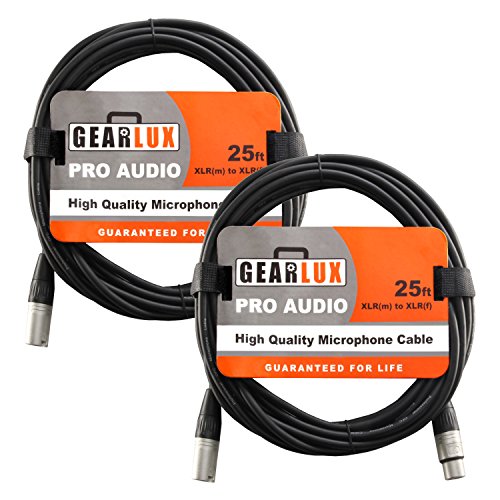
- Two 25-foot cables
- OFC cores with copper braided shielding
- Flexible jackets and metal connectors
Best For: Longer studio, live-sound, and field-recording runs
Best Value Pair

- 21 AWG OFC conductors for clear balanced audio
- Copper braided shielding helps limit interference
- Two-pack with durable metal connectors
Best For: Home studios and standard microphone setups
Best for Long Runs
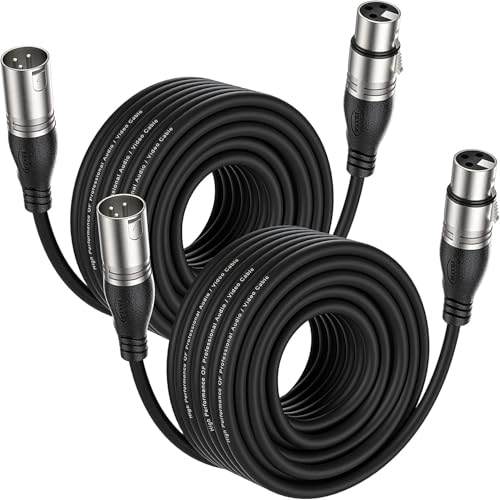
- 50-foot length for distant equipment
- Braided shielding helps reduce interference
- Flexible PVC jacket and locking connectors
Best For: Stages, events, and extended microphone runs
Best Durability

- Double shielding helps protect against interference
- Nylon braid supports flexible, tangle-resistant handling
- Heavy-duty connectors with molded strain relief
Best For: Frequent stage, studio, and home-audio use
Best Long-Reach Pick
Amazon Basics 25-Foot XLR Cable
- 25-foot reach for PA and studio setups
- All-copper conductors with spiral shielding
- Durable 3-pin connectors and PVC jacket
Best For: Longer connections in studios and live-sound systems
Best Short-Cable Value

- Two compact 3-foot cables included
- OFC conductors and double shielding
- Nylon braid with heavy-duty connectors
Best For: Short microphone and nearby audio-equipment connections
Best Bulk Stage Setup
Bietrun 100-Foot XLR Cable 2-Pack

- Two 100-foot balanced XLR cables
- Layered shielding and OFC conductors
- Color-coded connectors with Velcro ties
Best For: Long stage, venue, and recording-system cable runs
Best Value 2-Pack – 25ft Premium XLR Cables
For shoppers comparing xlr cables for studio recording, live sound, or general professional audio connections, this two-pack offers useful reach and a spare cable in the same purchase. Its balanced construction, OFC conductors, and braided shielding are designed for clear, low-interference signal transmission.
Best For: Studio and live setups that need two long male-to-female XLR cables.
Pros:
- Includes two 25-foot cables for flexible equipment placement and backup use.
- 21 AWG oxygen-free copper conductors support clear audio transmission.
- Copper braided shielding, metal connectors, and molded strain relief add durability and noise resistance.
Cons:
- The 25-foot length may be more cable than compact setups require.
- Designed for 3-pin XLR connections, so it is not a universal cable for other connector types.
This is a practical choice when you want long cable runs and the convenience of a two-pack. It suits microphones, mixers, preamps, speakers, and other equipment using standard 3-pin XLR connections.
Heavy-Duty Pick – 10ft XLR Cables with REAN Connectors
These xlr cables are built for users who prioritize connector quality, shielding, and regular-use durability. The 10-foot male-to-female design offers extra placement flexibility, while REAN by Neutrik connectors, Kevlar reinforcement, and dual shielding target demanding studio, DJ, and stage applications.
Best For: Musicians, creators, studios, and live performers who want a durable 10-foot cable with a lifetime warranty.
Pros:
- Uses gold-plated REAN by Neutrik XLR connectors for a firm, standard fit.
- Kevlar reinforcement and a reinforced jacket are designed to resist wear and accidental tugs.
- Aluminum and over-95% OFC braided shielding help reduce hum, static, and interference.
- Lifetime warranty and cable lengths ranging from 1.5 to 300 feet provide added flexibility.
Cons:
- A 10-foot cable may not provide enough reach for larger venues or distant equipment.
- The feature-rich construction may be unnecessary for simple, occasional connections.
Choose this model when durability and noise control matter more than a basic cable design. Its length is well suited to home studios, small-to-medium recording spaces, DJ booths, and stage setups.
Simple Budget Choice – Amazon Basics 10ft XLR Cable
If you need straightforward xlr cables for a microphone, PA system, or speaker, this 10-foot Amazon Basics model keeps the design focused on core functionality. All-copper conductors and inner copper spiral shielding are intended to support clear transmission while reducing noise interference.
Best For: Basic studio recording and live-sound connections using compatible 3-pin XLR equipment.
Pros:
- Provides a practical 10-foot length for common microphone and PA setups.
- All-copper conductors with spiral shielding help reduce interference.
- Zinc alloy 3-pin connectors and a flexible 6.0mm PVC jacket support everyday use.
Cons:
- Only one cable is included.
- Its indoor-oriented specification may be less suitable for outdoor applications.
- It does not list extras such as Kevlar reinforcement or a lifetime warranty.
This cable is a sensible option for buyers who want a basic, clearly specified connection without paying for specialized construction. Confirm that your equipment uses compatible male-to-female XLR ports before ordering.
Long-Run Set – Gearlux 25ft Balanced XLR Cables
Gearlux XLR Microphone Cable, Fully Balanced, Male to Female, 25 Feet - 2 Pack
Check Price On AmazonFor longer equipment runs, these xlr cables combine 25-foot reach with a two-cable configuration. Their fully balanced design, OFC cores, copper braided shielding, flexible PVC jackets, and metal connectors are aimed at reliable signal transmission in studio, field-recording, and live-sound environments.
Best For: Users who need two long XLR cables for microphones, mixers, or other professional audio equipment.
Pros:
- Two 25-foot cables provide 50 feet of total cable length for larger setups.
- OFC cores and copper braided shielding help minimize hum and interference.
- Flexible PVC jackets balance maneuverability with regular-use durability.
- Rugged metal connectors are designed for dependable connections.
Cons:
- Long 25-foot cables can be cumbersome in compact spaces.
- The supplied details contain an inconsistent pin specification, so verify compatibility with your equipment.
This Gearlux set makes sense when reach and a balanced signal are the main priorities. It is especially useful for users connecting microphones and other professional audio gear across wider studio, stage, or field-recording layouts.
Best Value Pair – Premium 6ft XLR Cables
These 6-foot XLR cables are a practical choice when you need dependable connections for microphones, recording equipment, mixers, or other 3-pin XLR gear. The two-pack gives you a spare while balancing sound quality, durability, and everyday flexibility.
Best For: Home studios, live recording, and users who need two standard-length microphone cables.
Pros:
- 21 AWG oxygen-free copper conductors support clear, balanced audio transmission.
- Copper braided shielding helps reduce unwanted noise and interference.
- Heavy-duty metal connectors and molded strain relief improve durability.
- Two-pack provides a replacement or second cable for different setups.
Cons:
- At 6 feet, the cables may be limiting for larger stages or spread-out equipment.
- Designed for 3-pin XLR connections, so they are not a universal cable for other connector types.
Choose this pair if you want straightforward, well-shielded XLR cables for common studio and live-audio connections without paying for extra length.
Best for Long Runs – 50ft XLR Cable 2-Pack
For setups where microphones or speakers sit farther from the mixer, these 50-foot XLR cables provide useful reach without requiring extensions. Their balanced 3-pin design, braided shielding, and flexible PVC jackets make them suitable for studio, stage, and event use.
Best For: Live sound, outdoor events, stage setups, and other applications requiring extended cable runs.
Pros:
- 50-foot length offers substantial reach for microphones, mixers, amplifiers, and speakers.
- High-density copper braided shielding and oxygen-free copper conductors help resist interference.
- Locking metal connectors help maintain a secure connection.
- Soft PVC insulation is flexible and can be wiped clean.
Cons:
- Long cables can be more cumbersome to manage than shorter options.
- The 24-gauge conductors are lighter than the 21-gauge conductors in the Cable Matters pair.
This two-pack is a sensible option when coverage matters most, especially for live or outdoor arrangements that demand extra cable length.
Best Durability – 25ft Nylon-Braided XLR Cables
These 25-foot XLR cables combine extended reach with a nylon-braided exterior designed for frequent handling. Double shielding, heavy-duty connectors, and a two-pack make them a strong fit for microphones, mixing boards, patch bays, and other 3-pin XLR equipment.
Best For: Users who want flexible, tangle-resistant cables for stage sound, home theater, KTV, or studio systems.
Pros:
- Double shielding with foil and copper braid helps reduce hum, hiss, and external interference.
- Nylon braiding is flexible, wear-resistant, and designed for repeated bending.
- Heavy-duty metal connectors include molded strain relief and grip treads.
- 25-foot length and two-pack offer useful reach plus a spare cable.
Cons:
- Longer than a typical short studio patch cable, so storage and cable management may require more attention.
- Built for 3-pin XLR connections and may not fit equipment using other interfaces.
If you prioritize rugged handling and reduced cable noise, this set offers a well-rounded combination of reach, shielding, flexibility, and connector durability.
Best Long-Reach Pick – Amazon Basics 25-Foot XLR Cable
If you need dependable reach for a PA system, speaker, or recording setup, this Amazon Basics option is a straightforward choice among XLR cables. Its all-copper conductors and copper spiral shielding are designed to support clear transmission, while the flexible PVC jacket suits studio and live-sound use.
Best For: Studio recording, live sound, and connecting equipment positioned farther apart.
Pros:
- 25-foot length provides useful reach for larger setups.
- All-copper conductors and inner copper spiral shielding help reduce interference.
- Zinc alloy 3-pin connectors and a protective metal housing support durability.
- Flexible 6.0mm PVC jacket is practical for regular setup changes.
Cons:
- Only one cable is included.
- The long length may be unnecessary for compact desktop or home setups.
This is a practical, no-frills XLR cable for buyers who prioritize length and broad compatibility with 3-pin XLR equipment over extras such as braided sleeving or a multipack.
Best Short-Cable Value – 3-Foot XLR Cable 2-Pack
For compact microphone and audio setups, this two-pack offers practical short-length XLR cables with features aimed at reducing noise and handling repeated use. The 3-foot size keeps cable runs manageable, while oxygen-free copper, double shielding, and nylon braiding add useful everyday durability.
Best For: Microphones, mixers, patch bays, and other nearby 3-pin XLR connections where a spare cable is useful.
Pros:
- Two 3-foot cables provide a spare or support multiple microphones.
- 100% 24AWG oxygen-free copper conductors and double shielding help limit interference.
- Nylon braided housing is flexible, wear-resistant, and designed to resist tangling.
- Heavy-duty metal connectors include molded strain relief and locking latches.
Cons:
- Three feet may be too short for stage or room-scale cable runs.
- The braided housing may require more care than a smooth jacket when cleaning.
This is a strong value-oriented pick when you want short, tidy connections and a backup cable. Buyers needing more reach can choose from the product’s listed alternate lengths.
Best Bulk Stage Setup – Bietrun 100-Foot XLR Cable 2-Pack
When a sound system requires substantial reach, this two-pack of 100-foot balanced XLR cables is built for larger stage, recording, and venue setups. Its oxygen-free copper conductors, multiple shielding layers, and 6mm TPE jacket are designed to support clear signals over long runs.
Best For: Stage sound, professional sound reinforcement, venues, and recording setups that need two long cables.
Pros:
- Two 100-foot cables provide extensive reach for microphones and equipment.
- Multiple shielding layers are designed to reduce static and interference.
- Heavy-duty alloy connectors, copper pins, and metal spring strain relief support repeated use.
- Different connector colors and included Velcro ties help with identification and organization.
Cons:
- 100-foot cables can be excessive for small rooms or desktop setups.
- Long cables require more storage and careful routing than shorter XLR cables.
This pack makes the most sense for buyers who need maximum reach in a balanced XLR system and want two organized, durable cables rather than a single short lead.
How We Picked These Xlr Cables
We focused on balanced male-to-female Xlr Cables suited to common microphone, mixer, audio interface, speaker, and PA connections. The selection covers several useful lengths—from compact 3-foot leads to 100-foot cables—as well as single and multipack options. We also considered conductor materials, shielding, connector construction, cable jackets, flexibility, and the practical value of each package.
Because cable needs vary by application, no single option is ideal for every buyer. Shorter cables can reduce clutter in a studio, while longer models provide more freedom onstage but require better organization and storage.
Quick Comparison
- Best for basic home setups: 6- or 10-foot cables offer a manageable balance of reach and tidiness.
- Best for stage and PA use: 25-foot cables are versatile for positioning microphones and equipment.
- Best for large venues: 50- and 100-foot options provide extra reach when equipment is spread out.
- Best for compact connections: 3-foot cables work well for nearby rack, mixer, and interface components.
- Best value for multiple microphones: Two-packs help outfit a small studio or live rig at once.
Key Buying Factors for Xlr Cables
Length and Cable Management
Choose the shortest length that comfortably reaches between components. Excess cable can create tangles and trip hazards, but a cable that is too short can strain connectors. Measure your expected route and add modest extra length for positioning.
Shielding and Conductor Design
Balanced Xlr Cables are designed to reject much of the noise picked up over longer runs. Shielding and quality conductors can further support a clean signal, especially near power supplies, lighting equipment, computers, and other potential interference sources.
Connectors and Construction
Look for secure three-pin connectors, firm strain relief, and a jacket suited to the environment. Reinforced or braided jackets may be useful for frequent transport, while flexible cables are easier to coil and store. Connector brand and build quality matter more when cables will be plugged and unplugged often.
Pack Size and Compatibility
Verify that the cable has the male-to-female XLR configuration your equipment requires. Two-packs are convenient for stereo setups or multiple microphones, but buying a single cable may be more economical if you need only one replacement.
Who Should Buy Which Xlr Cables?
Home recording and podcasting: Choose 3-, 6-, or 10-foot cables to connect microphones without filling your workspace with unnecessary slack.
Small bands and rehearsal spaces: A 25-foot two-pack is a practical starting point for vocal microphones, stage positioning, and backup capacity.
Live sound and event production: Consider 50- or 100-foot cables when microphones or speakers must be placed far from the mixer. Plan cable paths carefully and avoid running them where they can be crushed or tripped over.
Budget-conscious buyers: Basic all-copper, shielded options can cover everyday recording and PA duties. If the cables will see heavy touring use, prioritize stronger jackets, strain relief, and connectors over the lowest purchase price.