The best wireless microphones make it easier to record, perform, present, or host without being tied to a cable. This roundup covers compact creator kits, handheld systems, karaoke options, and dual-microphone setups.
Use the buying guide below to compare connection types, range, battery life, audio quality, and setup requirements before choosing the right system for your space and equipment.
Best 10 Wireless Microphones Picks for 2026
Best for Creators
DJI Mic Mini Charging Case Kit

- 10 g transmitters with detail-rich audio
- Up to 400 m range and 48-hour case battery
- Noise cancellation and automatic limiting
Best For: Interviews, livestreams, vlogging, and content creation
Best for Events
Phenyx Pro Dual UHF Handheld System

- Auto Scan and 200 selectable UHF frequencies
- Up to 328 ft line-of-sight range
- Dual cardioid handheld mics with metal construction
Best For: Churches, weddings, karaoke, DJ events, and public speaking
Best Mobile Setup

- Dual 10 g transmitters with mobile receiver
- USB-C plug-and-play compatibility
- 300 m range and active noise cancellation
Best For: Phone-based interviews, livestreaming, and mobile content
Best for PartyBox Karaoke
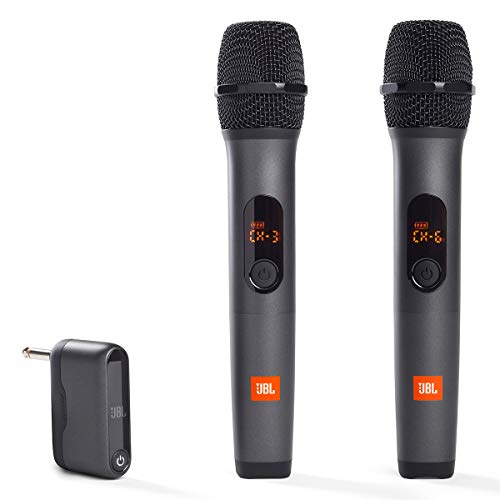
- Two handheld mics with dual-channel receiver
- Plug-and-play setup for compatible PartyBox speakers
- Replaceable AA batteries and clear vocal sound
Best For: Karaoke, parties, and singing with compatible JBL PartyBox models
Best Compact Pick

- Tiny 9g transmitters
- 48kHz/24-bit audio
- Up to 30 hours with case
Best For: Mobile creators, vloggers, and podcasters
Best Pro Feature Set

- 32-bit float backup recording
- Supports up to four transmitters
- Up to 28 hours of use
Best For: Interviews, podcasts, and advanced video production
Best for Comfort

- Two handheld microphones included
- Up to 20 hours of playtime
- Stable 2.4GHz dongle connection
Best For: Karaoke, parties, and JBL PartyBox owners
Best for Mobile Creators
Hollyland Lark A1 Wireless Mic
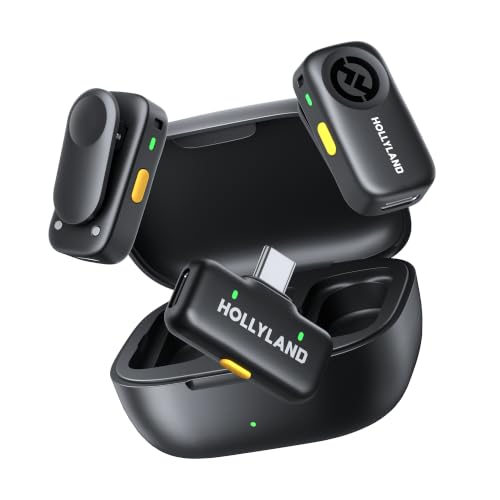
- USB-C plug-and-play receiver
- Two transmitters for interviews
- Up to 54 hours with case
Best For: Phone streaming, vlogging, and two-person recordings
Best for Group Karaoke

- Includes four handheld microphones
- 200-foot line-of-sight range
- Over 10 hours of rechargeable use
Best For: Karaoke, worship, parties, and group events
Best for Small Events

- Two handheld dynamic microphones
- Up to 200 feet of range
- Works with 3.5mm and 6.35mm mic inputs
Best For: Karaoke, speeches, churches, and small stages
Best for Creators – DJI Mic Mini Charging Case Kit
For creators who need discreet, dependable wireless microphones, the DJI Mic Mini combines lightweight transmitters with strong range, noise cancellation, and extended battery life. The two-transmitter kit is well suited to interviews, livestreams, and multi-person content.
Best For: Interviews, livestreams, vlogging, and content creation where long battery life matters.
Pros:
- Ultralight 10 g transmitters are comfortable and discreet on camera.
- Up to 400 m transmission range and automatic limiting help support reliable recordings.
- Up to 48 hours of use with the charging case.
- Two noise-cancellation levels and DJI OsmoAudio compatibility add flexibility.
Cons:
- The feature set may be more than needed for simple indoor recording.
- Its ecosystem-direct connection is centered on compatible DJI devices.
The charging case, dual transmitters, and automatic audio protection make this a versatile wireless microphone system for frequent creators who value portability and recording endurance.
Best for Events – Phenyx Pro Dual UHF Handheld System
This Phenyx Pro system is a practical choice among wireless microphones for live speaking, karaoke, and performances. Its dual handheld design, UHF operation, auto scanning, and metal construction are aimed at reliable use with PA systems and mixers.
Best For: Churches, weddings, karaoke, DJ events, public speaking, and other live applications.
Pros:
- Auto Scan selects a lower-interference frequency, while 200 selectable frequencies support flexible setup.
- Up to 328 feet of line-of-sight operating range.
- Cardioid pickup helps reject ambient noise, with a tuned response for fuller vocals.
- Dual handheld microphones, mute controls, and durable metal construction.
Cons:
- Requires a receiver and audio connection to a compatible PA, mixer, or speaker.
- AA batteries provide up to 16 hours, so replacements may be needed for extended events.
Choose this system when two performers or speakers need handheld microphones and you want UHF frequency flexibility rather than a camera-focused lavalier setup.
Best Mobile Setup – DJI Mic Mini USB-C Kit
For phone-first recording, these wireless microphones pair two compact transmitters with a mobile receiver for a plug-and-play setup. The kit supports USB-C devices and adds active noise cancellation, making it convenient for interviews, livestreams, and quick outdoor recordings.
Best For: iPhone and Android creators, interviews, livestreaming, and portable content production.
Pros:
- Small 10 g transmitters are discreet and comfortable to wear.
- USB-C mobile receiver supports compatible iPhone, Android, PC, and tablet setups.
- Up to 300 m transmission range and up to 11.5 hours of operating time.
- Two noise-cancellation levels and automatic limiting help maintain clear audio.
Cons:
- The listed mobile receiver is USB-C, so device connector compatibility should be checked.
- It does not include the charging-case endurance of the other DJI Mic Mini kit.
This is the more streamlined DJI option for mobile creators who want two microphones, quick connection, and active noise control without carrying a larger receiver setup.
Best for PartyBox Karaoke – JBL Dual Microphone System
This JBL system is a straightforward option for compatible PartyBox owners looking for wireless microphones. The dual-channel receiver connects two handheld mics, while plug-and-play operation and replaceable AA batteries keep karaoke and group singing simple.
Best For: Karaoke, parties, and singing with compatible JBL PartyBox speakers.
Pros:
- Two microphones can connect through the dual-channel receiver.
- Plug-and-play setup is quick and simple.
- Unidirectional microphones and JBL Original Pro Sound support clear vocals.
- Replaceable AA batteries are convenient for extended use.
Cons:
- Compatibility is focused on listed JBL PartyBox models.
- It is designed for karaoke and speakers rather than camera recording.
- Playback with both microphones is listed for up to six hours.
If you already own a compatible JBL PartyBox, this is an easy way to add two wireless microphones for casual performances without a complicated setup.
Best Compact Pick – Hollyland Lark M2
The Hollyland Lark M2 is a strong choice for creators who want highly portable wireless microphones for phones, tablets, laptops, and compatible cameras. Its tiny 9g transmitters, plug-and-play receiver, noise cancellation, and long total battery life make it practical for vlogging, interviews, streaming, and mobile video.
Best For: Filmmakers, vloggers, podcasters, and mobile creators who prioritize a lightweight setup and broad device compatibility.
Pros:
- Extremely compact 9g transmitter design.
- 48kHz/24-bit recording with a 70dB signal-to-noise ratio.
- Up to 1,000 feet of line-of-sight wireless range.
- Up to 30 hours of total runtime with the charging case.
Cons:
- Maximum range depends on clear line of sight.
- Device compatibility and recording controls can vary by phone.
- The listed configuration is designed around a USB-C receiver, so connector needs should be checked before buying.
Choose the Lark M2 if you want a discreet wireless microphone system that is easy to carry and quick to start. Adjustable noise cancellation and app controls add flexibility when recording in changing environments.
Best Pro Feature Set – DJI Mic 3
The DJI Mic 3 is a flexible wireless microphone kit for creators recording two voices, group discussions, or more demanding productions. Adaptive gain control, dual-band anti-interference, selectable noise cancellation, and 32-bit float internal recording give it a feature-rich design for video work on cameras and mobile devices.
Best For: Vloggers, interviewers, podcasters, and creators who need backup recording and room to expand beyond two transmitters.
Pros:
- Includes two transmitters, one receiver, and a charging case.
- Supports up to four transmitters and four-channel output.
- Dual-file 32-bit float internal recording helps protect against clipping.
- Up to 28 hours of use and USB-C mobile connectivity.
Cons:
- Its broad feature set may be more than casual users need.
- Some ecosystem benefits require compatible DJI devices.
- The supplied kit is described primarily for camera and mobile workflows, so connector requirements should be verified.
The DJI Mic 3 stands out when recording reliability and expansion matter more than simplicity. It is particularly compelling for interviews and multi-person productions where backup files, channel capacity, and interference management are valuable.
Best for Comfort – JBL PartyBox Wireless Mic
The JBL PartyBox Wireless Mic is a straightforward option for singing and announcements through a compatible JBL PartyBox speaker. This two-microphone set combines cardioid pickup, a built-in pop filter, shock-mounting, and a stable 2.4GHz dongle connection for casual performances and parties.
Best For: Party hosts, karaoke users, and performers who already own a JBL PartyBox speaker.
Pros:
- Includes two handheld wireless microphones.
- Cardioid pickup provides clear, crisp vocal sound.
- Pop filtering and shock mounting help reduce unwanted handling and breathing noise.
- Up to 20 hours of playtime, with quick charging support.
Cons:
- Designed specifically for compatibility with JBL PartyBox speakers.
- Playtime can drop to up to 12 hours when using the digital wireless dongle.
- This handheld set is less suited to lavalier-style recording or camera production.
For PartyBox owners, this is one of the more convenient wireless microphones for karaoke and live hosting. It focuses on easy setup and audience-friendly vocal pickup rather than advanced recording controls.
Best for Mobile Creators – Hollyland Lark A1 Wireless Mic
For creators who need compact wireless microphones for phone-based content, the Hollyland Lark A1 offers a straightforward plug-and-play setup with a USB-C receiver. Its two transmitters, noise cancellation, and long case-assisted battery life suit streaming, interviews, vlogging, and video recording.
Best For: YouTube, TikTok, Instagram Live, Zoom, vlogging, interviews, and smartphone recording.
Pros:
- Direct USB-C receiver connection avoids Bluetooth pairing and is designed for stable audio.
- Two transmitters support interviews and two-person recordings.
- Offers three-level intelligent noise cancellation, 48kHz/24-bit audio, gain adjustment, and clip protection.
- Up to 54 hours of alternating transmitter use with the charging case.
Cons:
- This version uses a USB-C receiver, so compatibility may depend on the phone or device port.
- The system is designed around lavalier transmitters rather than handheld stage microphones.
The Lark A1 is a strong fit when portability, fast setup, and phone compatibility matter more than connecting to a traditional PA system.
Best for Group Karaoke – Kaschun K8 Four-Mic System
Among wireless microphones for group events, the Kaschun K8 stands out for including four rechargeable handheld mics in one system. It is built for karaoke, worship, weddings, classrooms, conferences, and parties where several people need to speak or sing at once.
Best For: Group karaoke, churches, weddings, parties, classrooms, conferences, and PA-based events.
Pros:
- Four handheld microphones let multiple performers or speakers participate simultaneously.
- Cardioid dynamic capsules with DSP noise reduction help produce clear vocals and reduce unwanted sound.
- Up to 200 feet of line-of-sight wireless range supports movement around a room or stage.
- Rechargeable microphones and receiver provide over 10 hours of operation after a two- to three-hour charge.
Cons:
- It is not compatible with phones, tablets, computers, TVs, Bluetooth, or AUX/line-in ports.
- The receiver requires a 3.5mm or 6.35mm microphone input on compatible audio equipment.
Choose the K8 when the priority is accommodating a crowd with multiple handheld mics; just confirm that your speaker, mixer, or PA has a proper microphone input.
Best for Small Events – HUACAM W68 Dual Handheld Mics
The HUACAM W68 is a practical pair of wireless microphones for karaoke, speeches, church services, weddings, and small-stage use. Its two handheld dynamic mics connect through a receiver with 6.35mm and 3.5mm compatibility, making it suitable for many PA systems and amplifiers.
Best For: Karaoke, small performances, speeches, weddings, classrooms, churches, and PA systems.
Pros:
- Two handheld microphones allow duets, co-hosting, or alternating speakers.
- Up to 200 feet of line-of-sight range supports movement during events.
- Automatic pairing and plug-and-play setup simplify operation.
- Unidirectional dynamic capsules are designed to reduce background noise and some feedback.
Cons:
- It is not compatible with mobile phones, computers, or tablets.
- The system requires a 3.5mm or 6.35mm microphone input; AUX is not supported.
- The listing states that two receiver versions may be shipped at random.
The W68 makes sense for buyers who need two simple handheld mics for conventional audio equipment, but it is less versatile for mobile or computer-based recording.
How We Picked These Wireless Microphones
We focused on systems that match common real-world needs, including mobile video, interviews, livestreaming, karaoke, presentations, weddings, classrooms, churches, and live performance. The selection includes both compact clip-on transmitters and traditional handheld microphones, with options for phones, cameras, speakers, and dedicated receivers.
We also considered the features that most affect everyday use: connection compatibility, number of microphones, stated operating range, noise handling, charging design, battery runtime, receiver type, and setup simplicity. Because wireless performance depends on obstacles, interference, and the connected device, listed range should be treated as an ideal maximum rather than a guarantee.
Quick Comparison
| Best For | What to Look For | Recommended Style |
|---|---|---|
| Phone video and interviews | Compact USB-C or mobile receiver, noise reduction | Clip-on wireless kit |
| Camera recording | Dedicated receiver and camera-compatible output | Two-transmitter creator system |
| Karaoke and parties | Handheld microphones, speaker compatibility, long battery life | Dual handheld system |
| Presentations and events | Reliable range, simple controls, clear voice pickup | UHF or receiver-based system |
| Professional live use | Stable connection, durable hardware, flexible channel setup | Higher-end receiver system |
Key Buying Factors for Wireless Microphones
Compatibility and Connections
Confirm that the receiver works with your phone, camera, computer, speaker, or mixer. USB-C mobile receivers are convenient for newer phones, while 3.5mm or dedicated outputs may be better for cameras and audio equipment. Some systems are designed primarily for a specific device type, so check the included connectors before buying.
Microphone Format and Pickup
Clip-on transmitters are discreet and useful for speaking to camera, teaching, or presenting. Handheld dynamic microphones are more natural for karaoke, announcements, and stage use. Built-in noise reduction can improve speech in busy environments, but it may not replace good microphone placement and a quiet recording space.
Range, Interference, and Reliability
For small rooms, most modern systems provide ample range. Larger venues, crowded wireless environments, and outdoor events benefit from clearer channel management and a receiver designed for dependable operation. Keep the transmitter and receiver within line of sight when possible.
Battery Life and Charging
Choose a kit with enough runtime for the longest session you expect, plus a charging case or spare batteries when practical. Rechargeable systems simplify ownership, while replaceable batteries can be useful for events where charging access is limited.
One or Two Microphones
A two-transmitter kit is useful for interviews, co-hosted videos, and two-person presentations. A dual-handheld system is better for karaoke or live announcements. If you normally work alone, a smaller one-transmitter setup may reduce cost and clutter.
Who Should Buy Which Wireless Microphones?
Choose a Compact Clip-On Kit If You Create Mobile Content
Creators recording with a phone should prioritize a small receiver, straightforward pairing, clear voice capture, and a charging case. Compact kits are easier to carry and faster to set up than traditional handheld systems.
Choose Handheld Microphones for Karaoke and Events
Party hosts, singers, DJs, and presenters should look for handheld systems with two microphones, dependable range, clear vocal reproduction, and compatibility with the intended speaker or mixer.
Choose a More Advanced Receiver System for Production Work
Filmmakers, event professionals, and frequent presenters should prioritize connection flexibility, stable performance, monitoring options, and durable construction over the lowest upfront price.
Choose Based on Your Actual Venue
For a bedroom, classroom, or living room, ease of use may matter most. For weddings, churches, stages, and outdoor events, prioritize range, interference handling, battery planning, and a backup connection whenever possible.