Studio monitor isolation pads can make a noticeable difference in clarity by reducing desk and stand vibrations that blur low-end detail. If your monitors sound boomy, smeared, or harsh at your workspace, the right pads can help.
In this roundup, we focus on practical options for different speaker sizes, stand types, and studio setups so you can choose a pair that fits your monitors and your mix room.
Best 10 Studio Monitor Isolation Pads Picks for 2026
Best for Small 5-Inch Monitors

- Fits compact 5-inch studio monitors
- Reversible wedges add useful tilt options
- Helps reduce desk vibration and resonance
Best For: Home studios and desktop setups with small nearfield monitors.
Best for 5-Inch Monitors
Sound Addicted SMPad 5 Isolation Pads

- Dense foam helps reduce desk and stand vibration.
- Sized for many popular 5-inch studio monitors.
- Angled design offers flexible speaker positioning.
Best For: Home studio owners with 5-inch monitors who want simple, affordable isolation.
Best for Small Spaces
Studio Monitor Isolation Pads with Vibredux HD Foam

- Vibredux HD foam helps reduce vibration transfer.
- Five angle settings improve speaker positioning.
- Sized for many 5-inch monitors up to 24 lb.
Best For: Home studios and desktop setups using 5-inch monitor speakers.
Best for Angled Desk Monitoring
Liquid Stands 6"-8" Foam Isolation Pads

- Angled foam wedge improves monitor height and aim.
- High-density construction helps reduce desk vibrations.
- Compact, non-slip design suits smaller studio setups.
Best For: Home studios and desktop setups with small monitors that need a compact angled riser.
Best for Easy Angle Adjustment
2 Pack Studio Monitor Isolation Pads

- Reduces vibration and resonance from desktop surfaces
- Adjustable angle helps fine-tune monitor positioning
- Sized for most 5-6 inch studio monitors
Best For: Home studio users who want simple, affordable monitor isolation with easy angle adjustment.
Best for Tilted Desktop Monitors
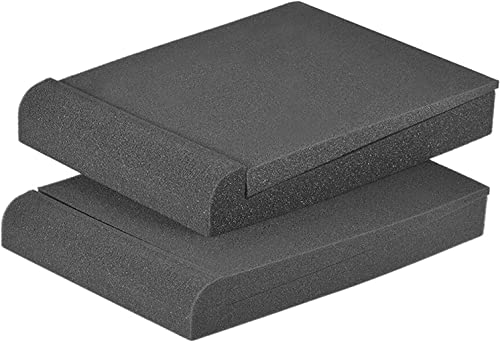
- High-density foam reduces vibration transfer and desk rumble.
- Stackable pieces make it easy to angle monitors toward ear level.
- Compact, affordable choice for small home studio setups.
Best For: Home producers with desk-based 5-inch monitors who want simple tilt and vibration control.
Best for Large Studio Monitors
2-Pack Isolation Pads for Large Speakers
- Fits 6.5- to 8-inch studio monitors
- Reduces desk vibration and resonance
- Angled foam helps refine listening position
Best For: Large-monitor owners who want simple vibration control and better desktop placement.
Best for Angled Desktop Monitoring
Liquid Stands 5" Speaker Foam Pads

- 5-angle foam design for flexible monitor positioning
- High-density build helps reduce desk vibrations
- Compact size suits small studio desks and stands
Best For: Desktop producers and small-studio users with compact monitors.
Best for Easy Setup
2 Pack Studio Monitor Isolation Pads for 3-5 Inch Speakers
- High-density foam helps reduce vibration and resonance
- Angled design supports better monitor positioning
- Quick desktop placement with no tools required
Best For: Home studios and compact desk setups that need an easy isolation upgrade.
Best for 8-Inch Monitors – Sound Addicted SMPad 8 Isolation Pads
If you need studio monitor isolation pads for larger nearfield speakers, the Sound Addicted SMPad 8 is a practical fit. The dense acoustical foam helps reduce vibration transfer, and the angled design gives you a bit of positioning flexibility without adding much complexity to your setup.
Best For: Home studios or project rooms using 6.5-inch to 8-inch monitors that need stable, vibration-reducing speaker support.
Pros:
- Dense 50kg/m³ foam helps absorb desk and stand vibrations
- Fits many popular 6.5-inch to 8-inch monitors, including Yamaha HS7/HS8 and KRK Rokit RP8
- Multiple angle configurations for better monitor placement
- Pair includes two pads for left and right speakers
Cons:
- Made for larger monitors, so it may be oversized for compact speakers
- Foam construction is effective but not as adjustable as rigid isolation platforms
Overall, the SMPad 8 is a straightforward choice if you want studio monitor isolation pads that are sized for bigger speakers and focused on vibration control. It’s especially appealing for listeners who want a simple, affordable way to tighten up low-end clarity on a desk or stand.
Best for Small 5-Inch Monitors – Gator Small Isolation Pads
If you need studio monitor isolation pads that fit compact nearfield speakers on a desk, the Gator Studio Monitor Isolation Pads – Small are a practical, no-fuss option. The high-density foam helps reduce vibration transfer into your desktop, while the reversible angled inserts make it easier to dial in speaker height and listening angle for cleaner mixing and playback.
Best For: Home studio users with up to 5-inch monitors who want basic isolation and simple angle adjustment on a desk setup.
Pros:
- Designed for small monitors up to 5 inches
- Removable inserts allow -8, -4, 0, 4, or 8 degrees of tilt
- High-density foam helps cut desk-borne resonance
Cons:
- Too small for larger studio monitors
- Angle options are useful, but not as adjustable as a stand
For compact desktop rigs, these studio monitor isolation pads strike a good balance between simplicity and function. They won’t replace dedicated speaker stands, but they do a solid job improving placement and taming vibration for better clarity.
Best for 5-Inch Monitors – Sound Addicted SMPad 5 Isolation Pads
If you need studio monitor isolation pads for compact nearfield speakers, the Sound Addicted SMPad 5 is a straightforward fit for popular 5-inch models. The dense acoustic foam helps decouple monitors from desks or stands, while the angled design gives you some flexibility in dialing in speaker tilt.
Best For: Home studio owners using 5-inch monitors who want a simple, affordable way to reduce desk vibration and improve listening angle.
Pros:
- High-density foam construction supports up to 24 lb per pair.
- Fits many popular 5-inch studio monitors, including Yamaha HS5 and JBL 305P MkII.
- Multiple angle configurations make setup easy on desks or stands.
Cons:
- Only sized for 5-inch monitors, so larger speakers need a different model.
- Foam pads can’t replace more rigid isolation solutions for heavier setups.
For small monitoring setups, these studio monitor isolation pads cover the basics well: stable placement, a bit of vibration control, and a better listening angle without adding much complexity. They’re a practical choice if you just want an easy upgrade for standard 5-inch speakers.
Best for Small Spaces – Studio Monitor Isolation Pads with Vibredux HD Foam
If you want a simple upgrade for cleaner desktop playback, these studio monitor isolation pads add foam-based decoupling and adjustable tilt to help reduce vibration transfer and improve speaker aim. They’re a practical fit for small studio desks, especially with popular 5-inch monitors.
Best For: Home studios and desktop setups using 5-inch monitor speakers that need better isolation and angle control.
Pros:
- Vibredux HD foam is designed to help cut down vibration and desk resonance.
- Five angle settings make it easier to aim speakers toward your listening position.
- Fits many popular 5-inch monitors and supports up to 24 lb.
Cons:
- Best suited to smaller monitors, so larger speakers may not fit well.
- Foam isolation can improve clarity, but it won’t replace proper room treatment.
For compact setups, these studio monitor isolation pads offer a good mix of size, tilt flexibility, and vibration control. They make the most sense for buyers who want an affordable, low-effort way to improve monitor placement and reduce desk-borne coloration.
Best for Angled Desk Monitoring – Liquid Stands 6"-8" Foam Isolation Pads
Liquid Stands studio monitor isolation pads are a practical pick if you want to raise smaller monitors to a more accurate listening height while helping cut down on desk vibration. The angled foam design makes it easier to improve speaker aim without taking up much space on your workstation.
Best For: Home studios and desktop setups that need a compact, angled monitor riser for 3" to 4.5" speakers.
Pros:
- Angled wedge shape helps dial in speaker height and listening position.
- High-density 50kg/m³ foam adds stability and vibration control.
- Non-slip surface and multiple angle options keep monitors seated securely.
- Compact footprint works well on crowded desks and studio tables.
Cons:
- Best suited to smaller monitors rather than larger bookshelf-style speakers.
- Angle options are useful, but not as adjustable as full speaker stands.
For compact setups, these studio monitor isolation pads offer an easy way to improve speaker positioning without adding bulky hardware. They make the most sense for users who want a simple, space-saving lift with some vibration damping built in.
Best for Easy Angle Adjustment – 2 Pack Studio Monitor Isolation Pads
If you want a simple way to improve monitor placement and reduce desk-borne vibration, these studio monitor isolation pads are a practical add-on. They’re sized for 5-6 inch speakers, use high-density foam, and can help tighten up perceived clarity in a home studio or compact mixing setup.
Best For: Producers and home-recording users who want affordable monitor isolation with adjustable angle positioning.
Pros:
- Helps reduce vibration and resonance for cleaner monitor playback
- Adjustable angle design supports more precise listening position
- Fits most 5-6 inch studio monitors and compact stands
- Easy drop-in setup with no tools required
Cons:
- Only suited to smaller monitors in the 5-6 inch range
- Foam construction is functional, but not as rigid as premium isolation platforms
- May offer limited improvement if your room acoustics are the main issue
For small studios, these studio monitor isolation pads offer a straightforward balance of fit, angle control, and vibration damping. They’re a sensible pick if you want an inexpensive upgrade that can make desk setups feel more controlled without adding much complexity.
Best for Tilted Desktop Monitors – Studio Monitor Isolation Pads
If you want a simple way to clean up speaker response on a desk, these studio monitor isolation pads are a practical fix. They help reduce vibration transfer, cut down on unwanted reflections, and let you angle your monitors so the tweeters sit closer to ear level.
Best For: Home studio users with 5-inch monitors who want an affordable desk-friendly isolation solution with basic tilt adjustment.
Pros:
- High-density acoustic foam helps damp vibrations and reduce desk resonance.
- Stackable design allows tilt adjustment for better monitor positioning.
- Compact size fits well on desks, bookshelves, and speaker stands.
- Rated to support heavier monitors without deforming.
Cons:
- Best suited to smaller 5-inch studio monitors rather than larger speakers.
- Foam isolation helps, but it won’t replace proper room treatment.
Overall, these studio monitor isolation pads are a smart low-cost upgrade if your monitors sound a little muddy or boomy on a desktop. They won’t solve every acoustic issue, but they can make a noticeable difference in clarity and placement.
Best for Large Studio Monitors – 2-Pack Isolation Pads for Large Speakers
If you need studio monitor isolation pads for bigger desktop speakers, this 2-pack is built to reduce vibration, tame resonance, and help your monitors sound cleaner at mix position. The high-density foam design and angled profile make it a practical choice for home studios where placement flexibility matters.
Best For: Producers and creators using 6.5- to 8-inch studio monitors who want simple acoustic isolation and better desktop placement.
Pros:
- Sized for large speakers, with support for 6.5- to 8-inch monitors
- Helps reduce vibration transfer and unwanted resonance
- Adjustable angle can improve listening position for mixing
- Easy desktop setup with no extra hardware required
Cons:
- Not ideal for smaller monitors or compact bookshelf speakers
- Foam pads won’t replace dedicated speaker stands for all setups
- Angle adjustment is useful, but still limited compared with full stands
Overall, these studio monitor isolation pads make the most sense if you want a straightforward upgrade for larger speakers without adding complexity to your desk. They’re a solid fit for reducing vibration and improving placement in a simple, affordable way.
Best for Angled Desktop Monitoring – Liquid Stands 5" Speaker Foam Pads
If you want a simple way to improve speaker height and cut down on desk vibrations, these studio monitor isolation pads are a practical upgrade. The angled foam design helps position small monitors more accurately while taking up very little space on a desktop or stand.
Best For: Producers, home-studio users, and desktop setups using smaller studio monitors that need better listening height and a more stable resting surface.
Pros:
- Angled design with multiple angle options for better monitor positioning
- High-density 50kg/m³ foam helps support speakers and reduce vibrations
- Compact footprint works well on crowded desks and small studio spaces
- Non-slip surface helps keep monitors securely in place
Cons:
- Only fits smaller monitors, so larger speakers will need a bigger solution
- Foam pads are less adjustable than a full monitor stand setup
For small studios, these studio monitor isolation pads offer a straightforward balance of elevation, stability, and space savings. They are especially appealing if you mainly need cleaner positioning rather than a fully adjustable speaker stand.
Best for Easy Setup – 2 Pack Studio Monitor Isolation Pads for 3-5 Inch Speakers
If you want a simple way to improve desktop monitoring, these studio monitor isolation pads are an easy add-on. The high-density foam helps cut down on vibration and resonance, while the angled design can improve speaker positioning for a more accurate listening setup.
Best For: Home studios, small desks, and buyers who want a quick, no-fuss isolation upgrade for compact monitors.
Pros:
- Reduces vibrations and resonance for cleaner playback
- Adjustable angle helps fine-tune monitor placement
- Simple desktop setup with no tools required
- Fits a wide range of 3-5 inch studio monitors
Cons:
- Only suitable for smaller speakers
- Foam pads may not offer the rigidity some users want
- Sold as a 2-pack, so larger multi-speaker setups may need more
For compact monitoring setups, these studio monitor isolation pads deliver a practical mix of vibration control and positioning help. They are a solid choice if you want a fast improvement without spending much time on installation.
How We Picked the Best Studio Monitor Isolation Pads
We looked for Studio Monitor Isolation Pads that offer stable support, useful size coverage, and a simple way to reduce vibration transfer. Priority went to options with dense foam construction, angled designs where helpful, and formats that work well on desks or stands.
We also favored products that match the most common monitor sizes in home studios, since fit matters as much as material. A pad that is too small, too soft, or poorly shaped will not isolate as effectively.
Quick Comparison
Smaller pads are usually best for compact nearfields in the 3- to 5-inch range, while medium and large pads are better suited to 5- to 8-inch monitors. Angled pads can help aim tweeters toward ear level, while flat pads are more flexible if you already have ideal speaker placement.
Key Buying Factors for Studio Monitor Isolation Pads
Speaker Size and Weight
Match the pad to your speaker footprint and weight. Larger monitors need more surface area and firmer foam to stay stable without compressing too much over time.
Foam Density and Vibration Control
High-density acoustic foam is typically the best choice because it absorbs energy better and helps prevent desk resonance. Softer foam may feel cushier, but it can allow more movement and less precise support.
Angle and Positioning
Some Studio Monitor Isolation Pads tilt the speaker slightly upward, which can improve listening height and alignment. If your monitors sit too low on a desk, an angled pad can be more useful than a flat one.
Desk Versus Stand Use
Consider where the monitors will live. Desk setups often benefit the most from isolation because surfaces can vibrate easily, but stands can also gain clarity and a tighter low end when pads are used correctly.
Size, Grip, and Stability
The pad should support the cabinet securely without overhanging too much. A stable fit reduces slipping and keeps the speaker centered, especially when bass-heavy playback is involved.
Who Should Buy Which Studio Monitor Isolation Pads?
If you use small desktop monitors, choose compact pads that fit closely and keep the system tidy. For 5-inch monitors, mid-size foam pads are usually the safest all-around pick. If you run 6.5- to 8-inch speakers, go for larger Studio Monitor Isolation Pads with enough surface area and firmer support. Buyers who want a more precise listening angle should prioritize angled models, while anyone focused mainly on vibration reduction can stick with flat, dense foam options.