The best stage monitors for home studios need to do more than play loudly. They should provide clear vocals and instruments, fit your room, and connect easily to your existing recording or live-sound setup.
These 10 picks cover compact nearfield monitors, Bluetooth-enabled speakers, powered PA wedges, and higher-output options for rehearsal spaces. Use the guide below to match speaker type, power, coverage, and connectivity to the way you work.
Best 10 Stage Monitors for Home Studios Picks for 2026
Studio Accuracy Pick

- Pair of bi-amplified near-field monitors
- 5-inch woofer with 54 Hz–30 kHz response
- XLR and TRS balanced or unbalanced inputs
Best For: Neutral home-studio mixing and monitoring
High-Output Live Monitor

- 300-watt active two-way monitor
- 12-inch woofer and 1-inch compression driver
- Feedback filter and integrated limiter
Best For: Loud rehearsal, playback, and live-monitoring setups
Connectivity Value Pick

- Bluetooth 5.3 and built-in 24-bit USB DAC
- Balanced TRS, RCA, AUX, and headphone output
- 3.5-inch driver with 0.75-inch silk-dome tweeter
Best For: Compact studios needing flexible wired and wireless inputs
Vocal-and-Keyboard Monitor
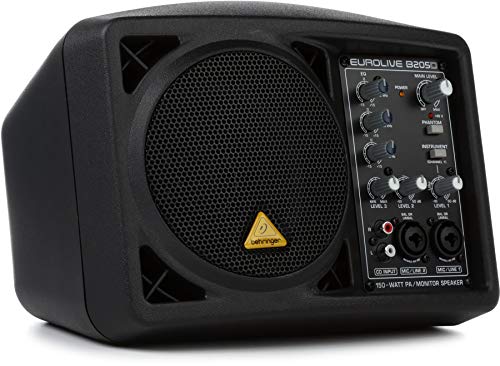
- 150-watt active monitor speaker
- Three-channel mixer with three-band EQ
- Two phantom-powered mic preamps and instrument input
Best For: Vocal, keyboard, instrument, and rehearsal monitoring
Wide-Sweet-Spot Workhorse

- Pair of powered 5-inch studio monitors
- Wide sweet spot with precise imaging
- Boundary EQ and HF Trim for room setup
Best For: Home-studio production, podcasting, and sound design
Compact Everyday Monitor

- Compact powered 2-way stereo pair
- Room Control and High Trim adjustments
- XLR/TRS, RCA, and stereo mini inputs
Best For: Small desktop studios and video-editing setups
Large-Format Detail Option

- 6.5-inch woofer for deeper lows
- Wide EBM waveguide sweet spot
- Extensive acoustic tuning controls
Best For: Larger home studios and detailed mixing
Power Pair
Sound Town METIS-10MPW Stage Monitors

- Pair of powered 10-inch 2-way wedge monitors
- 300W amplification per speaker with three-band EQ
- XLR, 1/4-inch, and 1/8-inch wired inputs
Best For: Home studios that also support rehearsal and live monitoring
Desk-Friendly Classic
PreSonus Eris E4.5 Studio Monitors

- Compact 4.5-inch near-field monitor pair
- 50W total Class AB amplification
- Balanced, RCA, aux, and headphone connections
Best For: Desktop music production and near-field listening
Connected Compact
Edifier MR3 Powered Studio Monitor

- Hi-Res audio with 3.5-inch drivers and 1-inch tweeters
- Balanced TRS, RCA, AUX, Bluetooth, and headphone output
- App-based EQ with Music, Monitor, and Custom modes
Best For: Connected near-field home-studio setups and everyday listening
Studio Accuracy Pick – Yamaha HS5 Pair
For creators comparing stage monitors for home studios, the Yamaha HS5 pair is a focused near-field option built around accurate, uncolored playback. Its bi-amplified design and balanced inputs suit music production and studio monitoring.
Best For: Home-studio mixing and near-field monitoring where a neutral presentation matters.
Pros:
- Includes a pair of two-way, bi-amplified monitors.
- 5-inch woofer and 1-inch dome tweeter cover a 54 Hz–30 kHz response range.
- 70 watts of combined LF/HF amplification per monitor system specification.
- XLR and TRS inputs accept balanced or unbalanced signals.
Cons:
- Not waterproof or designed for portable outdoor use.
- Its near-field studio focus is less suited to broad live-event coverage.
The HS5 pair is the more purpose-built choice for a compact home recording setup, especially when consistent, transparent sound is more important than wireless convenience or high-output PA performance.
High-Output Live Monitor – Behringer EUROLIVE F1320D
If your idea of stage monitors for home studios includes rehearsals, playback, or louder monitoring, the Behringer F1320D brings substantially more output than compact desktop monitors. It combines a 12-inch woofer, 300-watt amplification, and feedback-control features in an active monitor design.
Best For: Home studios that also handle live playback, rehearsals, or high-volume monitoring.
Pros:
- 300-watt, two-way active monitor system for live and playback applications.
- 12-inch woofer and 1-inch compression driver provide a larger format than typical desktop monitors.
- Adjustable feedback filter and integrated limiter support system control and speaker protection.
- Class-D amplification helps keep the system relatively lightweight for its output.
Cons:
- Its 33.1-pound cabinet and roughly 19.5-inch dimensions require substantial space.
- The supplied frequency-response detail lists 80 Hz, so it may need additional low-end support for full-range monitoring.
- It is not waterproof.
The F1320D makes sense when a home studio doubles as a rehearsal or small live-performance space. For close-range mixing at a desk, its PA-oriented size may be more than necessary.
Connectivity Value Pick – Ortizan C7 Pair
The Ortizan C7 pair is a flexible option for stage monitors for home studios when you also want everyday media playback. Bluetooth 5.3, USB audio through a built-in 24-bit DAC, RCA, AUX, and balanced TRS connectivity make it adaptable to both consumer and studio sources.
Best For: Compact creative spaces that need studio-style monitoring plus convenient wireless and home-audio connections.
Pros:
- Includes Bluetooth 5.3, RCA, 3.5mm AUX, USB, and 6.35mm TRS balanced connectivity.
- Built-in 24-bit DAC supports direct digital audio over USB.
- 3.5-inch carbon-fiber mid-bass driver and 0.75-inch silk-dome tweeter use a two-way design.
- Front headphone output supports convenient headphone monitoring.
Cons:
- The 3.5-inch woofer is smaller than the drivers in larger PA-style monitors.
- It is not waterproof and is intended for indoor use.
- The supplied details emphasize compact monitoring and general media use rather than high-output live coverage.
C7 is a practical hybrid for producers who switch between recording, gaming, movies, and casual listening. Its broad input selection is the main advantage, while the smaller driver size favors a compact desk setup.
Vocal-and-Keyboard Monitor – Behringer Eurolive B205D
For stage monitors for home studios that need built-in mixing rather than a conventional left-right monitor pair, the Behringer B205D is a compact active solution. It combines 150 watts of output with a three-channel mixer, microphone preamps, and an instrument-ready input.
Best For: Vocal, keyboard, instrument, and presentation monitoring in a home recording or rehearsal space.
Pros:
- 150-watt active speaker is designed for vocal and keyboard monitoring, home recording, and multimedia use.
- Three-channel mixer includes a three-band EQ.
- Two microphone preamps provide phantom power for condenser microphones.
- Instrument-ready input does not require a DI box.
Cons:
- It is a single speaker rather than a stereo pair.
- Its 5.25-inch full-range driver is less specialized than a two-way studio-monitor design.
- The supplied specifications do not provide a detailed frequency-response range.
The B205D is especially useful when inputs and portability matter more than stereo imaging. Its integrated mixer makes it a convenient vocal or instrument monitor for small home-studio and rehearsal applications.
Wide-Sweet-Spot Workhorse – JBL 305P MkII Pair
For stage monitors for home studios, the JBL 305P MkII pair offers a practical stereo setup with precise imaging, a broad listening sweet spot, and room-adjustment controls. Its 5-inch woofers, dual 41-watt Class-D amplifiers, and XLR/TRS inputs suit music production, podcasting, and sound design.
Best For: Home-studio producers, podcasters, and creators who want a capable stereo pair with flexible room tuning.
Pros:
- Includes two powered 305P MkII monitors for stereo work.
- Image Control Waveguide provides precise imaging and a wide sweet spot.
- Boundary EQ and HF Trim help adapt the sound to the room.
- Offers both XLR and 1/4-inch TRS connectivity.
Cons:
- They are tabletop monitors rather than floor-standing speakers.
- At 5 inches, the woofers may provide less low-frequency scale than larger monitors.
- They require AC power and are not water resistant.
The JBL pair is a strong all-around choice when accurate stereo imaging and setup flexibility matter more than maximum cabinet size. The included pair also makes it straightforward to build a conventional monitoring position from the start.
Compact Everyday Monitor – Yamaha HS4 Pair
The Yamaha HS4 pair is a compact option for stage monitors for home studios, especially where desk space is limited. Its 4.5-inch woofers, 1-inch dome tweeters, room controls, and broad input selection support music production and video editing.
Best For: Small home studios and desktop setups that need a compact stereo pair with flexible connections.
Pros:
- Includes a pair of 2-way powered monitors.
- Compact 4.5-inch woofer design fits smaller workspaces.
- Room Control and High Trim controls help tailor response.
- Accepts XLR/TRS combo, RCA, and stereo mini inputs.
Cons:
- The listed output is 26 watts, so it is aimed at smaller monitoring spaces.
- The 60 Hz–22 kHz response offers less stated low-end extension than larger models.
- They are not water resistant.
Choose the HS4 when footprint and connectivity are priorities. The included cables and anti-slip pads also make this pair convenient for a straightforward desktop installation.
Large-Format Detail Option – PreSonus Eris E7 XT
PreSonus Eris E7 XT 2-Way Active Studio Monitor with EBM Waveguide (Pack of 1)
Check Price On AmazonFor larger home studios considering stage monitors for home studios, the PreSonus Eris E7 XT emphasizes extended low-frequency capability and a wide monitoring area. Its 6.5-inch woven-composite woofer, 1.25-inch silk-dome tweeter, EBM waveguide, and acoustic controls are designed for detailed mixing in a tailored room.
Best For: Home-studio mixers who have space for a larger single monitor and want broad imaging with extensive acoustic adjustment.
Pros:
- 6.5-inch woofer supports deeper lows than the smaller models listed.
- EBM waveguide provides a wide 100-degree horizontal by 60-degree vertical sweet spot.
- Acoustic controls include level, high-pass, LF Trim, HF Trim, and Acoustic Space.
- Includes Studio One Prime and Studio Magic plug-in software.
Cons:
- This listing includes one monitor, not a stereo pair.
- The larger 16-inch-tall cabinet requires more room than compact desktop monitors.
- It is not water resistant.
The Eris E7 XT makes the most sense when you want a larger monitor for low-end work and have the space to position it properly. Because this listing is for one speaker, plan on purchasing a second unit for stereo monitoring.
Power Pair – Sound Town METIS-10MPW Stage Monitors
For home studios that also handle rehearsals or live sound, the Sound Town METIS-10MPW pair offers a more performance-oriented take on stage monitors for home studios. Each wedge combines a 10-inch woofer, compression driver, integrated amplification, and flexible wired connections.
Best For: Home studios needing a pair of powered floor monitors for rehearsal, live monitoring, or higher-output applications.
Pros:
- Includes two powered 2-way monitor speakers with 300W amplification per speaker.
- 10-inch woofers and 1-inch compression drivers support focused, full-range monitoring.
- Offers XLR input and output, 1/4-inch auxiliary input, and 1/8-inch MP3 input.
- Built-in three-band EQ and road-ready wedge construction add setup flexibility.
Cons:
- The larger PA-style design may take more space than compact desktop monitors.
- These speakers are wired and have no wireless communication technology.
- They are not waterproof or water resistant.
The METIS-10MPW pair is best when output, portability, and floor-monitor placement matter more than a small near-field desktop footprint. Its dual-speaker package and integrated controls make it a practical choice for multipurpose studio and performance spaces.
Desk-Friendly Classic – PreSonus Eris E4.5 Studio Monitors
The PreSonus Eris E4.5 pair is a compact near-field option for stage monitors for home studios where accurate desk-level listening is the priority. Its 4.5-inch woven-composite woofers, silk-dome tweeters, and 50W-per-pair Class AB amplification suit music production and everyday reference listening.
Best For: Desktop producers and listeners who want compact, adjustable near-field monitors with convenient headphone access.
Pros:
- Compact pair includes one active and one passive monitor with 25W per side.
- Provides balanced 1/4-inch TRS, RCA, and front-panel 1/8-inch stereo aux inputs.
- High- and low-frequency controls help adapt the sound to the room and speaker position.
- Front headphone output and integrated amplifier make quick private listening convenient.
Cons:
- The 4.5-inch woofer is smaller than the drivers in larger PA-style monitors.
- The supplied configuration uses one active and one passive speaker rather than two powered cabinets.
- They are not waterproof or water resistant.
The Eris E4.5 makes the most sense for a small home-studio desk, especially when balanced inputs, room-tuning controls, and a front headphone jack are useful. It is a practical near-field choice rather than a high-output floor-monitor system.
Connected Compact – Edifier MR3 Powered Studio Monitor
The Edifier MR3 is a compact powered option for stage monitors for home studios, combining near-field monitoring features with Bluetooth convenience. Its 3.5-inch mid-low drivers, 1-inch tweeters, 18W-per-channel output, and selectable listening modes fit production, editing, guitar practice, and daily use.
Best For: Home-studio users who want compact monitors with balanced input, Bluetooth, app-based EQ, and flexible everyday connectivity.
Pros:
- Hi-Res Audio certified with a stated 52Hz to 40kHz response.
- Supports balanced TRS, RCA, AUX, Bluetooth, and headphone connections.
- Offers Music, Monitor, and Custom modes plus EQ control through the EDIFIER ConneX app.
- MDF cabinet and compact drivers are suited to near-field home-studio listening.
Cons:
- Its 3.5-inch mid-low drivers provide less low-frequency scale than larger monitors.
- The 42W maximum output is intended for compact setups rather than loud PA use.
- The supplied notes identify a single item, so buyers should verify the package configuration if they need a stereo pair.
The MR3 stands out for users who want studio-monitor functions without giving up wireless and app-based control. Its compact format and multiple inputs make it adaptable for a home desk, while its output is better suited to near-field work than stage-level volume.
How We Picked the Best Stage Monitors for Home Studios
We compared these speakers by intended use, driver size, amplification, connectivity, placement flexibility, and overall practicality for home studios. Nearfield studio monitors generally prioritize accurate, focused listening at a desk, while PA and wedge-style monitors emphasize projection, durability, and performance volume.
We also considered whether each model is sold as a pair or single speaker, since stereo monitoring and live-monitoring setups have different requirements. Features such as Bluetooth can be convenient for reference playback, but wired inputs remain important for recording interfaces, mixers, and microphones.
Quick Comparison
| Best For | What to Look For |
|---|---|
| Mixing at a desk | Nearfield design, balanced inputs, consistent stereo imaging |
| Small rooms | Compact cabinets, manageable bass, flexible placement |
| Rehearsal or live practice | Higher output, rugged construction, monitor-wedge positioning |
| Casual playback | Bluetooth, simple controls, broad compatibility |
| Vocals and announcements | PA inputs, microphone compatibility, feedback-control features |
Key Buying Factors for Stage Monitors for Home Studios
Studio Accuracy Versus Live Output
Choose a nearfield monitor when your priority is mixing, editing, or critical listening from a short distance. Choose an active PA monitor when you need more volume, wider projection, or a cabinet that can face performers during rehearsal. A speaker that is ideal for a desktop may not provide the headroom needed for a band.
Power and Driver Size
Higher wattage and larger woofers can produce greater volume and fuller low frequencies, but they also require more space and may excite room modes. For most small rooms, a compact 4- or 5-inch monitor can be easier to place and control. Larger models are more suitable for bigger rooms, electronic music, or live practice.
Inputs, Pairing, and Placement
Check for the connections used by your interface or mixer, including balanced TRS or XLR inputs where available. Bluetooth is useful for streaming reference tracks, but it should not replace a reliable wired connection for production work. Leave clearance around rear ports and position stereo monitors symmetrically at ear height.
Pair or Single Speaker
Verify the package contents before buying. A stereo pair is usually the better choice for mixing, while a single powered wedge may be enough for vocal monitoring or a compact live rig. Two PA speakers can provide broader coverage, but they may be excessive for a small desk setup.
Who Should Buy Which Stage Monitors for Home Studios?
Home producers and mixers: Focus on accurate nearfield monitors with balanced inputs and a matched stereo pair. Bedroom studios: Compact models can deliver useful detail without overwhelming the room. Singers and instrumentalists: Look for simple powered speakers with sufficient headroom and convenient input options. Small bands, DJs, and rehearsal spaces: PA-style wedges with larger drivers are the better fit when volume and projection matter. Streamers and casual listeners: Bluetooth-enabled powered monitors offer an easy way to switch between studio playback and everyday audio.