Reverb pedals with presets make it easier to move from one song, scene, or gig to the next without rebuilding your sound from scratch. Whether you want simple stompbox control or a more programmable multi-effect unit, presets can save time and keep your rig consistent.
In this roundup, we focus on practical features like sound quality, preset capacity, stereo support, and ease of editing so you can choose a pedal that fits your playing style and workflow.
Best 10 Reverb Pedals with Presets Picks for 2026
Compact Stereo Preset Reverb
FLAMMA FS02 7-Storable Slot Reverb Pedal

- 7 reverb modes with storable slots
- Stereo input and output support
- Trail On and true bypass features
Best For: Players who want stereo reverb with easy preset storage
Classic Multi-Reverb Workhorse

- Six crafted reverb voices
- 100% analog dry path
- Relay true bypass with trails mode
Best For: Guitarists who want multiple high-quality reverb voices
Mini 7-Mode Reverb
Donner Verb Square Digital Pedal

- Seven reverb modes in a mini enclosure
- True bypass and LED indicator
- Durable aluminium-alloy build
Best For: Pedalboard users who want a small, durable reverb pedal
Preset-Heavy Stereo FX Platform
MOOER Meta FX 100-Preset Pedal

- 100 preset locations for recall
- 40+ stereo algorithms across three effect families
- Touchscreen plus dual stereo I/O
Best For: Players who want a preset-rich multi-effects pedal
Ambient Bloom

- Stereo ambient reverb with ensemble switch.
- Hands-on decay, mod, pre-delay, tone, and mix.
- Compact pedal with 2-year warranty.
Best For: Players who want a premium stereo ambient reverb with simple knob control.
Preset-Studio Verb

- Nine stereo reverb modes, including shimmer and reverse.
- Preset save plus infinite and trail functions.
- True stereo I/O with hi-cut, low-cut, and pre-delay.
Best For: Players who want multiple stereo reverb modes and built-in preset saving for live or studio use.
Portable Preset Rig

- 36 editable presets with app and computer editing.
- Rechargeable battery for up to 12 hours.
- Reverb plus delay, modulation, preamp, EQ, and IR cab slots.
Best For: Guitarists who want a compact multi-effects pedal with lots of editable presets.
Preset-Friendly 2-in-1
Yellow Fall II Dual-Time-Domain Reverb/Delay

- 3 delay modes and 3 reverb modes
- User-defined storage with 2 preset dials
- Stereo/mono I/O and tap/tempo modes
Best For: Players who want preset-friendly reverb and delay control in one compact pedal
Deep Preset Editor
Blackbox ANN 80-Preset Multi-Effects Pedal
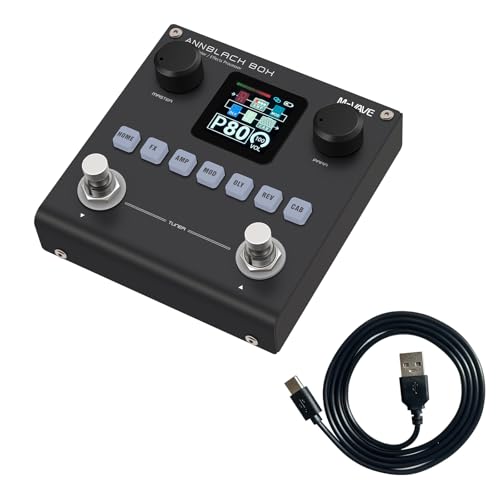
- 80 built-in editable presets
- 6 effect modules with reverb, delay, and amp sims
- App editing plus ANN/IR loading support
Best For: Guitarists who want deep preset storage and multi-effect flexibility in a portable unit
Practice-Ready Presets
LEKATO M03106 36-Preset Multi-Effects Pedal

- 36 presets with save/overwrite support
- Room, Spring, and Cloud reverb modes
- App editing plus Bluetooth and recording outputs
Best For: Players who want editable presets, practice features, and easy tone sharing in a compact pedal
Compact Stereo Preset Reverb – FLAMMA FS02 7-Storable Slot Reverb Pedal
If you want reverb pedals with presets in a compact format, the FLAMMA FS02 is built around quick recall and a wide spread of classic ambience sounds. It gives you seven reverb types—Room, Hall, Church, Cave, Plate, Spring, and Mod—plus four tone controls and storable slots for saving sounds you actually use.
Best For: Players who want stereo reverb with easy preset storage and a simple knob-based layout.
Pros:
- 7 reverb types with save slots for storing custom settings
- Stereo input and output for fuller signal routing
- Trail On feature lets reverb fade naturally when switched off
- True bypass and low-noise buffer bypass for cleaner signal handling
Cons:
- Power supply is not included
- Requires 9V DC power with more than 300mA
The FS02 is a practical choice if you want preset-friendly ambience without a complex interface. Its saved slots, stereo I/O, and trail mode make it a solid fit for players who need repeatable sounds on a pedalboard.
Classic Multi-Reverb Workhorse – MXR M300 Reverb
The MXR Reverb is a straightforward pick if you’re comparing reverb pedals with presets in the sense of multiple built-in voicings rather than memory banks. It packs six carefully designed reverbs into one pedal and keeps the dry path 100% analog, which makes it appealing for players who want flexible ambience without overcomplicating the signal chain.
Best For: Guitarists who want multiple high-quality reverb voices with analog dry-through and simple controls.
Pros:
- Six reverb types in one pedal
- 100% analog dry path
- Relay true bypass plus delay trails mode
- Studio-grade low noise floor
Cons:
- No preset memory slots listed in the supplied details
- Less compact than some mini pedals
If you value sound quality and a simple layout, the M300 is a strong candidate. It leans more toward classic pedalboard usability than deep preset management, but the variety of reverbs and analog dry path make it easy to use in real-world setups.
Mini 7-Mode Reverb – Donner Verb Square Digital Pedal
The Donner Verb Square is a compact option for players who want reverb pedals with presets in the form of multiple selectable modes. It offers seven reverb styles—Room, Hall, Church, Spring, Plate, Studio, and Mod—in a mini aluminum-alloy enclosure with true bypass and an easy-to-read LED indicator.
Best For: Pedalboard users who want a small, durable reverb pedal with seven switchable modes.
Pros:
- 7-mode digital reverb selection
- Mini size makes it pedalboard friendly
- True bypass for transparent signal handling
- Aluminium-alloy housing for durability
Cons:
- Power supply is not included
- No preset memory locations are listed in the supplied details
This is a practical budget-friendly style pedal if you mainly need quick access to several reverb flavors. It keeps the feature set simple, compact, and easy to integrate into a crowded board.
Preset-Heavy Stereo FX Platform – MOOER Meta FX 100-Preset Pedal
If your search for reverb pedals with presets is really about deeper memory, the MOOER Meta FX stands out with 100 preset locations and a broad effects engine. It covers more than 40 stereo algorithms across reverb, delay, and modulation, so you can save and recall a wide range of sounds for live use or studio work.
Best For: Players who want a preset-rich multi-effects pedal with stereo routing and touchscreen control.
Pros:
- 100 preset locations for quick recall
- 40+ stereo algorithms across reverb, delay, and modulation
- Dual stereo I/O for modern setups
- Touchscreen, tap tempo, kill dry, and trail sustain features
Cons:
- More complex than a simple standalone reverb pedal
- Only one of its three firmware families is reverb-focused at a time
The Meta FX is the most feature-rich option here if presets are the priority. It’s a better fit for players who want to organize many sounds and switch between them quickly than for those who only need a basic reverb box.
Ambient Bloom – Strymon Cloudburst
If you want reverb pedals with presets in a straightforward ambient form, the Strymon Cloudburst is built for spacious stereo texture rather than menu-heavy storage. It focuses on hands-on control with decay, modulation, pre-delay, tone, and mix, plus an ensemble switch for extra depth.
Best For: Players who want a premium stereo ambient reverb with simple knob control and ensemble-style expansion.
Pros:
- Stereo reverb design for wide spatial effects.
- Ensemble switch adds a richer ambient layer.
- Dedicated decay, mod, pre-delay, tone, and mix controls keep editing simple.
- Compact pedalboard-friendly size with 2-year warranty.
Cons:
- No preset-save feature is listed in the supplied notes.
- Single-effect focus may be limiting if you want multiple sound types.
Cloudburst is the most immediate, performance-oriented option here, but it is less about saving and recalling sounds and more about shaping a high-quality ambient reverb in real time. If presets are mandatory, this is not the preset-heavy choice; if tone and simplicity matter most, it remains compelling.
Preset-Studio Verb – JOYO PARA-VERB R-31
For shoppers comparing reverb pedals with presets, the JOYO PARA-VERB R-31 is the clearest fit because it explicitly includes preset save functionality. It also gives you nine stereo reverb modes, plus hi-cut, low-cut, pre-delay, infinite sustain, and trail behavior for practical control.
Best For: Players who want multiple stereo reverb modes and built-in preset saving for live or studio use.
Pros:
- Preset save system lets you store knob settings per mode.
- Nine reverb voices cover room, hall, plate, spring, shimmer, reverse, dream, and more.
- Hi-cut, low-cut, and pre-delay controls help shape the tail.
- True stereo I/O and true bypass suit stereo rigs and clean signal paths.
Cons:
- Requires a 9V DC adapter; battery operation is not supported.
- Power supply is not included.
- Preset and LED behavior may take a little learning if you tweak settings often.
This is the strongest choice in the group for players who specifically want preset storage in a reverb pedal. Its feature set is broad but still focused on reverb, making it a practical option for users who need recallable sounds without stepping up to a full multi-effects unit.
Portable Preset Rig – M-VAVE TANK-G Multi-effects
If your search for reverb pedals with presets is really about maximum recall and flexibility, the M-VAVE TANK-G goes beyond a simple reverb box. It includes 36 editable presets, multiple delay and reverb options, preamp and modulation blocks, plus battery power for portable use.
Best For: Guitarists who want a compact multi-effects pedal with lots of editable presets and mobile-friendly features.
Pros:
- 36 editable presets provide plenty of stored sounds.
- Built-in rechargeable battery offers up to 12 hours of use.
- Includes reverb, delay, modulation, preamp, EQ, noise gate, and IR cab slots.
- Supports app or computer editing, preset sharing, and import/export.
Cons:
- It is a multi-effects unit, not a dedicated reverb pedal.
- Preset editing may be more involved than on a single-purpose pedal.
The TANK-G is the most feature-packed option here and the strongest match if presets are your top priority. It trades the simplicity of a dedicated reverb pedal for a much wider toolkit, making it ideal for players who want to build, save, and move between many sounds quickly.
Preset-Friendly 2-in-1 – Yellow Fall II Dual-Time-Domain Reverb/Delay
If you want reverb pedals with presets that also cover delay, the Donner Yellow Fall II is a practical 2-in-1 option. It gives you 9 effect combinations from 3 delay modes and 3 reverb modes, plus user-defined storage so you can save and recall custom sounds quickly. The stereo/mono I/O and tap modes make it easier to use at home or on stage.
Best For: Players who want preset-friendly reverb and delay control in one compact pedal.
Pros:
- 1 free-adjustable dial plus 2 preset storage dials for quick recall
- 3 delay modes and 3 reverb modes create 9 combinations
- Tap Mode and Tempo Mode support desktop and live use
- Stereo input/output adds flexibility for immersive setups
Cons:
- Preset storage is limited compared with larger multi-effects units
- Adapter is not included
- It focuses on delay/reverb rather than a wide effects library
For players who mainly need reverb pedals with presets and a straightforward workflow, this one is easy to dial in. It keeps the feature set focused while still offering enough control to move from practice to performance without relearning the unit.
Deep Preset Editor – Blackbox ANN 80-Preset Multi-Effects Pedal
For reverb pedals with presets that go far beyond a standard stompbox, the M-VAVE ANN Blackbox is built like a compact all-in-one processor. It includes 80 editable presets, 6 effect modules, app-based parameter editing, and support for third-party ANN and IR loads. If you want one pedal that can cover reverb, delay, amp tones, and more, this one is aimed at flexible tone building.
Best For: Guitarists who want deep preset storage and multi-effect flexibility in a portable unit.
Pros:
- 80 built-in presets with editable and savable tones
- 6 effect modules plus 6+1 simultaneous effect capability
- Includes 6 reverb types along with delay, EQ, boost, and amp simulation
- App support for parameter editing and third-party ANN/IR loading
Cons:
- More complex than a simple dedicated reverb pedal
- Battery-powered design may not suit every pedalboard setup
- Small-format multi-effects units can take longer to learn
This is a strong fit if preset management matters more to you than simplicity. It offers a lot of room to experiment, and the app plus loading support make it especially useful for players who like to shape tones in detail.
Practice-Ready Presets – LEKATO M03106 36-Preset Multi-Effects Pedal
If you’re comparing reverb pedals with presets for practice and recording, the LEKATO multi-effects pedal stands out for its 36 presets and editing tools. It combines amp, modulation, delay, reverb, and IR cabinet options in one compact unit, and the app lets you edit, share, import, export, and overwrite presets. The built-in battery and Bluetooth support also make it more convenient for mobile use.
Best For: Players who want editable presets, practice features, and easy tone sharing in a compact pedal.
Pros:
- 36 presets with overwrite/save support
- Three reverb types: Room, Spring, and Cloud
- App lets you edit, exchange, share, import, and export presets
- Bluetooth, USB, headphone, and XLR connections add versatility
Cons:
- It is a multi-effects unit rather than a dedicated reverb pedal
- Preset editing may be more involved than basic stompbox use
- Controls are knob-based, so deep changes may take some setup time
This pedal makes sense if you want presets plus a broader practice toolkit. Its combination of editing, connectivity, and battery life makes it especially appealing for players who move between rehearsal, recording, and casual sessions.
How We Picked These Reverb Pedals with Presets
We looked for pedals that balance usable preset storage, solid core reverb tones, and straightforward control. We also favored models that make sense in real-world setups, including compact boards, stereo rigs, home recording, and live performance. Because Reverb Pedals with Presets vary widely, we paid close attention to how easy they are to save, recall, and edit sounds.
Quick Comparison: What Matters Most
The biggest differences are preset count, sound engine flexibility, and workflow. Some pedals are simple digital reverbs with a handful of stored sounds, while others combine reverb with delay, modulation, amp simulation, or cab IRs. If you need fast stage use, fewer but easier-to-access presets can be better than a huge library. If you build many tones, more memory and deeper editing will matter more.
Key Buying Factors for Reverb Pedals with Presets
Preset Count and Recall Speed
More presets are useful only if you can access them quickly. Look for clear footswitch behavior, bank navigation, or app control if you plan to switch sounds mid-set.
Reverb Types and Tone Quality
Check whether the pedal covers the basics well first: room, hall, plate, spring, and ambient styles. Extra modes are nice, but the core algorithms should sound natural and sit well in a mix.
Stereo I/O and Trails
Stereo inputs and outputs are important for modern boards, recording, and spacious ambient sounds. Trails and infinite decay can also be valuable if you want smooth transitions between presets.
Editing Depth and Ease of Use
Some players want quick knobs and one-touch saving; others want deeper parameter control through screens or apps. Choose the interface that matches how often you tweak sounds.
Power, Size, and Integration
Consider pedalboard space, power requirements, USB or app connectivity, and whether the pedal includes extra features like tap tempo, tuner, Bluetooth audio, or multi-effects. Those extras can be useful, but only if they fit your setup.
Who Should Buy Which Reverb Pedals with Presets?
If you want simple preset-based reverb for classic tones, a compact digital pedal is usually the best value. If you need extensive sound design, look at multi-effects units with deeper preset storage and app editing. Ambient players and studio users may benefit most from stereo models with richer algorithms and longer decay control. Gigging players should prioritize fast recall, dependable switching, and a layout that lets them adjust sounds without menu frustration.
In short, the best choice depends on whether you value simplicity, versatility, or deep customization. The right Reverb Pedals with Presets should make your workflow faster and your tones more repeatable, not more complicated.