If you’re looking to elevate your sound design game, choosing the right polyphonic synthesizer is essential. These instruments can transform your studio experience and inspire creativity in your music production. With a variety of features and capabilities, each synth offers something unique. So, what should you consider when selecting the best one for your needs? Let’s explore some of the top contenders that could change the way you approach your sound.
Korg multipoly Analog Modeling Synthesizer

If you’re a sound designer or a musician seeking a versatile instrument, the Korg multipoly Analog Modeling Synthesizer is an excellent choice for your studio. With four oscillators and 60 voices, it delivers rich, multidimensional sounds, thanks to features like flexible x-mod routing and round-robin oscillator triggering. Dual filters and multiple modulation options enhance your creative possibilities. Plus, the Kaoss Physics and Motion Sequencing 2.0 allow for expressive performances and fluid modulation. This compact synth, inspired by the legendary Mono/Poly, integrates seamlessly into any setup, making it a playground for experimental sound design and evolving textures.
Best For: Musicians and sound designers looking for a versatile and expressive synthesizer that excels in creating rich, multidimensional sounds.
Pros:
- Versatile sound design capabilities with four oscillators and extensive modulation options.
- Compact and user-friendly design makes it easy to integrate into any studio setup.
- Advanced performance features like Kaoss Physics and Motion Sequencing 2.0 enhance expressiveness.
Cons:
- May have a learning curve for beginners unfamiliar with complex synthesis techniques.
- Limited onboard presets could require more time for users to develop their own sounds.
- Potentially higher price point compared to simpler, more basic synthesizers.
MOOG Muse – 8-Voice Analog Synthesizer with 61 Keys
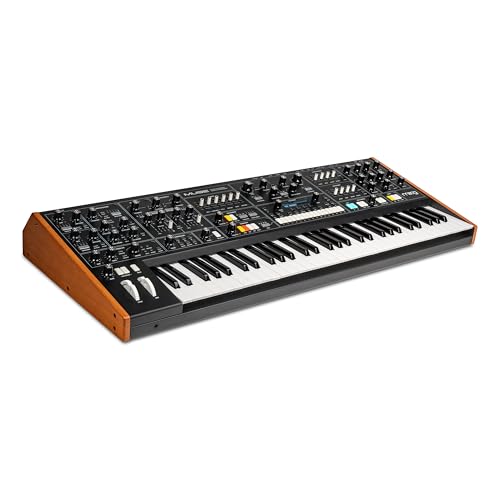
The MOOG Muse stands out as an exceptional choice for musicians and producers seeking a versatile 8-voice analog synthesizer. With 61 keys and a 64-step sequencer, you can explore 256 patches while enjoying its bi-timbral capabilities. Each of its eight analog voices features two VCOs, dual VCFs, and a stereo VCA, delivering that unmistakable MOOG sound. The intuitive knob-per-function layout guarantees ease of use, while performance controls like the powerful arpeggiator and chord memory enhance creativity. Plus, the stereo diffusion delay processor adds depth to your sound, making the Muse an essential tool for modern sound design.
Best For: Musicians and producers looking for a versatile and high-quality 8-voice analog synthesizer for sound design and performance.
Pros:
- Intuitive knob-per-function layout enhances user experience and facilitates quick adjustments.
- Powerful performance features like arpeggiator and chord memory encourage creativity and complex sound creation.
- Stereo diffusion delay processor adds depth and richness to the sound, allowing for intricate audio effects.
Cons:
- The extensive features and capabilities may have a learning curve for beginners.
- Limited to 8 voices, which may not satisfy users needing higher polyphony for complex compositions.
- The price point may be higher than entry-level synthesizers, making it less accessible for casual users.
Korg minilogue 37-key Polyphonic Analog Synthesizer

For musicians seeking a versatile and affordable option, the Korg minilogue 37-key Polyphonic Analog Synthesizer stands out with its rich sound quality and intuitive design. You’ll enjoy true analog sounds with warm, punchy tones and four-voice polyphony for complex arrangements. With 200 diverse preset sounds, you can easily explore different genres or create unique sounds from scratch. The slim keys guarantee fast, natural playability, making it perfect for both beginners and pros. Plus, the built-in sequencer and tape-style delay effect add depth to your compositions, while the oscilloscope display aids in precise sound shaping and tuning.
Best For: Musicians of all skill levels looking for an affordable and versatile analog synthesizer with rich sound quality.
Pros:
- Wide range of sounds: 200 preset sounds available for diverse musical genres.
- User-friendly design: Slim keys facilitate fast and natural playability, suitable for beginners and professionals alike.
- Advanced features: Built-in sequencer and oscilloscope display enhance sound design and composition capabilities.
Cons:
- Limited polyphony: Only four voices may restrict complex arrangements for some users.
- Compact size: While portable, the smaller keys may not be ideal for everyone, especially those used to full-sized keys.
- Basic effects: Onboard effects are limited compared to more advanced synthesizers, which may disappoint some users.
Novation MiniNova Compact 37 Mini-key Synth

Designed for musicians seeking versatility and portability, the Novation MiniNova Compact 37 Mini-key Synth delivers powerful sound creation in a compact format. With 256 onboard sounds and the ability to create deep bass, soaring leads, and lush pads, you’ll find endless possibilities. Its pitch-correcting vocoder and VocalTune feature enhance your vocal performances, allowing you to run vocals through the effects engine seamlessly. Easily manage sounds with quick searches and save 128 custom sounds for quick access. Plus, the Animate mode and Arpeggiator provide real-time jamming opportunities, making it an ideal addition to any studio setup.
Best For: Musicians looking for a portable synthesizer that combines versatile sound creation with vocal processing capabilities.
Pros:
- Compact design makes it easy to transport and integrate into any setup.
- Vocal processing features like the pitch-correcting vocoder enhance live performances.
- Extensive sound library with 256 onboard sounds and the ability to save custom sounds for quick access.
Cons:
- Mini keys may not be comfortable for all players, especially those used to full-sized keys.
- Limited number of voices (up to 18) may restrict complex layering.
- Learning curve for new users to fully utilize all features and capabilities.
Korg Volca Keys Analogue Loop Synthesizer

Compact and portable, the Korg Volca Keys Analogue Loop Synthesizer is perfect for musicians who crave rich, analog sounds without sacrificing space or convenience. With 27 touch-sensitive keys and three-voice polyphony, you can easily layer chords and create lush soundscapes. Its built-in delay and motion sequencing take your sound to the next level, while the 16-step sequencer lets you craft complex patterns on the fly. Plus, MIDI input and sync capability with other Volca devices enhance your performance options. Powered by batteries or AC, it’s lightweight and durable—ideal for both on-the-go sessions and small studio setups.
Best For: Musicians and producers seeking a compact, versatile analog synthesizer for live performance and studio use.
Pros:
- Versatile Sound Creation: Offers three-voice polyphony and extensive sound shaping options with built-in effects.
- User-Friendly Interface: Intuitive controls and a simple layout facilitate quick adjustments and sound design.
- Portability: Lightweight design with battery power option makes it easy to transport for on-the-go music creation.
Cons:
- Limited Polyphony: With only three voices, it may not be sufficient for more complex arrangements or rich chord progressions.
- No Built-In Effects Beyond Delay: The sound processing options are limited to built-in delay, which may not satisfy advanced users looking for more effects.
- Small Keys: The 27 touch-sensitive keys may feel cramped for players who prefer a full-sized keyboard for playing.
Yamaha Montage M8X 88-Key Music Synthesizer

The Yamaha Montage M8X 88-Key Music Synthesizer stands out as a premier choice for musicians seeking unparalleled expressive control in their performances. With GEX action and Polyphonic Aftertouch, you can modulate held notes with pressure, adding depth to your sound. Its 400-note polyphony across three engines, including the AN-X engine for rich analog sounds, guarantees you have ample creative freedom. Seamless Sound Switching lets you shift smoothly between sounds, while dedicated controls enhance usability. Plus, integration with your favorite DAW through the Expanded Softsynth Plugin offers versatile sound production options, making the Montage M8X an essential tool for your studio.
Best For: Musicians and producers seeking a versatile and expressive synthesizer for live performances and studio production.
Pros:
- Advanced Expressive Control: Features Polyphonic Aftertouch and GEX action for nuanced performance.
- Rich Sound Engine: Offers a 400-note polyphony and the AN-X engine for authentic analog synth sounds.
- Seamless Integration: Compatible with popular DAWs through the Expanded Softsynth Plugin for enhanced production capabilities.
Cons:
- Price Point: It may be considered expensive for beginner musicians or hobbyists.
- Learning Curve: The extensive features may require time to master for new users.
- Size and Weight: The 88-key design can be cumbersome for transport and storage.
MOOER E7 Polyphonic Guitar Synth Pedal
If you’re looking to expand your sonic palette without breaking the bank, the MOOER E7 Polyphonic Guitar Synth Pedal is an excellent choice. This compact pedal packs seven distinct synthesizer tones, including trumpet, organ, and 8-bit sounds, letting you create unique textures. With adjustable arpeggiator speeds and customizable presets, it allows you to shape your sound effortlessly. Plus, you can store up to seven user presets without needing special pickups. Just plug it into a 9V DC power supply, and you’re all set to transform your guitar into a versatile electronic instrument. Enjoy endless sonic possibilities with the E7!
Best For: The MOOER E7 Polyphonic Guitar Synth Pedal is best for guitarists seeking to explore a wide range of synthesizer sounds without needing extensive modifications to their instrument.
Pros:
- Compact and portable design makes it easy to transport and use in various settings.
- Offers seven distinct synthesizer tones with adjustable features for customizing sound.
- Allows storage of up to seven user presets, enhancing versatility during performances.
Cons:
- Requires a 9V DC power supply, which needs to be sourced separately if not already owned.
- Limited to only seven synthesizer tones, which may not satisfy users seeking a broader range.
- Some users may find the interface less intuitive compared to more complex synthesizer options.
Roland JUNO-X Programmable Polyphonic Keyboard Synthesizer
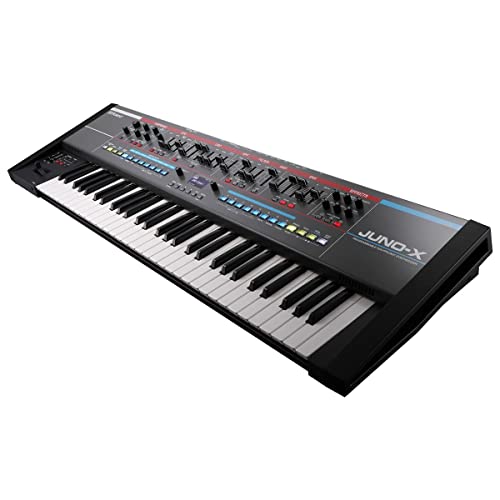
For musicians seeking a versatile and powerful addition to their studio, the Roland JUNO-X Programmable Polyphonic Keyboard Synthesizer stands out with its advanced ZEN-Core Synthesis System. You’ll love the authentic JUNO-60 and JUNO-106 models, plus the incredible Super Saw oscillator and Chorus III effect. With a user slot for Model Expansions, you can easily load sounds like JUPITER-8 or JD-800. Its intuitive Scenes workflow and hands-on panel make sound creation a breeze. Enjoy high-resolution control with knobs and sliders, and immerse yourself in creativity with the traditional arpeggiator and I-Arpeggio. Ten free Sound Packs await from Roland Cloud!
Best For: Musicians and producers looking for a versatile synthesizer that combines classic sounds with modern functionality.
Pros:
- High-quality sound with authentic JUNO models and advanced synthesis capabilities.
- Intuitive user interface featuring Scenes workflow and hands-on controls for easy sound creation.
- Includes ten free Sound Packs from Roland Cloud, expanding sound possibilities.
Cons:
- The weight of 29.7 pounds may be cumbersome for portability.
- Average customer rating of 4.3 out of 5 suggests some users may have experienced issues.
- Limited to specific software support within the Roland Cloud ecosystem.
Behringer PHARA-O MINI Mini Synthesizer for Compact Sound Design

Compact sound design enthusiasts will appreciate the Behringer PHARA-O MINI Mini Synthesizer, which packs a punch in a small package. Weighing just 0.65 kg and measuring 9.21 x 6.1 x 2.56 inches, it’s perfect for tight spaces. Crafted from durable alloy steel with a glossy finish, this sleek synth features MIDI connectivity, making it easy to integrate into your setup. With a solid rating of 4.4 out of 5 stars from 23 reviews, it stands out among synthesizers. Whether you’re a beginner or a pro, the PHARA-O MINI can elevate your sound design game effortlessly.
Best For: Compact sound design enthusiasts looking for a portable and versatile synthesizer.
Pros:
- Lightweight and Compact: Weighs only 0.65 kg and has small dimensions, making it easy to transport and fit into tight spaces.
- Durable Build: Crafted from alloy steel with a glossy finish for a stylish yet sturdy design.
- MIDI Connectivity: Easily integrates into existing setups, enhancing versatility for both beginners and professionals.
Cons:
- Limited Customer Reviews: While it has a solid rating, only 23 reviews may not provide a comprehensive view of its performance.
- Warranty Information Not Immediate: Product warranty details are available upon request, which may be inconvenient for potential buyers.
- Best Sellers Rank: At #13,870 in musical instruments, it may not be the most recognized option compared to other synthesizers on the market.
Roland AIRA Compact P-6 Creative Sampler

The Roland AIRA Compact P-6 Creative Sampler is ideal for musicians and producers who crave a portable solution for quick sample capture and intricate sound design. This pocket-sized device features a built-in mic for on-the-go sampling and enables granular sound manipulation. You can chop samples into segments and assign them to pads for easy playback. With chromatic and polyphonic options, you can trigger samples effortlessly. Plus, dedicated filters and envelopes allow for detailed editing. You’ll appreciate the flexibility to resample and manage your sounds using the P-6 Sample Tool software on macOS or Windows. Elevate your creativity with the P-6!
Best For: Musicians and producers seeking a portable sampler for quick audio capture and advanced sound design.
Pros:
- Compact and portable design for easy transport.
- Built-in mic for immediate sample capture.
- Extensive sound manipulation features including granular editing and dedicated filters.
Cons:
- Limited onboard storage for samples may require frequent management.
- Learning curve for advanced features might be steep for beginners.
- Battery life may vary depending on usage and features activated.
Factors to Consider When Choosing Polyphonic Synthesizers for Studio
When choosing a polyphonic synthesizer for your studio, you’ll want to contemplate several key factors. Sound engine quality, key count variability, and performance features can greatly impact your music creation. Plus, think about how well it integrates with your DAW and its portability, especially if you plan to move it around.
Sound Engine Quality
Choosing a polyphonic synthesizer hinges considerably on the quality of its sound engine, since it directly impacts the richness and depth of the sounds you’ll create. High-quality sound engines often feature multiple oscillators and modulation options, enabling you to layer sounds intricately and explore nuanced sound design. The polyphony of a synthesizer also matters, as higher polyphony allows for more complex musical arrangements without note drop-outs. Additionally, look for synthesizers that support various synthesis methods—like subtractive, additive, and granular synthesis—so you can expand your creative palette. Finally, consider models with integrated effects processing, which can enhance sound quality and let you manipulate audio in real-time, adding depth to your synthesized creations.
Key Count Variability
Sound engine quality plays a significant role in your choice of a polyphonic synthesizer, but key count variability also deserves attention. Key counts typically range from 25 to 88 keys, influencing your playability and musical expression. If you’re after portability for live performances, consider synthesizers with 25 or 37 keys. On the other hand, models with 61 to 88 keys offer a full piano-like experience, ideal for studio work. A larger key count allows for complex chords and melodies, enhancing your arrangements. You might also encounter mini keys, which provide a compact design but can affect playability if you’re used to standard-sized keys. Always align the key count with your playing style, whether it’s performance-oriented or studio-focused.
Performance Features Importance
While exploring polyphonic synthesizers, you’ll find that performance features can greatly impact your creative process. Arpeggiators and sequencers enable you to create dynamic musical patterns, whether you’re playing live or in the studio. Intuitive controls, like knob-per-function layouts, allow you to manipulate sound parameters efficiently, making your performances more expressive. If you’re seeking nuanced expression, look for polyphonic aftertouch capability, which lets you modulate individual notes for greater control. Built-in effects processors, like delays and modulation effects, can enrich your sound, adding depth to your recordings. Finally, features like motion sequencing provide fluid modulation options, automating changes in sound over time and leading to intricate, engaging compositions that truly elevate your music.
Integration With DAWS
When integrating polyphonic synthesizers into your studio setup, you’ll want to prioritize compatibility with your Digital Audio Workstation (DAW). Verify the synthesizer has MIDI connectivity for seamless recording and playback. USB connectivity is also a must, as it simplifies transferring audio and MIDI data without extra interfaces. Look for synthesizers compatible with various software plugins and virtual instruments to expand your sound design capabilities. Additionally, evaluate whether the synth supports external control protocols like Ableton Link or OSC, enhancing synchronization with your DAW and other devices. Finally, check for built-in features that allow direct audio streaming to your DAW, streamlining your workflow and reducing the need for additional audio routing equipment.
Portability and Design
Portability and design play essential roles in choosing the right polyphonic synthesizer for your studio setup. If you need to transport your gear, lightweight and compact models are ideal for mobile musicians. Look for synthesizers with intuitive interfaces and ergonomic layouts, as these features make sound creation and manipulation faster and easier. Many portable options also offer battery power, giving you flexibility during performances or in studio environments without relying on AC outlets. Consider the size and weight of the synthesizer, as compact models fit well in limited spaces or crowded workstations. Finally, make sure it has a robust build quality to withstand transport and frequent use while maintaining performance integrity.