If you’re a musician on the move, finding the right pocket wind synth can be a game changer. These compact instruments combine portability with versatility, making them ideal for both practice and performance. From built-in tones to MIDI connectivity, each model offers unique features tailored to your needs. But with so many options out there, how do you choose the best one? Let’s explore the top contenders and what makes them stand out.
Stylophone The Original Pocket Electronic Synthesizer

The Stylophone, the original pocket electronic synthesizer, is perfect for musicians of all skill levels, from seasoned pros to curious beginners. This compact instrument, used by legends like David Bowie, delivers an iconic analog sound, reminiscent of its 1968 launch. With three octaves and an optional vibrato effect, you can easily create unique melodies. Simply tap or slide the stylus on its touch-sensitive metal surface to play notes, making it user-friendly. Its portability is a bonus—fitting in your coat pocket and powered by batteries. Plus, you can connect it to computers for recording and sound manipulation.
Best For: Musicians of all skill levels, from experienced artists to beginners who want to explore electronic music.
Pros:
- Compact and portable design, easily fits in a coat pocket.
- Offers iconic analog sound with the option for vibrato effect.
- User-friendly playing mechanism suitable for all skill levels.
Cons:
- Limited to three octaves, which may restrict some musical compositions.
- Battery-powered, requiring regular battery replacements for extended use.
- Connectivity options are limited to a 3.5mm stereo cable, which may not suit all setups.
Vangoa EWI-100 Portable Mini Digital Electronic Wind Instrument Synthesizer

For aspiring musicians of all ages, the Vangoa EWI-100 Portable Mini Digital Electronic Wind Instrument Synthesizer stands out as an ideal choice. This compact instrument boasts 10 built-in tones, from saxophones to flutes, perfect for exploring different sounds. With MIDI connectivity, you can easily link it to your favorite music apps or DAWs. The EWI-100 offers two fingerstyle options and adjustable blowing sensitivities, enhancing your playing experience. It features a rechargeable battery for up to 4 hours of playtime, ensuring portability for practice or performances. Plus, included accessories make it ready for both private use and public showcases.
Best For: The Vangoa EWI-100 is best for aspiring musicians of all ages looking to explore electronic wind instruments with ease and versatility.
Pros:
- Versatile Sound Options: Offers 10 built-in tones, allowing users to experiment with various musical styles.
- MIDI Connectivity: Easily connects to music apps and DAWs on multiple platforms, enhancing creative possibilities.
- Portable and Rechargeable: Compact design with a rechargeable battery providing up to 4 hours of playtime, ideal for on-the-go musicians.
Cons:
- Limited Battery Life: While 4 hours is sufficient for short sessions, longer performances may require additional planning for recharging.
- Touch Sensitivity Learning Curve: Beginners may need time to adjust to the fingerstyle playing options and blowing sensitivities.
- Mouthpiece Maintenance: Requires regular cleaning of removable silicone nozzles to maintain hygiene and performance quality.
Synth-a-Sette Original Cassette Sized Analog Synthesizer

Perfect for musicians and students alike, the Synth-a-Sette Original Cassette Sized Analog Synthesizer offers a 13 key monophonic touchpad that makes it easy to play melodies on the go. With an octave up button and an optional vibrato switch, you’ll reveal versatile sound options. Its built-in speaker lets you share your creations anywhere, while the line out provides connectivity for more established setups. Plus, it’s battery operated, ensuring you can take it anywhere. Experiment by connecting everyday conductive objects to the touchpads, turning fruits or forks into musical instruments, blending creativity and STEM learning effortlessly.
Best For: Musicians and students looking for a portable and versatile synthesizer to explore sound and creativity.
Pros:
- Compact and lightweight design makes it easy to carry and play anywhere.
- Engaging educational tool that combines music with STEM learning.
- Versatile sound options with touchpad keys, octave up button, and vibrato switch.
Cons:
- Monophonic design limits playing to one note at a time.
- Built-in speaker may not provide the best sound quality for professional use.
- Battery operation could limit usage time without access to replacements.
Teenage Engineering Pocket Operator PO-14 Sub Bass Synthesizer

Compact and versatile, the Teenage Engineering Pocket Operator PO-14 Sub Bass Synthesizer is an ideal choice for musicians who crave deep basslines and innovative sound manipulation. With 15 sounds and a micro drum engine, you can easily create rich audio experiences. Use the 16 punch-in effects to enhance your beats and explore various bass-oriented play styles. The 16 pattern chains let you assemble tracks effortlessly, while the studio-quality sound keeps your music crisp. Its ultra-portable design, powered by 2 AAA batteries, guarantees you can jam anywhere. Plus, enjoy audio through the built-in speaker or connect to headphones for an immersive experience.
Best For: Musicians and producers looking for a compact synthesizer that offers deep basslines and creative sound manipulation in a portable format.
Pros:
- Ultra-portable design makes it easy to carry and use on the go.
- Diverse sound options with 15 sounds and micro drum engine for varied audio experiences.
- Studio-quality sound ensures crisp and clear music production.
Cons:
- Limited battery life may require frequent replacements or recharging.
- Small interface can be challenging for complex compositions or adjustments.
- Requires additional gear for optimal audio experience when using external speakers or headphones.
Digital Wind Instrument Synthesizer
The Digital Wind Instrument Synthesizer stands out as an ideal choice for musicians of all ages, from curious kids to seasoned adults. Its portable design features 13 tone options, including saxophones, clarinets, and trumpets, allowing you to explore various sounds easily. With three blowing sensitivity levels and touch-sensitive buttons, you can customize your playing experience. Plus, its built-in 2W Hi-Fi speaker means you can play without additional equipment. Enjoy up to four hours of playtime on a single charge, and rest easy knowing there’s a 100% satisfaction guarantee. This synth truly caters to every budding musician’s needs.
Best For: The Digital Wind Instrument Synthesizer is best for musicians of all ages, including kids, beginners, and adults looking for a portable and versatile instrument.
Pros:
- Offers 13 tone options for diverse sound exploration.
- Features a built-in 2W Hi-Fi speaker for direct play without external equipment.
- High-capacity battery provides up to 4 hours of playtime on a full charge.
Cons:
- Limited playtime compared to some larger instruments that can last longer.
- May require a learning curve for complete beginners unfamiliar with wind instruments.
- Some users may prefer a more extensive range of tones and features found in higher-end models.
Vangoa MAE-02 MIDI EWI Electronic Wind Instrument

If you’re a musician seeking versatility and portability, the Vangoa MAE-02 MIDI EWI Electronic Wind Instrument fits the bill. This compact synthesizer reveals up to 35 tones, allowing you to explore styles from classical to pop. With three fingering options—Hulusi, saxophone, and flute—you can effortlessly switch genres. Its touch-sensitive buttons enhance performance, enabling dynamic pitch bends and transformations on the fly. Plus, with wireless Bluetooth connectivity and a built-in speaker, you can play anywhere. The rechargeable battery offers up to four hours of uninterrupted play, making it perfect for outdoor gigs or on-the-go practice.
Best For: Musicians of all skill levels who seek a versatile and portable electronic wind instrument for diverse musical styles.
Pros:
- Unlocks up to 35 tones, catering to various musical genres from classical to pop.
- Offers three unique fingering options for flexibility in playing style (Hulusi, saxophone, flute).
- Wireless Bluetooth connectivity and a built-in speaker allow for easy play anywhere.
Cons:
- Battery life of up to 4 hours may limit extended performances without recharging.
- May require a learning curve for beginners unfamiliar with electronic wind instruments.
- The compact design might not be as comfortable for all users compared to traditional wind instruments.
Electric Wind Synthesizer Instrument – 7-Key Mini Digital Saxophone
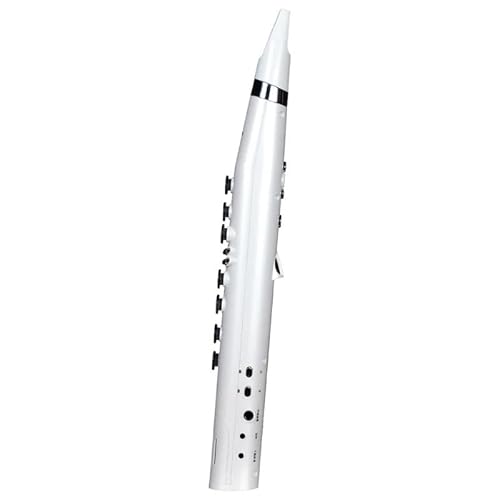
For musicians on the go, the Electric Wind Synthesizer Instrument – 7-Key Mini Digital Saxophone stands out as an ideal choice, blending portability with impressive sound variety. This compact device fits easily in your backpack, making it perfect for travel or practice in quiet settings. With 30 built-in synthesized tones, from sax to electronic sounds, you can explore diverse genres effortlessly. Its responsive breath sensor and touch-sensitive keys allow for expressive playing, while MIDI compatibility connects seamlessly to your computer or DAW. Plus, you can power it via USB or batteries, letting you start playing in minutes.
Best For: Musicians seeking a portable and versatile instrument for silent practice and MIDI performance.
Pros:
- Compact and lightweight design for easy transport and storage.
- 30 high-quality synthesized tones for diverse musical exploration.
- Expressive breath sensor and touch-sensitive keys enhance playing dynamics.
Cons:
- Limited to 7 keys, which may restrict complex melodies.
- Built-in sounds may not satisfy advanced users looking for high-end synth capabilities.
- Requires USB power or batteries, which can be an inconvenience during extended use.
Akai Professional EWI Solo Electronic Wind Instrument

Musicians seeking a portable and versatile instrument will find the Akai Professional EWI Solo an ideal choice. This electronic wind instrument features a built-in speaker and over 200 premium sounds, ensuring you’ll always have the perfect tone for your performance. Its responsive mouthpiece includes air-pressure and bite sensors, allowing you to control volume and pitch dynamics effortlessly. With a rechargeable battery providing over 12 hours of playtime, you’re set for long sessions. Plus, USB-MIDI connectivity and various output options make it easy to integrate into your setup. The OLED display simplifies maneuvering through presets and sound parameters, enhancing your creative experience.
Best For: Musicians looking for a portable, versatile electronic instrument that combines ease of use with a wide range of sounds and connectivity options.
Pros:
- 200 built-in premium sounds offer a diverse range of tones suitable for various genres.
- Responsive mouthpiece with air-pressure and bite sensors provides dynamic control over volume and pitch.
- Long battery life of over 12 hours allows for extended play without interruption.
Cons:
- Built-in speaker quality may not compete with professional external sound systems.
- Learning curve for beginners unfamiliar with wind instruments or electronic controls.
- Limited acoustic resonance compared to traditional wind instruments.
Portable Electronic Wind Instrument with MIDI Connectivity

The Pocket Wind Synth is the ideal choice for musicians seeking versatility and portability in their performances. With 10 built-in tones, including recorder, saxophone, and clarinet, you’ll find high-quality sounds that suit various musical styles. You can easily switch between recorder and E-Sax fingering modes, while adjustable breath sensitivity and pitch transpose give you precise control. Its built-in 800mAh battery provides up to 4 hours of wireless play, perfect for practice or outdoor gigs. Plus, MIDI connectivity lets you connect to music apps, expanding your sound library and enhancing functionality, making it user-friendly for all skill levels.
Best For: Musicians looking for a versatile and portable wind instrument for practice, lessons, or performances.
Pros:
- 10 built-in tones offer a variety of high-quality sounds for different musical styles.
- Adjustable breath sensitivity and pitch transpose provide enhanced control for players.
- MIDI connectivity allows for integration with music apps, expanding sound library options.
Cons:
- Battery life of 4 hours may limit extended practice or performance sessions.
- The compact design may not accommodate all playing styles comfortably for some users.
- Learning curve may exist for beginners unfamiliar with wind instrument techniques.
Digital Wind Instrument Synthesizer S56

Offering a versatile playing experience, the Digital Wind Instrument Synthesizer S56 is perfect for beginners and seasoned players alike. With 13 tone options ranging from saxophones to flutes, you can explore various sounds effortlessly. Its Bluetooth connectivity lets you connect to devices seamlessly, whether you’re on Windows, iOS, or Android. Enjoy the built-in 2W HiFi speaker for direct play, and the comfortable removable mouthpiece enhances your blowing experience. Plus, the 800 mAh battery provides up to 4 hours of playtime, making it ideal for on-the-go musicians looking for convenience without sacrificing sound quality.
Best For: The Digital Wind Instrument Synthesizer S56 is best for beginners, adults, and teens who want a versatile and portable electronic wind instrument.
Pros:
- Offers 13 diverse tone options, allowing for a wide range of musical exploration.
- Bluetooth connectivity enables seamless connection to various devices, enhancing usability.
- Built-in speaker and comfortable mouthpiece provide a convenient and enjoyable playing experience.
Cons:
- Limited battery life of 4 hours may require frequent recharging for extended use.
- The instrument may have a learning curve for complete beginners unfamiliar with wind instruments.
- Some users might prefer the acoustic feel of traditional instruments over digital alternatives.
Factors to Consider When Choosing Pocket Wind Synths
When you’re choosing a pocket wind synth, consider sound quality and the variety of tones it offers. Portability, battery life, and connectivity options also play an essential role, especially if you plan to use it on the go. Finally, you’ll want to think about how easy it is to use, so you can focus on making music.
Sound Quality and Variety
Choosing the right pocket wind synth can elevate your musical creativity, especially if you pay attention to sound quality and variety. Look for models that offer a range of built-in tones, like saxophones and flutes, to enhance your musical styles. High-quality sound reproduction is essential, as it makes your playing experience more enjoyable and realistic. Consider instruments that support MIDI connectivity for seamless integration with music software, expanding your sound palette. Adjustable blowing sensitivity is another feature to seek, as it enhances your control over dynamics and expression. Finally, check for built-in speakers or headphone outputs, as these can greatly impact sound quality during practice or performances, ensuring you’re ready for any musical setting.
Portability and Weight
Portability is a key factor in selecting a pocket wind synth, especially for musicians on the move. These instruments are designed to be lightweight and compact, often fitting easily into your backpack or coat pocket. Many models measure less than 12cm in width, making them perfect for travel or casual practice. Battery-operated options mean you won’t have to search for power outlets, allowing you to play in various environments without restrictions. With an average playtime of 4 to 12 hours on a full charge, you can enjoy extended use while on the go. Plus, features like removable mouthpieces and foldable designs further enhance their portability and ease of storage, making them ideal companions for any musician.
Battery Life Durability
For musicians on the go, battery life and durability play a significant role in the functionality of pocket wind synths. You’ll want models that offer around 4 hours of playtime on a full charge, allowing for extended sessions without constant recharging. Look for synths with higher-capacity batteries, ideally over 800mAh, to maximize usage time during outdoor gigs or travel. Durability is equally vital; well-built instruments withstand wear and tear, preventing battery drain from physical stress. Rechargeable batteries are a smart choice as they save money and reduce environmental impact. Finally, consider the charging time and method to guarantee your synth is ready for spontaneous practice or performance opportunities. Choose wisely to keep your music flowing!
Connectivity Options Available
When it comes to pocket wind synths, connectivity options can greatly enhance your musical experience. Many models offer MIDI connectivity, allowing you to connect to various music software and expand your sound library. Some even support both wireless and wired MIDI connections, giving you flexibility with smartphones, tablets, and computers. You’ll find standard audio outputs, like 3.5mm jacks, for connecting to headphones or external speakers to improve your sound experience. Plus, certain instruments feature Bluetooth connectivity, enabling seamless integration with mobile devices and apps for real-time music creation. If you prefer practicing without external gear, look for models with built-in speakers, making them versatile for both practice and performance.
Ease of Use
Choosing the right pocket wind synth can make all the difference in your musical journey, especially regarding ease of use. Look for instruments with intuitive controls and user-friendly interfaces that let you engage quickly, whether you’re a beginner or an experienced player. Models featuring touch-sensitive buttons enhance your ability to express yourself dynamically during performances. Evaluate the variety of fingering options available, as multiple styles can simplify your playing techniques and adapt to your musical preferences. Adjustable blowing sensitivity levels are essential, allowing you to customize volume and tone dynamics. Finally, choose synthesizers with built-in instructional features or presets to help you navigate and use the instrument effectively right out of the box.
Sensitivity and Responsiveness
Sensitivity and responsiveness are essential factors that can elevate your experience with pocket wind synths. These instruments should effectively respond to your breath and finger touch, allowing for dynamic control over volume and pitch. Look for models with adjustable blowing sensitivity levels, so you can customize how the synth reacts to your playing style. Touch-sensitive buttons enhance this responsiveness, enabling quick tone and key switching while capturing nuanced techniques. Some synths incorporate air-pressure and bite sensors, which detect variations in breath intensity and mouth pressure, leading to a more expressive performance. Ultimately, a higher degree of sensitivity and responsiveness makes it easier for you to achieve subtle phrasing and articulation, creating a more realistic playing experience.
Built-in Features and Effects
Built-in features and effects can greatly enhance your experience with pocket wind synths, allowing for a richer and more versatile musical palette. When choosing a model, consider the variety of built-in tones; some synths offer sounds from saxophones to flutes, which expands your creative options. Adjustable blowing sensitivity levels are essential too, as they let you control volume and expression based on your playing style. Look for built-in effects like vibrato or pitch modulation to elevate your sound quality. A built-in speaker is also a must for convenient standalone practice. Finally, MIDI connectivity options enable you to connect with music apps and DAWs, revealing even more possibilities for your music creation.
Price and Value
Budgeting for a pocket wind synth requires careful consideration of both price and value. You’ll find models ranging from budget-friendly options under $100 to advanced synths exceeding $300. While it’s tempting to go for the cheapest option, assess the value based on features like built-in tones, connectivity, and battery life. These aspects can greatly influence your satisfaction. Don’t forget to compare warranties and customer service, as these contribute to long-term value. User reviews and ratings can provide insights into performance and durability, reminding you that a higher price doesn’t always mean better quality. Finally, consider future expansion and compatibility with music software to enhance your synth’s value over time.