A good boom arm keeps your microphone positioned consistently while clearing valuable desk space. The right model can also reduce cable clutter, unwanted movement, and setup frustration during recording, streaming, podcasting, or voiceover work.
These 10 microphone boom arms for studio use cover different priorities, including quiet adjustment, low-profile positioning, heavy-microphone support, broad compatibility, and straightforward value.
Best 10 Microphone Boom Arms for Studio Picks for 2026
Professional Quiet Pick
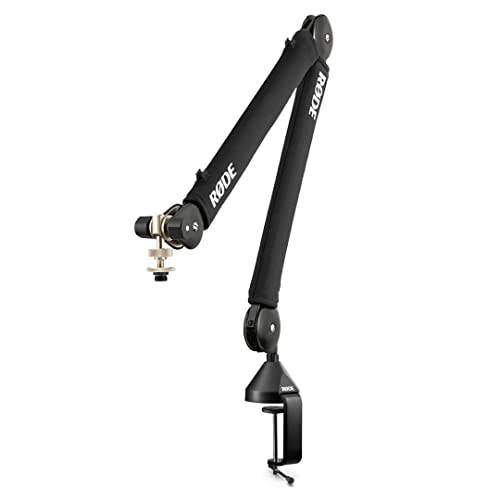
- Quiet internal spring damping
- Supports 0.25–1.2 kg microphones
- 360° rotation with hidden cable management
Best For: Quiet podcast and streaming desks
Low-Profile Gaming Choice

- Extends beneath the monitor
- All-metal construction with cable management
- 29-inch reach and multiple thread adapters
Best For: Gaming and streaming desks with limited monitor clearance
Dependable Traditional Design
Audio-Technica AT8700 Boom Arm

- Full 360° rotation
- 17-inch reach with 16.75-inch vertical height
- Includes USB and XLR cable clips
Best For: Standard desk-mounted recording and streaming setups
Heavy-Duty Low-Profile Pick
NEEWER MS002 Pneumatic Mic Arm

- Supports microphones up to 2.5 kg
- 30.2-inch horizontal reach
- Adjustable pneumatic damping and hidden cable channels
Best For: Heavy microphones and flexible low-profile workspaces
Heavy-Duty Pick

- 4.4-pound load capacity
- Quiet, flexible one-hand movement
- Adapters and concealed cable channels included
Best For: Heavy microphones and demanding podcast or streaming setups
Flexible Desk Setup

- 37.4-inch vertical reach
- Internal springs support up to 3.5 pounds
- Riser and cable channels included
Best For: Monitor-spanning home studio and streaming desks
All-in-One Value

- Supports up to 4 pounds
- 360-degree rotation and 700mm adjustment
- Pop filter and accessories included
Best For: Beginners assembling a complete podcast or streaming setup
Best Low-Profile Stability
Aokeo AK-58i Low-Profile Mic Arm

- Low-profile steel construction supports stable positioning
- Supports microphones or mounts up to 2 kg
- Includes multiple thread adapters and cable concealment
Best For: Compact studio, podcasting, gaming, and streaming desks
Best Beginner-Friendly Option
MAONO BA20 Adjustable Boom Arm

- Steel arm supports microphones up to 1 kg
- Clamp fits desks up to 5.5 cm thick
- Includes adapter, clip, and cable straps
Best For: Beginner podcasting, streaming, gaming, and recording setups
Best Simple Pick
AA AUDIO ACCESSORY ABA01 Mic Arm
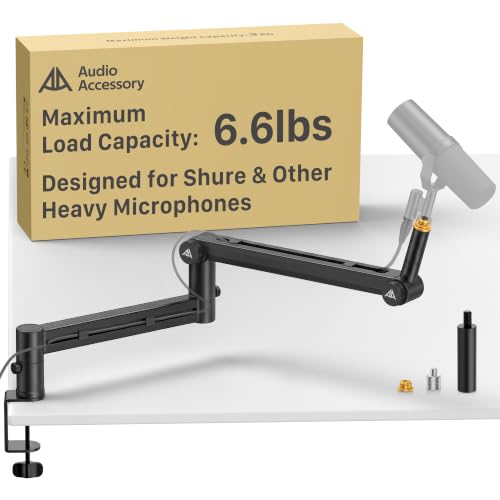
- 3 kg load capacity for heavy studio microphones
- Gear-lock design is intended to prevent sagging
- 780 mm reach with channels for multiple cables
Best For: Heavy microphones including Shure SM7B and RODE PodMic
Professional Quiet Pick – RØDE PSA1+ Studio Boom Arm
For microphone boom arms for studio setups where quiet repositioning and a clean desk matter, the RØDE PSA1+ is a strong all-around option. Its internal spring damping is designed to reduce creaks and handling noise, while the arm provides full 360-degree rotation and concealed cable routing.
Best For: Podcasting, streaming, and broadcast-style desks that need quiet movement and a polished appearance.
Pros:
- Internal spring damping helps minimize movement noise during recording.
- Supports microphones and shock mounts from 0.25 to 1.2 kg.
- 360-degree rotation and full extension offer flexible positioning.
- Built-in cable management keeps XLR runs hidden.
Cons:
- Its 1.2 kg capacity may not suit heavier microphone configurations.
- The clamp fits desks up to 70 mm thick, so thicker surfaces are excluded.
The PSA1+ is a practical choice when silent operation and tidy cable routing are more important than maximum load capacity. Included thread adapters support both 3/8-inch and 5/8-inch microphone mounts.
Low-Profile Gaming Choice – FIFINE BM88 Boom Arm
The FIFINE BM88 is a useful option among microphone boom arms for studio and gaming desks where monitor clearance is a priority. Its low-profile design can extend beneath a screen, while the all-metal construction, hidden cable channels, and broad adjustment range support a tidy, flexible setup.
Best For: Gaming, streaming, and recording desks that need a boom arm below monitor level.
Pros:
- Low-profile design helps preserve monitor visibility and desktop space.
- All-metal arm and clamp are built for stable positioning.
- Extends up to 29 inches with 220-degree vertical and 360-degree horizontal adjustment.
- Includes 1/4-inch, 3/8-inch, and 5/8-inch thread compatibility.
Cons:
- The section near the C-clamp cannot be adjusted vertically.
- The clamp is limited to desktops from 0.8 to 2.4 inches thick.
- The microphone is not included.
Choose the BM88 when a low-profile arm and long reach are central to your setup. Its included adapters simplify installation, although the fixed adjustment near the clamp may limit some positioning options.
Dependable Traditional Design – Audio-Technica AT8700 Boom Arm
The Audio-Technica AT8700 offers a straightforward table-mounted design for microphone boom arms for studio, recording, and streaming setups. It provides full 360-degree rotation, a 17-inch reach, and a 5/8-inch-27 thread for compatible microphone hardware.
Best For: Users who want a conventional metal boom arm from an established audio brand.
Pros:
- Full 360-degree rotation supports flexible microphone placement.
- 17-inch boom reach and 16.75-inch vertical height suit many desk setups.
- Includes six USB cable clips and six XLR cable clips.
- Supports up to 1.7 kg according to the supplied specifications.
Cons:
- Uses a 5/8-inch microphone stand thread rather than multiple included thread sizes.
- The supplied notes do not specify a low-profile design or internal cable routing.
The AT8700 is a sensible fit for buyers who prefer a simple, sturdy table clamp and conventional adjustment range. Its supplied cable clips help organize USB or XLR connections without adding a more complex cable-management system.
Heavy-Duty Low-Profile Pick – NEEWER MS002 Pneumatic Mic Arm
For microphone boom arms for studio setups using heavier microphones or multiple mounting options, the NEEWER MS002 stands out with pneumatic damping and a 2.5 kg capacity. Its low-profile structure reaches up to 30.2 inches horizontally, while the clamp accommodates desks from 10 to 80 mm thick.
Best For: Heavier microphones, low-profile workspaces, and users who want adjustable arm tension.
Pros:
- Adjustable pneumatic damping supports microphones up to 2.5 kg.
- Extends up to 30.2 inches horizontally and offers broad swivel adjustment.
- Low-profile height range helps preserve desk and monitor visibility.
- Hidden cable channels and multiple adapters support a tidy, versatile setup.
Cons:
- The joints cannot be fully locked, according to the supplied notes.
- Adjusting the pneumatic arm requires care because it can rebound.
- At 3.19 kg, the arm itself is relatively heavy.
The MS002 is the most capable choice here for heavier microphone setups and users who want to tune arm tension. Its pneumatic mechanism and extensive adjustment range add flexibility, but installation and tension adjustments require more care than a basic boom arm.
Heavy-Duty Pick – FIFINE BM66
The FIFINE BM66 is a strong option among microphone boom arms for studio setups that need substantial load capacity and smooth positioning. Its all-metal construction supports up to 4.4 pounds, while built-in cable channels help keep a recording desk organized.
Best For: Podcasters, streamers, and vocal or instrument recording setups using heavier microphones such as the Shure SM7B.
Pros:
- Supports up to 4.4 pounds with a heavy-duty metal build.
- Moves quietly with one-hand adjustment and a 360-degree base hinge.
- Includes adapters for 1/4-inch, 3/8-inch, and 5/8-inch microphone threads.
- Concealed cable channels and rubber covers reduce cable clutter and friction.
Cons:
- The supplied model is listed without an extension tube.
- Its sturdy metal construction weighs about 1,000 grams.
Choose the BM66 when stability, microphone compatibility, and clean cable routing matter more than having the lightest boom arm. Its reach and 180-degree adjustment suit both seated and standing recording positions.
Flexible Desk Setup – InnoGear Mic Arm
The InnoGear mic arm is a practical choice for microphone boom arms for studio desks where reach and adjustability are priorities. It extends up to 37.4 inches vertically, includes a riser, and uses internal springs to support microphones weighing up to 3.5 pounds.
Best For: Home studios, streamers, and podcasters who need an arm that can extend over monitors and fit desks up to 2 inches thick.
Pros:
- Provides up to 32.3 inches of horizontal reach and 37.4 inches vertically.
- Offers 135-degree back-and-forth and 180-degree up-and-down adjustment.
- Includes a 6.3-inch extension riser and 360-degree rotating base.
- Built-in cable channels help maintain a tidy setup.
Cons:
- Maximum supported weight is 3.5 pounds, lower than some heavy-duty arms.
- The shock mount is not included.
- The clamp is designed for desks up to 2 inches thick.
Its combination of long reach, multiple adjustment directions, and broad microphone compatibility makes the InnoGear a versatile desk-mounted option. Check the microphone and shock-mount weight before buying.
All-in-One Value – TONOR T20
The TONOR T20 stands out among microphone boom arms for studio beginners who want useful accessories included. Along with its steel boom arm and upgraded clamp, the package includes a mic clip, pop filter, foam cover, adapter, and cable ties.
Best For: Entry-level podcasting, streaming, and recording setups that need a basic boom arm plus starter accessories.
Pros:
- Steel construction supports up to 4 pounds or 1.8 kilograms.
- Provides 700mm of horizontal and vertical adjustment with 360-degree rotation.
- The larger clamp contact area fits desks up to 2.4 inches thick.
- Includes a pop filter, foam cover, mic clip, thread adapter, and cable ties.
Cons:
- Its listed maximum height is 27.55 inches, less than some longer arms.
- The package uses a mic clip rather than specifying an included shock mount.
The T20 is a convenient package for building a recording station without immediately purchasing several accessories. Its shorter listed height makes it better suited to standard desk layouts than especially tall or wide setups.
Best Low-Profile Stability – Aokeo AK-58i Low-Profile Mic Arm
For microphone boom arms for studio desks where stability and a tidy workspace matter, the Aokeo AK-58i uses a low-profile steel design with a lower center of gravity. It supports microphones or shock mounts up to 2 kg and includes adapters for common thread sizes.
Best For: Studio, podcasting, gaming, and streaming setups that need a stable arm with minimal visual obstruction.
Pros:
- Low-profile design helps reduce shaking and line-of-sight distractions.
- 360-degree arm rotation and 180-degree vertical movement provide flexible positioning.
- Supports up to 2 kg and includes 3/8-to-1/4-inch and 3/8-to-5/8-inch adapters.
- Integrated cable-hiding design and a one-year warranty add practical convenience.
Cons:
- The clamp fits tables less than 7 cm thick, which may exclude some desks.
- The microphone is not included.
The AK-58i is a sensible choice when you want a compact arm that stays unobtrusive while supporting a broad range of microphones. Check your desk thickness and microphone weight before buying.
Best Beginner-Friendly Option – MAONO BA20 Adjustable Boom Arm
The MAONO BA20 is one of the more approachable microphone boom arms for studio and home recording setups. Its steel construction, spring design, adjustable joints, desk clamp, standard microphone clip, and cable straps provide the basic components needed for flexible placement.
Best For: Beginners, podcasters, streamers, and gamers using microphones weighing up to 1 kg.
Pros:
- Wide movement range allows the microphone to be pulled in or pushed away as needed.
- Upgraded C-frame clamp fits desks up to 5.5 cm thick and includes a soft protective pad.
- Compatible with many popular microphones and includes a 3/8-to-5/8-inch adapter.
- Package includes a standard clip and two cable straps.
Cons:
- Its 1 kg load limit is lower than that of heavy-duty alternatives.
- The clamp may not work with glass tables.
- Positioning requires loosening the adjustment knobs.
The BA20 offers useful adjustability and a straightforward setup at a relatively light 450 g. It is best matched with standard microphones and a compatible solid desk rather than unusually heavy studio hardware.
Best Simple Pick – AA AUDIO ACCESSORY ABA01 Mic Arm
For heavier microphones, the AA AUDIO ACCESSORY ABA01 stands out among microphone boom arms for studio use with a stated 3 kg load capacity and gear-lock mechanism. Its reinforced aluminum-alloy arms, 780 mm reach, and deep cable channels are designed for substantial microphones and extended desk coverage.
Best For: Heavy microphones such as the Shure SM7B, SM7dB, MV7, and RODE PodMic.
Pros:
- Supports up to 3 kg, making it suitable for heavier microphones and mounts.
- Gear-lock construction is designed to resist sagging over time.
- Extra-long 780 mm reach and 360-degree horizontal adjustment offer broad placement flexibility.
- Includes 3/8-to-5/8-inch and 3/8-to-1/4-inch adapters plus cable channels for multiple cables.
Cons:
- At 1.63 kg, the arm is substantially heavier than lighter-duty options.
- The premium heavy-duty construction may be more capability than lightweight microphones require.
- Its vertical adjustment range is 120 degrees, rather than a full 180 degrees.
The ABA01 is the strongest match here for users concerned about sagging or supporting a heavier studio microphone. Its reach and load rating are useful, but confirm that your desk can accommodate the clamp and arm weight.
How We Picked the Best Microphone Boom Arms for Studio Use
We focused on the features that matter most in a working studio: load capacity, adjustment range, desk-clamp stability, cable management, noise during repositioning, and compatibility with common microphone mounts. The selection includes premium, budget-friendly, low-profile, and heavy-duty designs so you can match the arm to your microphone and workspace rather than choosing by appearance alone.
Thread compatibility was also considered. Many microphones and shock mounts use 3/8-inch or 5/8-inch connections, while some arms include adapters. Always confirm the thread size and the microphone’s actual weight, including a shock mount, pop filter, or other accessories.
Quick Comparison
| Best For | What to Look For |
|---|---|
| Professional recording | Quiet movement, reliable spring or pneumatic support, and a strong clamp |
| Streaming and gaming | Low-profile positioning, easy adjustment, and tidy cable routing |
| Heavy microphones | Verified load capacity, rigid joints, and a locking or reinforced clamp |
| Small desks | Compact clamp footprint and a horizontal arm that stays out of the way |
| Budget setups | Basic stability, included adapters, and sufficient reach |
Key Buying Factors for Microphone Boom Arms for Studio Setups
Load Capacity and Balance
Choose an arm that comfortably supports the complete microphone assembly. A large condenser microphone, shock mount, pop filter, and cable can weigh considerably more than the microphone alone. Staying below the stated maximum helps prevent sagging and makes adjustments smoother.
Clamp and Desk Protection
The clamp is often the weakest point of an inexpensive arm. Look for a broad contact area, a substantial tightening screw, and padding that protects the desk. Check the available desk thickness, especially if your workstation has a rear lip or cable tray.
Range of Motion
Consider whether you need the microphone directly in front of you, beside a monitor, or tucked away when not in use. Swivel joints and a long horizontal reach offer flexibility, while low-profile arms are better for keeping the microphone below the top edge of a monitor.
Noise and Cable Management
Spring damping, pneumatic support, and well-finished joints can reduce handling noise when you reposition the arm. Integrated clips or channels keep the cable secure, but leave enough slack for full movement and avoid sharply bending the connector.
Who Should Buy Which Microphone Boom Arms for Studio?
Choose a premium arm such as the RØDE option if quiet operation, refined construction, and dependable daily use matter most. The Audio-Technica model is a sensible fit for users who want a straightforward branded arm with adjustable positioning.
For gaming, streaming, and compact workstations, consider a low-profile design such as the FIFINE BM88, NEEWER MS002, or Aokeo AK-58i. These styles help keep the microphone clear of screens while preserving desk space. The FIFINE BM66, AA Audio Accessory arm, and other reinforced models are better suited to heavier microphones or accessories, provided their rated capacity exceeds your complete setup.
Value-focused buyers should compare the included adapter, pop filter, clamp design, and cable-management hardware—not just the listed price. If you frequently move between seated and standing positions, prioritize reach and joint flexibility. If the arm will remain fixed for recording, prioritize rigidity, quiet adjustment, and a secure clamp.