Finding the right metronome can transform your guitar practice, helping you develop a solid sense of timing and rhythm. With options ranging from digital to mechanical, each has its own unique features that cater to different playing styles. Whether you’re a beginner or a seasoned player, there’s a perfect metronome for you. Let’s explore the top 10 choices and see which one might become your new practice companion.
Sondery Digital Metronome for Piano, Guitar, Drum and All Instruments
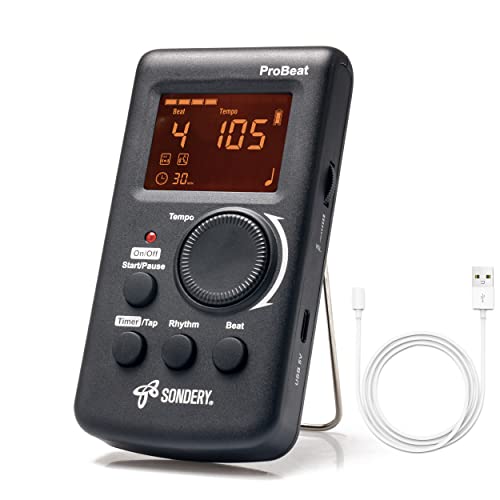
If you’re looking for a versatile metronome that caters to multiple instruments, including guitar, the Sondery Digital Metronome is an excellent choice. This device boasts rechargeable functionality, ensuring you can practice without interruption. You’ll appreciate the vocal counting option and ten beat patterns for diverse rhythm training. The color screen makes it easy to read, while the tap function allows you to set your own tempo. With a tempo range of 40 to 208 BPM, it fits any practice session. Plus, the LED light and big sound output help you stay on beat, making it perfect for all musicians.
Best For: Musicians of all levels seeking a reliable and versatile metronome for practice across various instruments like piano, guitar, and drums.
Pros:
- Rechargeable functionality allows for extended usage without the need for constant battery replacements.
- Vocal counting and multiple beat patterns enhance rhythm training and versatility.
- Easy-to-read color screen and LED light provide clear visual and audio indicators for maintaining tempo.
Cons:
- Requires specific charging cable (USB A to USB C), which may be inconvenient for some users.
- Limited to a maximum of 10 hours of use after charging, which may not suffice for longer practice sessions.
- The big sound output may not be suitable for very quiet environments where silence is preferred.
AODSK Mechanical Metronome for Piano, Guitar, Violin, and Drums

The AODSK Mechanical Metronome is an excellent choice for guitarists and musicians of all levels who want a reliable tool to enhance their practice sessions. With a tempo range of 40-208 beats per minute and beat selections of 0, 2, 3, 4, and 6, it helps you develop strong rhythm skills. Its loud sound and simple pendulum design guarantee you stay on track without needing batteries. Weighing just 1.17 pounds and measuring 7.99 x 3.74 x 4.76 inches, it’s easy to transport. Whether for personal use or as a thoughtful gift, this metronome is perfect for anyone passionate about music.
Best For: The AODSK Mechanical Metronome is best for musicians of all levels, including guitarists, pianists, violinists, and drummers, who seek a reliable and effective tool for improving their rhythm and tempo.
Pros:
- Versatile Use: Suitable for various instruments like piano, guitar, violin, and drums.
- No Batteries Required: Operates on a winding mechanism, ensuring convenience and sustainability.
- Loud Sound: The clear, loud tone aids in tracking beats, enhancing practice sessions significantly.
Cons:
- Mechanical Design: May not have advanced features found in digital metronomes, such as complex time signatures or subdivisions.
- Limited Tempo Range: The maximum tempo of 208 beats per minute may not suffice for all musical styles.
- Weight and Size: While portable, some musicians may prefer lighter or more compact options for travel.
Seiko SQ50-V Quartz Metronome

Designed for musicians seeking precision and simplicity, the Seiko SQ50-V Quartz Metronome is an excellent choice for guitar practice. Its easy-to-use design lets you quickly select from two sound types, ensuring you stay on tempo. With a tempo range of 40-208 bpm, you can easily adjust the speed using the 39-position rotary dial. The red LED light provides a clear visual cue for your tempo, making it great for practicing without sound or during performances. Plus, it offers reference tuning tones for A (440 Hz) and Bb (446.1 Hz), enhancing your practice efficiency and performance accuracy.
Best For: Musicians seeking a reliable and easy-to-use metronome for practice and performance.
Pros:
- Easy-to-use design with two sound types for tempo and beat.
- Clear visual tempo indication with a red LED light, ideal for silent practice.
- Provides reference tuning tones for A and Bb, enhancing practice efficiency.
Cons:
- Limited to a maximum tempo of 208 bpm, which may not suit all musical styles.
- Lacks advanced features such as rhythm patterns or subdivisions.
- Battery-operated, which may require frequent replacements during heavy use.
SDREAM Digital Metronome for Piano, Guitar, and Violin

For guitarists seeking a reliable practice tool, the SDREAM Digital Metronome stands out with its user-friendly features and versatility. This rechargeable metronome, designed for piano, guitar, and violin, boasts an LCD display and classic pyramid shape for enhanced precision. You can easily adjust the volume and tempo, ranging from 40-208 BPM, and choose from 10 rhythm patterns. With over 8 hours of battery life and a headphone jack, you’ll enjoy focused practice anywhere. Its compact size makes it portable, fitting perfectly in your pocket or instrument bag. It’s an excellent choice for musicians of all levels.
Best For: Musicians of all levels, especially guitarists, seeking a versatile and user-friendly metronome for practice.
Pros:
- Rechargeable with over 8 hours of battery life for extended use.
- Compact and portable design fits easily in pockets or instrument bags for practice on the go.
- Versatile with compatibility for various instruments and 10 beat patterns suitable for all musical styles.
Cons:
- Limited to 208 BPM, which may not suffice for advanced musicians requiring faster tempos.
- LCD display may be difficult to read in bright outdoor lighting conditions.
- Headphone jack may require additional adapters for some instrument connections.
Korg MA-2 Digital Metronome for Orchestral Instruments

With its large 30% improved display and engaging beat visuals, the Korg MA-2 Digital Metronome stands out as an excellent choice for orchestral musicians and guitarists alike. You’ll appreciate its tap tempo and multiple tempo settings, including Pendulum and Full Step, making it easy to find your groove. The enhanced volume guarantees clarity, even among high-volume instruments, though some may find it a bit high-pitched. With an impressive 400-hour battery life, this compact metronome is portable and user-friendly. You’ll love the personalized rhythm training options with various time signatures and rhythms to suit your practice needs.
Best For: The Korg MA-2 Digital Metronome is best for orchestral musicians and guitarists seeking a portable and user-friendly practice tool.
Pros:
- Large 30% improved display with engaging beat visuals for enhanced usability.
- Impressive 400-hour battery life makes it ideal for long practice sessions without frequent battery changes.
- Offers personalized rhythm training with various time signatures and rhythm types.
Cons:
- Some users find the sound quality to be high-pitched and abrasive in certain environments.
- May struggle to be heard in noisy settings despite enhanced volume.
- Reports of battery indicators showing low power even with new batteries.
Aroma 3 in 1 Metronome Tuner for All Instruments

The Aroma 3 in 1 Metronome Tuner is a fantastic choice for musicians seeking a versatile and portable practice tool. This compact device combines a tuner, metronome, and tone generator, making it perfect for guitars, violins, and more. With a tuning range from A0 to C8 and ±0.5 cent accuracy, you’ll achieve pitch-perfect results every time. The digital metronome offers a range of 30–260 beats per minute, along with customizable rhythms to master timing. Its bright LCD screen and lightweight design guarantee easy visibility and portability, making it an ideal companion for practice, lessons, or performances.
Best For: Musicians of all levels looking for a compact and multifunctional tool to enhance their practice and performance.
Pros:
- Combines tuner, metronome, and tone generator in one portable device, ideal for various instruments.
- Offers precise tuning with ±0.5 cent accuracy and a wide tuning range from A0 to C8.
- User-friendly design with a bright LCD screen and customizable metronome rhythms for versatile practice.
Cons:
- May not have advanced features that professional musicians require for complex performances.
- Limited battery life may require frequent replacements or recharging during extensive use.
- Smaller size could make it challenging for those who prefer larger, more robust devices.
Ueteto Digital Metronome with Timer for Piano, Guitar, Drum, Violin
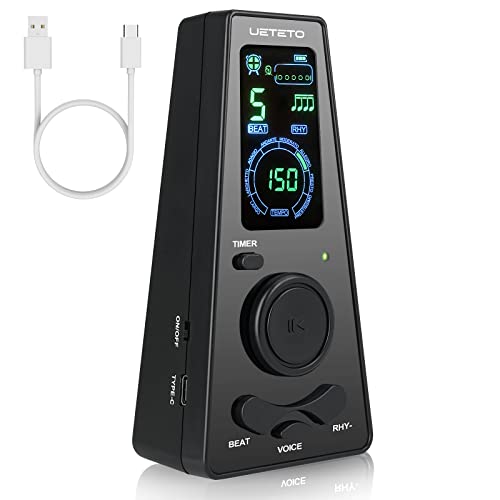
Ideal for musicians seeking versatility, the Ueteto Digital Metronome stands out with its broad tempo range of 40-208 bpm, making it perfect for guitarists, pianists, drummers, and violinists alike. Its user-friendly design features an easily readable LCD color display and one-touch operation for hassle-free practice. With built-in timer settings from 15 to 60 minutes, you can structure your sessions effectively. You’ll appreciate the option to switch between voice and electronic sounds, plus the adjustable volume control. Compact and lightweight, it’s powered by USB-C or AAA batteries, ensuring you can practice anywhere without interruption.
Best For: Musicians of all levels seeking a versatile metronome for various instruments such as piano, guitar, drums, and violin.
Pros:
- Easily readable LCD color display and one-touch operation for user-friendly experience.
- Multiple timer settings and sound options enhance practice sessions.
- Compact design with USB-C and battery power options allows for practice on the go.
Cons:
- Some users may prefer a mechanical metronome for a more traditional feel.
- Limited battery life when using AAA batteries compared to continuous USB-C power.
- May not have as many advanced features as higher-end metronomes for professional musicians.
Sondery Digital Metronome Tuner 3 in 1 for All Instruments
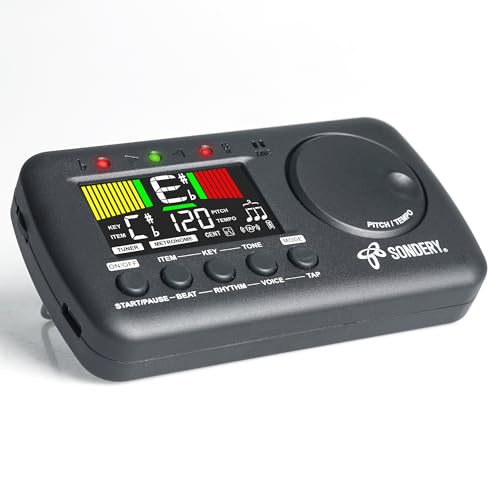
If you’re looking for a versatile tool that combines a metronome, tuner, and tone generator, the Sondery Digital Metronome Tuner 3 in 1 is your go-to choice. With a large LCD color screen and user-friendly features like a JOG Dial, adjusting tempo and pitch is a breeze. It supports a wide range of instruments and offers an impressive tempo range of 30-260 BPM. Users appreciate its accuracy and portability, weighing just 4.3 ounces. Plus, its rechargeable battery provides up to five hours of use. Whether you’re practicing guitar or any other instrument, this tool enhances your musical experience.
Best For: Musicians of all skill levels seeking a compact and multifunctional tool for tuning, rhythm practice, and tone generation.
Pros:
- Versatile Functionality: Combines metronome, tuner, and tone generator in one device, suitable for various instruments.
- User-Friendly Design: Features a large LCD color screen, JOG Dial for easy adjustments, and a portable build.
- Rechargeable and Long-Lasting: Provides up to five hours of use on a single charge, making it ideal for practice sessions on the go.
Cons:
- Tap Feature Sensitivity: Some users report issues with the tap tempo feature activating on release, which may affect drummers.
- Build Quality Concerns: A few users have noted complaints regarding the overall durability of the device.
- Lack of Dedicated Output Jack: While it includes audio output options, the absence of a dedicated output jack may limit connectivity for some users.
Sondery Classic Mechanical Metronome for All Instruments

For musicians seeking a reliable and elegant tool, the Sondery Classic Mechanical Metronome stands out with its classic pyramid design and precise mechanics. This metronome offers an adjustable tempo range from 40 to 208 beats per minute, making it versatile for any piece. With five beat modes, it accommodates various time signatures, and the clear auditory cues from its bell and wood block enhance your practice. Its wind-up spring eliminates the need for batteries, promoting sustainability. Plus, its durable construction guarantees long-term reliability, making it a perfect choice for both beginners and seasoned players alike.
Best For: Musicians of all skill levels looking for a reliable, elegant, and sustainable metronome to enhance their practice.
Pros:
- High-precision mechanics ensure accurate tempo and stable performance.
- Adjustable tempo and beat modes cater to various musical styles and time signatures.
- Eco-friendly wind-up design eliminates the need for batteries, promoting sustainability.
Cons:
- Mechanical operation may not be suitable for those preferring digital metronomes with advanced features.
- Initial winding may require some effort, which might not appeal to all users.
- Limited to a single sound type (bell and wood block), lacking diverse auditory cues.
Pocket Guitar Chord Practice Tool for Beginners

The Pocket Guitar Chord Practice Tool is perfect for beginners wanting to develop their skills without the distraction of sound. This portable neck trainer features a rotatable chord chart and over 400 stored chords, helping you build muscle memory and finger placement effectively. With genuine steel strings, it mimics the real guitar feel, making your conversion seamless. Its compact design fits easily in your pocket, and the built-in metronome allows you to practice timing without producing any guitar tones. Whether you’re in a car or an office, this tool is ideal for silent practice anytime, anywhere.
Best For: Beginners looking to practice guitar chords silently and effectively without the distraction of sound.
Pros:
- Compact and lightweight design makes it easy to carry and practice anywhere.
- Over 400 chords stored, providing a wide variety of practice options for skill development.
- Genuine steel strings mimic the real guitar feel, aiding in a smoother transition to actual guitar playing.
Cons:
- Customer ratings are relatively low at 3.4 out of 5 stars, indicating some user dissatisfaction.
- Limited to silent practice, which may not suit those who prefer audible feedback while learning.
- Adjustable string tension may require some fiddling for optimal comfort, which could be a hassle for beginners.
Factors to Consider When Choosing Metronomes for Guitar Practice
When choosing a metronome for your guitar practice, you’ll want to take into account several key factors. Think about the tempo range, power source options, and how user-friendly it is for your needs. Don’t forget to evaluate sound quality, volume, design, and portability to find the perfect fit for your practice sessions.
Tempo Range Flexibility
Choosing a metronome that offers flexible tempo range is crucial for your guitar practice, as it allows you to explore various musical styles and levels. Most metronomes provide a tempo range from 40 to 208 beats per minute (BPM), catering to beginners and advanced players alike. This flexibility allows you to start slow for accuracy and gradually increase your speed to enhance proficiency. Look for models with a tap tempo function, allowing you to set your desired pace through rhythmic tapping. Additionally, selecting different beat patterns—often ranging from 0 to 9—can greatly boost your rhythmic training. A wide tempo range guarantees you can practice effectively across genres, from classical to rock, making your metronome an invaluable tool.
Power Source Options
Finding the right power source for your metronome can greatly impact your practice sessions. You’ve got several options, including rechargeable batteries, alkaline batteries, and mechanical winding mechanisms. Rechargeable metronomes typically last 8 to 10 hours on a full charge, perfect for longer practices. On the other hand, mechanical metronomes don’t require batteries at all, ensuring reliability without electronic components. If you prefer a digital option, look for models with dual power sources; they often allow USB charging and standard batteries, making them portable for different settings. Keep in mind that battery life varies considerably, with some electronic metronomes lasting up to 400 hours on alkaline batteries, while others may need more frequent recharging or replacements. Choose wisely!
Sound Quality and Volume
Sound quality and volume play an essential role in your metronome selection for guitar practice. A clear, distinct sound helps you accurately track your timing and rhythm, making your practice sessions more effective. Look for metronomes that offer volume control, allowing you to adjust the sound to fit your environment—whether you’re in a quiet room or a noisy space. For acoustic instruments, a louder sound output guarantees the metronome’s beat is heard above your guitar. Additionally, consider metronomes that provide various sound types, like clicks or vocal counts, to enhance your learning experience. Some even include visual indicators like LED lights, which can help you maintain tempo, especially in less-than-ideal conditions.
User-Friendly Features
When selecting a metronome for guitar practice, user-friendly features can make a significant difference in your experience. Look for a metronome with a large, clear LCD display to enhance visibility, especially in low-light conditions. Vocal counting options can also help you maintain rhythm and timing. Choose devices with simple one-touch operation or intuitive controls, allowing you to adjust tempo quickly without interrupting your flow. Adjustable volume settings and a headphone jack are essential for silent practice, accommodating different environments. Features like tap tempo functionality let you set your desired tempo by just tapping, making it easier to customize your practice sessions. These user-friendly features guarantee that your practice remains productive and enjoyable.
Design and Portability
User-friendly features enhance your practice experience, but the design and portability of a metronome are equally important. When choosing a metronome, look for compact models around 4.5 x 2 x 6 inches, as they fit easily into bags or pockets, making them perfect for practicing on the go. Lightweight options, weighing about 0.29 lb or less, add convenience for traveling musicians. A folding kickstand can improve visibility, allowing you to position the metronome at an ideal angle. Rechargeable models that last over 8 hours on a single charge eliminate battery hassles. Finally, opt for a metronome with a user-friendly interface, enabling quick adjustments no matter where you practice.
Rhythm Patterns Variety
How can a diverse range of rhythm patterns elevate your guitar practice? By incorporating various beat patterns, like 2/4, 3/4, 4/4, and 6/8, you’ll enhance your rhythmic versatility and deepen your understanding of different musical styles. Many metronomes provide these options, allowing you to explore complex rhythms and keep your practice engaging. Some digital models even let you customize patterns, tailoring your practice to your specific needs. This variety not only challenges you but also helps you master rhythms that span diverse genres. When you mix things up, you stay motivated and excited about your practice sessions, pushing yourself to improve continuously. So, choose a metronome that offers a rich selection of rhythm patterns to elevate your playing!
Visual Indicators Availability
Ever wondered how visual indicators can enhance your metronome experience? They make it easier to follow the beat, especially in noisy environments. Many digital metronomes now come with large color screens that clearly display tempo settings and beat patterns, improving your practice sessions. If you prefer a traditional approach, mechanical metronomes with a pendulum swing let you visually track the tempo while listening to the sound. Enhanced visual feedback, like graphical representations of beats, helps you grasp timing and rhythm better. Plus, metronomes with adjustable visual indicators allow you to customize your setup based on different lighting conditions, ensuring ideal visibility. Choosing a metronome with these features can greatly boost your practice effectiveness.
Additional Functionalities
When choosing a metronome for guitar practice, consider several key functionalities that can enhance your experience and effectiveness. Look for options like rechargeable features, as seen in models like the Sondery Digital Metronome, which also offers various audio outputs, including vocal counting. Tap tempo functionality allows you to set custom rhythms easily, adding flexibility to your practice. Some metronomes include built-in timers for structured sessions, enabling you to practice for set durations like 15 or 60 minutes. Multi-purpose devices with tuners and tone generators can also be beneficial, helping you tune while you play. Finally, visual indicators like LED lights or large displays offer clear tempo feedback, especially useful in noisy environments.