Choosing a lavalier microphone for singing means balancing vocal clarity, wireless reliability, comfort, and compatibility with your recording or performance setup.
This roundup compares 10 options ranging from compact smartphone kits to more flexible UHF systems, helping you find the right fit for practice, content creation, live use, or mobile recording.
Best 10 Lavalier Microphones for Singing Picks for 2026
Best Compact Wireless Pick

- 10 g transmitters with discreet clip-on design
- Two noise-cancellation levels and automatic limiting
- Up to 300 m transmission and 11.5-hour operation
Best For: Mobile singing videos, livestreams, and content creation
Best Single-Performer UHF System

- Includes lapel and headset microphones
- 15 tunable UHF frequencies with digital transmission
- 6.35 mm receiver output for PA and karaoke equipment
Best For: Karaoke, small stages, church, and wedding performances
Best Dual-Channel Live Setup
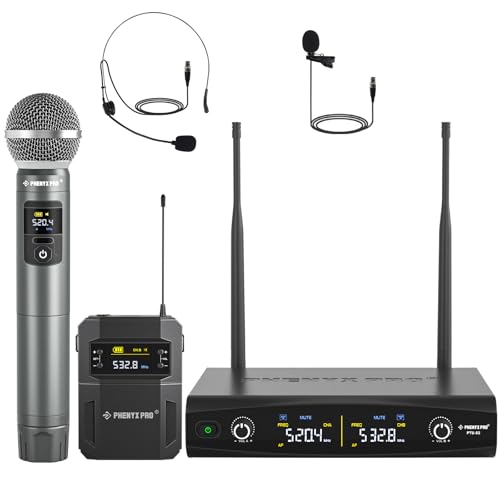
- Handheld, headset, and lapel microphones included
- 30 tunable frequency groups with two channels
- XLR and mixed 1/4-inch outputs for PA equipment
Best For: Karaoke, live shows, church, and multi-mic performances
Best Phone-Friendly Pick
MAYBESTA Wireless Mini Lavalier

- Two wireless microphones for shared recordings
- Lightning and USB-C compatibility
- Plug-and-play noise-reduction design
Best For: Mobile singers, vloggers, and interview recordings
Best for PA Systems
TONOR UHF Lavalier Microphone System

- 200-foot line-of-sight wireless range
- Lavalier and headset microphones included
- 15 adjustable frequencies and 6.35 mm output
Best For: Live singers and speakers using a PA system
Best Multi-Device Kit
PQRQP 3-in-1 Wireless Lavalier

- USB-C, Lightning, and 3.5 mm receiver options
- Two microphones with 65-foot wireless range
- Approximately seven hours of working time
Best For: Singers recording across phones and cameras
Best USB-C Flexibility
GoorDik Wireless Mini Lavalier Mic

- Active denoise and original-sound modes
- Dual transmitters with 6–12-hour battery life
- USB-C, Lightning, and computer adapters included
Best For: USB-C creators recording singing videos, interviews, and livestreams
Best Portable Creator Kit
Mini Mic Pro Wireless Lavalier

- Plug-and-play USB-C and Lightning connectivity
- Two microphones with charging case included
- Foam and deadcat wind protection for outdoor use
Best For: Mobile singers and creators who need a simple travel-ready kit
Best Low-Latency Dual Mic Set
Labstandard K9 Wireless Lavalier

- Approximately 0.008-second low-latency transmission
- Dual microphones with noise reduction
- Lightning and USB-C compatibility
Best For: Singers recording duets, performances, and synchronized live video
Best Compact Wireless Pick – DJI Mic Mini
For creators seeking lavalier microphones for singing, the DJI Mic Mini combines a discreet 10 g transmitter with convenient wireless operation. Its two noise-cancellation levels, automatic limiting, and 300 m maximum transmission range make it a practical choice for vocals in changing environments.
Best For: Mobile singing videos, livestreams, interviews, and content creation.
Pros:
- Very lightweight and discreet at 10 g per transmitter.
- Strong noise cancellation option helps in louder environments.
- Automatic limiting helps prevent clipping from loud vocals.
- Up to 11.5 hours of operating time with the included setup.
Cons:
- The mobile receiver is centered on USB-C connectivity.
- Its omnidirectional pickup may capture surrounding sound.
The DJI Mic Mini is a strong fit when portability and simple phone recording matter most. It is less tailored to traditional PA systems than the dedicated UHF performance systems below.
Best Single-Performer UHF System – Phenyx Pro PDP-1-1B
Among lavalier microphones for singing, the Phenyx Pro PDP-1-1B is designed for live use rather than phone-first recording. Its UHF digital system includes both lapel and headset microphones, 15 tunable frequencies, and a 1/4-inch receiver output for karaoke machines, mixers, powered speakers, and amplifiers.
Best For: Karaoke, small-stage performances, weddings, church events, and portable PA setups.
Pros:
- Includes both headset and lapel microphones for flexible performance use.
- 48 kHz/24-bit digital circuitry is designed for delay-free transmission.
- 15 tunable UHF frequencies help manage crowded spectrum conditions.
- Rechargeable bodypack and receiver use USB-C charging.
Cons:
- Its 160–200 ft line-of-sight range depends on setup and surroundings.
- The receiver uses a 6.35 mm output, so phone recording may require additional equipment.
This system makes more sense for singers who need a receiver that connects directly to live audio gear. The included headset also provides an alternative when a lapel mic is not the best fit for movement-heavy performances.
Best Plug-and-Play Phone Option – SUDEHO Wireless Mini Lavalier
For singers recording directly to a phone or tablet, this SUDEHO model offers a quick alternative among lavalier microphones for singing. The receiver pairs automatically without Bluetooth or an app, while selectable audio modes and three levels of noise cancellation add flexibility for videos, interviews, and casual vocal clips.
Best For: Smartphone singing videos, vlogging, interviews, game chat, and outdoor recording.
Pros:
- Plug-and-play setup with automatic pairing.
- Three noise-cancellation levels accommodate different environments.
- Up to 6 hours of continuous recording and 36 hours with the case.
- Up to 164 feet of wireless transmission range.
Cons:
- The supplied notes identify it as a phone-focused wireless system rather than a PA microphone.
- Voice changer and extra modes may be unnecessary for straightforward singing recordings.
This is a convenient choice for creators who value fast setup and a charging case. Its feature set suits social video and mobile recording more than stage amplification.
Best Dual-Channel Live Setup – Phenyx Pro PTU-52-1H1B
The Phenyx Pro PTU-52-1H1B is a practical pick for singers who need more than a single wireless channel. This UHF system combines a handheld microphone with a bodypack, headset, and lapel microphone, making it suitable for karaoke, live shows, church services, and outdoor events.
Best For: Performances requiring a handheld mic plus hands-free headset or lavalier flexibility.
Pros:
- Includes a handheld mic, headset mic, and lapel microphone.
- Two channels support shared or multi-microphone use.
- 30 tunable frequency groups help reduce interference.
- Provides XLR outputs plus a mixed 1/4-inch output.
Cons:
- Its 200 ft range is specified for open-space line-of-sight use.
- The system uses included AA batteries rather than a fully rechargeable setup.
- It is less convenient for direct smartphone recording than USB-C systems.
Choose this Phenyx Pro when your singing setup centers on a mixer, amplifier, or PA system and you want multiple microphone formats available. It offers more live-performance flexibility than compact phone-oriented kits.
Best Phone-Friendly Pick – MAYBESTA Wireless Mini Lavalier
The MAYBESTA two-microphone kit is a practical choice when you need lavalier microphones for singing, vlogging, interviews, or mobile video. Its plug-and-play receiver supports Lightning and USB-C devices, while the omnidirectional microphones and noise-reduction chip are designed to capture clear voice audio.
Best For: Phone-based creators, singers recording on iPhone or Android, livestreamers, and anyone who needs two wireless clip-on microphones.
Pros:
- Includes two wireless lavalier microphones for interviews, duets, or multi-person recordings.
- Supports iPhone, iPad, Android, laptops, and tablets through Lightning or USB-C connections.
- Plug-and-play setup requires no app or adapter, and the longer receiver is designed to work with many phone cases.
- Omnidirectional pickup, windscreen tips, and noise reduction help limit unwanted recording noise.
Cons:
- Designed around mobile and compatible device recording rather than traditional PA-system use.
- The supplied specifications list a 2.4 GHz wireless connection but do not provide a specific operating distance.
For singers who record directly to a phone, this is the most convenient option of the three. The dual-mic package adds flexibility, though performers needing a mixer or speaker connection should look at a dedicated UHF system instead.
Best for PA Systems – TONOR UHF Lavalier Microphone System
The TONOR TW621 is a better fit for singers and speakers who perform through a mixer, powered speaker, amplifier, or karaoke system. Unlike phone-focused lavalier microphones for singing, this kit uses UHF transmission and a 6.35 mm output for sound-system connections.
Best For: Live singers, church events, instructors, speakers, weddings, and performances using a PA system or amplifier.
Pros:
- Offers up to 200 feet of line-of-sight wireless range.
- Includes a bodypack, lavalier microphone, and headset microphone for flexible hands-free use.
- Provides 15 adjustable frequencies per bodypack to help manage interference.
- Rechargeable receiver runs for approximately 6–8 hours after a 2–3 hour charge.
Cons:
- Requires a speaker, mixer, amplifier, or other compatible sound system; it cannot operate independently.
- Uses a 6.35 mm output and is not Bluetooth-compatible, so additional adapters may be needed for some equipment.
- The bodypack requires two AA batteries, which are not included.
This is the strongest choice for live vocal use when you already have compatible amplification. Its long range and frequency selection are useful on stage, but its connector and system requirements make it less convenient for direct phone recording.
Best Multi-Device Kit – PQRQP 3-in-1 Wireless Lavalier
The PQRQP GT16 stands out for singers who switch between phones, cameras, and other recording equipment. Its 3-in-1 receiver supports USB-C, Lightning, and 3.5 mm connections, while the dual microphones, active noise reduction, and 65-foot stated transmission range suit mobile recording and live content.
Best For: Singers and creators recording across iPhone, Android, cameras, and compatible 3.5 mm audio equipment.
Pros:
- 3-in-1 receiver supports USB-C, Lightning, and 3.5 mm connections.
- Two wireless microphones provide flexibility for duets, interviews, or group content.
- Offers a stated 65-foot stable wireless transmission range.
- Active noise reduction, omnidirectional pickup, and approximately seven hours of working time support extended recordings.
Cons:
- Some Android and USB-C devices may require OTG to be enabled manually.
- The 3.5 mm receiver connector is not suitable for laptop audio input according to the supplied notes.
- Its wireless range is shorter than the TONOR system’s stated 200-foot line-of-sight range.
Choose the PQRQP if connection flexibility matters more than PA-system range. It is especially useful for creators who record singing clips on different devices, provided their phone or camera supports the relevant receiver connection.
Best USB-C Flexibility – GoorDik Wireless Mini Lavalier Mic
For singers and creators seeking lavalier microphones for singing, the GoorDik set offers USB-C convenience, two transmitters, adjustable clip positioning, and selectable noise reduction. It is especially practical for recording on newer phones, tablets, or computers.
Best For: USB-C device users who want a dual-mic wireless setup for singing videos, vlogs, podcasts, and livestreams.
Pros:
- Active denoise and original-sound modes provide recording flexibility.
- Two transmitters support interviews, duets, or multi-person content.
- Includes foam covers, furry windscreens, USB and Lightning adapters, and a USB adapter.
- Transmitters provide approximately 6–12 hours of use per charge.
Cons:
- Some Android devices may require OTG activation.
- Computer users may need to select it as the default input device.
- The strongest compatibility is centered on USB-C and supported adapters.
This is a versatile option when you need portable wireless audio and useful wind protection. Its adaptable connections and dual transmitters make it a strong all-around choice for mobile singing content.
Best Portable Creator Kit – Mini Mic Pro Wireless Lavalier
Among lavalier microphones for singing, the Mini Mic Pro stands out as a compact, ready-to-use kit for phones and laptops. Its plug-and-play adapters, noise reduction, and included wind protection make it convenient for recording vocals and spoken content on the move.
Best For: Creators who prioritize portability, simple setup, and compatibility with both Lightning and USB-C devices.
Pros:
- Works without apps or Bluetooth and includes USB-C and Lightning adapters.
- Two wireless lavalier microphones are supplied with a receiver and charging case.
- Foam and deadcat wind protection helps with outdoor recording.
- Provides up to six hours of recording per charge and allows simultaneous device charging.
Cons:
- The stated battery runtime is up to six hours per charge.
- The system is listed with one channel, which may limit some recording setups.
- Its design is optimized primarily for smartphone, tablet, and laptop use.
The Mini Mic Pro is a practical pick for singers who want a lightweight kit that can move easily between iPhone and Android devices. The charging case and included wind covers add convenience for frequent mobile recording.
Best Low-Latency Dual Mic Set – Labstandard K9 Wireless Lavalier
For singing videos where timing matters, the Labstandard K9 is one of the lavalier microphones for singing designed around low-latency wireless transmission and real-time synchronization. Its dual microphones, noise-reduction chip, and support for Lightning and USB-C devices suit vocal recording, interviews, and live content.
Best For: Singers and performers who need two microphones, low-latency audio, and broad phone or tablet compatibility.
Pros:
- Claims approximately 0.008-second latency for closely matched sound and video.
- Dual microphones support two speakers or vocalists.
- Noise reduction and real-time auto-sync help simplify recording.
- Supports Lightning and USB-C devices through the included rechargeable adapter.
Cons:
- Battery life is approximately six hours.
- The supplied notes emphasize mobile and tablet recording rather than computer use.
- Some advanced functions may require consulting the manual.
The K9 is a strong fit when synchronized audio is more important than extensive controls. Its dual-mic configuration and wide mobile-device compatibility make it useful for duet performances, vocal lessons, interviews, and livestreams.
How We Picked These Lavalier Microphones for Singing
We focused on microphones and wireless systems suited to sung vocals rather than speech alone. Our comparison considers pickup quality, noise-control features, transmission stability, connection options, battery practicality, included accessories, and ease of setup. The list includes phone-focused microphones, USB-C models, camera-compatible kits, and traditional UHF systems so different singers can compare realistic options.
Because product performance depends on the phone, camera, venue, vocal technique, and placement, specifications should be treated as a starting point. Check connector compatibility and the manufacturer’s supported range before ordering.
Quick Comparison
| Best For | Recommended Type | What to Prioritize |
|---|---|---|
| Phone videos and social content | Compact wireless lavalier | Direct compatibility, charging case, noise reduction |
| Android or USB-C recording | USB-C wireless microphone | Plug-and-play connection, monitoring, battery life |
| Camera and multi-device use | 3-in-1 wireless kit | Adapters, receiver options, stable pairing |
| Live singing or events | UHF bodypack system | Frequency control, range, interference resistance |
| Two performers | Dual-transmitter system | Independent channels, matched receivers, runtime |
Key Buying Factors for Lavalier Microphones for Singing
Vocal Clarity and Pickup Pattern
A singing microphone should preserve intelligibility without making vocals sound harsh or excessively thin. A lavalier placed near the upper chest can capture a balanced sound, but clothing movement and distance from the mouth affect results. Look for noise reduction that does not overly suppress vocal detail.
Wireless Connection and Compatibility
Confirm whether the receiver connects through Lightning, USB-C, a camera input, or a standard audio connection. Some phone microphones are designed for one connector, while others include interchangeable adapters. UHF systems typically offer more control for live environments but may require a compatible receiver and frequency setup.
Battery Life and Charging
For rehearsals, performances, or long shoots, compare transmitter and receiver runtime rather than relying only on charging-case capacity. A case is convenient for mobile use; replaceable or rechargeable bodypack batteries may be more practical for extended events.
Noise Handling and Monitoring
Active noise cancellation can help with traffic, fans, and room ambience, but it cannot fix poor mic placement or heavy clothing noise. Headphone monitoring, if supported, makes it easier to catch clipping, dropouts, or unwanted rubbing before recording.
Who Should Buy Which Lavalier Microphones for Singing?
Choose a Compact Phone Kit for Mobile Creators
If you mainly record singing clips, short performances, or social videos with a phone, choose a lightweight wireless kit with the correct phone connector, simple pairing, and a charging case.
Choose a USB-C Model for Android and Computer Recording
USB-C lavalier microphones are a practical choice for compatible Android phones, tablets, and some computers. They work well when portability and quick setup matter more than advanced live-frequency control.
Choose a UHF System for Live Performance
Singers performing at events or using mixers should consider a UHF bodypack system with tunable frequencies and a suitable output. These systems are generally less phone-centric and better suited to a dedicated audio setup.
Choose a Dual System for Two Vocalists
For interviews, duets, or collaborative videos, a dual-transmitter system can reduce equipment clutter. Verify that both transmitters can operate simultaneously and that the receiver provides separate or well-managed audio channels.