A dependable tuner is one of the simplest ways to improve bass tone, intonation, and rehearsal efficiency. The right model should detect low notes clearly, remain readable in your playing environment, and fit naturally into your setup.
We’ve gathered 10 guitar tuners for bass guitars across clip-on, pedal, rechargeable, and multi-instrument designs. Use the guide below to compare features and choose the best match for practice, performance, recording, or everyday maintenance.
Best 10 Guitar Tuners for Bass Guitars Picks for 2026
Best Budget Clip-On

- Full-color display
- Guitar and bass frequency range
- Front- or back-of-headstock mounting
Best For: Affordable everyday bass tuning
Best for Stage Use

- 21-segment high-visibility LED meter
- Accurate to plus or minus one cent
- Mute, drop tuning, and pedal power support
Best For: Live bassists and pedalboard setups
Best Multi-Instrument Option

- Dedicated bass and multi-instrument modes
- Vibration sensing for varied environments
- Dual-hinge clip with color LCD display
Best For: Players who tune several instruments
Best Adjustable Clip-On
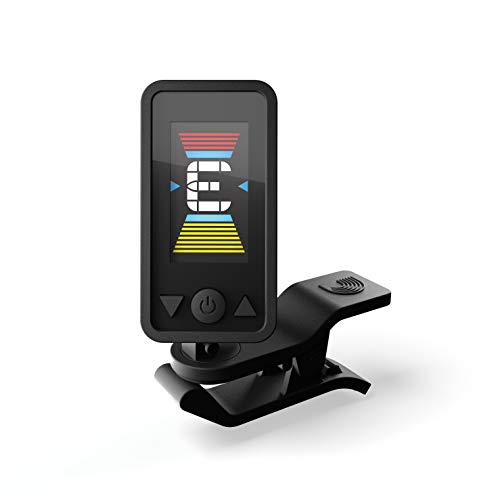
- 435–450 Hz calibration range
- Full-color vertical display
- Strong clamp with dual swivels
Best For: Flexible everyday bass tuning
Stage-Ready Pedal Tuning
Donner DT-1 Chromatic Tuner Pedal
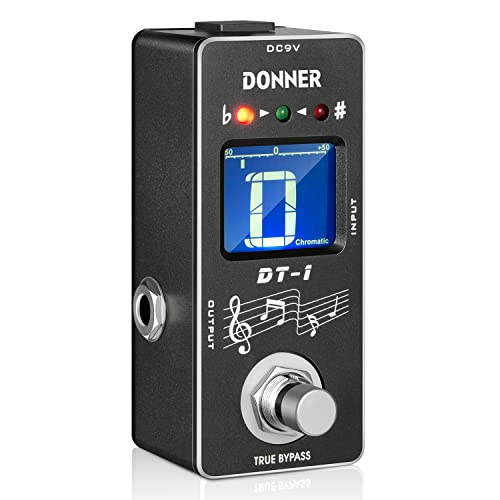
- A0–C8 range covers bass and guitar.
- Strobe mode offers stated ±1-cent accuracy.
- Requires a 9V adapter; no battery compartment.
Best For: Pedalboard users who need muting while tuning
Rechargeable Headstock Convenience
D'Addario Eclipse Rechargeable Clip-On Tuner

- Up to 24 hours of tuning per charge.
- Full-color screen with dual-swivel positioning.
- Adjustable calibration from 435–450Hz.
Best For: Players wanting a flexible rechargeable clip-on tuner
Multi-Instrument Clip-On Value
Ranch Chromatic Clip-On Tuner for Bass
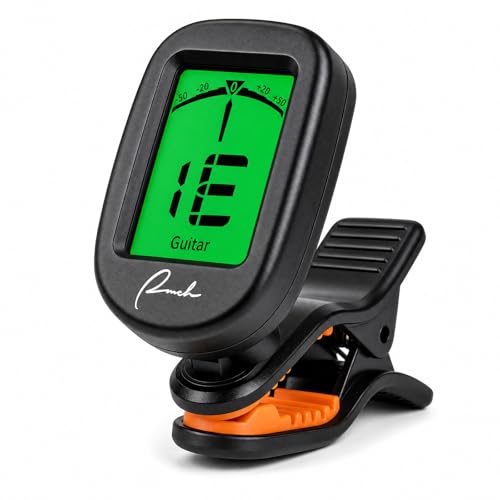
- Includes dedicated Bass mode and chromatic tuning.
- Vibration sensor is suited to noisy environments.
- Comes with an installed CR2032 battery.
Best For: Players tuning bass and multiple string instruments
Reliable Fender Pick

- Chromatic tuner for bass, guitar, and more
- Dual hinges plus backlit LCD display
- CR2032 battery included
Best For: Players wanting a recognizable, easy-to-read clip-on tuner
Budget-Friendly Choice

- Vibration sensor supports noisy environments
- 360-degree adjustable viewing screen
- Auto shutoff after three minutes
Best For: Affordable everyday tuning across several stringed instruments
Rechargeable Upgrade
New Bee GT30 Color-Screen Tuner

- USB-C rechargeable battery lasts up to 10 hours
- Color display and 360-degree rotation
- Supports bass, guitar, cello, and open tuning
Best For: Players seeking rechargeable power and broad tuning support
Best Budget Clip-On – Snark SN5X
If you want straightforward guitar tuners for bass guitars, the Snark SN5X offers a compact clip-on design with a full-color display and tuning modes tailored to guitar and bass. Its headstock clip can be positioned on either the front or back for flexible viewing.
Best For: Bassists who want an affordable, easy-to-read clip-on tuner for practice and everyday setup.
Pros:
- Full-color display is easy to read.
- Frequency range is tailored to guitar and bass.
- Can be mounted on the front or back of the headstock.
Cons:
- Plastic construction may feel less rugged than a stompbox tuner.
- Its listed features are focused on basic clip-on tuning rather than stage signal control.
The SN5X is a practical choice when portability and simple visual feedback matter more than advanced stage features. Its flexible mounting and bass-focused tuning range make it a convenient everyday option.
Best for Stage Use – BOSS TU-3
Among guitar tuners for bass guitars, the BOSS TU-3 is built for demanding live use. Its stompbox housing, high-visibility 21-segment LED meter, automatic muting, and precise tuning make it a strong fit for stage setups.
Best For: Performing bassists who need silent, highly visible tuning and durable pedal-style construction.
Pros:
- Accurate to plus or minus one cent.
- High-brightness LED meter with adjustable brightness.
- Supports six-string bass, drop tuning, and automatic signal muting.
- Can supply power to up to seven BOSS compact pedals.
Cons:
- Requires a 9-volt power source and is less compact than a clip-on tuner.
- Its corded pedal format may be excessive for casual practice.
The TU-3 is the most performance-oriented option here. Choose it if reliable visibility, silent tuning, drop-tuning support, and integration with a pedalboard are priorities.
Best Multi-Instrument Option – Fender FCT-2
Fender FCT-2 Professional Multi-Instrument Clip-On Tuner for Guitar, Bass, Ukulele, and Violin
Check Price On AmazonThe Fender FCT-2 is a versatile choice among guitar tuners for bass guitars, using instrument vibrations rather than room sound to guide tuning. Dedicated guitar, bass, ukulele, violin, and chromatic modes make it useful for players with multiple instruments.
Best For: Multi-instrument musicians who want one vibration-sensing clip-on tuner with a clear color display.
Pros:
- Dedicated bass mode plus guitar, ukulele, violin, and chromatic modes.
- Vibration sensing works in loud or quiet environments.
- Color LCD needle display provides quick visual feedback.
- Dual-hinge clip fits either side of the headstock.
Cons:
- Plastic construction may not feel as substantial as a pedal tuner.
- The feature set may be more than needed for bass-only players.
The FCT-2 balances flexibility and simplicity well. Its wide B0-to-B7 range, A440 calibration, included CR2032 battery, and adjustable clip make it a convenient all-purpose tuner.
Best Adjustable Clip-On – D'Addario Eclipse
The D’Addario Eclipse is a flexible clip-on option for guitar tuners for bass guitars, combining a large vertical full-color display with a strong clamp. Dual swivels allow positioning on either side of the headstock and support a wide range of viewing angles.
Best For: Bassists who want quick visual tuning with flexible positioning and adjustable calibration.
Pros:
- Wide 435–450 Hz calibration range.
- Vertical full-color screen with flexible viewing angles.
- Strong clamp can mount in different headstock positions.
- Suitable for bass, guitar, and ukulele.
Cons:
- Uses a CR2 battery, which may be less commonly stocked than coin cells.
- It is a clip-on tuner without the automatic muting and pedal integration of a stage tuner.
The Eclipse is a strong everyday pick when screen visibility and mounting flexibility are important. Its adjustable calibration also gives players more control than a fixed-reference clip-on model.
Stage-Ready Pedal Tuning – Donner DT-1 Chromatic Tuner Pedal
For players comparing guitar tuners for bass guitars, the Donner DT-1 is a practical pedalboard option with a broad A0–C8 tuning range, fast tuning response, and a stated accuracy of ±1 cent in strobe mode. Its LED display is designed to remain visible on stages and outdoor performance spaces.
Best For: Electric guitar and bass players who want a pedal-based tuner for rehearsals, gigs, and pedalboard setups.
Pros:
- Supports bass and guitar across a wide A0–C8 range.
- Offers tuning and bypass modes, including signal muting while tuning.
- Fast strobe mode provides stated accuracy of ±1 cent.
- Bright LED indicators and LCD screen are suited to large stages and outdoor venues.
Cons:
- Power adapter is not included.
- There is no battery compartment, so adapter power is required.
- Pedal format is less convenient than a clip-on tuner for quick, cable-free checks.
The DT-1 makes the most sense when you want muting and hands-free operation within a pedalboard. Budget separately for the required 9-volt adapter before using it.
Rechargeable Headstock Convenience – D'Addario Eclipse Rechargeable Clip-On Tuner
The D’Addario Eclipse is a convenient choice among guitar tuners for bass guitars, using a headstock clip, adjustable viewing angles, and a full-color vertical screen. Its rechargeable battery provides up to 24 hours of tuning time per charge, while calibration can be adjusted from 435–450Hz.
Best For: Guitar and bass players who prefer a reusable clip-on tuner with a large, flexible display.
Pros:
- Rechargeable battery provides up to 24 hours per charge.
- Full-color screen and dual swivels support flexible viewing angles.
- Strong clamp can mount in different positions on the headstock.
- Adjustable 435–450Hz calibration supports precise setup preferences.
Cons:
- Requires USB charging rather than a replaceable battery.
- The supplied details list compatibility as guitar, although the product description also says it tunes bass.
- Clip-on operation depends on mounting the tuner to the instrument headstock.
Choose the Eclipse if rechargeable convenience and screen adjustability matter more than a pedal-style signal-muting workflow. Its clamp and swiveling display are useful for left- or right-handed positioning.
Multi-Instrument Clip-On Value – Ranch Chromatic Clip-On Tuner for Bass
The Ranch clip-on is a straightforward pick among guitar tuners for bass guitars, with dedicated guitar and bass modes plus support for ukulele, violin, banjo, mandolin, and chromatic tuning. Its vibration-based piezo sensor is designed to work in noisy environments, and the included CR2032 battery lets you start tuning immediately.
Best For: Players who need one compact clip-on tuner for bass, guitar, and several other string instruments.
Pros:
- Dedicated Bass mode works alongside guitar and other instrument modes.
- Vibration sensing helps maintain readings in noisy rehearsal or performance spaces.
- Rotating, backlit display supports front or rear headstock mounting.
- Includes a CR2032 battery and padded spring clip.
Cons:
- Runs on a replaceable coin-cell battery rather than rechargeable power.
- Its compact display may offer less viewing area than larger tuner screens.
- It is a clip-on design, so it does not provide pedal-style signal muting.
The Ranch is a versatile, low-fuss option for musicians who switch among instruments. Its included battery, dedicated modes, and vibration sensing make it especially practical for lessons, rehearsals, and busy stages.
Reliable Fender Pick – FT-1 Professional Clip-On
The Fender FT-1 Professional is a practical choice when shopping for guitar tuners for bass guitars, especially if you want a familiar brand, a clear display, and flexible positioning. Its chromatic tuning, vibration-based clip-on design, and included battery make it ready for practice or performance.
Best For: Bassists and guitarists who want a compact, easy-to-read tuner with a recognizable Fender build and dual-hinge adjustment.
Pros:
- Works with electric guitar, acoustic guitar, bass, and other instruments.
- Dual-rotating hinges help position the tuner for comfortable viewing.
- LCD backlight and tuning needle make pitch status easy to read; the display turns green when in tune.
- Includes a CR2032 battery and a limited warranty.
Cons:
- Uses a replaceable CR2032 battery rather than rechargeable power.
- Plastic construction may feel less premium than metal-bodied alternatives.
Choose the FT-1 if straightforward operation, flexible placement, and a clear visual readout matter most. It is a well-rounded clip-on option for bass and general stringed-instrument tuning.
Budget-Friendly Choice – Rotatable Clip-On Tuner
Guitar Tuner Clip On 1 Pack Tuners for Acoustic Electric Guitar Bass Ukulele Violin banjo Tuning
Check Price On AmazonThis clip-on model is a simple option for shoppers comparing guitar tuners for bass guitars on a budget. It uses a vibration sensor to detect notes, offers a rotatable screen, and automatically shuts off after three minutes without continual operation.
Best For: Bassists, guitarists, and multi-instrument players who need an affordable, lightweight tuner for everyday practice.
Pros:
- Designed for bass, acoustic and electric guitar, ukulele, violin, banjo, and other stringed instruments.
- Built-in vibration sensing helps it work in noisy surroundings.
- 360-degree rotatable screen supports flexible viewing angles.
- Automatic three-minute shutoff helps conserve battery life.
Cons:
- The supplied notes do not specify battery type or whether a battery is included.
- Plastic construction is functional but not positioned as a premium build.
This tuner makes sense when you want broad instrument compatibility and uncomplicated controls without paying for rechargeable features. Its rotating screen is particularly useful when the clip is attached at an awkward angle.
Rechargeable Upgrade – New Bee GT30 Color-Screen Tuner
The New Bee GT30 stands out among guitar tuners for bass guitars with its vivid color screen, USB-C charging, and rechargeable battery. It supports bass and several other instruments, while its 360-degree screen and padded clamp make it convenient for practice, studio use, or stage setups.
Best For: Players who prefer rechargeable convenience, a bright display, and one tuner that handles bass plus multiple instrument types.
Pros:
- Supports guitar, bass, ukulele, violin, cello, chromatic tuning, and guitar open-tuning detection.
- High-resolution color screen is designed for clear visibility in different lighting.
- 360-degree rotating screen and silicone-padded clamp improve viewing and instrument protection.
- Built-in battery provides up to 10 hours of tuning and charges via USB-C.
Cons:
- Requires charging, so it must be powered up before extended use.
- The supplied notes do not specify charging time or battery replacement options.
The GT30 is the strongest fit if you want to avoid disposable batteries and value a vivid, adjustable display. Its multi-instrument support also makes it useful for players who switch between bass and other stringed instruments.
How We Picked the Best Guitar Tuners for Bass Guitars
We selected models that cover the main ways bassists tune: headstock clip-ons for portability, pedal tuners for live rigs, and versatile chromatic units for players who use multiple instruments. Our comparison focuses on tuning range, display visibility, note detection, power requirements, mounting flexibility, and practical value.
Because bass strings produce lower frequencies than guitar strings, dependable low-note recognition matters. We also considered whether each tuner suits quick checks at home, noisy rehearsal rooms, or hands-free stage use.
Quick Comparison
| Type | Best For | Main Advantage | Potential Trade-Off |
|---|---|---|---|
| Clip-on | Practice and portability | Compact, easy to use, and usually affordable | Can be affected by vibration or poor placement |
| Pedal | Live electric bass | Easy foot control and clear stage visibility | Requires pedalboard space and power |
| Rechargeable clip-on | Frequent everyday use | Reduces disposable battery use | Must be charged before use |
| Multi-instrument | Players with several instruments | Useful across guitar, bass, ukulele, violin, and more | May include features you do not need |
Key Buying Factors for Guitar Tuners for Bass Guitars
Low-Frequency Accuracy
Choose a chromatic tuner that can recognize bass notes consistently, especially if you use lower tunings. A stable reading is more useful than a display that changes rapidly between notes.
Display and Visibility
Bright color screens and large indicators are helpful on dark stages, while a simple, high-contrast display is often sufficient for home practice. Look for viewing angles that work when the tuner is attached to the headstock.
Attachment and Signal Method
Clip-on tuners read instrument vibrations and work without an amplifier, making them convenient for acoustic or unplugged tuning. Pedal tuners receive the bass signal and can mute the output while you tune, which is valuable during performances.
Power and Durability
Check whether the tuner uses replaceable batteries, USB charging, or a standard pedal power supply. For gigging, a secure clip, responsive buttons, and a robust enclosure can matter as much as extra tuning modes.
Who Should Buy Which Guitar Tuners for Bass Guitars?
Choose a clip-on tuner if you want the simplest option for lessons, practice, travel, or occasional adjustments. Models with rotating hinges are especially useful when headstock space or screen positioning is limited.
Choose a rechargeable tuner if you tune frequently and prefer not to keep spare coin-cell batteries available. Confirm the charging connection and battery runtime before relying on it for a performance.
Choose a pedal tuner if you play amplified bass at rehearsals or live shows. Its hands-free operation and signal muting can make stage tuning faster and quieter.
Choose a multi-instrument model if your setup includes guitar, ukulele, violin, or other stringed instruments. Otherwise, prioritize dependable bass detection, clear feedback, and a secure fit over a long list of specialty modes.