Practicing quietly should not mean practicing poorly. The right mute can cut string noise, reduce ringing, and keep your focus on timing, hand position, and clean fretting.
This roundup of guitar practice mute systems highlights the most practical options for home practice, late-night sessions, and low-volume training across acoustic, electric, and bass setups.
Best 10 Guitar Practice Mute Systems Picks for 2026
Best for Fast String Dampening
Gruv Gear Fret Wrap Medium Black

- Quick, tool-free install
- Adjustable damping pressure
- Great for tapping and high-gain cleanup
Best For: Players who want fast, adjustable muting for electric, acoustic, bass, or extended-range guitars.
Best for Quick Tone Dampening

- Simple weave-in installation
- Mellow rubber-bridge-style tone
- Three dampening levels available
Best For: Players who want quick, reversible tone dampening without modifying the guitar.
Best Silent Chord Trainer
Pocket Guitar Chord Practice Tool

- Silent practice for apartments, travel, and office breaks
- Rotating chart covers a wide range of beginner chords
- Steel strings and pocket size make practice feel portable and familiar
Best For: Beginners who need a quiet, portable way to drill chords and finger placement.
Best Wireless Mute-Style Pick

- Silent plug helps prevent pops and buzz
- Up to 98 ft wireless range with about 5 ms latency
- 10-hour rechargeable battery with USB-C
Best For: Players who want a quiet, cable-free practice setup for electric instruments and bass.
Best for Tremolo Practice
Rosette TremoloMute Classical Guitar Practice Tool

- Targets tremolo and rasqueado drills
- Quick, seconds-long installation
- Safe for any guitar finish
Best For: Classical guitar players focused on tremolo and rasqueado technique work.
Best for String Control
- Cuts string noise and overtones fast
- Adjustable damping for different playing styles
- Fits electric, acoustic, bass, and extended-range guitars
Best For: Players who want an easy, adjustable string dampener for cleaner tone and practice.
Best for Quiet Practice
Guitar String Mute Silencer Practice Tool

- Cuts down string resonance and overtones.
- Soft material is designed to be instrument-friendly.
- Quick clip-on setup for practice sessions.
Best For: Players who want an easy, low-cost mute strap for quieter practice at home.
Best for Quiet Late-Night Practice
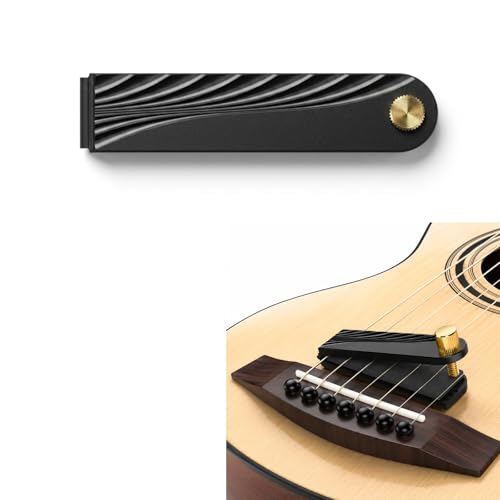
- Reduces overtone noise and ringing for quieter practice
- Soft fiber build aims to protect strings and fretboard
- Compact, tool-free design for fast setup and storage
Best For: Players who need a lightweight, tool-free mute for quiet home practice and quick setup.
Best for Quick Practice Setup
2PCS Guitar String Mute Noise Damper

- Slides on in seconds for hassle-free practice
- Soft felt helps protect strings and fretboard
- Cuts down overtones and string noise effectively
Best For: Players who want a simple, low-cost mute for quiet practice on acoustic guitar, bass, or 6-string.
Best for Easy Setup
Pack of 2 Guitar Bass String Mute Clamps

- No-tools clamp-on installation
- Felt cushioning helps protect strings and fretboard
- Reduces overtones and unwanted resonance
Best For: Players who want a quick, portable muting tool for practice across guitar types.
Best for Fast String Dampening – Gruv Gear Fret Wrap Medium Black
If you want a simple, reliable way to clean up string noise, the Gruv Gear Fret Wrap is a strong pick for guitar practice mute systems. It slips on quickly, reduces overtones right away, and helps keep recordings, tapping lines, and high-gain practice more controlled without changing your setup.
Best For: Players who want fast, adjustable muting for electric, acoustic, bass, or extended-range guitars.
Pros:
- Installs in seconds with no tools or permanent modification.
- Adjustable pressure lets you fine-tune how much damping you want.
- Works well for tapping, legato, sweep picking, and studio cleanup.
- Compatible with a wide range of guitars and basses, including 7-string and 5-string models.
Cons:
- Not a silent practice solution for the whole instrument, only a string dampener.
- Medium size may not be ideal for every neck width or playing position.
- Some players may prefer a more permanent muting system.
For players comparing guitar practice mute systems, this is one of the easiest ways to reduce unwanted noise while keeping your instrument playable and responsive. It is especially useful if you need quick setup, flexible damping, and a clean result for both practice and recording.
Best for Quick Tone Dampening – Ernie Ball Mute Noodle Guitar
If you want a simple, no-modification way to change the feel and sound of your instrument, the Ernie Ball Mute Noodle is a smart option to consider for guitar practice mute systems. It weaves between the strings at the bridge and delivers a softer, more muted tone that works well for quiet practice or exploring a rubber-bridge-style sound.
Best For: Players who want an easy-to-use mute accessory that changes tone without permanent setup or hardware changes.
Pros:
- Easy to install and remove in seconds
- Creates a mellow, muted rubber-bridge-style tone
- Three sizes offer different levels of dampening
- No permanent modification required
Cons:
- Focuses on tonal dampening more than total volume reduction
- Effect may not suit players who want a completely silent practice solution
For players shopping guitar practice mute systems, this is a lightweight and practical pick if you mainly want fast setup and a warm, subdued sound rather than a full isolation solution.
Best Silent Chord Trainer – Pocket Guitar Chord Practice Tool
If you want a compact way to work on finger placement without making noise, this pocket trainer is a practical pick among guitar practice mute systems. It gives beginners a repeatable surface for chord shapes, muscle-memory drills, and timing practice anywhere you can’t use a full guitar.
Best For: Beginners, students, and commuters who want silent chord practice with a realistic string feel.
Pros:
- Silent, no-sound design is ideal for apartments, travel, and shared spaces
- Rotating chord chart displays a wide range of common chord shapes
- Real steel strings help the practice feel transfer to an actual guitar
- Compact size, carry pouch, and included battery make it easy to use right away
Cons:
- Does not produce tone, so it can’t replace real strumming or picking practice
- Limited to chord fingering and timing drills rather than full guitar technique
- Not tunable, which may matter if you want a more guitar-like setup
As a practice aid, it fits well into guitar practice mute systems when the main goal is quiet repetition and finger accuracy. It won’t teach sound production, but it can speed up chord memorization and hand comfort before moving back to a full instrument.
Best Wireless Mute-Style Pick – FW2D Wireless Guitar System
If you want guitar practice mute systems that also keep you mobile, the FW2D Wireless Guitar System is a practical choice. It combines a silent-plug design with 2.4 GHz wireless transmission, so you can change instruments quietly and move around without a cable getting in the way.
Best For: Players who want a quiet, cable-free practice setup for electric instruments, bass, and other 6.35mm-jack gear.
Pros:
- Patented silent plug helps reduce pops and buzz during plug-in and unplug moments.
- Low-latency wireless connection with up to 98 ft range for flexible practice or rehearsal.
- 10-hour battery life with USB-C charging makes it easy to use between sessions.
- Supports multiple channel groups and up to 4 devices without cross-talk.
Cons:
- Not a true acoustic sound mute; it is a wireless system, not a physical practice mute.
- 2.4 GHz performance can still vary in crowded wireless environments.
For players comparing guitar practice mute systems, this stands out more for quiet switching and cable-free convenience than for actual sound reduction. It’s a useful add-on if you need a cleaner, less disruptive practice or rehearsal setup.
Best for Tremolo Practice – Rosette TremoloMute Classical Guitar Practice Tool
Rosette TremoloMute Classical Guitar Tremolo-Rasqueado Practice Tool - String Mute
Check Price On AmazonIf you’re comparing guitar practice mute systems for classical technique work, the Rosette TremoloMute is a simple add-on that focuses on tremolo and rasqueado control rather than full-room sound reduction. It installs quickly, is safe for most finishes, and can help you practice right-hand articulation without changing your setup.
Best For: Classical guitar players who want a fast, low-fuss mute tool for tremolo and rasqueado drills.
Pros:
- Designed specifically for tremolo and rasqueado practice
- Installs in seconds with no complicated setup
- Safe for any guitar finish
- Includes instructions and a study guide
Cons:
- Geared mainly toward classical guitar techniques
- Not a full acoustic volume-reduction solution
- Less useful if you need a broader all-purpose mute system
As a niche practice accessory, the TremoloMute makes the most sense for players who want targeted technique work instead of a general-purpose mute. Within guitar practice mute systems, it stands out as a focused training aid for improving speed, consistency, and right-hand precision.
Best for String Control – Gruv Gear Fret Wrap
If you want one of the most practical guitar practice mute systems for cleaner playing, the Gruv Gear Fret Wrap is a simple way to cut down string noise, overtones, and sympathetic ringing. It is especially useful for recording, tapping, and high-gain practice where extra damping can make your parts sound tighter and more controlled.
Best For: Players who want an easy, adjustable string dampener for electric, acoustic, bass, and extended-range instruments.
Pros:
- Reduces unwanted string noise and overtones quickly
- Adjustable tension gives you lighter or heavier muting
- Works across electric, acoustic, bass, and extended-range guitars
- Installs in seconds with no tools or permanent changes
Cons:
- Not a silent practice solution; it only dampens open-string noise
- May need repositioning for different neck widths or setups
This is a strong pick if you want a fast, low-fuss accessory that improves clarity without changing your instrument. For players comparing guitar practice mute systems, it stands out for versatility, consistent damping, and how quickly it can tighten up your tone.
Best for Quiet Practice – Guitar String Mute Silencer Practice Tool
Guitar String Mute Silencer Practice Tool Black Built In Felt Material for Quiet Practice
Check Price On AmazonIf you want a simple way to cut string noise while you work on chord changes, scales, or timing, this guitar practice mute system is built for low-volume home use. It reduces resonance and overtones so you can practice more comfortably without bothering people nearby.
Best For: Players who need an easy, low-cost mute strap for quiet practice on 6-string guitars, bass, and similar stringed instruments.
Pros:
- Helps reduce string resonance and unwanted overtones.
- Soft felt/cotton-style material is designed to be gentle on the instrument.
- Simple clip-on design makes setup quick for practice sessions.
- Works with guitars, basses, and other stringed instruments.
Cons:
- It mutes the strings, so it is not meant for normal-volume playing.
- Fit and damping feel may vary depending on your instrument and setup.
This is a straightforward pick if you mainly want quieter rehearsal time rather than a more advanced electronic solution. Among guitar practice mute systems, it makes the most sense for players who want a fast, portable, and inexpensive way to tame noise.
Best for Quiet Late-Night Practice – Milisten String Dampener
If you want one of the simplest guitar practice mute systems for knocking down extra ring and vibration, this Milisten string dampener is a practical pick. It’s designed to reduce unwanted noise on acoustic, electric, bass, and other string instruments while staying easy to slip on and remove during everyday practice.
Best For: Players who need a lightweight, tool-free mute for quiet home practice and quick setup.
Pros:
- Helps cut overtone noise and sympathetic vibration for a cleaner muted sound.
- Soft fiber construction is designed to be string-safe and easy on the instrument.
- Compact size makes it easy to store in a gig bag or case.
- Works across multiple stringed instruments, including guitar and bass.
Cons:
- It mutes rather than fully silencing the instrument.
- Fit and damping strength may vary by neck width and string spacing.
For players comparing guitar practice mute systems, this model stands out for its simplicity and portability more than advanced features. It’s a solid everyday helper if you mainly want less noise, fast on/off use, and a muted practice feel without adding a bulky accessory.
Best for Quick Practice Setup – 2PCS Guitar String Mute Noise Damper
If you want a simple way to cut down string noise during late-night sessions, this pick fits the role well in guitar practice mute systems. It slides on quickly, uses soft felt materials, and helps tame overtones without any tools or permanent setup.
Best For: Players who want an inexpensive, easy-on/easy-off mute for quiet practice on acoustic guitar, bass, or a 6-string.
Pros:
- Fast to install with no tools or special mounting required
- Soft felt construction helps avoid scratches on strings and fretboard
- Reduces unwanted resonance and overtones while practicing
- Works with a range of 4-6 string instruments
Cons:
- Noise reduction is helpful, but not as quiet as larger dedicated muting systems
- Simple design may feel basic for players wanting a more adjustable solution
- Best suited to practice use rather than performance-grade muting
Overall, this is a practical low-friction option for players who need guitar practice mute systems that are quick to use and easy to carry. It’s a straightforward choice when convenience matters more than advanced features.
Best for Easy Setup – Pack of 2 Guitar Bass String Mute Clamps
If you want a simple way to quiet excess ringing during practice, this option fits well among guitar practice mute systems. It clamps on quickly, adds a felt cushion to help protect the instrument, and reduces overtones so you can focus on cleaner playing.
Best For: Players who want a quick, no-tools muting solution for electric, acoustic, classical guitar, or bass practice.
Pros:
- Fast to install with no special tools or setup
- Soft felt cushioning helps guard fretboard and strings
- Helps cut down unwanted overtones and resonance
- Works across multiple stringed instruments
Cons:
- Not a full substitute for silent practice headphones or digital muting gear
- May feel more limited for advanced palm-muting or studio-style control
For players building out practical guitar practice mute systems, this is a straightforward, portable accessory that keeps things simple and effective. It’s especially useful when you want less noise without committing to a more complex setup.
How We Picked the Best Guitar Practice Mute Systems
We looked for Guitar Practice Mute Systems that are easy to use, compatible with common instrument types, and effective at reducing unwanted string noise without making the instrument feel awkward. Priority went to products that balance quieting performance, fit, durability, and convenience.
Quick Comparison
Some options are simple felt-based string dampers for reducing open-string ring, while others are training accessories designed to help with chord shapes and finger placement. Wireless systems serve a different purpose: they reduce cable clutter and support low-friction practice setups, though they are not true string mutes.
Key Buying Factors for Guitar Practice Mute Systems
Instrument Compatibility
Check whether the mute is intended for acoustic, electric, bass, or classical guitar. A model that works well on one instrument may not fit the string spacing or bridge design of another.
Mute Style and Goal
Decide what you want to reduce: sympathetic string vibration, fret noise, string ringing, or general volume during practice. Felt clamps, fret wraps, and specialized classical guitar tools all serve slightly different purposes.
Ease of Installation
The best Guitar Practice Mute Systems should be quick to attach and remove, especially if you switch between quiet practice and normal playing often. A secure fit matters, but so does speed.
Playability Impact
A good mute should lower noise without creating excessive tension or making the instrument feel unnatural. If your practice goal is technique work, choose a design that preserves normal left-hand and right-hand movement as much as possible.
Portability and Durability
If you practice on the go, compact and lightweight designs are easier to carry. Materials like felt, foam, and reinforced bands can improve longevity when used regularly.
Who Should Buy Which Guitar Practice Mute Systems?
Beginners who want cleaner practice habits may prefer simple, affordable mute tools that make it easier to hear mistakes. Electric and bass players often benefit from versatile dampers that reduce ringing during scale work and recording prep. Classical and acoustic players should look for purpose-built mute solutions that match their instrument style and keep setup straightforward.
If you want a low-noise practice routine that still feels musical, focus on fit, comfort, and the specific kind of dampening you need. The best choice is the one that helps you practice more often with less distraction.