If you’ve ever wanted to explore the world of music through wind instruments, you’re in the right place. Electronic wind instruments offer a unique blend of versatility and ease, perfect for beginners. With options like the Vangoa EWI-100 and the KONIX DC02, you’ll find a range of sounds to experiment with. But how do you choose the right one for your musical journey? Let’s uncover the top picks that cater to your needs.
Vangoa EWI-100 Portable Mini Digital Electronic Wind Instrument Synthesizer

The Vangoa EWI-100 Portable Mini Digital Electronic Wind Instrument Synthesizer is an excellent choice for beginners, offering a user-friendly design that caters to both kids and adults. With 10 built-in tones, you can explore sounds from saxophones to violins, making it versatile for any style. Its rechargeable battery provides up to 4 hours of playtime, and the compact design guarantees you can practice anywhere. Enjoy flexible playing with adjustable blowing sensitivity and two fingerstyle modes. Plus, the included accessories, like washable nozzles and a portable case, enhance your experience. Connect via MIDI for even more sound options!
Best For: The Vangoa EWI-100 is best for beginners, kids, and adults looking for a versatile and portable electronic wind instrument.
Pros:
- 10 built-in tones provide a wide range of musical options.
- Rechargeable battery offers up to 4 hours of playtime for convenient use.
- Compact design makes it easy to transport for practice and performances.
Cons:
- Limited battery life may require frequent recharging during extended sessions.
- MIDI connectivity may require additional setup for some users.
- Sound quality may not match that of traditional wind instruments.
EX Electric Digital Wind Instrument – Electric Saxophone

For aspiring musicians enthusiastic to explore a variety of sounds, the EX Electric Digital Wind Instrument—an innovative electric saxophone—stands out as an ideal choice. With 12 onboard instrument voices and three fingering modes, you can easily switch between styles. Its three-octave range and automatic vibrato feature add depth to your performance. You’ll love the adjustable blow sensitivity and reverb effects, allowing you to shape your sound. Plus, Bluetooth MIDI connectivity lets you link to music apps. Lightweight and portable, it includes everything you need, making it perfect for students and music lovers alike. Enjoy hours of playtime with its rechargeable battery!
Best For: The EX Electric Digital Wind Instrument is best for students, beginners, and music lovers of all ages looking to explore and enjoy a variety of musical sounds.
Pros:
- Versatile Sound Options: Offers 12 different instrument voices and three fingering modes for diverse musical expression.
- User-Friendly Features: Includes adjustable blow sensitivity and reverb effects, enhancing the playing experience.
- Portable and Convenient: Lightweight design with built-in speaker, rechargeable battery, and complete accessory kit for easy use anywhere.
Cons:
- Learning Curve: Beginners may require time to master the various fingering modes and sound controls.
- Battery Dependency: Requires charging, which may limit playtime if not managed properly.
- Sound Quality Limitations: While versatile, the digital sound may not fully replicate the richness of traditional acoustics.
KONIX DC02 Pro Digital Wind Instrument for Beginners

Looking for an ideal starting point in your musical journey? The KONIX DC02 Pro Digital Wind Instrument is perfect for beginners like you. With 10 built-in tones, including saxophones, clarinet, and flute, you’ll have plenty of options to explore. Its MIDI connectivity lets you integrate easily with your favorite apps on Android, iOS, macOS, or Windows. You’ll appreciate the adjustable blowing sensitivity and responsive touch sound hole, enhancing your playability. Plus, the built-in rechargeable battery offers 4 hours of playtime. With removable silicone nozzles and a portable case, it’s a fantastic gift for anyone enthusiastic to start playing!
Best For: Beginners looking to start their musical journey with a versatile and user-friendly wind instrument.
Pros:
- 10 built-in musical tones offer a variety of sounds to explore, from saxophones to flutes.
- MIDI connectivity allows seamless integration with various apps across multiple platforms.
- Portable design with a rechargeable battery and removable nozzles makes it easy to practice anywhere.
Cons:
- Limited playtime of 4 hours may require frequent recharging during extended use.
- May lack the authentic feel of traditional wind instruments for experienced players.
- The sensitivity adjustment could take time for beginners to master effectively.
Electronic Saxophones with Built-in Musical Tones & MIDI Connectivity

Designed with beginners in mind, electronic saxophones featuring built-in musical tones and MIDI connectivity offer an accessible way to explore various styles of music. You’ll enjoy 10 professional sounds, including Alto Saxophone and Flute, providing a rich palette for your musical creations. With two fingering modes and adjustable blowing sensitivity, you can tailor your playing experience. The 800mAh rechargeable battery guarantees up to four hours of playtime, perfect for practice or performances. Plus, MIDI connectivity lets you connect to apps or DAW software, turning your sax into a versatile electronic music controller. Start your musical journey today!
Best For: Beginners and professionals looking for a versatile and portable instrument to explore various musical styles.
Pros:
- Offers 10 built-in professional sounds, enhancing musical creativity.
- Lightweight and portable with up to 4 hours of playtime on a single charge.
- MIDI connectivity allows for integration with apps and DAW software, expanding sound possibilities.
Cons:
- May require a learning curve for those unfamiliar with electronic instruments.
- Limited to the built-in sounds without additional sound packs.
- Battery life may be insufficient for extended performances without recharging.
Vangoa MAE-02 MIDI EWI Electronic Wind Instrument

The Vangoa MAE-02 MIDI EWI Electronic Wind Instrument is an excellent choice for beginners enthusiastic to explore the world of electronic wind instruments. Weighing just 2.79 pounds, it’s portable and perfect for outdoor performances. With 35 tones replicating instruments from pianos to bagpipes, you’ll find endless creative possibilities. You can switch between three fingerings—hulusi, saxophone, and flute—tailoring your sound to various genres. Plus, its Bluetooth connectivity and built-in speaker enhance your practice sessions. A rechargeable battery offers up to four hours of playtime, making this a reliable companion on your musical journey.
Best For: Beginners looking to explore electronic wind instruments with a portable and versatile option.
Pros:
- Offers 35 tones that replicate a variety of instruments, providing diverse musical opportunities.
- Features three different fingerings, allowing users to adapt to different musical styles.
- Bluetooth connectivity and a built-in speaker enhance convenience for practice and performance.
Cons:
- Battery life is limited to up to four hours, which may not be sufficient for extended sessions.
- Customer reviews indicate a mixed satisfaction level with an average rating of 3.8 out of 5 stars.
- May not meet the advanced needs of professional musicians seeking more sophisticated features.
AP 300 Pro Electronic Wind Instrument with Bluetooth

For those new to music, the AP 300 Pro Electronic Wind Instrument with Bluetooth stands out as an ideal choice, blending user-friendly features with advanced technology. With 108 global tones and an LCD display, it’s easy to navigate your sound preferences. The dual-mode Bluetooth lets you connect for backing tracks without any latency, enhancing your creativity. Plus, the built-in OTG recording captures high-quality sound while minimizing noise. You’ll enjoy up to six hours of battery life for outdoor performances, and the eight fingering options make it simple for you to play without relearning. Immerse yourself in your musical journey confidently!
Best For: The AP 300 Pro Electronic Wind Instrument is best for beginners and aspiring musicians looking for an intuitive and versatile instrument to enhance their musical journey.
Pros:
- Easy navigation with an LCD display and 108 global tones.
- Dual-mode Bluetooth connectivity for seamless backing track integration.
- Long battery life of up to six hours supports outdoor performances.
Cons:
- Limited advanced features may not satisfy professional musicians.
- The need for some basic musical knowledge to fully utilize the fingering options.
- OTG recording may require compatible devices for optimal use.
Vangoa MAE-02 Digital Wind Instrument Synthesizer

Releasing creativity in sound, the Vangoa MAE-02 Digital Wind Instrument Synthesizer is a fantastic choice for beginners enthusiastic to explore music. Weighing just 2.2 pounds and featuring a rechargeable battery, it’s perfect for on-the-go musicians. With 35 tones mimicking various instruments, you can experiment with unique sounds. The three fingerings—Hulusi, saxophone, and flute—allow you to play in different styles. Its touch-sensitive buttons make changing tones effortless, while Bluetooth connectivity lets you connect to mobile devices. Plus, the built-in speaker and headphone jack enhance your practice sessions, making this instrument a versatile addition to your musical journey.
Best For: The Vangoa MAE-02 Digital Wind Instrument Synthesizer is best for beginner musicians looking to explore various musical styles and sounds in a portable format.
Pros:
- Offers 35 tones replicating a wide range of instruments, enhancing creative possibilities.
- Lightweight and rechargeable, making it ideal for travel and outdoor performances.
- Bluetooth connectivity and built-in speaker provide versatile practice and performance options.
Cons:
- Battery life lasts only up to 4 hours, which may be limiting for extended sessions.
- Customer reviews reflect a moderate satisfaction level with an average rating of 3.4 out of 5 stars.
- Limited warranty information may concern potential buyers seeking assurance.
Electric Saxophone Digital Wind Instrument Set

Ideal for both beginners and professionals, the Electric Saxophone Digital Wind Instrument Set stands out with its MIDI connectivity, allowing you to connect effortlessly to various devices like Android, iOS, macOS, and Windows. With 10 musical tones, two fingering modes, and three sensitivity settings, you can customize your sound and playing style. Plus, its one-key octave shifting offers even more versatility. The high-capacity lithium battery guarantees up to four hours of playtime, perfect for extended practice sessions. Enjoy quiet practice with the detachable mouthpiece and headphone connectivity, making it an ideal choice for late-night rehearsals or learning environments.
Best For: The Electric Saxophone Digital Wind Instrument Set is best for musicians of all skill levels, from beginners to professionals, looking for a versatile and portable instrument.
Pros:
- MIDI Connectivity: Easily connects to various devices and apps, allowing for a wide range of sounds and functionalities.
- Customizable Features: Offers 10 musical tones, two fingering modes, and three sensitivity settings for personalized playing experiences.
- Quiet Practice: Includes a detachable mouthpiece and headphone connectivity, making it perfect for practice without disturbing others.
Cons:
- Limited Battery Life: While it offers up to four hours of playtime, some users may find this insufficient for longer sessions.
- Learning Curve: Beginners may need time to adjust to the digital features and fingering modes compared to traditional saxophones.
- Price Point: The cost may be higher than entry-level traditional saxophones, which could be a consideration for budget-conscious beginners.
Mini Saxophone Digital Wind Instrument Set

The Mini Saxophone Digital Wind Instrument Set stands out as an excellent choice for beginners of all ages, from students to adults and even teachers. This rechargeable instrument features a built-in 2W HiFi speaker and offers 10 selectable tones, including saxophones and clarinets. You can connect it wirelessly via MIDI to various devices, making it versatile for practice and performance. With touch-sensitive buttons, three blowing sensitivities, and 12 accompaniments, it’s user-friendly. Its lightweight design and 800mAh battery provide up to 4 hours of playtime, ensuring you can take your music anywhere. Enjoy the journey of learning with this fantastic instrument!
Best For: Beginners of all ages, including students, teenagers, teachers, adults, and the elderly who want to learn and enjoy playing music.
Pros:
- Compact and lightweight design makes it easy to carry and play anywhere.
- Offers a variety of tones and accompaniments, enhancing the musical experience.
- Rechargeable battery provides up to 4 hours of playtime, perfect for extended practice sessions.
Cons:
- Limited to 10 selectable tones, which may not satisfy advanced players.
- The plastic body may not offer the same durability as traditional instruments.
- Wireless connectivity may require compatible devices or software for full functionality.
Eastar Digital Woodwind Electric Saxophone for Beginners (EDA-100)
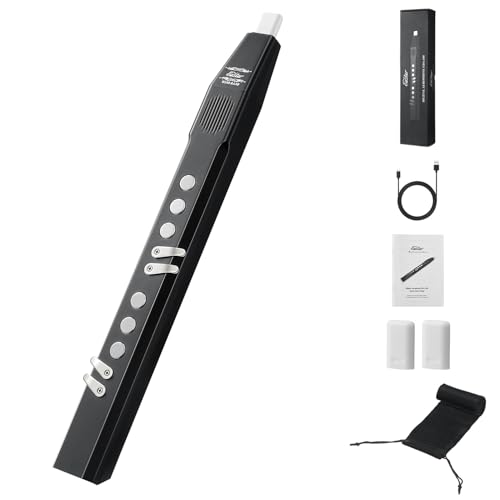
For aspiring musicians seeking a versatile introduction to wind instruments, the Eastar Digital Woodwind Electric Saxophone (EDA-100) stands out with its impressive array of 27 tones, allowing you to explore sounds from saxophones to flutes. Its ergonomic design makes it suitable for all ages, while adjustable airflow control and dual fingering modes enhance playability. With a lightweight build and built-in Hi-Fi speaker, you can easily practice anywhere for up to five hours. Plus, it supports MIDI transmission for added versatility. With included accessories and dedicated customer support, the EDA-100 is a fantastic choice to kickstart your musical journey.
Best For: Aspiring musicians and beginners looking for a versatile and user-friendly introduction to wind instruments.
Pros:
- High-fidelity sound quality with 27 tones and 30 reverb effects for creative expression.
- Lightweight and portable design, making it easy to practice anywhere for up to 5 hours.
- Ergonomic build with adjustable airflow control and dual fingering modes for enhanced playability.
Cons:
- Limited to digital sounds, which may not appeal to those seeking an acoustic experience.
- Battery life may not be sufficient for extended practice sessions without recharging.
- Some users may find the touch buttons less tactile compared to traditional instrument keys.
Factors to Consider When Choosing Electronic Wind Instruments for Beginners
When you’re choosing an electronic wind instrument, several factors can make a big difference in your experience. Consider the variety of sounds, ease of play, and how portable the instrument is for your lifestyle. You’ll also want to think about connectivity options and battery life to guarantee it fits your needs.
Instrument Variety and Tones
Choosing the right electronic wind instrument means considering the variety of built-in tones that can enhance your musical experience. Many models offer between 10 to 35 different sounds, replicating traditional instruments like saxophones, flutes, and trumpets. Look for instruments with multiple fingering modes, such as flute and saxophone, so you can explore various playing styles and genres. Adjustable blowing sensitivity levels are also essential; some instruments let you choose from up to five levels for dynamic sound control. Plus, the ability to connect via MIDI can greatly expand your tonal palette, giving you access to a rich array of sounds and effects from music apps. Features like accompaniment tracks can make your practice sessions more engaging and enjoyable.
Playability and User Experience
Playability and user experience are essential factors to contemplate for beginners selecting an electronic wind instrument. Look for models that offer multiple fingering modes, as they accommodate different playing styles and simplify learning. Instruments with adjustable blowing sensitivity levels let you control dynamics and expression, enhancing your overall playing experience. User-friendly controls, like touch-sensitive buttons, make it easy to switch tones and adjust settings quickly. A lightweight and ergonomic design guarantees comfort during practice, allowing you to play for extended periods without strain. Additionally, built-in speakers and headphone jacks provide flexibility for both public performances and private practice, catering to your learning environment preferences. Choosing an instrument with these features will boost your confidence and enjoyment as you commence your musical journey.
Portability and Design Features
Portability and design features are vital for beginners looking to select an electronic wind instrument. You’ll want to take into account the weight and dimensions; a lightweight design makes it easier to practice and transport. Look for instruments with built-in rechargeable batteries that last at least four hours, ensuring you can enjoy extended practice sessions without frequent recharging. A compact size is important if you plan to use the instrument in various locations, like classrooms or outdoors. Additionally, instruments with detachable mouthpieces improve hygiene and simplify cleaning, which is beneficial as you learn proper techniques. Finally, having a headphone jack allows for private practice, helping you focus without disturbing others while you develop your skills.
Connectivity Options and Compatibility
As you explore your options for electronic wind instruments, connectivity options and compatibility become significant factors to evaluate. Look for instruments that offer MIDI connectivity to seamlessly integrate with devices like Android, iOS, macOS, and Windows, expanding your sound capabilities. Bluetooth MIDI support is a bonus, enabling wireless connections to music apps for added versatility during practice and performances. Don’t forget to check for headphone jacks for private practice and speaker outputs for a more traditional experience. Additionally, models with pitch transpose functions allow you to shift notes easily, making it simpler to play along with other instruments. Verify compatibility with popular digital audio workstations (DAWs) and music software for a richer creative expression.
Battery Life and Rechargeability
When choosing an electronic wind instrument, battery life and rechargeability are essential factors that can greatly impact your playing experience. Many instruments provide around 4 to 5 hours of playtime on a full charge, perfect for practice and performances without constant recharging. Look for models with built-in rechargeable batteries, typically ranging from 800mAh to 1200mAh, which strike a balance between portability and longevity. These options also eliminate the need for disposable batteries, making them more environmentally friendly and cost-effective. Some instruments even offer fast charging capabilities, allowing you to quickly recharge between sessions—ideal for busy schedules. Understanding these features helps you plan your practice sessions effectively, ensuring you’ve got enough power for extended playing time.
Accessories and Additional Features
Choosing the right electronic wind instrument goes beyond just battery life and rechargeability. You’ll want to look for models with removable and washable mouthpieces for easy hygiene and maintenance. Instruments equipped with built-in rechargeable batteries should ideally provide at least four hours of playtime, allowing for uninterrupted practice. Consider options that offer various connectivity features like MIDI and Bluetooth, which can help you integrate with music apps and devices, revealing new creative possibilities. A complete accessory kit—including earphones, USB cables, and carrying cases—enhances portability and convenience. Additionally, some instruments come with adjustable blowing sensitivity settings and touch-sensitive buttons, making them more responsive and easier to play, especially for beginners like you.