The right microphone can make your stream sound more polished, intelligible, and consistent—even in a room with keyboard noise, fans, or untreated walls. Dynamic microphones are especially useful for streamers who want focused voice capture without picking up every surrounding sound.
We selected 10 USB, XLR, and hybrid models for different budgets and workflows, including beginner-friendly gaming microphones and broadcast-grade options. Use the guide below to narrow the choices by connectivity, software, sound control, and upgrade potential.
Best 10 Dynamic Microphone for Streaming Picks for 2026
Best Hybrid Pick

- USB and XLR connectivity
- Tap-to-mute and headphone monitoring
- Cardioid pickup with optional RGB
Best For: Beginner streamers planning an eventual XLR upgrade
Best for Vocal Isolation
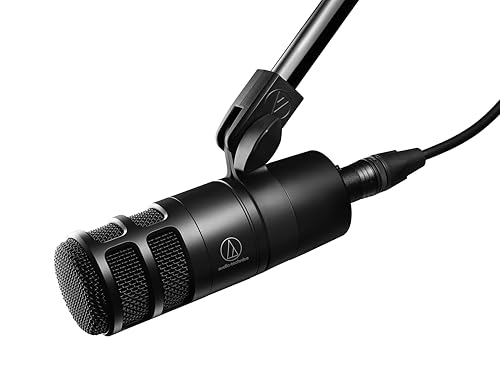
- Hypercardioid pattern limits room pickup
- Integrated shock mount
- Multistage pop filtering
Best For: Spoken-word creators in untreated or noisy rooms
Best Value XLR Broadcast Mic

- Broadcast-tuned dynamic capsule
- Internal pop filter and shock mounting
- Durable all-metal construction
Best For: XLR-equipped streamers focused on spoken voice
Best Professional Upgrade

- Warm, balanced vocal reproduction
- Cardioid pickup with strong isolation
- Rugged shielded XLR design
Best For: Experienced creators with an interface offering ample gain
Broadcast-Ready Choice

- Speech-optimized capsule with warm, clear sound
- Room-noise rejection for cleaner voice capture
- XLR operation without a signal booster
Best For: Streamers using an XLR interface or preamp
Feature-Rich Upgrade

- USB-C and XLR connectivity
- Auto Level and real-time denoising
- LED touch controls with tap-to-mute
Best For: Streamers wanting advanced processing and flexible connectivity
Complete Starter Kit

- USB/XLR connectivity with cardioid pickup
- Software EQ, compression, limiting, and RGB control
- Includes boom arm, shock mount, and USB cable
Best For: New streamers building a flexible USB setup
Versatile USB/XLR Pick

- USB and XLR connectivity
- Cardioid pickup with noise-reducing accessories
- USB mute, gain, and headphone controls
Best For: Streamers and podcasters wanting flexible connection options
Wireless Creator Choice
MAONO PD200W Hybrid Wireless Mic

- Wireless, USB, and XLR connectivity
- Up to 60 hours of battery life
- Supports two wireless mics on one receiver
Best For: Mobile creators and flexible podcast or streaming setups
Gaming Setup Kit

- Includes boom arm and C-clamp
- USB/XLR connectivity for flexible setups
- RGB, mute, gain, and headphone controls
Best For: Gamers and streamers building a complete microphone setup
Best Hybrid Pick – FIFINE AmpliGame AM8
If you want a flexible dynamic microphone for streaming, the FIFINE AmpliGame AM8 combines plug-and-play USB operation with an upgradeable XLR connection. Its cardioid pickup pattern, tap-to-mute control, headphone monitoring, gain knob, and optional RGB make it especially practical for gaming setups.
Best For: Beginner streamers who want USB convenience now and an XLR upgrade path later.
Pros:
- USB and XLR connectivity support different recording setups.
- Tap-to-mute, headphone monitoring, and a dedicated gain control simplify live use.
- Cardioid pickup helps reject unwanted off-axis noise.
- RGB lighting and multiple function controls are available in USB mode.
Cons:
- An XLR cable is not included.
- RGB and function controls are unavailable when using XLR.
- The microphone works best when positioned 2 to 6 inches from the speaker.
The AM8 is a strong all-around option for creators who value convenience and flexibility. USB mode is the simplest starting point, while XLR keeps the setup viable for future audio upgrades.
Best for Vocal Isolation – Audio-Technica AT2040
The Audio-Technica AT2040 is a focused dynamic microphone for streaming designed to emphasize speech while limiting distractions from the room. Its hypercardioid pattern, integrated shock mount, and multistage windscreen make it well suited to spoken-word content.
Best For: Streamers and podcasters working in rooms where side and rear noise are concerns.
Pros:
- Hypercardioid pickup reduces sound from the sides and rear.
- Large diaphragm delivers warm, assertive broadcast-style sound.
- Integrated shock mount helps reduce stand, boom, and vibration noise.
- Multistage foam mesh windscreen provides built-in pop filtering.
Cons:
- XLR connectivity requires an audio interface or mixer.
- It is a corded microphone rather than a direct USB plug-in model.
- The included soft pouch protects it during storage but is not a hard case.
Choose the AT2040 when vocal focus matters more than onboard streaming controls. It offers a purpose-built broadcast design, but your setup needs compatible XLR hardware.
Best Value XLR Broadcast Mic – RØDE PodMic
The RØDE PodMic is a straightforward dynamic microphone for streaming built around broadcast-style speech and an XLR workflow. Its internal pop protection, integrated shock mounting, and cardioid pattern help produce clean voice audio without requiring many extra accessories.
Best For: Streamers who already have an XLR interface, mixer, or RØDECaster and want a durable speech-focused microphone.
Pros:
- Broadcast-tuned dynamic capsule is designed for speech.
- Cardioid pickup helps reject room noise in untreated spaces.
- Internal pop filtering and shock mounting reduce plosives and desk thumps.
- All-metal construction is built for long-term use.
Cons:
- It requires an XLR interface or mixer and is not a USB microphone.
- The setup does not provide onboard USB controls or headphone monitoring.
- Its 937-gram body may be substantial for lighter microphone arms.
The PodMic is a sensible choice for an established XLR setup and speech-first content. Its integrated protection keeps the rig simple, while the all-metal body adds durability.
Best Professional Upgrade – Shure SM7B
The Shure SM7B is a professional-grade dynamic microphone for streaming aimed at creators who want warm, controlled vocal sound and extensive XLR-based audio shaping. Its cardioid pattern, pop protection, air-suspension isolation, and electromagnetic shielding support clean close-mic recording.
Best For: Experienced streamers, podcasters, voiceover artists, and musicians with a capable XLR interface or preamp.
Pros:
- Wide-range dynamic cartridge delivers warm, balanced vocals.
- Cardioid pickup and air suspension help reduce room and handling noise.
- Built-in pop filtering and included windscreens help control plosives.
- Rugged metal construction includes electromagnetic shielding against interference.
Cons:
- XLR connectivity requires an audio interface or mixer.
- At least 60 dB of gain is recommended for its commonly associated tone.
- It weighs 2.7 pounds, so the stand or arm must support a substantial microphone.
The SM7B is best viewed as a long-term studio and broadcast investment rather than a beginner plug-and-play mic. With sufficient gain, it offers the control and focused vocal presentation expected from a professional XLR setup.
Broadcast-Ready Choice – Elgato Wave DX
The Elgato Wave DX is a practical dynamic microphone for streaming when you want clear, warm speech through an XLR setup. Its speech-optimized capsule and room-noise rejection help keep your voice present, while the cardioid pattern offers a forgiving angle for off-axis speaking.
Best For: Streamers with an XLR interface or preamp who want broadcast-style voice quality without a signal booster.
Pros:
- Speech-optimized dynamic capsule delivers detailed, warm sound.
- Room-noise rejection helps reduce unwanted background sound.
- Works with any XLR preamp or audio interface without a booster.
- Includes a swivel mount and thread adapters for flexible positioning.
Cons:
- Uses XLR connectivity, so a compatible interface or preamp is required.
- Does not include a boom arm or XLR cable in the supplied contents.
The Wave DX is a straightforward choice for creators who already have an XLR signal chain. Its included swivel mount and broad cardioid acceptance angle make positioning easier, while the capsule focuses the design on spoken voice.
Feature-Rich Upgrade – Shure MV7+ USB-C & XLR
The Shure MV7+ is a flexible dynamic microphone for streaming that supports both plug-and-play USB-C and traditional XLR connections. Its Voice Isolation Technology, real-time denoising, and Auto Level Mode are designed to help maintain clear, consistent speech during livestreams and recordings.
Best For: Streamers and podcasters who want advanced onboard processing, easy USB setup, and the option to move to an XLR system later.
Pros:
- USB-C and XLR outputs support both simple and studio-style setups.
- Auto Level Mode helps adjust gain based on speaking distance and volume.
- Real-time denoising and Voice Isolation Technology help keep speech clear.
- LED touch panel includes level monitoring, tap-to-mute, and customizable lighting.
Cons:
- Its feature-rich design may be more than needed for a basic setup.
- Integrated reverb effects are primarily useful when you want additional sound shaping.
The MV7+ is well suited to creators who value setup flexibility and hands-on controls. USB-C simplifies computer connections, while XLR preserves an upgrade path for interfaces and mixers.
Complete Starter Kit – MAONO PD200XS
The MAONO PD200XS is a convenient dynamic microphone for streaming with USB and XLR connectivity, RGB lighting, and a supplied boom arm. Its cardioid pattern emphasizes vocals, while USB-mode software provides EQ, limiter, compressor, and lighting controls for a more customized setup.
Best For: New streamers who want a ready-to-use USB kit with monitoring controls, software customization, and an included boom arm.
Pros:
- Dual USB/XLR outputs support computers, interfaces, mixers, and more.
- MAONO Link software offers EQ, limiter, compressor, and RGB adjustments in USB mode.
- Built-in gain and headphone-volume knob, mute button, and zero-latency monitoring add convenience.
- Includes a shock mount, adjustable boom arm, and USB cable.
Cons:
- XLR cable is not included.
- Software features are available only when using USB mode.
- RGB lighting may not appeal to users seeking a minimal setup.
The PD200XS is a strong value-oriented option for building a streaming station from scratch. USB keeps setup simple, while the included arm and onboard controls reduce the need for separate accessories.
Versatile USB/XLR Pick – FIFINE AmpliTank K688
If you need a dynamic microphone for streaming that can also support more advanced recording setups, the FIFINE AmpliTank K688 offers both USB and XLR connectivity. Its cardioid pattern helps focus on your voice, while USB controls make everyday PC recording straightforward.
Best For: Streamers, podcasters, and voice creators who want USB convenience with an upgrade path to XLR equipment.
Pros:
- USB plug-and-play connection for Windows and Mac, plus XLR output for mixers or sound cards.
- Cardioid pickup, included windscreen, and shock mount help reduce background and handling noise.
- USB controls include tap-to-mute, gain adjustment, headphone monitoring, and volume control.
Cons:
- Arm stand, mic stand, and XLR cable are not included.
- Mute, gain, headphone monitoring, and headphone volume controls work only over USB.
- The microphone should be used at a close distance for recording.
The K688 is a practical choice when flexibility matters. USB makes it accessible for streaming today, while XLR connectivity gives you room to build a more studio-oriented setup later.
Wireless Creator Choice – MAONO PD200W Hybrid Wireless Mic
The MAONO PD200W stands out as a dynamic microphone for streaming when cable-free movement is important. It supports wireless, USB, and XLR connections, so you can use it with a computer, mobile device, camera, or traditional audio interface.
Best For: Mobile creators, wireless streamers, and podcasters recording solo or two-person conversations.
Pros:
- Three connection options: wireless, USB, and XLR.
- Up to 60 hours of battery life and a stated wireless range of up to 60 meters with RGB off.
- Supports two wireless microphones on one receiver, with separate tracks for conversations.
- Cardioid pickup and three-stage noise cancellation help keep voices focused.
Cons:
- Camera and Lightning accessories are sold separately.
- Wireless operation requires battery charging, while XLR use requires compatible audio equipment.
- Its feature set and app controls may be more than needed for a basic wired setup.
For creators who want freedom from a desk-bound cable, the PD200W offers unusual flexibility. Its wireless mode is the main draw, while USB and XLR preserve easy computer use and more conventional studio connectivity.
Gaming Setup Kit – FIFINE AmpliGame AM8T
The FIFINE AmpliGame AM8T is a dynamic microphone for streaming designed as a ready-to-use gaming and recording kit. It combines USB and XLR connections with a boom arm, RGB lighting, mute and gain controls, and headphone monitoring.
Best For: Gamers and streamers who want an included boom arm and customizable RGB lighting.
Pros:
- Includes a boom arm, C-clamp, USB cable, and external windscreen.
- USB plug-and-play setup works with PC, while XLR supports mixers and audio interfaces.
- Cardioid pickup, mute button, gain knob, and headphone monitoring suit live streaming.
- RGB lighting can be customized or turned off by tapping the RGB button.
Cons:
- XLR cable is not included.
- The desk clamp fits desktops less than 2 inches thick.
- XLR operation requires a mixer, sound card, or audio interface.
The AM8T is a strong all-in-one option for a gaming desk, especially if you do not already have a microphone arm. It prioritizes convenient controls and visual customization while retaining an XLR path for future setup upgrades.
How We Picked the Best Dynamic Microphone for Streaming
We focused on microphones that are well suited to spoken voice, gaming commentary, live broadcasts, podcasts, and creator work. Selection criteria included vocal clarity, off-axis noise rejection, connection options, monitoring features, mounting flexibility, software support, and overall value.
USB/XLR models received particular attention because they can work with a computer immediately while leaving room for a future audio interface. We also included dedicated XLR microphones for users who already have compatible hardware and want a more traditional broadcast setup.
Quick Comparison
| Best For | Recommended Type | Why It Matters |
|---|---|---|
| First-time streamers | USB dynamic microphone | Simple setup with no separate interface required |
| Flexible upgrades | USB/XLR hybrid | Works now and supports an interface later |
| Professional broadcast sound | XLR dynamic microphone | Pairs with mixers and interfaces for advanced control |
| Multiple connection locations | Wireless or hybrid model | Offers greater freedom around the desk or studio |
Key Buying Factors for a Dynamic Microphone for Streaming
USB, XLR, or Both
USB is the easiest option for direct computer recording and streaming. XLR requires an audio interface, mixer, or compatible console but can provide more control over gain, processing, and multi-microphone setups. A hybrid microphone is a practical choice if you want plug-and-play convenience without giving up future expansion.
Pickup Pattern and Noise Rejection
Most suitable models use cardioid or hypercardioid patterns to prioritize sound from the front and reduce pickup from the sides and rear. Position the microphone close to your mouth and aim the rejection area toward your keyboard, PC fans, or noisy room.
Gain, Distance, and Voice Character
Dynamic microphones generally sound best when used relatively close to the speaker. Check whether your interface or mixer provides enough clean gain, especially with lower-output broadcast models. A microphone that sounds warm and full may suit deep voices, while a more articulate model can improve clarity for softer or higher voices.
Monitoring and Software
A headphone jack with direct monitoring helps prevent distracting latency. Companion software may add mute controls, equalization, compression, routing, or lighting customization, but avoid paying extra for features you will not use.
Mounting and Desk Space
Confirm that the microphone includes a stand, shock mount, or compatible adapter if needed. A boom arm can improve positioning and keep the mic out of the way, but it must support the microphone’s weight without drifting.
Who Should Buy Which Dynamic Microphone for Streaming?
Choose a USB Model for the Simplest Start
New streamers, gamers, and remote workers should prioritize a USB microphone with onboard mute and headphone monitoring. It minimizes setup time and avoids the added cost of an interface.
Choose USB/XLR for Long-Term Flexibility
If you expect to improve your audio chain, a hybrid model is often the best middle ground. Start over USB, then move to an interface or mixer when you need hardware processing, multiple inputs, or more detailed control.
Choose XLR for a Dedicated Studio Setup
Experienced streamers and podcasters with an interface can choose an XLR broadcast microphone. This route is best when you already understand gain staging and want to build a more customized signal chain.
Choose Wireless When Movement Matters
A hybrid wireless microphone is useful for creators who move away from the desk, record in different positions, or want fewer cables. Check battery life, wireless range, charging, and whether wired USB or XLR operation remains available as a backup.