A double neck lets you switch between sounds without swapping instruments, but the right choice depends on which two sounds you actually need. A 6/12-string electric suits layered guitar parts; a guitar-and-bass combination serves a different role entirely.
These 10 options include ready-to-play electrics, an acoustic-electric harp guitar, and DIY kits. Start with the neck pairing, then weigh setup, carrying comfort, and the work required before your first performance.
Best 10 Double Neck Guitars Picks for 2026
Solid-Body Pick

- 18 strings listed in total
- Basswood body and jatoba fretboard
- H-H pickups and fixed bridge
Best For: Right-handed players seeking a fixed-bridge solid-body double-neck
Tremolo-Equipped Pick
White 12-String and 6-String Double Neck

- 12-string and 6-string necks
- 22 frets on each neck
- 18-pound listed weight
Best For: Players wanting 6-string tremolo and a fixed-bridge 12-string
DIY Guitar-and-Bass Pick
Fistrock Mahogany Double-Neck Kit
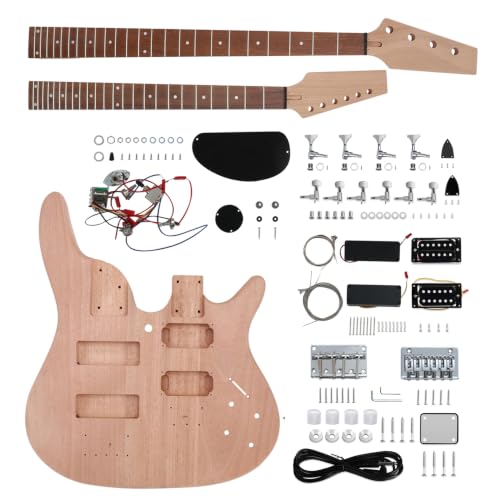
- 6-string guitar and 4-string bass
- Unfinished for customization
- Assembly and extra tools required
Best For: Builders who want a customizable guitar-and-bass project
Acoustic-Electric Harp Pick
Ktone Harp Guitar with Gig Bag

- Listed 6,6,8-string arrangement
- 4-band EQ with 9-volt battery
- Padded gig bag included
Best For: Players seeking an acoustic-electric harp-guitar layout
Best 6/12-String DIY Kit
Mahogany Double-Neck Guitar Kit
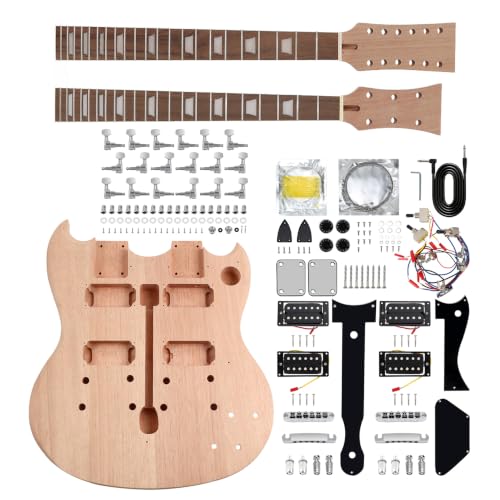
- Six- and 12-string necks
- Unfinished mahogany body
- Hardware and pickups included
Best For: Beginners seeking a customizable six/12-string build
Best Guitar-and-Bass Combo

- Listed as 12-string guitar plus four-string bass
- White finish with chrome hardware
- String-count specifications conflict
Best For: Buyers seeking a custom-style guitar-and-bass pairing
Best ST/TL DIY Kit
Unfinished Mahogany Double Neck

- ST- and TL-style double neck
- Plug-and-play wiring harness
- Unfinished body and blank headstocks
Best For: Builders wanting an ST/TL-style customization project
Best Tremolo Option

- 12-string and six-string necks
- Six-string vintage-style tremolo
- Mahogany body; 22 frets per neck
Best For: Right-handed players seeking a six-string tremolo alongside a 12-string
Best DIY Guitar-and-Bass Kit
Fistrock 4/6-String Double Neck Kit

- Four-string bass plus six-string guitar
- Unfinished body for customization
- Assembly and extra tools required
Best For: Builders seeking a customizable bass-and-guitar instrument
Best Neck-Selector Flexibility

- Selector described for either or both necks
- Humbuckers and individual controls described
- Conflicting material and string-count details
Best For: Players willing to verify specs before buying for dual-neck switching
Solid-Body Pick – IYV IDN-126 Trans Red
The IYV IDN-126 is a right-handed option among double neck guitars if you want a solid-body instrument in a trans red finish. Its listed features include a basswood body, jatoba fretboard, H-H pickup configuration, and fixed bridge.
Best For: Players seeking a right-handed, fixed-bridge solid-body double-neck guitar.
Pros:
- H-H pickup configuration.
- Fixed bridge system.
- Trans red finish offers a distinctive look.
Cons:
- A fixed bridge will not suit players looking for a tremolo.
- The listing does not specify the string count of each neck separately.
With 18 strings listed in total, check the neck layout against your playing needs before choosing this model.
Tremolo-Equipped Pick – White 12-String and 6-String Double Neck
This white model stands out among double neck guitars by pairing a 12-string neck with a 6-string neck. Both have 22 frets; the 12-string has a fixed bridge, while the 6-string has a vintage-style tremolo.
Best For: Right-handed players who want 12-string and 6-string options, including tremolo on the 6-string neck.
Pros:
- Combines 12-string and 6-string necks.
- Vintage-style tremolo on the 6-string neck.
- Color-matched necks and headstocks with a pearloid white pickguard.
Cons:
- Listed weight is 18 pounds, worth considering for standing performances.
- The 12-string neck has a fixed bridge rather than a tremolo.
The separate bridge setups make this a practical choice if you specifically want a tremolo-equipped 6-string alongside a fixed-bridge 12-string.
DIY Guitar-and-Bass Pick – Fistrock Mahogany Double-Neck Kit
For shoppers comparing double neck guitars as a build project, this Fistrock kit combines a 6-string guitar neck and a 4-string bass neck. It includes a mahogany body and necks, rosewood fretboards, pickups, and hardware, while leaving the body and headstock unfinished for customization.
Best For: Right-handed builders who want to finish and assemble a guitar-and-bass double-neck themselves.
Pros:
- Includes parts and hardware for both guitar and bass necks.
- Unfinished body and headstock allow a custom design.
- Mahogany body and necks with rosewood fretboards.
Cons:
- Assembly and finishing are required before use.
- Extra tools, such as a soldering iron and screwdriver, may be needed.
Choose this kit for the hands-on build and customization, not for an instrument that is ready to play out of the box.
Acoustic-Electric Harp Pick – Ktone Harp Guitar with Gig Bag
The Ktone harp guitar offers an unusual acoustic-electric option for shoppers exploring double neck guitars. Its listed 6,6,8-string arrangement includes harp strings, and the package includes a padded gig bag.
Best For: Right-handed players looking for a harp-guitar layout with acoustic-electric operation.
Pros:
- Acoustic-electric design with a 4-band EQ.
- Includes a padded gig bag.
- Spruce top and mahogany body are listed in the specifications.
Cons:
- The harp-guitar string layout differs from a conventional 12-string/6-string double-neck.
- The EQ uses a 9-volt battery.
If the harp-string arrangement is what you want, this model adds onboard EQ and an included bag; confirm the layout suits your repertoire.
Best 6/12-String DIY Kit – Mahogany Double-Neck Guitar Kit
Among double neck guitars you can build yourself, this right-handed kit pairs six- and 12-string necks with a mahogany body. Its unfinished wood gives you room to choose your own paint, stain, or varnish.
Best For: Beginners who want a customizable six- and 12-string build without sourcing the main parts separately.
Pros:
- Includes twin mahogany necks, a rosewood fingerboard, humbuckers, and chrome hardware.
- Body is cut and sanded; the headstock is left unfinished for customization.
- Includes a two-year manufacturer warranty.
Cons:
- Assembly and finishing are required.
- You may need extra tools, including a soldering iron and screwdriver; instructions may need to be requested.
Choose this kit if the six/12-string combination is the priority and you enjoy hands-on finishing. Allow time and tools for the build rather than expecting a ready-to-play instrument.
Best Guitar-and-Bass Combo – White 12+4 Double Neck
If you are comparing double neck guitars for a guitar-and-bass setup, this listing describes a white 12-string guitar and four-string bass combination with chrome hardware, a white pickguard, and body binding. It also emphasizes customization options.
Best For: Players seeking a custom-style 12+4 guitar-and-bass configuration.
Pros:
- Combines 12-string guitar and four-string bass necks according to the title.
- White body, chrome hardware, pickguard, and binding create a coordinated look.
- Listing offers customization of details such as material, color, shape, and size.
Cons:
- Specifications conflict: the title says 12+4 strings, while the details list six strings.
- Listing states no warranty.
The guitar-and-bass pairing is the reason to consider it, but confirm the exact configuration and customization details with the seller before ordering.
Best ST/TL DIY Kit – Unfinished Mahogany Double Neck
For builders considering double neck guitars with two familiar electric-guitar styles, this right-handed kit combines ST- and TL-style necks. The unfinished mahogany body and blank headstocks leave the final look to you.
Best For: DIY builders who want an ST/TL-style project with room for custom finishing and headstock shaping.
Pros:
- Includes a mahogany body, hard maple necks, rosewood fretboards, and chrome hardware.
- Preassembled plug-and-play wiring is intended to simplify installation.
- Body is cut and sanded, with blank headstocks for custom shaping.
Cons:
- Requires finishing, assembly, and headstock shaping if you want a finished design.
- Some tools may still be needed; instructions may need to be requested.
This is the more suitable choice here if you want an ST/TL-style building project rather than a six/12-string pairing. The simplified wiring helps, but it remains a hands-on kit.
Best Tremolo Option – TARIO 12/6-String Double Neck
Among double neck guitars, this TARIO model pairs a 12-string neck with a six-string neck and gives each a different bridge: fixed on the 12-string, vintage-style tremolo on the six-string. It has a mahogany body and necks, maple fretboards, and 22 frets on both necks.
Best For: Right-handed players who want 12-string and six-string parts in one instrument, with tremolo available on the six-string.
Pros:
- Combines 12-string and six-string necks.
- Six-string vintage-style tremolo adds an option the fixed-bridge 12-string does not have.
- Both necks provide 22 frets.
Cons:
- Listed for right-handed players.
- The stated return period is 30 days.
The contrasting bridges are the main reason to choose this model: check whether you want tremolo on the six-string rather than matching fixed bridges across both necks.
Best DIY Guitar-and-Bass Kit – Fistrock 4/6-String Double Neck Kit
If you want to build rather than buy a finished instrument, this is the project pick among double neck guitars. The kit pairs a four-string bass neck with a six-string guitar neck and includes the parts and hardware for assembly, including pickups, selectors, and chrome machine heads.
Best For: Right-handed builders who want a customizable guitar-and-bass double neck.
Pros:
- Unfinished, cut-and-sanded basswood body is ready for a custom finish.
- Includes hard maple necks, humbucker pickups, and hardware.
- Combines bass and guitar rather than two guitar necks.
Cons:
- Requires assembly, finishing, and extra tools such as a soldering iron and screwdriver.
- Instructions may need to be accessed through the video referenced in the listing.
Choose this kit for the build and the bass/guitar pairing, not for immediate playability. Plan your finish and gather tools before starting.
Best Neck-Selector Flexibility – White 12/6-String Double Neck
This white 12-string/six-string model stands out among double neck guitars for its stated neck selector, which can activate either neck or both together. The listing also describes humbucking pickups, individual volume and tone controls, and Tune-O-Matic-style bridges.
Best For: Players interested in switching between 12-string and six-string parts or experimenting with both necks active.
Pros:
- Neck selector is described as offering 12-string, six-string, and both-neck settings.
- Humbucking pickups are described for both necks.
- Individual volume and tone controls offer adjustment.
Cons:
- Listing details conflict with the description on body, neck, and fretboard materials.
- The structured string-count field says one, despite the 12-string/six-string description.
- No warranty is listed.
The switching layout is appealing, but the conflicting specifications make this a verify-before-buy choice. Confirm the actual materials and string configuration with the seller.
How We Picked These Double Neck Guitars
We organized the selected options around the decisions most likely to change a purchase: neck and string configuration, ready-to-play instrument versus DIY kit, body materials listed, and the intended playing context. The group spans 6/12-string electrics, guitar-and-bass combinations, an acoustic-electric harp guitar, and several build kits. Product names and specifications do not establish sound quality, setup quality, or reliability, so verify current listing details and seller policies before ordering.
Quick Comparison: Which Configuration Fits?
- 6/12-string electric: Choose this to move between standard electric parts and the fuller shimmer of a 12-string without changing guitars.
- 6-string guitar plus 4-string bass: Useful when one performer needs both ranges, though switching necks is not a substitute for playing both at once.
- Acoustic-electric harp guitar: Consider the Ktone if your goal is an acoustic-style instrument with additional string possibilities; confirm its tuning and electronics suit your plans.
- DIY kit: Best if you want the building experience or plan to customize components. Budget for finishing, assembly, setup, and any tools you lack.
Key Buying Factors for Double Neck Guitars
Neck Pairing and Playability
Decide on the musical job before choosing a finish or body shape. Twelve-string necks take more tuning time and may feel firmer under the fingers than six-string necks. Check scale length, nut width, neck profile, fret count, and string spacing when those measurements are available. If you can try an instrument, test both necks while standing as well as seated.
Weight, Balance, and Controls
Two necks can make an instrument bulky. Look for a comfortable strap position, reachable upper frets, and controls that make neck changes straightforward during a song. Confirm whether each neck has separate pickups and switching, and consider your amp or signal-routing needs for guitar-and-bass models. A suitable case or padded bag matters too; ordinary guitar cases may not fit.
Setup, Electronics, and Kit Work
For a finished guitar, ask about fret condition, neck relief, intonation, and electronics testing, particularly when buying online. For a kit, check which hardware and wiring parts are included and whether the necks are pre-fretted or prefinished. Plan for a professional setup if you are not equipped to handle final adjustments yourself.
Who Should Buy Which Double Neck Guitars?
Performers covering six- and twelve-string parts should start with a completed 6/12-string electric and prioritize comfortable switching and manageable balance. Players doubling on bass should focus on a 4/6-string combination and confirm how its outputs connect to their rig. Acoustic experimenters may prefer the harp-guitar format, provided its layout matches the music they intend to play. Hands-on builders can choose a kit based on the neck pairing they need, then compare included parts and finishing requirements. If you simply want the easiest first double neck, a completed instrument avoids the extra time and uncertainty of a build.