The best desktop phono preamps make it easier to connect a turntable to powered speakers, a stereo receiver, headphones, or a broader home audio system. They also apply the RIAA equalization your records need for balanced playback.
This roundup covers compact solid-state units, tube-equipped models, headphone-friendly designs, and options for moving-magnet or moving-coil cartridges. Use the guide below to narrow the list by compatibility, controls, connectivity, and budget.
Best 10 Desktop Phono Preamps Picks for 2026
Best for Clean MM Vinyl Playback

- Accurate RIAA equalization
- Selectable subsonic rumble filter
- Shielded, low-noise design
Best For: MM turntable owners seeking a focused, clean desktop phono stage
Best Simple RCA Upgrade

- Stereo RCA input and output
- Dedicated ground terminal
- Power adapter included
Best For: Listeners wanting a compact, uncomplicated RCA phono connection
Best for MM/MC Flexibility

- Supports MM and MC cartridges
- Four adjustable gain levels
- Aluminum chassis with grounding port
Best For: Turntable owners who need cartridge flexibility and gain matching
Tube-Tuned Desktop Choice
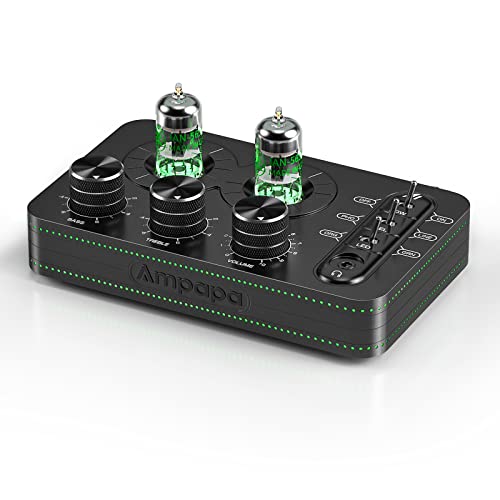
- MM phono stage with tube-based sound
- Bass, treble, and headphone controls
- Compact metal body with selectable lighting
Best For: MM turntable listeners wanting a warm, adjustable desktop setup
Simple Signal Converter
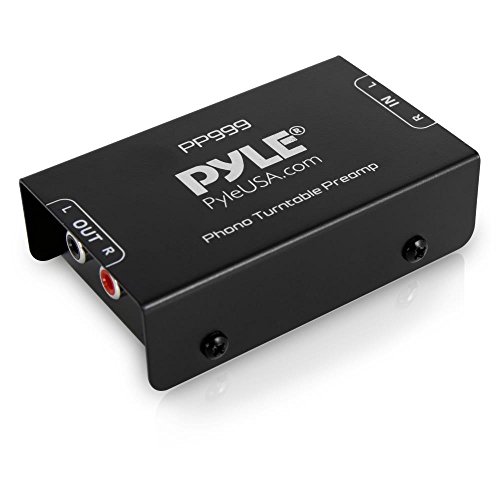
- Converts magnetic phono signals to line level
- Stereo RCA input and output
- Compact, low-noise plug-and-play design
Best For: Basic turntable connections to modern receivers, speakers, or computers
Feature-Rich Tube Platform

- Supports both MM and MC cartridges
- Headphone amplifier for 16–300Ω headphones
- Tube swapping, tone controls, and signal display
Best For: Flexible desktop systems with multiple cartridge and headphone needs
Budget Starter
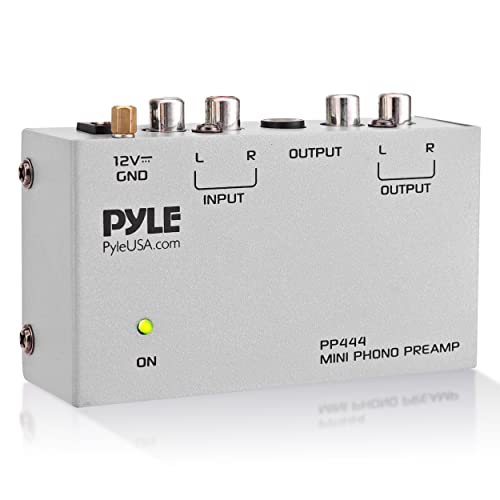
- Compact 9.6-ounce plastic design
- RCA input and output
- Supports turntable, microphone, and guitar connections
Best For: Basic RCA-based turntable systems
Tube-Tuning Pick
Fosi Audio Box X2 Phono Preamp

- Three selectable gain settings
- Includes two vacuum tubes
- Adds a 3.5mm AUX input
Best For: MM vinyl systems with adjustable, tube-based sound options
Headphone-Friendly Choice
Fosi Audio Box X1 Phono Preamp

- RCA and 3.5mm headphone outputs
- Low-noise RIAA-compliant circuitry
- Supports simultaneous line and headphone output
Best For: MM turntable setups with speaker and headphone listening
Best for Clean MM Vinyl Playback – Fluance PA10
The Fluance PA10 is one of the more focused desktop phono preamps for MM turntables. Its RIAA equalization, low-noise power supply, metal shielding, and separate left- and right-channel op amps are designed to produce a clean, well-separated line-level signal.
Best For: MM turntable owners who want a dedicated, interference-resistant phono stage with selectable low-frequency rumble filtering.
Pros:
- Accurate RIAA equalization for faithful signal conversion
- Individual channel op amps support stereo separation and low crosstalk
- Selectable filter reduces subsonic rumble below 20Hz
- Internal metal enclosure helps block electronic interference
Cons:
- Designed for MM turntables rather than MC cartridges
- Offers a dedicated phono-stage design without the extra inputs or headphone output found on some alternatives
The PA10 is a sensible choice when clean MM performance and noise control matter more than versatility. Its compact freestanding enclosure and two-year manufacturer warranty also suit a straightforward desktop setup.
Best Simple RCA Upgrade – ART DJPREII
The ART DJPREII is a compact desktop phono preamp for setups that need a basic connection between a turntable and audio equipment. It provides RCA-type left/right inputs and outputs, a ground terminal, and a power adapter for a simple installation.
Best For: Vinyl listeners looking for a straightforward RCA phono preamp with a dedicated ground connection.
Pros:
- RCA-type stereo input and output connections
- Dedicated ground terminal helps support proper turntable setup
- Compact 4.5 x 4.6 x 1.85-inch enclosure
- Power adapter is included
Cons:
- Supplied notes do not specify MM/MC compatibility or adjustable gain
- Does not list added features such as a headphone output or auxiliary input
The DJPREII keeps the feature set practical and uncomplicated. It is a reasonable fit for buyers who need standard RCA connectivity and do not require the broader adjustment options of more specialized desktop phono preamps.
Best Tube-and-Headphone Combo – Douk Audio T4 PRO
The Douk Audio T4 PRO combines a tube phono stage, auxiliary input, and headphone amplifier in a compact aluminum chassis. Among desktop phono preamps, it stands out for users who want to connect an MM turntable while also using headphones or a phone, tablet, PC, or MP3 player.
Best For: Desktop listeners who want tube-style sound, an MM phono input, an auxiliary input, and headphone drive in one small unit.
Pros:
- MM phono input includes RIAA equalization
- 3.5mm AUX input supports phones, tablets, PCs, and MP3 players
- 3.5mm headphone output is rated for 32–300-ohm headphones
- Pluggable JAN5654 tubes allow tube rolling and sound-shaping
Cons:
- Phono input is specified for MM rather than MC cartridges
- Tube-based design may not suit listeners seeking a strictly solid-state presentation
- Its 150mW headphone output may not meet every headphone user’s power needs
The T4 PRO is more than a basic phono stage: it is a compact desktop hub for vinyl, auxiliary sources, and headphones. Its tube socket and gain adjustment add flexibility for listeners who enjoy experimenting with system character.
Best for MM/MC Flexibility – Fosi Audio BOX X5
The Fosi Audio BOX X5 is a versatile desktop phono preamp for both MM and MC cartridges. Four selectable gain levels—38, 48, 56, and 66 dB—make it easier to match different cartridge requirements, while its aluminum chassis and RCA connections keep the setup compact.
Best For: Turntable owners who want adjustable gain and a single phono stage that supports both MM and MC cartridges.
Pros:
- Supports both MM and MC cartridge types
- Four gain settings from 38 to 66 dB
- Precision components and RIAA equalization target clean, detailed playback
- Grounding port, cartridge selector, and one-touch power button simplify operation
Cons:
- Supplied specifications list one channel, so the channel description is less clear than on the other models
- Does not list a headphone output or auxiliary input
- Its 2.4-pound weight is relatively substantial for a mini preamp
The BOX X5 is the strongest fit here for system builders who may change cartridges or need more gain-matching control. It prioritizes MM/MC compatibility and adjustment range over extra desktop-source features.
Tube-Tuned Desktop Choice – Ampapa A1
The Ampapa A1 is a flexible option among desktop phono preamps for MM turntables. Its tube-based design adds a warm, rich sound profile, while the tone controls and headphone output make it useful for both speaker and personal listening setups.
Best For: MM turntable owners who want tube coloration, adjustable bass and treble, and headphone connectivity in a compact desktop unit.
Pros:
- Supports MM turntables and converts their low-level signal for amplifiers, active speakers, and headphones.
- JAN 5654 tubes provide a warm, detailed sound profile.
- Includes bass and treble controls plus a 3.5mm headphone output.
- Compact metal enclosure with selectable warm orange or cool green lighting.
Cons:
- Designed for MM turntables rather than MC cartridge support.
- Its tube sound and tone controls may not suit listeners seeking a strictly neutral presentation.
The A1 stands out when you want more than basic phono-to-line conversion. It combines a small footprint with tube styling, tone shaping, and headphone amplification for a versatile desktop audio system.
Simple Signal Converter – Pyle PP999
The Pyle PP999 is a straightforward choice among desktop phono preamps when a receiver or powered speaker lacks a dedicated phono input. It converts magnetic-cartridge phono signals to line level and uses stereo RCA connections for uncomplicated setup.
Best For: Vinyl listeners who need an affordable, plug-and-play bridge between a turntable and modern audio equipment.
Pros:
- Converts phono signals to line-level output for receivers, speakers, computers, and laptops.
- Provides stereo RCA input and output connections.
- Low-noise operational amplifiers are designed for clean operation.
- Compact design can be positioned close to the turntable to help reduce interference.
Cons:
- Offers basic phono preamp functionality without tone controls or a headphone output.
- Uses a 12-volt DC adapter and requires a ground connection during setup.
The PP999 is best viewed as a practical connection solution rather than a feature-rich listening upgrade. Its appeal is the simple RCA workflow and compatibility with equipment that does not include a phono stage.
Feature-Rich Tube Platform – Douk Audio T9
The Douk Audio T9 is one of the more versatile desktop phono preamps in this group, supporting both MM and MC cartridges while also accepting RCA line-level sources. Its tube circuit, headphone amplifier, tone controls, and visual signal display make it suited to a more involved desktop listening system.
Best For: Audiophiles who want MM/MC compatibility, tube customization, headphone listening, and adjustable sound in one desktop component.
Pros:
- Supports both MM and MC phono cartridges, along with RCA sources.
- Dedicated 3.5mm headphone amplifier supports headphones rated from 16–300Ω.
- Treble and bass controls allow practical sound adjustment.
- Replaceable tube sockets and selectable green or orange backlighting add customization.
Cons:
- Larger and heavier than a basic phono converter, weighing 0.96 kg.
- Its multiple controls, tubes, and visual features may be unnecessary for a minimalist system.
The T9 is the strongest fit here for users building a flexible desktop rig around different cartridges and listening methods. It combines broad input support with tube styling and independent headphone amplification.
Budget Starter – Pyle PP444 Mini Phono Preamp
If you need an affordable desktop phono preamp for connecting a turntable to a receiver or amplifier, the Pyle PP444 keeps the setup simple. It uses RCA input and output, supports stereo operation, and includes low-noise operation in a compact plastic enclosure.
Best For: Basic turntable setups, compact audio systems, and buyers seeking a straightforward RCA phono preamp.
Pros:
- Compact, lightweight design at 9.6 ounces
- RCA input and output for common stereo connections
- Compatible with turntables, microphones, and guitars
- Includes a 12-volt DC power adapter
Cons:
- Plastic enclosure may feel less substantial than metal alternatives
- Limited to basic connectivity without headphone output or gain controls
- Warranty coverage is listed as 90 days
The PP444 is a practical entry-level choice when you only need to bring a phono signal up to line level. Its small footprint and simple RCA layout make it easy to add to an existing desktop or stereo system.
Tube-Tuning Pick – Fosi Audio Box X2 Phono Preamp
The Fosi Audio Box X2 is a desktop phono preamp for MM turntables that adds adjustable gain and tube-based sound shaping. Its three gain settings, grounding post, RCA connectivity, and included vacuum tubes give vinyl listeners more flexibility than a basic fixed-gain unit.
Best For: MM turntable owners who want switchable gain and the option to experiment with different compatible vacuum tubes.
Pros:
- Three switchable gain modes: 39, 42, and 45 dB
- Includes two vacuum tubes and supports several compatible tube models
- Provides an RCA cable and 12-volt power adapter in the package
- Also functions as a tube preamp with a 3.5mm AUX input
Cons:
- Designed for MM turntables rather than moving-coil cartridges
- Tube rolling requires separately choosing compatible replacement tubes
- Its 0.65-kilogram weight is less portable than ultra-compact alternatives
Choose the Box X2 if you want a more adjustable desktop phono setup and enjoy experimenting with tube presentation. It offers useful gain flexibility while retaining a relatively simple stereo connection scheme.
Headphone-Friendly Choice – Fosi Audio Box X1 Phono Preamp
The Fosi Audio Box X1 is a versatile desktop phono preamp for MM turntables, combining RCA line output with a 3.5mm headphone output. Its low-noise circuitry follows the RIAA standard, while the aluminum case and included 12-volt adapter suit a compact listening station.
Best For: Vinyl listeners who want to use powered speakers and headphones from the same phono preamp.
Pros:
- Offers both RCA line output and 3.5mm headphone output
- Supports simultaneous RCA and AUX headphone output
- Uses low-noise circuitry with RIAA-standard frequency response
- Includes an 18-month manufacturer warranty
Cons:
- Designed for MM turntables
- Provides one channel according to the listed specifications
- Does not list adjustable gain modes or tube functionality
The Box X1 stands out when private listening matters as much as speaker playback. Its dual-output design makes it a flexible choice for a desktop vinyl setup, especially when you want to switch between powered speakers and headphones without adding another device.
How We Picked the Best Desktop Phono Preamps
We compared these models by cartridge compatibility, connection options, control layout, size, intended use, and overall practicality for desktop listening. A useful phono preamp should provide accurate RIAA equalization, a clean signal path, and outputs that match the rest of your system. We also considered whether each model is better suited to a simple turntable setup, headphone listening, tone adjustment, or experimentation with tube-based sound.
Because features vary considerably, the best choice is not necessarily the most expensive or most feature-rich unit. Matching the preamp to your cartridge and listening setup matters more than adding controls you will never use.
Quick Comparison
| Best For | Look For | Typical Choice |
|---|---|---|
| Simple MM turntable systems | RCA input and output, low noise, compact housing | Fluance PA10, Fosi Audio Box X1, or Pyle mini models |
| MM and MC flexibility | Selectable cartridge support and adjustable gain | Fosi Audio Box X5 or Douk Audio T9 |
| Headphone listening | Dedicated headphone output and suitable volume control | Fosi Audio Box X1, Douk Audio T4 PRO, or T9 |
| Tube-style presentation | Vacuum-tube circuitry and accessible tone controls | Douk Audio or A1 tube models |
| Lowest-cost upgrade | Basic RIAA preamplification and straightforward RCA connectivity | Pyle or entry-level Fosi Audio models |
Key Buying Factors for Desktop Phono Preamps
Cartridge Compatibility
Check whether your turntable uses a moving-magnet (MM) or moving-coil (MC) cartridge. Many affordable models support MM only, while units with MC support offer more flexibility for future upgrades. Do not assume that a preamp labeled “phono” supports both types.
Inputs, Outputs, and Placement
Most desktop units use RCA input and output connections. Confirm that your turntable has the required cables and that your receiver, amplifier, or powered speakers accept the output. A headphone jack can be valuable for private listening, but it does not replace a proper line output.
Gain, Loading, and Tone Controls
Adjustable gain helps match different cartridges and system levels. Bass and treble controls are useful if you want to compensate for room acoustics or personal preferences, although a simple, fixed design may be preferable for a cleaner setup.
Noise and Power
Phono signals are very quiet and highly sensitive to hum. Place the preamp away from power adapters where possible, use a reliable ground connection, and choose a model with a reputation for quiet operation. Tube units may add a different character and usually need more care around heat and tube replacement.
Who Should Buy Which Desktop Phono Preamps?
Choose a compact MM-only preamp if you want the easiest, least expensive way to connect a standard turntable to powered speakers or a receiver. Select a model with MM/MC support if you plan to change cartridges or want greater system flexibility. Headphone listeners should prioritize a dedicated headphone output and accessible volume control.
Tube models suit listeners who enjoy their distinctive appearance and presentation, along with users who want tone controls in a desktop system. For a clean, low-maintenance setup, solid-state designs are generally the safer choice. Before buying, verify your cartridge type, available connections, grounding arrangement, and the space beside your turntable.