Choosing one of the best cello cases for air travel is about more than simple padding. You need a case that balances protection, airline handling, weight, and ease of moving through terminals.
This roundup focuses on flight-ready options for different budgets and cello sizes, from soft gig bags to rigid hard cases with wheels and backpack straps.
Best 10 Cello Cases for Air Travel Picks for 2026
Protective Everyday Carry
Protec Silver Series Cello Gig Bag
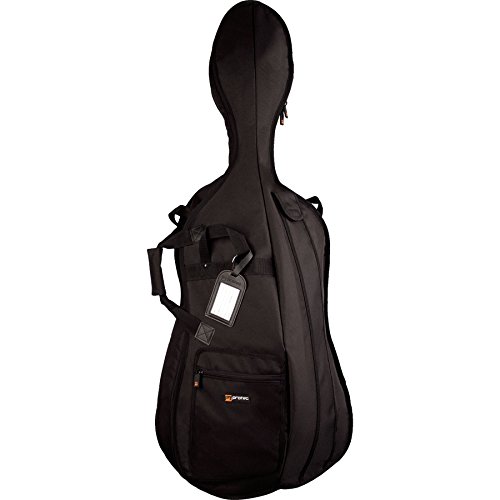
- 600D nylon exterior with 3mm padding
- Backpack straps and multiple grab handles
- Bow pocket plus several storage pockets
Best For: Lightweight daily transport and rehearsals
Wheeled Commuter Protection

- Scratch-resistant molded ABS shell
- Wheels plus top and side handles
- Backpack straps and accessory pouch
Best For: Traveling students and players who need easier transport
Premium Lightweight Hard Shell

- Pressure-molded thermoplastic shell
- About 3.9 kg without accessories
- Insulation, locks, and bridge protection
Best For: Frequent flyers wanting a premium protective hard case
Budget Travel Utility

- Durable nylon soft-shell build
- Reinforced handles and backpack straps
- Front bow storage and utility pocket
Best For: Basic transport with simple carry convenience
Premium Travel Protection
Crossrock 3K Carbon Fiber Cello Case

- 7 lb carbon fiber hard-shell build
- Locking mechanism for travel security
- Fits 4/4 full-size cellos only
Best For: Full-size cellists flying with a premium lightweight hard case
Lightweight Gig Bag
MI&VI CB-5001 1/4 Size Cello Bag

- 12mm foam padding with water-resistant nylon
- Backpack straps and multiple accessory pockets
- Made for 1/4-size cellos
Best For: 1/4-size cello players needing a light padded bag for short travel
Budget Travel Bag
VEVOR 4/4 Lightweight Cello Case
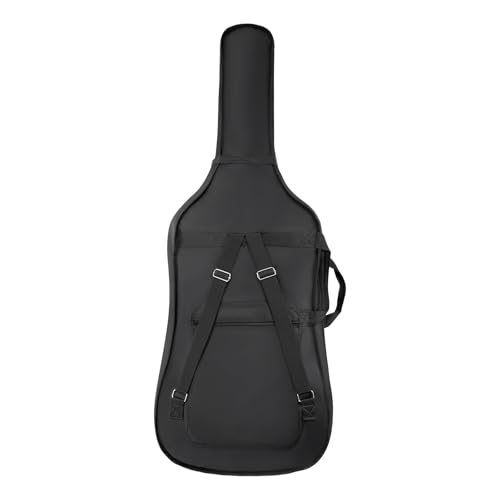
- Only 2.1 lbs with dual shoulder straps
- Waterproof, scratch-resistant nylon exterior
- Shock-absorbing soft bag for 4/4 cellos
Best For: 4/4 players who want a light, affordable carrying bag
Lightweight Padded Soft Case

- 20 mm foam padding for everyday protection
- Backpack straps and grab handles for easy carrying
- Front and rear pockets for accessories and sheet music
Best For: players wanting a light 4/4 soft case for short travel and airport handling
Rolling Carbon Fiber Hard Case

- About 4 kg composite carbon fiber hard shell
- Wheels plus backpack straps for flexible transport
- Waterproof exterior with cushioned interior support
Best For: travelers who want a lightweight hard case for airports, commutes, and local trips
Water-Resistant Backpack Gig Bag

- Multi-layer padding with soft interior protection
- Water-resistant exterior for light rain and spills
- Several pockets for bows, rosin, and sheet music
Best For: students and musicians needing a light, organized soft case for everyday travel
Protective Everyday Carry – Protec Silver Series Cello Gig Bag
If you want cello cases for air travel that lean lighter and easier to carry, this Protec gig bag is more of a padded transport solution than a rigid flight case. Its 600D nylon exterior, 3mm padding, nylex lining, and multiple handles make it practical for getting a 4/4 cello through regular moves, with backpack straps and pockets helping on busy travel days.
Best For: Players who need a lightweight padded bag for local transit, rehearsals, and ground-level travel.
Pros:
- Tough 600D nylon exterior with non-abrasive nylex lining
- Adjustable backpack straps plus multiple grab handles
- Bow holder pocket and multiple storage pockets for accessories
- Lightweight at 2.8 pounds
Cons:
- Soft 3mm padding offers far less protection than a hard-shell case
- Not designed with wheels or rigid impact protection
- Best suited to carrying, not checked-flight abuse
This is a sensible everyday carrier if your priority is convenience and low weight, but it is not the right choice when you need serious air-travel protection. For flying, it works best as a padded bag inside a larger travel plan rather than as a full flight case.
Wheeled Commuter Protection – Crossrock ABS Cello Case
For shoppers comparing cello cases for air travel, this Crossrock model brings a tougher molded ABS shell, wheels, and backpack straps in one travel-friendly design. It is sized for 4/4 and 3/4 cellos, and the included bow holders plus padded accessory pouch make it convenient for moving between home, rehearsal, class, or airport terminals.
Best For: Cellists who want a lightweight hard case with rolling transport and hands-free carry options.
Pros:
- Scratch-resistant molded ABS shell for better protection than a soft bag
- Wheels, side handle, and top handle improve transport around airports
- Padded backpack straps support hands-free carrying
- Includes 2 bow holders and a detachable padded pouch for accessories
Cons:
- At 14.6 pounds, it is not especially light
- ABS construction is travel-oriented, but not as premium as high-end composite cases
- Best suited to commuting and airport movement rather than ultra-light packing
This case is a strong middle-ground option if you want more structure and mobility than a gig bag without jumping to a premium flight case. The wheels and backpack straps make it especially practical for moving through terminals or between buildings.
Premium Lightweight Hard Shell – GEWA Air 3.9 Cello Case
If you are shopping cello cases for air travel and want a hard-shell design with a more advanced build, the GEWA Air 3.9 stands out. Its independently formed outer and inner shells are pressure-molded with 2K foam, and the case is built for high torsional strength, low weight, strong insulation, and superior breakdown protection.
Best For: Frequent travelers who want a lightweight hard case with strong protection and thermal insulation.
Pros:
- Extremely break-resistant thermoplastic shell construction
- Weight of about 3.9 kg without accessories
- Excellent insulating properties and low thermal conductivity
- Includes padded suspension system, locks, bridge protection, and backpack straps
Cons:
- More expensive, specialized case than a basic gig bag
- Weight can rise once pads, suspension system, and straps are added
- Bulky hard-shell format may be less convenient for casual everyday carrying
This is the most protection-focused option in the group and the closest match for serious travel planning. Its combination of low weight, structural strength, and insulation makes it a strong choice when air travel and changing conditions matter.
Budget Travel Utility – Gator Lightweight Cello Bag
Gator Cases Lightweight Band and Orchestra Travel Bag for 4/4 Cello; (GBO-CELLO44)
Check Price On AmazonFor players looking at cello cases for air travel in a simpler soft-bag format, this Gator travel bag keeps the focus on durability and convenience. It uses a nylon shell, reinforced handles, backpack straps, and front bow storage, making it a straightforward option for carrying a 4/4 cello to rehearsals, lessons, or airport check-in.
Best For: Players who want a basic, durable soft bag with easy-carry features.
Pros:
- Durable nylon construction with a soft shell
- Reinforced handles and backpack straps for daily use
- Front bow storage and a utility pocket for essentials
- YKK zippers add a durability-focused touch
Cons:
- Soft-shell design offers limited impact protection for flying
- No wheels or rigid case structure
- Best for basic transport rather than demanding air travel
This bag is a practical low-friction carry option, but it does not aim to deliver the protection level usually associated with serious flight cases. It makes the most sense if you want something durable and simple for transport, not maximum airline protection.
Premium Travel Protection – Crossrock 3K Carbon Fiber Cello Case
For cello cases for air travel, this Crossrock full-size hard case is built around a 3K twill carbon fiber shell that keeps weight down while prioritizing protection. It’s designed to fit a 4/4 cello and includes travel-focused details like a secure locking mechanism, temperature-resistant materials, and a rugged hardshell build for demanding trips.
Best For: Full-size cellists who want a lightweight, premium hard case for flying and frequent travel.
Pros:
- Ultra-light 7 lb carbon fiber construction for easier transport.
- Secure locking mechanism for added travel peace of mind.
- Temperature-resistant hardshell protection for changing environments.
- Professional touches like leather handles, silent zippers, and expandable bow holders.
Cons:
- Made only for standard 4/4 full-size cellos.
- Premium construction is likely overkill for casual local use.
This is the most travel-ready option in the group if your priority is strong protection without excessive weight. It suits musicians who want a hard-shell case with polished details and airline-friendly security features.
Lightweight Gig Bag – MI&VI CB-5001 1/4 Size Cello Bag
When comparing cello cases for air travel, this MI&VI gig bag is better viewed as a lightweight carry solution for smaller instruments rather than a high-protection flight case. It uses 12mm foam padding, a water-resistant nylon exterior, and multiple pockets for accessories, making it practical for short-distance travel and everyday transport.
Best For: Players with a 1/4-size cello who want a light, padded gig bag for short trips and everyday use.
Pros:
- 12mm high-density foam padding for basic cushioning.
- Water-resistant 600D nylon exterior.
- Adjustable backpack straps and double-stitched grab handles.
- Multiple storage areas, including a bow holder and sheet-music pocket.
Cons:
- Designed for 1/4-size cellos only.
- Soft gig bag format offers less protection than a hard flight case.
This is a sensible choice if you need portability and organization more than maximum impact resistance. For air travel, it makes the most sense as a lightweight option for smaller instruments, not as a rugged checked-in case.
Budget Travel Bag – VEVOR 4/4 Lightweight Cello Case
For shoppers looking at cello cases for air travel on a tighter budget, this VEVOR 4/4 bag offers a lightweight nylon build with basic protective features. It’s water-resistant, scratch-resistant, and includes shock absorption plus a sturdy zipper, so it works well as a portable carrying bag for everyday transport and lower-intensity travel needs.
Best For: 4/4 cellists who want a lightweight, water-resistant carrying bag with simple protection.
Pros:
- Very light at 2.1 lbs for easier carrying.
- Durable nylon exterior is waterproof, scratch-resistant, and dirt-resistant.
- Shock-absorbing design helps reduce vibration damage.
- Includes dual shoulder straps and a reinforced handle.
Cons:
- Soft bag design is less protective than a hard case for flights.
- Best suited to 4/4 size instruments only.
This VEVOR bag is a practical portable option if you want low weight and simple protection without paying for a premium shell. It’s a better fit for carrying than for serious airline handling, but it covers the basics well.
Lightweight Padded Soft Case – 4/4 Nylon Cello Gig Bag
If you want cello cases for air travel that keep weight down while still adding everyday protection, this 4/4 gig bag is a practical soft-case option. Its 20 mm foam padding, nylon exterior, and backpack straps make it easy to move through terminals, with multiple pockets for the small items you want close at hand.
Best For: Players who want a lightweight 4/4 soft case with solid padding and easy carry options for short trips and airport transfers.
Pros:
- About 20 mm thick foam padding for added protection
- Backpack-style adjustable straps for hands-free carrying
- Multiple pockets, including front accessory storage and a back sheet music pocket
- Nylon exterior with protective feet and grab handles
Cons:
- Soft-gig-bag design offers less protection than a hard shell
- Made only for 4/4 full-size cellos
- No wheels for rolling through long airport walks
This case makes sense if portability is the priority and you need a simple, padded carrier for organized travel. For air travel, it is best viewed as a lightweight transport solution rather than maximum-impact protection.
Rolling Carbon Fiber Hard Case – 4/4 Cello Case With Wheels
For cello cases for air travel, a hard shell is the stronger choice, and this composite carbon fiber model is built for serious portability. The lightweight 4 kg body, internal suspension system, wheels, and waterproof exterior make it a strong fit for moving between cars, terminals, and rehearsal spaces without giving up structure.
Best For: Cellists who want a lightweight hard case with wheels and backpack straps for airport transfers, commuting, and local travel.
Pros:
- Composite carbon fiber shell weighs about 4 kg
- Internal suspension system with neck pad and strap helps absorb bumps
- Two silent wheels make short rolling trips easier
- Waterproof exterior and full plush interior protection
Cons:
- Hard-case design may be bulkier than a soft gig bag
- Built for 4/4 full-size cellos only
- Higher-protection design may not be as compact for storage
This is the most travel-ready option in the group if you want hard-shell protection without a heavy load. The combination of rolling transport, backpack straps, and waterproof construction makes it especially useful when airport or station walking is part of the trip.
Water-Resistant Backpack Gig Bag – 4/4 Cello Travel Cover
If you’re comparing cello cases for air travel and want a simple soft option, this 4/4 gig bag focuses on portability and basic weather resistance. Its lightweight build, padded interior, adjustable backpack straps, and multiple storage pockets make it a straightforward choice for lessons, rehearsals, and travel days where easy carrying matters.
Best For: Students and traveling musicians who want a lightweight, water-resistant 4/4 soft case with organized storage.
Pros:
- Thick, multi-layered padding with a soft interior
- Adjustable padded backpack straps for hands-free carrying
- Water-resistant exterior helps guard against light rain and spills
- Multiple pockets for rosin, bows, sheet music, and small essentials
Cons:
- Soft-case construction is less protective than a hard shell
- Designed for 4/4 full-size cellos only
- No wheels for rolling through airports or stations
This case is a good fit if you want a lighter, more affordable-feeling travel bag with practical storage. It is best suited to routine transport and light protection rather than maximum airline handling security.
How We Picked the Best Cello Cases for Air Travel
We prioritized cases that make travel less stressful: manageable weight, solid structural protection, comfortable carry options, and practical storage for accessories. For Cello Cases for Air Travel, we also looked at whether a case is better suited to casual transport, frequent flights, or higher-risk checked baggage use.
Quick Comparison
Soft gig bags are lighter and easier to carry, but they offer less impact resistance. Semi-rigid and hard-shell models add more protection and are usually the better choice when a cello will be checked or handled repeatedly. Wheels, backpack straps, reinforced handles, and secure closures can matter just as much as shell material.
Key Buying Factors for Cello Cases for Air Travel
Protection Level
If you fly often, favor a rigid or semi-rigid case with dense interior padding and strong external structure. Soft cases can work for occasional travel or local transport, but they are a weaker choice if baggage handling is rough.
Weight and Portability
Every extra pound matters at the airport. Lightweight cases are easier to lift overhead, move through security, and carry across terminals, but ultra-light options can trade away some crash protection.
Carry Style
Look for backpack straps if you want hands-free movement, and wheels if you expect long walks between curb, check-in, and gate areas. Dual-carry options are ideal for frequent flyers.
Fit and Size
Confirm that the case matches your cello size, especially for 4/4 instruments. A proper fit helps prevent shifting inside the case and reduces the chance of damage during turbulence or handling.
Storage and Security
Accessory pockets, bow storage, and secure latches can simplify travel. If you are checking the case, stronger closures and a reinforced shell are more important than extra pockets.
Who Should Buy Which Cello Cases for Air Travel?
Choose a soft gig bag if you mainly need a light, budget-friendly option for short trips or rehearsals. Choose a wheeled or hard-shell case if you fly regularly or want the best balance of convenience and protection. Frequent travelers with premium instruments should lean toward the most rigid, flight-ready models available, while players with smaller instruments may find lightweight padded bags sufficient for occasional air travel.