Choosing the right capo can make a nylon-string guitar easier to play without sacrificing tone or tuning stability. The best models apply even pressure, stay out of the way, and work smoothly on wider classical necks.
Below, we’ve narrowed the field to 10 of the best capos for classical guitar in 2026, focusing on comfort, fit, reliability, and value for students, gigging players, and home musicians.
Best 10 Capos for Classical Guitar Picks for 2026
Budget Quick-Release Pick
WINGO Flat Capo for Classical Nylon Strings
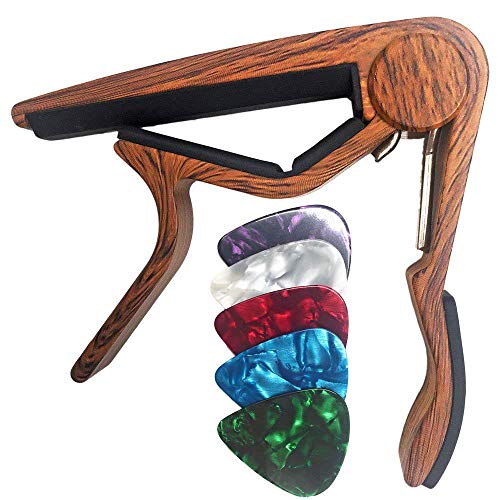
- Longer rubber pad for classical guitars
- Quick-release clamp for fast key changes
- Includes 5 medium picks
Best For: Budget-minded players who want fast changes on nylon strings
Premium Tension Control
D'Addario Pro Plus Buzz-Free Capo

- FlexFit Technology adapts to fretboard radius
- Buzz-free pressure across each string
- Easy one-handed operation
Best For: Players who want precise, adjustable pressure and premium control
Traditional Smooth-Action
Shubb C2 Nickel Capo for Nylon Strings

- Fits most classical guitars with flat fretboards
- Roller design reduces wear and improves action
- Contoured lever makes it easier to use
Best For: Players who want a durable, traditional flat-fretboard capo
Fast One-Handed Clamp
Kyser Quick-Change Capo for Classical Guitar

- Optimized radius for classical guitars
- Fast one-handed key changes
- Lightweight aircraft-grade aluminum
Best For: Players who need a quick, reliable capo for frequent key changes
Ultra-Light Nylon String Pick
Sondery Classical Capo Ultra Light

- Designed for classical and nylon-string guitars
- Ultra-light aircraft-grade aluminum construction
- Calibrated spring and silicone padding help reduce buzz
Best For: Players wanting a light trigger capo for classical guitars
Precision Tension Pick
D'Addario NS Artist Classical Capo

- Micrometer tension adjustment for fine control
- Designed for flat classical guitar fretboards
- Includes an integrated pick holder
Best For: Classical players who want precise, easy one-handed clamping
Compact Spring Grip

- Contoured for classical guitar necks and flat fretboards
- High-tension spring aims for even pressure and less buzz
- Silicone pads help protect the instrument
Best For: Players wanting a compact quick-release capo for nylon strings
Best Overall
D'Addario NS Lite Classical Guitar Capo
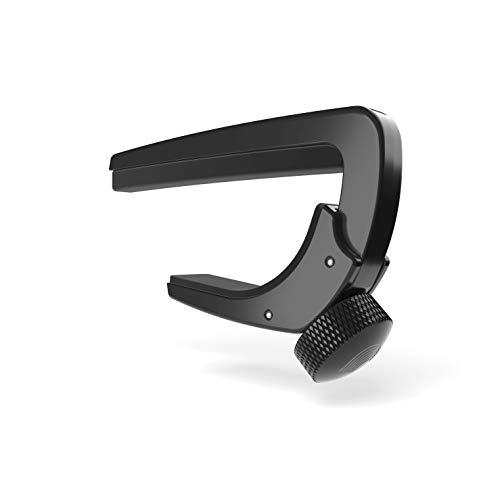
- Micrometer tension adjustment for buzz-free performance
- Made for flat classical nylon fingerboards
- Ultra-light thermoplastic build with one-hand use
Best For: Players who want a lightweight, easy-adjust classical capo
Best Value Bundle
WINGO Flat Guitar Capo for Classical Guitars

- Longer 60 mm rubber pad for classical guitars
- One-hand clip-on use for quick changes
- Includes 5 medium picks
Best For: Players who want a budget-friendly classical capo with extra picks
Premium Metal Pick
D'Addario NS Classical Guitar Capo
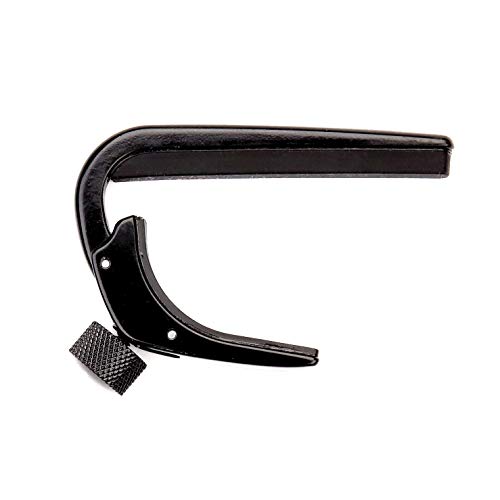
- Aircraft-grade aluminum construction
- Micrometer screw for precise tension control
- Made for 6-string classical guitars
Best For: Guitarists who prefer a durable aluminum capo with precise screw adjustment
Budget Quick-Release Pick – WINGO Flat Capo for Classical Nylon Strings
If you want one of the more affordable capos for classical guitar that still aims for a secure, clean clamp, the WINGO Flat Guitar Capo is built for nylon-string instruments and includes a longer rubber pad for a better fit. Its quick-release design makes it practical for fast key changes during practice, rehearsal, or performance.
Best For: Players who want a budget-friendly flat capo with quick changes and a nylon-string fit.
Pros:
- Longer rubber pad is designed to fit classical guitars more closely.
- Strong spring and balanced pressure are meant to reduce buzz.
- Thicker silicone pad helps protect the guitar finish from scratches.
- Includes 5 medium picks, adding a small bonus bundle.
Cons:
- Fit and feel are geared specifically toward flat classical fretboards, so it is less versatile.
- Spring-loaded designs may feel less adjustable than screw-style capos.
Overall, this is a practical no-frills option if you need a classical guitar capo that is easy to clip on and move quickly. The extra picks and wood-finish look are nice touches, but the real appeal is the simple, fast performance.
Premium Tension Control – D'Addario Pro Plus Buzz-Free Capo
Among capos for classical guitar, the D’Addario Pro Plus stands out for players who want precise tension control and a buzz-free clamp. Its FlexFit Technology is designed to adapt to the fretboard radius, while the one-handed operation makes it easy to move quickly during playing.
Best For: Players who want controlled pressure and easy one-handed use with a premium feel.
Pros:
- FlexFit Technology automatically adjusts to the fretboard radius.
- Designed for optimal pressure on each string to prevent fret buzz.
- Single-hand operation makes tension changes and repositioning easy.
- Suitable for 6- or 12-string guitars and octave-pair instruments.
Cons:
- It is a premium screw-style capo, so it is less compact than some spring clamp models.
- The design is broader than a classical-guitar-only capo, even though it is listed for classical use.
This is a strong choice if your priority is tuning stability and controlled pressure rather than the simplest possible clamp. For players comparing capos for classical guitar, it offers a polished, precise feel that should appeal to careful users.
Traditional Smooth-Action – Shubb C2 Nickel Capo for Nylon Strings
The Shubb C2 is a classic option in capos for classical guitar, especially if you want a flat-fretboard design with controlled action. Its roller design is meant to improve smoothness and reduce wear, while the contoured lever makes it easier to open and close.
Best For: Classical players who want a durable, traditional capo with smooth lever action.
Pros:
- Designed to fit most classical guitars with a 2.25-inch wide flat fretboard.
- Roller design offers smoother action and reduced wear.
- Contoured lever improves ease of use.
- Lifetime warranty adds confidence for long-term use.
Cons:
- It is specifically made for flat classical fretboards, so it is not a general-purpose capo.
- The design is more traditional than quick-release spring models.
If you value a proven mechanism and a fit made for nylon-string guitars, the Shubb C2 is easy to recommend. It focuses on controlled operation and durability rather than flashy features, which is exactly what many players want.
Fast One-Handed Clamp – Kyser Quick-Change Capo for Classical Guitar
If you want a fast, easy option among capos for classical guitar, the Kyser Quick-Change model is built around simple one-handed use and an optimized radius for classical instruments. Its lightweight aluminum construction and headstock parking feature make it especially convenient for players who switch keys often.
Best For: Players who want a lightweight quick-change capo made specifically for classical guitars.
Pros:
- Optimized radius is designed for classical guitars.
- Quick-change spring design allows fast key changes.
- Aircraft-grade aluminum keeps it lightweight.
- Parks on the headstock when not in use for convenience.
Cons:
- Spring tension offers less fine adjustment than screw-style capos.
- The black powder-coated finish is simple rather than decorative.
For players who prioritize speed and convenience, this Kyser is a straightforward and reliable pick. It is one of the easiest capos to move during a set, and the classical-specific radius is the key detail that makes it relevant here.
Ultra-Light Nylon String Pick – Sondery Classical Capo Ultra Light
If you want capos for classical guitar that stay light in the hand and gentle on nylon strings, the Sondery Classical Capo Ultra Light is built around that use case. It is designed for flat fingerboards and wider necks, with calibrated spring tension and silicone padding to help reduce buzz while protecting delicate finishes.
Best For: Classical and nylon-string players who want a lightweight trigger capo for quick changes and clean pressure.
Pros:
- Engineered specifically for classical, nylon string, and wide neck guitars
- Aircraft-grade aluminum body keeps it ultra-light
- Calibrated stainless-steel spring aims for balanced pressure and no fret buzz
- Silicone padding helps protect strings and guitar finish
Cons:
- Made for straight fingerboards, so it is not aimed at radiused necks
- Single-purpose design may not suit players who switch between many guitar types
Overall, this is a straightforward classical-guitar capo focused on comfort, fast handling, and buzz-free pressure. If you prefer a minimalist, low-weight design for nylon-string work, it fits that role well.
Precision Tension Pick – D'Addario NS Artist Classical Capo
Among capos for classical guitar, the D’Addario NS Artist stands out for micrometer tension adjustment and one-handed trigger operation. It is designed for classical guitars with flat, non-radiused fretboards, and its lightweight aluminum build plus integrated pick holder make it practical for players who want control and convenience.
Best For: Classical guitarists who want precise tension control and easy one-handed use.
Pros:
- Micrometer tension adjustment helps support buzz-free, in-tune performance
- Designed for flat classical guitar fretboards
- Easy single-hand trigger geometry for quick changes
- Includes an integrated pick holder
Cons:
- Made specifically for classical guitars, so it is not the most universal option
- Trigger-style design may be more than some casual players need
For players who care about fine adjustment and repeatable clamping, this capo offers a very practical setup. It is a strong fit if you want a dependable classical-guitar accessory with extra control built in.
Compact Spring Grip – Aroma Classical Guitar Capo
If you are shopping for capos for classical guitar and want a quick-release model made for wider, flatter necks, the Aroma Classical Guitar Capo is a solid fit. It uses a lightweight zinc-alloy body, a high-tension steel spring, and silicone pads to aim for even pressure, clean tone, and protection against scratches.
Best For: Classical guitar players who want a compact, ergonomic capo with quick one-handed operation.
Pros:
- Contoured for classical guitar necks and flat fretboards
- High-tension steel spring is designed for consistent pressure and less buzz
- High-density silicone pads help protect the instrument
- Ergonomic trigger-style shape supports easy one-handed use
Cons:
- Zinc-alloy construction is different from the aluminum builds used by some rivals
- Purpose-built fit makes it less relevant for players outside classical guitars
This model focuses on ease of use and a secure, balanced fit for nylon-string instruments. If you want a compact capo that is clearly tailored to classical guitars, it is an appealing choice.
Best Overall – D'Addario NS Lite Classical Guitar Capo
If you want a reliable capo for classical guitar, this D’Addario NS Lite model is built for secure, buzz-free performance with precise tension control. Its micrometer adjustment helps you fine-tune pressure at each fret, and the flat-fingerboard design makes it a practical fit for nylon-string instruments.
Best For: Players who want a lightweight, easy-to-adjust classical guitar capo for everyday use.
Pros:
- Micrometer tension adjustment helps reduce buzz and keep notes in tune.
- Designed for classical nylon guitars and other flat-fingerboard instruments.
- Ultra-light reinforced thermoplastic construction keeps it easy to handle.
- Single-hand operation makes fret changes quick and simple.
Cons:
- Made specifically for flat, non-radiused fingerboards.
- Lite construction may not appeal to players who prefer a metal capo.
Overall, this is a straightforward choice if you want dependable performance and simple handling in a capo made for classical guitars.
Best Value Bundle – WINGO Flat Guitar Capo for Classical Guitars
WINGO Flat Guitar Capo for Classical Guitars- Black with 5 Picks | Longer Rubber Pad, No Buzz
Check Price On AmazonThis WINGO capo is a practical option for capos for classical guitar, especially if you want a longer rubber pad and simple one-handed clipping. It is designed for nylon-string classical guitars, and the included 5 picks add a little extra value right out of the box.
Best For: Players who want a budget-friendly classical capo with extra picks included.
Pros:
- Longer 60 mm rubber pad is designed for a better fit on classical guitars.
- Easy to clip on and move with one hand during play.
- Thicker silicone rubber is meant to protect the guitar and reduce buzz.
- Includes 5 medium picks in the package.
Cons:
- Limited detail on tension adjustment compared with micrometer-style capos.
- Uses a mixed-material build rather than an all-metal design.
If you want a simple classical guitar capo with a longer pad and a bonus accessory bundle, this WINGO model is easy to consider.
Premium Metal Pick – D'Addario NS Classical Guitar Capo
For players comparing capos for classical guitar, this D’Addario NS model stands out for its aircraft-grade aluminum construction and micrometer screw tension control. It is made for 6-string classical guitars, so it focuses on secure fit, buzz-free performance, and easy one-handed adjustment.
Best For: Guitarists who prefer a durable aluminum capo with precise screw adjustment.
Pros:
- Micrometer tension adjustment helps deliver buzz-free, in-tune performance.
- Designed specifically for 6-string classical guitars.
- Aircraft-grade aluminum build offers strong, durable construction.
- Fast micrometer screw allows single-hand use when moving up the fretboard.
Cons:
- Heavier metal build may feel less minimal than the Lite version.
- Adjustable screw design can take more setup than a quick-clip capo.
This is a solid pick if you want a classical guitar capo with a more traditional metal feel and precise tension control.
How We Picked These Capos for Classical Guitar
We focused on the details that matter most on nylon-string instruments: even clamping pressure, a wide and flat contact surface, low risk of string buzz, and simple one-handed operation. We also looked at build quality, weight, finish, and whether a capo is better suited to casual practice, regular performance, or frequent key changes.
Quick Comparison
In general, clamp-style capos tend to be the fastest to use, while models with more tension control can offer a more tailored fit. Lighter designs are easier to handle and less intrusive on the neck, but they still need enough grip to stay stable. For Capos for Classical Guitar, a flatter bar and a neck-friendly shape usually matter more than extreme clamping force.
Key Buying Factors for Capos for Classical Guitar
Neck Width and String Spacing
Classical and nylon-string guitars typically have wider necks than steel-string acoustics, so a capo must cover the fretboard cleanly without pulling strings out of alignment. Check that the design is explicitly made for classical or nylon-string guitars.
Pressure Control
Too much pressure can push notes sharp; too little can cause fret buzz or muted strings. Adjustable tension is helpful if you want a more precise setup, while simpler spring-loaded designs are often best for players who want speed and convenience.
Pad Shape and Contact Surface
A straight, even rubber pad helps distribute pressure across all strings. This is especially important for Capos for Classical Guitar, where uneven clamping can be more noticeable because nylon strings respond differently than steel strings.
Material and Weight
Aluminum and other lightweight metals are popular because they balance durability with low bulk. Heavier capos can feel solid, but they may be less comfortable for long practice sessions or frequent repositioning.
Ease of Use
If you change keys often, choose a capo that can be moved quickly with one hand. If you play more carefully in the studio or at home, a slower but more adjustable model may be worth it.
Who Should Buy Which Capos for Classical Guitar?
Beginners usually do best with a straightforward, budget-friendly capo that fits securely and is easy to use. Intermediate players may prefer a model with better tension control for cleaner intonation. Performers and recording players should look for the most stable, buzz-free option possible, especially if they move between songs often. If you want one capo to handle most situations, prioritize a well-made classical-specific design over a universal capo that only works adequately on nylon strings.