The best BOSS modeling setup depends on where you play. A compact pedal may be ideal for a direct rig, while a multi-effects processor offers broader control and a Katana amplifier gives you a speaker in the room.
This roundup covers 10 options across those formats, so you can narrow your choice by how you practice, record, and perform—not just by the number of sounds available.
Best 10 Boss Amp Modelers for Guitar Picks for 2026
Flexible Floorboard

- 32 amp types and 170+ effects
- 15 assignable routing blocks
- Touchscreen and onboard foot control
Best For: Detailed presets and live floorboard control
Best Hands-On Floor Processor
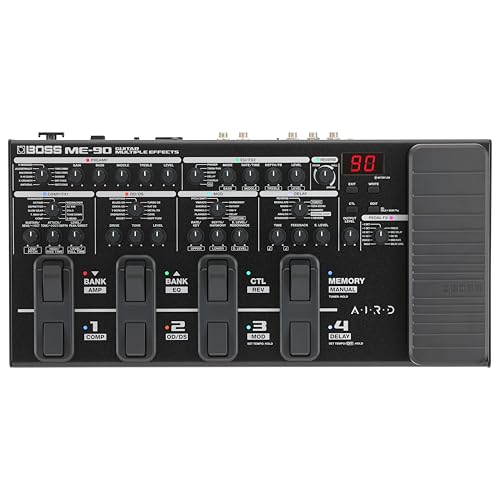
- 11 AIRD amp models and IR loading
- 60 effects with knob-based editing
- Battery power and eight footswitches
Best For: Players wanting a hands-on floor processor
Best Speaker-Equipped Combo

- 50 watts with a 12-inch speaker
- Twelve selectable amp voicings
- Five independent effects sections
Best For: Players wanting a speaker-equipped modeling combo
Best Private-Practice Pick

- Ten guitar amp types and 85-plus effects
- Bluetooth backing-music streaming
- Guitar and bass headphone practice
Best For: Quiet, portable guitar or bass practice
Portable All-Rounder – BOSS GX-1 Effects Processor
Among boss amp modelers for guitar, the GX-1 is a practical choice when you want a compact processor without giving up hands-on control. It packs 23 amp types and more than 140 effects into a unit designed to fit in a guitar case or bag.
Best For: Guitarists who want a portable setup for practice, recording, and live playing.
Pros:
- AIRD technology provides tube-amp tone and touch response.
- Color display, effect-category buttons, and Gear Suite simplify sound selection and editing.
- Built-in Bluetooth, three assignable footswitches, and an expression pedal add flexibility.
Cons:
- Its 23 amp types offer fewer choices than the GX-100’s 32.
- Players who need more than three onboard footswitches may want a larger unit.
The GX-1 balances portability with useful performance controls. Its battery, adapter, and USB bus-power options also make it easier to use in different settings.
If you are comparing boss amp modelers for guitar and mainly need amp-and-cabinet sound from a compact pedal, the IR-2 keeps the setup focused. It offers 11 amp types, Celestion Digital cabinet impulse responses, and familiar tone-shaping knobs.
Best For: Players building a compact direct-recording or headphone-practice rig around their existing pedals.
Pros:
- Level, Gain, Bass, Middle, and Treble knobs make adjustments straightforward.
- USB-C supports computer recording and audio playback.
- A headphone jack and mono/stereo effects loop add practical routing options.
Cons:
- Its 11 amp types give you a smaller selection than the multi-effects processors here.
- Players seeking a broad onboard effects library should consider a dedicated multi-effects unit.
Choose the IR-2 when your priority is a small amp-and-cabinet solution, not a processor intended to replace a full effects board.
For players who want extensive routing from boss amp modelers for guitar, the GX-100 offers 32 amp types, more than 170 effects, and 15 assignable blocks. Its color touchscreen makes that deeper setup more approachable.
Best For: Guitarists who want a configurable floor processor for detailed presets and live control.
Pros:
- Flexible amp/effect routing and WAV speaker IR loading support detailed sound design.
- Assignable footswitches and an expression pedal provide onboard performance control.
- BOSS Tone Studio enables computer editing and Liveset sharing.
Cons:
- Its 23.7-inch length takes more space than a compact pedal setup.
- Mobile editing and audio streaming require an optional Bluetooth adaptor.
The GX-100 makes sense when routing options and stage control matter more than minimizing the size of your rig.
The IR-200 stands out among boss amp modelers for guitar if cabinet IR selection is central to your direct rig. It combines amp simulation with more than 150 onboard BOSS and Celestion Digital cabinet IRs, plus 128 locations for your own IRs.
Best For: Players who want a pedalboard-friendly amp and cabinet solution with extensive IR choices.
Pros:
- 128 memories make it practical to recall different direct sounds.
- Custom mono or stereo IR loading expands the included cabinet selection.
- Outputs accommodate a stage amp, PA, recording system, and headphones; USB audio supports recording and playback.
Cons:
- Its amp-and-cabinet focus is less suited to players seeking a broad built-in multi-effects library.
- Managing a large collection of custom IRs may add setup time.
Pick the IR-200 when you want your pedalboard to handle direct amp and cabinet tones while keeping your preferred effects pedals in the rig.
Best Hands-On Floor Processor – BOSS ME-90
BOSS ME-90 Guitar Multi-Effects Guitar Processor | All-In-One Guitar Processor
Check Price On AmazonAmong boss amp modelers for guitar, the BOSS ME-90 suits players who want amp sounds and effects in one floor unit without relying on menu-heavy editing. Its knob-based layout makes on-the-spot adjustments straightforward.
Best For: Guitarists who want a performance-ready processor with hands-on tone control.
Pros:
- Eleven AIRD amp models, IR loading, and 60 effects provide broad sound-shaping options.
- Eight multifunction footswitches and an expression pedal support live control.
- Can run on batteries and offers an effects loop.
Cons:
- Bluetooth editing and audio streaming require an optional adaptor.
- No built-in speaker; this is a processor rather than a combo amp.
The ME-90 is the flexible pick if you already have an amplification or monitoring setup and value quick physical control over your patches.
Best Speaker-Equipped Combo – BOSS Katana-50 Gen 3
If your search for boss amp modelers for guitar starts with a ready-to-play speaker amp, the Katana-50 Gen 3 is the combo choice here. It pairs 50 watts and a custom 12-inch speaker with twelve selectable amp voicings.
Best For: Guitarists who want modeled tones in a single combo for practice and performances.
Pros:
- Six amp characters, each with a variation, offer twelve voicing options.
- Five independent effects sections cover Booster, Mod, FX, Delay, and Reverb.
- Updated BOSS Tone Studio supports remote amp and effects editing.
Cons:
- Requires an electrical outlet rather than battery power.
- A combo amp is less compact than a plug-in headphone unit.
Choose this Katana when hearing your tones through a built-in speaker matters more than the portability of a floor processor or headphone amp.
Best Private-Practice Pick – BOSS Katana:GO
For players comparing boss amp modelers for guitar primarily for quiet practice, the Katana:GO puts Katana sounds at the instrument jack and sends audio to headphones. Bluetooth backing-track streaming makes it especially useful for everyday jams.
Best For: Guitarists or bassists who want portable, headphone-based practice with backing music.
Pros:
- Guitar mode offers ten amp types and more than 85 effects.
- Also supports bass with three amp types and more than 65 effects.
- Spatial audio and Bluetooth music streaming add options for headphone practice.
Cons:
- Designed for headphone listening, not room-filling sound from a built-in speaker.
- Its plug-in format does not offer the ME-90’s bank of footswitches.
The Katana:GO makes the most sense when convenience and private playing take priority over onstage foot control or a conventional combo amp.
Best All-Around Combo – BOSS Katana-100 Gen 3
For players comparing boss amp modelers for guitar, the Katana-100 Gen 3 puts a 100-watt amp, custom 12-inch speaker, and onboard effects in one combo. Its six amp characters each have a variation, giving you 12 tonal options, including the edge-of-breakup Pushed character.
Best For: Guitarists who want a stage-ready, single-speaker combo with built-in tone shaping.
Pros:
- 100-watt output and custom 12-inch speaker provide a self-contained stage amp.
- Five independent effects sections cover Booster, Mod, FX, Delay, and Reverb.
- Updated BOSS Tone Studio supports remote amp and effects editing.
Cons:
- At 32.6 pounds, it is heavier to carry than the Katana Head Gen 3.
- Its single 12-inch speaker may not suit players specifically seeking a two-speaker combo.
Choose this model if you want the Gen 3 sounds and effects without pairing an amp head with an external cabinet.
Best Amp Head – BOSS Katana Head Gen 3
Among boss amp modelers for guitar, the Katana Head Gen 3 is the flexible pick if you prefer an amp head over a combo. It delivers 100-watt output and includes a built-in 5-inch speaker for practice, while offering 12 amp-character options and five independent effects sections.
Best For: Guitarists who want a 100-watt head that can also be used for practice through its built-in speaker.
Pros:
- Built-in 5-inch speaker adds practice convenience to the amp-head format.
- Six amp characters with variations include the new Pushed sound.
- Booster, Mod, FX, Delay, and Reverb sections offer onboard sound shaping.
Cons:
- The built-in speaker is only 5 inches; players seeking a larger speaker setup will need an external cabinet.
- It is not a self-contained 12-inch combo.
This is the practical choice when the head format matters most, but you still want a built-in speaker for practice sessions.
Best Dual-Speaker Combo – BOSS Katana-100/212 Gen 3
If you’re shopping for boss amp modelers for guitar and want two built-in speakers, the Katana-100/212 Gen 3 pairs 100-watt output with two custom 12-inch speakers. It also offers six amp characters with a variation for each, including the newly developed Pushed type.
Best For: Players who want a stage-ready, two-speaker combo with onboard effects.
Pros:
- Two custom 12-inch speakers make it a self-contained 2×12 combo.
- 12 amp-character options offer a range of sounds, including Pushed.
- Five independent effects sections cover Booster, Mod, FX, Delay, and Reverb.
Cons:
- At 43.6 pounds, it is the heaviest of these three Katana models.
- Its two-speaker enclosure takes more space than a single-speaker combo or amp head.
Pick the 100/212 when its two-speaker configuration is worth the extra size and weight; otherwise, the single-speaker combo is easier to move.
How We Picked These Boss Amp Modelers for Guitar
We compared the selected models by their intended role: direct amp simulation, all-in-one effects, headphone practice, or amplification through a guitar speaker. We prioritized practical differences such as portability, hands-on control, cabinet-simulation options, and how readily each format fits a pedalboard, desktop, or stage rig. This is a format comparison, not a claim that every product was tested side by side.
Quick Comparison: Which Format Fits Your Rig?
Compact amp and cabinet pedals: The IR-2 and IR-200 suit players building a direct-output rig around existing pedals. The IR-200 offers a more expansive control surface; the IR-2 keeps the footprint smaller.
Multi-effects processors: The GX-1, GX-100, and ME-90 combine amp sounds with effects. Choose among them based on the space you have, the depth of editing you want, and whether you prefer screen-led or more immediate hands-on operation.
Personal practice: The Katana:GO is the most targeted choice here when headphone playing and portability matter more than a stage-ready floor setup.
Speaker-equipped amps and head: The Katana-50 Gen 3, Katana-100 Gen 3, and Katana-100/212 Gen 3 provide self-contained combos at different sizes. The Katana Head Gen 3 is for players who want to choose a separate speaker cabinet.
Key Buying Factors for Boss Amp Modelers for Guitar
Start with Where the Sound Will Come Out
If you mainly play through headphones, a dedicated personal amp or a suitable processor may save space. For recording or a PA, check the outputs and cabinet-simulation workflow of the specific model. If you want the feel of an amp in the room, a Katana combo or a head paired with a cabinet is the more direct choice. A direct modeler and a guitar amp can both be useful, but they solve different setup problems.
Decide How Much of Your Rig to Replace
An amp-and-cab pedal makes sense if you already like your drive, modulation, and delay pedals. A multi-effects unit is better suited to consolidating more sounds and switching them together. Before buying, check the current specifications for the connections you need, including headphones, recording, external control, and any effects-loop requirements.
Match Controls to Your Playing
Consider whether you will tweak sounds between songs or build presets in advance. More editing flexibility is valuable only if you will use it; straightforward physical controls may be faster at rehearsal. Also check the unit’s size, power requirements, and how it will travel with the rest of your gear.
Who Should Buy Which Boss Amp Modelers for Guitar?
For a compact direct pedalboard: Start with the IR-2; consider the IR-200 if you want more room to shape an amp-and-cab setup. For an all-in-one floor rig: Compare the portable GX-1 with the larger GX-100 and the hands-on ME-90. For quiet, grab-and-go practice: Look at the Katana:GO. For a self-contained amp: Choose a Katana Gen 3 combo according to the size and speaker arrangement you can accommodate. For a separate cabinet: Consider the Katana Head Gen 3.
The safest choice is the format that works with your actual output, playing space, and switching needs. Check the exact model’s connections and included accessories before ordering.