Choosing the right bass at the intermediate stage is about more than just upgrading from a starter model. You want better playability, reliable hardware, and enough tonal flexibility to grow with your playing.
This roundup of 10 bass guitars for intermediate players focuses on practical choices that make it easier to practice, perform, and explore different styles without overpaying for features you may not use.
Best 10 Bass Guitars for Intermediate Players Picks for 2026
Balanced All-Rounder
Yamaha TRBX304 BL 4-String Electric Bass Guitar
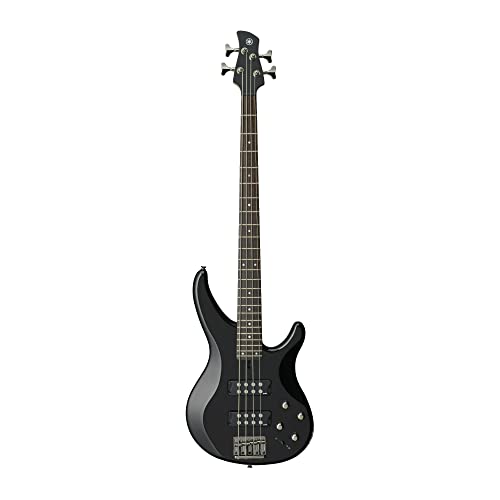
- Solid mahogany body for a balanced tonal base
- Five-piece maple/mahogany neck for stable feel
- Performance EQ switch supports several playing styles
Best For: Intermediate players needing a versatile 4-string bass
Compact Short-Scale Pick
Ibanez GSRM20BWNF MiKro Walnut Flat

- 28.6-inch short-scale design for easier handling
- Poplar body with maple neck keeps the build simple
- Stable tuning from hardtail bridge and die-cast machines
Best For: Players who prefer a smaller bass with easy playability
Comfortable Starter Step-Up
Fender Squier Debut Precision Bass Guitar

- C-shaped neck and thin body improve comfort
- Split-coil pickup delivers punchy P-Bass tones
- Includes Fender Play lessons for extra practice support
Best For: Players wanting a lightweight Precision-style bass
Extended-Range Option
Ibanez GSR206SMNGT 6-String Bass

- 6-string format offers a broader playing range
- Phat II EQ boosts low-end resonance and power
- Dual humbucking pickups give a fuller setup
Best For: Intermediate players ready for a 6-string bass
Versatile 5-String Upgrade
Ibanez Standard SR305E Bass Guitar

- 5-string electric bass for expanded range
- Dual humbucking pickups for flexible tone
- Maple/walnut neck with Jatoba fingerboard
Best For: Intermediate players wanting a 5-string bass with practical versatility
Vintage-Style Experimenter
Squier Classic Vibe 6-String Bass VI

- 6-string Bass VI tuned an octave lower than a guitar
- Three pickup on/off switches for tonal control
- Vintage-style tremolo with stable tuning machines
Best For: Intermediate players exploring Bass VI textures and vintage-style options
Classic 4-String Workhorse

- Familiar 4-string electric bass layout
- One-piece maple neck with rosewood fretboard
- Poplar body and right-handed setup
Best For: Intermediate players wanting a simple, traditional bass
Extended-Range Fanned-Fret Choice

- 6-string fanned-fret layout
- 24 frets for extended range
- Roasted maple neck, bright tone
Best For: Intermediate players ready for more range and versatility
Best Heavy-Duty Pick
Ibanez SR300E Midnight Gray Burst

- 2 humbucking pickups with Power Tap
- Light 3.6 kg 4-string design
- Maple/walnut neck, Jatoba fingerboard
Best For: Intermediate players wanting a versatile, comfortable 4-string
Best Value Starter Bundle
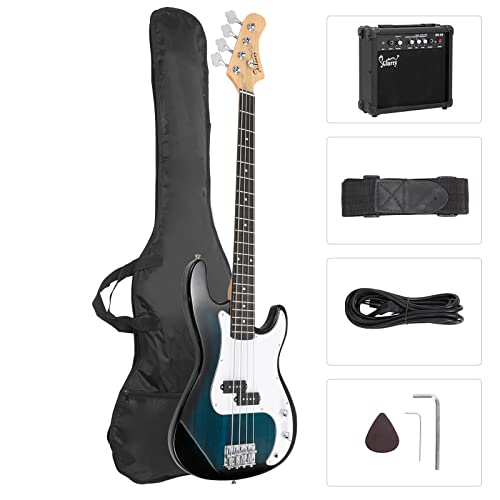
- Includes amp, cable, bag, strap, and pick
- 4-string basswood body with 20 frets
- Adjustable setup with split single-coil pickup
Best For: Budget-minded players who want an all-in-one practice kit
Balanced All-Rounder – Yamaha TRBX304 BL 4-String Electric Bass Guitar
If you’re shopping for bass guitars for intermediate players, the Yamaha TRBX304 BL is a strong everyday option because it blends comfort, stability, and flexible tone shaping. Its solid mahogany body and five-piece maple/mahogany neck give it a solid feel, while the active electronics and Performance EQ switch make it easy to move between different playing styles.
Best For: Intermediate players who want a versatile 4-string bass for practice, recording, and live use.
Pros:
- Solid mahogany body provides a balanced tonal foundation.
- Five-piece maple/mahogany neck adds a sturdy, performance-focused build.
- Active electronics expand tone-shaping options.
- Performance EQ switch supports slap, pick, flat, finger, or solo playing.
Cons:
- Active electronics may be more than a beginner specifically needs.
- Only available as a 4-string model, so it may not suit players seeking extended range.
Overall, this Yamaha is a practical step-up choice for players who want one bass that can cover several genres and techniques without feeling limiting.
Compact Short-Scale Pick – Ibanez GSRM20BWNF MiKro Walnut Flat
Among bass guitars for intermediate players, the Ibanez GSRM20BWNF MiKro stands out for its short-scale design and easy handling. The 28.6-inch scale, poplar body, maple neck, and dual single-coil pickups make it a compact bass that still offers the core features needed for practice and everyday playing.
Best For: Players who want a smaller, short-scale bass that stays comfortable and easy to manage.
Pros:
- Short-scale 28.6-inch design is easier to handle.
- Poplar body and maple neck keep the build straightforward.
- Dual single-coil pickups offer a classic pickup layout.
- Hardtail bridge and die-cast tuning machines are built for stable tuning and intonation.
Cons:
- Short-scale format may not appeal to players who prefer a full-size feel.
- Included notes focus on basics rather than expanded tone controls.
This MiKro is a smart pick if you want an approachable bass that feels manageable without giving up the essentials needed to keep progressing.
Comfortable Starter Step-Up – Fender Squier Debut Precision Bass Guitar
If you’re comparing bass guitars for intermediate players but still want an easy, comfortable feel, the Fender Squier Debut Series Precision Bass is worth a look. It uses a super-comfortable C-shaped neck, thin lightweight body, and split-coil pickup with volume and tone controls, giving you a familiar P-Bass-style platform that is simple to navigate.
Best For: Players who want a lightweight Precision-style bass with a comfortable neck and easy controls.
Pros:
- Comfortable C-shaped neck and thin, lightweight body.
- Split-coil pickup delivers punchy P-Bass tones.
- Volume and tone controls keep the layout straightforward.
- Includes a 30-day Fender Play subscription with lessons.
Cons:
- Designed primarily for beginners, so advanced players may outgrow it sooner.
- It focuses on simplicity rather than a wide range of onboard features.
This is a solid choice if you value comfort, familiar Precision Bass sounds, and extra learning support while you keep building skills.
Extended-Range Option – Ibanez GSR206SMNGT 6-String Bass
For bass guitars for intermediate players who want more range to explore, the Ibanez GSR206SMNGT offers a 6-string format with active low-end shaping. Its mahogany body, spalted maple top, dual humbucking pickups, and Phat II EQ give it a more expansive setup for players who are ready to branch out beyond standard four-string basics.
Best For: Intermediate players looking for a 6-string bass with active tone control and broader range.
Pros:
- 6-string layout expands the available range.
- Phat II EQ active bass boost adds low-end resonance and power.
- Dual humbucking pickups support a fuller pickup configuration.
- Spalted maple top and polished finish give it a more premium look.
Cons:
- Six-string basses can be less immediately approachable than 4-string models.
- Heavier build may be less convenient than smaller or lighter options.
This model makes sense if you want a bass that opens up more notes and lets you experiment with active EQ shaping in a single instrument.
Versatile 5-String Upgrade – Ibanez Standard SR305E Bass Guitar
If you’re comparing bass guitars for intermediate players, the Ibanez Standard SR305E is a strong choice when you want extra range without moving into a huge instrument. Its 5-string layout, Nyatoh body, maple/walnut neck, Jatoba fingerboard, and dual humbucking pickups make it a practical step up for players ready to explore lower notes and a broader tonal palette.
Best For: Intermediate players who want a 5-string bass with a comfortable feature set and humbucker-powered versatility.
Pros:
- 5-string setup expands note range for more song coverage.
- Dual humbucking pickups offer a flexible electric bass sound.
- Maple/walnut neck and Jatoba fingerboard provide a solid playability foundation.
- Nyatoh body keeps the build straightforward and gig-ready.
Cons:
- 5-string instruments can take time to adjust to if you’re used to 4 strings.
- The notes do not indicate active electronics or extra onboard controls.
This is a sensible intermediate-level bass if your goal is to add range and pickup flexibility without overcomplicating the instrument. It’s especially appealing for players who want a modern 5-string platform for practice, rehearsal, and gigging.
Vintage-Style Experimenter – Squier Classic Vibe 6-String Bass VI
For bass guitars for intermediate players who want something different, the Squier Classic Vibe 6-String Bass VI stands out as a vintage-style crossover instrument. Tuned an octave lower than a guitar, it includes three individual pickup on/off switches, a Jaguar-type low-frequency-attenuating filter, a vintage-style tremolo, and vintage-style tuning machines, giving you plenty to explore if you like unusual textures and range.
Best For: Intermediate players who want a Bass VI for experimental tones, guitar-like familiarity, and vintage-style features.
Pros:
- 6-string Bass VI format offers a unique octave-lower-than-guitar setup.
- Three pickup on/off switches add sound-shaping flexibility.
- Jaguar-type high-pass filter and vintage-style tremolo expand tonal options.
- Vintage-style tuning machines are built for rock solid tuning stability and smooth action.
Cons:
- Its tuning and layout are less traditional than a standard bass.
- The wider concept may be more specialized than a typical intermediate bass guitar.
This is a good pick if you want an intermediate instrument that encourages experimentation rather than a standard bass role. The Bass VI design is clearly aimed at players who want to cover new sonic ground while keeping a vintage-inspired feel.
Classic 4-String Workhorse – Ibanez GSR200BK Bass Guitar
If you want bass guitars for intermediate players that stay close to a familiar format, the Ibanez GSR200BK is an easy one to consider. This right-handed 4-string electric bass uses a one-piece maple neck, rosewood fretboard, pearl dot inlay, and a poplar body, making it a straightforward option for building confidence on a traditional bass layout.
Best For: Intermediate players who want a familiar 4-string bass with a simple, dependable build.
Pros:
- 4-string layout is familiar and easy to move to from a beginner bass.
- One-piece maple neck supports a straightforward playing feel.
- Rosewood fretboard and pearl dot inlay keep the layout easy to follow.
- Right-handed electric bass design suits standard practice and gig use.
Cons:
- The supplied details do not list extra pickup or electronics features.
- It does not offer the extended range of a 5-string or 6-string bass.
This model makes sense if you want to stay with a classic bass format while still getting a credible step-up instrument. It’s a practical choice for players who value simplicity, familiarity, and an uncomplicated path to better technique.
Extended-Range Fanned-Fret Choice – Purple Burl Burst 6-String
If you want bass guitars for intermediate players that open up more range and technique, this 6-string fanned-fret model is built for that step up. The roasted maple neck, 24 frets, and bright, resonant sound profile give you room to explore chords, higher-register lines, and tighter string balance across the neck.
Best For: Intermediate players who want an extended-range bass with a fanned-fret layout and a standout look.
Pros:
- 6-string, fanned-fret design supports wider tonal range and varied playing styles
- 24 frets add extra room for melodic and chordal playing
- Roasted maple neck is designed for comfort and stability
- Purple Burl Burst finish gives it a distinctive stage appearance
Cons:
- 6-string layout may be more demanding than a standard 4-string
- Extended-range design is not the simplest option for players who want a basic bass
This is a strong pick if your intermediate playing is moving beyond the basics and you want an instrument that rewards technique growth. The design emphasizes versatility and range more than simplicity, which makes it better suited to players ready for a broader musical palette.
Best Heavy-Duty Pick – Ibanez SR300E Midnight Gray Burst
For bass guitars for intermediate players, the Ibanez SR300E is a practical all-rounder with a proven 4-string layout, dual humbucking pickups, and a 3-band EQ with Power Tap. Its lighter 3.6 kg build and slim-spec details make it a sensible choice if you want a comfortable bass for regular practice, rehearsals, and gig-ready use.
Best For: Intermediate players who want a versatile 4-string bass with flexible electronics and a manageable feel.
Pros:
- 2 humbucking pickups and 3-band EQ with Power Tap offer flexible tone shaping
- 4-string format is familiar and easy to adapt to
- Light 3.6 kg weight supports comfortable long sessions
- Maple/walnut neck and Jatoba fingerboard add a solid spec set
Cons:
- Does not include accessories like a bag or amplifier
- 4-string design offers less range than extended-range basses
This is a dependable upgrade-style bass for players who want better electronics and a refined feel without moving into a more complex string setup. It stands out as a versatile, easy-to-live-with option for intermediate bassists.
Best Value Starter Bundle – GLARRY 4-String Beginner Kit
If you’re comparing bass guitars for intermediate players on a tighter budget, this GLARRY kit offers a straightforward 4-string setup plus the essentials to get playing right away. The basswood body, rosewood bridge and fingerboard, 20-fret layout, and included 20W amp make it a practical package for practice and first rehearsals.
Best For: Players who want an affordable, all-in-one bass kit with basic practice gear included.
Pros:
- Includes 20W amp, cable, strap, bag, and pick for immediate use
- 4-string, 20-fret layout keeps the instrument familiar and approachable
- Split single-coil pickup and 2 volume knobs cover warm to rock tones
- Adjustable string height and neck fine-tuning help with setup
Cons:
- Kit-level construction is more basic than higher-end basses
- Included amplifier is small and best suited to practice
This package makes sense if you want the convenience of everything in one box rather than buying each piece separately. It is especially useful for developing players who value affordability and a simple, ready-to-play setup.
How We Picked These Bass Guitars for Intermediate Players
We looked for models that offer a clear step up in feel, stability, and sound versatility. Priority went to neck comfort, fret access, pickup flexibility, build consistency, and overall value. We also considered whether each bass makes sense for players moving beyond their first instrument and into regular rehearsals, lessons, and gigs.
Quick Comparison
The best options in this group range from compact short-scale designs to full-size 4-string and 5-string models, plus a few extended-range choices for players who want to experiment. Some emphasize easy handling and familiar layouts, while others offer broader tonal control or added low-end range. If you want a straightforward upgrade, a 4-string is usually the safest choice; if you need more range, a 5- or 6-string can open up new musical territory.
Key Buying Factors for Bass Guitars for Intermediate Players
Scale Length and Neck Feel
Comfort matters a lot once you start playing longer sessions. Short-scale basses can be easier to fret and navigate, while standard-scale instruments often feel tighter and more familiar for most styles. Check neck profile and string spacing if you have smaller hands or prefer faster movement.
Pickup and Electronics Flexibility
Intermediate players often benefit from basses with multiple pickup voices or active EQ. These features help you shape tone for practice, recording, and live use without relying entirely on pedals or amp settings.
Number of Strings
A 4-string bass is still the most versatile and approachable choice for many players. A 5-string adds low-end range for modern styles, and a 6-string can be useful if you want extended range and chordal work. Choose based on the music you actually play, not just the maximum spec sheet.
Build Quality and Hardware
Look for stable tuners, a solid bridge, and a neck that stays consistent over time. At this level, dependable hardware is often more important than flashy aesthetics.
Who Should Buy Which Bass Guitars for Intermediate Players?
If you want a comfortable all-rounder, choose a standard 4-string with active or versatile electronics. If you value compact handling, a short-scale model may feel more natural. Players exploring heavier styles, modern fusion, or extended-range parts may prefer a 5- or 6-string bass. For Bass Guitars for Intermediate Players, the best choice is the one that matches your hand size, musical goals, and willingness to learn a slightly different layout.